
Your cart is currently empty!
Female CPR Manikin to Help ‘Save More Women’
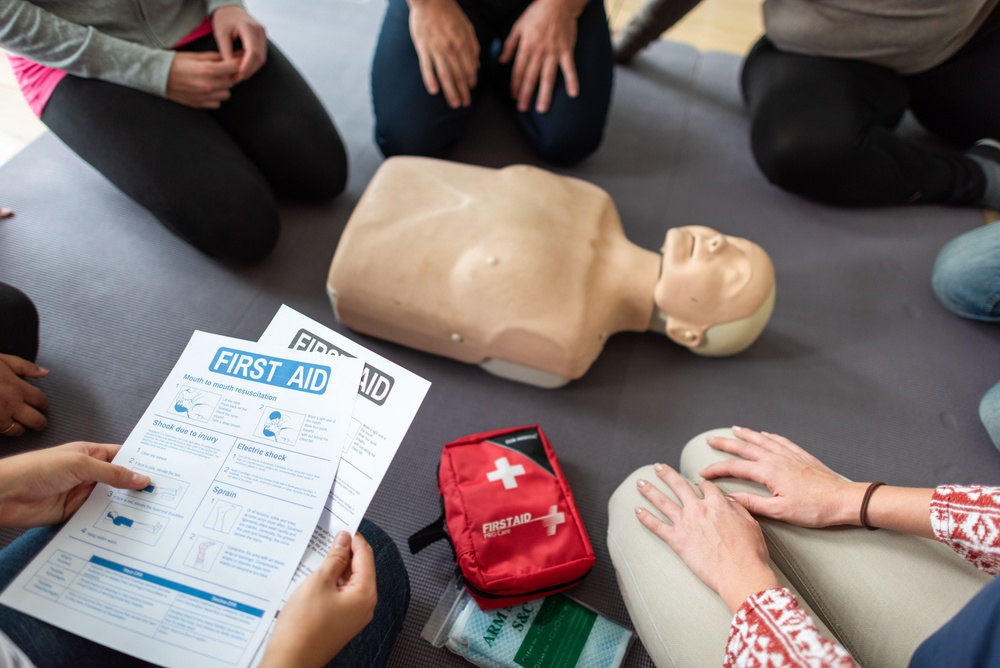
Cardiopulmonary resuscitation — better known as CPR — has been taught using a standard image: a flat-chested, male-bodied training dummy lying on the floor while students practice chest compressions. It became so normalized that few people questioned it. But new research and growing public awareness are revealing a troubling reality hidden within that standard: women experiencing cardiac arrest are statistically less likely to receive CPR from bystanders than men.
Contents
show
Now, emergency services and medical trainers are attempting to address that gap with something surprisingly simple — female CPR manikins equipped with breasts and anatomically realistic female chest structures. While the idea may sound minor at first glance, experts say it could help dismantle a deeply ingrained hesitation that has quietly affected emergency response outcomes for years.
Recent efforts by organizations in the UK and elsewhere suggest that correcting those blind spots may save lives.
The Gender Gap in CPR Survival Rates
Cardiac arrest is one of the leading causes of death worldwide. When it occurs outside of a hospital, immediate CPR can dramatically improve survival chances by keeping oxygenated blood flowing to the brain and vital organs until professional help arrives.
Yet studies repeatedly show that women are less likely than men to receive bystander CPR in public settings.
Researchers have proposed several reasons for this disparity. Some bystanders fear accusations of inappropriate touching if they expose or touch a woman’s chest during an emergency. Others panic over uncertainty about hand placement on breasts. Some hesitate because they unconsciously perceive women as more fragile, while others simply lack training that includes female anatomy.
Whatever the cause, the results are measurable.
Medical researchers have found that delays of even a few minutes can drastically reduce survival chances during cardiac arrest. In situations where immediate action is critical, hesitation itself becomes dangerous.
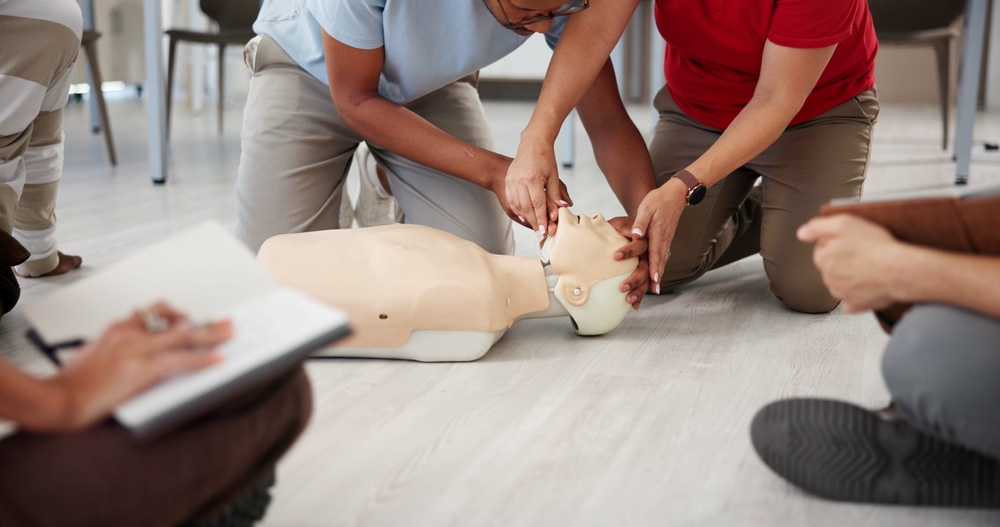
This is where female CPR manikins enter the conversation. The goal is not political correctness or symbolic representation. It is practical conditioning. Trainers hope that if people repeatedly practice CPR on female-shaped manikins, they will become more comfortable and confident responding to real emergencies involving women.
In other words, the training seeks to remove uncertainty before a crisis ever happens.
Why Medical Training Has Long Defaulted to Male Bodies
The emergence of female CPR manikins is part of a much larger reckoning happening across modern science and medicine.
Historically, male bodies have often been treated as the “default” in medical research, clinical trials, safety testing, and educational materials. Women were frequently excluded from studies due to concerns about hormonal cycles complicating data or fears surrounding pregnancy risks during research participation.
The consequences of this imbalance have been profound.
For example:
- Women often experience heart attacks differently than men, displaying symptoms such as nausea, fatigue, jaw pain, or shortness of breath rather than dramatic chest pain.
- Some medications metabolize differently in female bodies, affecting dosage effectiveness and side effects.
- Vehicle safety systems have historically been designed around male crash-test dummies, contributing to higher injury risks for women in accidents.
- Conditions like endometriosis and autoimmune disorders affecting women have historically been underdiagnosed or misunderstood.
What seems like a small adjustment in CPR training actually reflects a broader scientific shift toward recognizing that biological differences matter — not only socially, but medically.
Science evolves by correcting its blind spots. Sometimes those blind spots persist for generations simply because certain assumptions become invisible through repetition.
The standard CPR dummy may be one of those assumptions.
The Psychology of Hesitation During Emergencies

One of the most fascinating aspects of this issue lies not in anatomy itself, but in human psychology.
Emergency situations expose unconscious fears and social conditioning almost instantly. During a cardiac arrest event, bystanders must make decisions in seconds while under intense stress. If uncertainty enters the mind — even briefly — action slows down.
Psychologists studying emergency response have identified several factors that contribute to hesitation around administering CPR to women:
Fear of Social Judgment
Many people worry about being accused of inappropriate touching, especially in public spaces crowded with strangers or cameras. In today’s hyper-visible world, social anxiety can overpower rational thinking in moments of crisis.
Lack of Familiarity
Most CPR trainees have practiced on male-shaped manikins for years. When confronted with a real female body during an emergency, uncertainty over hand placement or compression technique can create hesitation.
Cultural Conditioning
Society often conditions people to protect women physically, which paradoxically may lead some bystanders to apply weaker compressions out of fear of causing injury. Yet effective CPR requires significant force. Broken ribs, while unfortunate, are often preferable to death from cardiac arrest.
These psychological barriers reveal something important about human behavior: people rarely rise to the level of abstract knowledge during emergencies. Instead, they fall back on familiarity and practiced instinct.
Training shapes instinct.
That is why advocates argue that female CPR manikins are not cosmetic additions — they are behavioral tools designed to normalize life-saving action.
Technology and Inclusivity in Modern Healthcare
The development of female CPR manikins also reflects a growing trend in healthcare innovation: designing systems that account for human diversity rather than assuming one-size-fits-all solutions.
Across medicine and biomedical engineering, researchers are increasingly acknowledging the importance of inclusivity in design. This includes:
- AI diagnostic systems trained on more diverse patient populations
- Medical studies incorporating sex-based biological analysis
- Prosthetics designed for different body types
- Wearable health technology tailored to varying physiology
- Mental health research accounting for gender-specific experiences
Healthcare technology functions best when it reflects the people it serves.
In many ways, the female CPR manikin represents a symbolic correction to decades of oversimplification in emergency medicine training. It acknowledges that the body in need of saving may not resemble the traditional template used in classrooms for generations.
Importantly, this innovation does not diminish existing CPR methods. The core principles remain exactly the same:
- Call emergency services immediately
- Begin hard, fast chest compressions
- Continue until professional help arrives or an AED becomes available
The difference lies in preparing people psychologically and physically for real-world situations involving all kinds of bodies.
The Importance of Representation in Science
Representation is often discussed in cultural or political contexts, but it also plays a critical role in science and education.
Humans learn partly through repetition and recognition. What we repeatedly see becomes normalized. What remains absent can unintentionally signal that it is less important or less expected.
For years, medical students, emergency responders, and CPR trainees primarily interacted with male-bodied training tools. Over time, that subtly reinforced the perception of the male body as the medical standard.
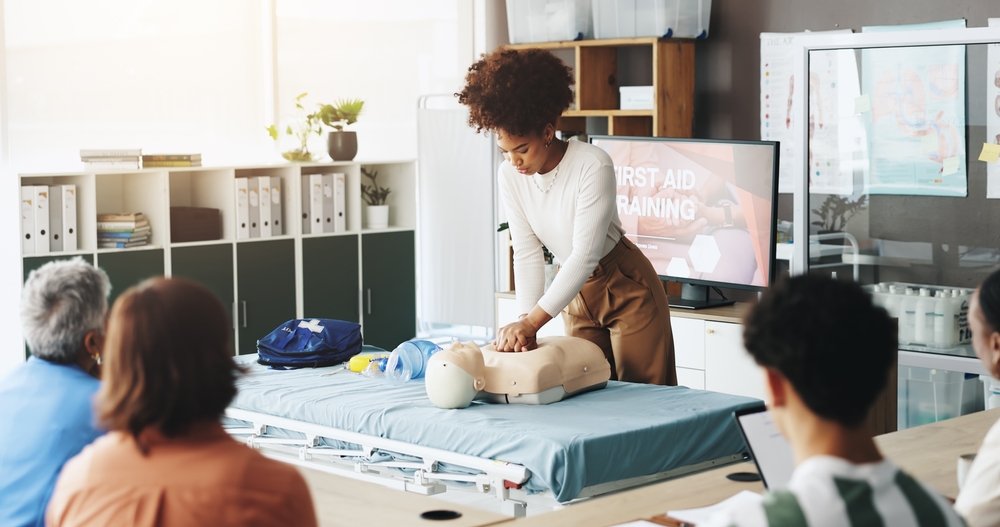
Adding female manikins may seem simple, but psychologically it broadens the mental image of who requires emergency care.
This principle appears throughout scientific education:
- Diverse anatomical models improve diagnostic awareness
- Inclusive datasets improve AI accuracy
- Broader representation in clinical studies improves treatment outcomes
- Varied simulations improve preparedness in crisis response
Science becomes more effective when it reflects reality more accurately.
Women suffer cardiac arrest. Women need CPR. Therefore, training systems should realistically prepare people for those situations.
The logic is straightforward, but implementing it required society first recognizing the gap.
A Small Change That Could Have Big Consequences
Some critics may view the female CPR manikin as unnecessary or overly symbolic. Yet history shows that many life-saving improvements begin with seemingly minor adjustments.
Handwashing in hospitals was once mocked before becoming foundational to modern medicine. Seatbelts faced resistance before becoming standard safety measures. Even CPR itself took decades to gain widespread adoption.
Small procedural changes can create enormous public health impacts when applied consistently across millions of people.
If female CPR manikins help reduce hesitation even slightly, the cumulative effect over years could be significant. A few extra seconds saved during cardiac arrest may mean the difference between survival and tragedy.
More importantly, the conversation surrounding these manikins forces society to confront deeper questions about unconscious bias within healthcare systems.
What other assumptions still exist unnoticed within medicine?
Where else might standardization unintentionally exclude important differences?
Scientific progress often begins not with revolutionary discoveries, but with the willingness to question what has long been accepted as normal.
The Future of Emergency Response Training
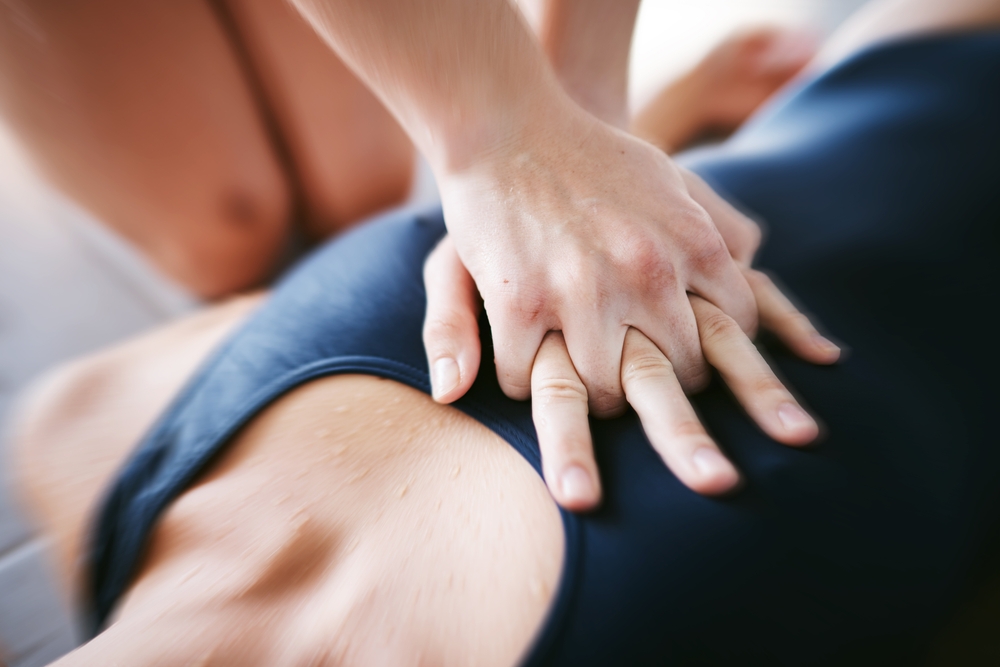
Advocates want CPR to become something people feel confident performing on anyone — regardless of gender, age, or appearance. Because during cardiac arrest, hesitation is the true enemy.
At its core, CPR is an act of human intervention against death itself. It is one person using their body to help preserve another person’s chance at life. That instinct should transcend discomfort, uncertainty, or outdated assumptions.
Science continually refines our understanding of the human body, but it also reveals something about human behavior. We are shaped not only by facts, but by habits, conditioning, and perception. Changing outcomes sometimes requires changing those invisible psychological patterns as well.
The female CPR manikin may appear to be a modest innovation, yet it represents something larger: the ongoing effort to make healthcare more realistic, inclusive, and effective for everyone.
And in emergencies where every second matters, that evolution could save countless lives.