
Your cart is currently empty!
Trump’s New Green Card Rule Forces Legal Visa Holders to Leave the U.S. Before They Can Apply for Permanent Residence
For hundreds of thousands of people living and working in the United States on legal visas, May 21, 2026 arrived as an ordinary Wednesday. Students were attending classes. Tech workers were sitting at their desks. Spouses of American citizens were raising children, paying mortgages, and building lives in communities they had come to think of as home. By the end of that day, a government memo had put all of it in a different light.
Contents
show
What the U.S. Citizenship and Immigration Services announced on Friday would not affect people who crossed the border without authorization. It would not target visa overstays or undocumented workers. It would land on people who had done everything by the book, and it would ask something of them that many had no reasonable way to give.
What the Rule Actually Says
USCIS issued a memo directing its officers to require green card applicants to leave the United States and apply for permanent residence from their home countries. For more than fifty years, foreign nationals already present in the country on temporary legal status had been able to complete the entire green card process without leaving American soil, a procedure known as adjustment of status. Under the new directive, that option narrows sharply.
USCIS described the change as a return to “the original intent of the law” and a closing of what it called a loophole. Exemptions exist for what the agency terms “extraordinary circumstances,” but USCIS has not defined what qualifies, leaving individual officers to make that judgment on a case-by-case basis. When the agency made its announcement, it did not clarify whether applicants would be required to remain abroad throughout the entire process, how the rule would apply to people with applications already underway, or when full enforcement would begin.
Who Stands to Be Affected
Adjustment of status has been, by any measure, a mainstream part of how legal immigration works in America. Students on academic visas, people on work visas, tourists who fell in love and married American citizens, refugees, and asylum seekers have all used it as the standard route to permanent residence. More than half of all green cards issued each year have gone through this channel. In 2023 alone, 600,000 people obtained green cards this way. About 1.4 million people obtained lawful permanent residence in fiscal year 2024 across all pathways combined.
Under the new rule, a substantial portion of those future applicants would need to pack up and leave before their cases are resolved. How long they might be gone is an open question. Green card processing is a process that can take anywhere from several months to several years. No one applying from abroad gets to set that timeline.
What Leaving Actually Means
Anne Rowley, an immigration attorney based in San Diego, was among the first legal professionals to speak publicly about what this shift would mean in practice for people who have already put down roots. “You know, they might have to leave their home. They might not be able to work. And then to wait for an effectively indefinite period of time outside the country to wait for their green card, of course, brings a lot of uncertainty, as well,” she said.
Beyond the personal disruption, there are procedural differences between applying domestically and applying through a consulate abroad. When going through a U.S. consulate, the process falls under State Department authority rather than USCIS, and it asks for documentation not required under adjustment of status. Applicants may need to produce police certificates from every country where they have previously lived, an added layer of complexity that can be difficult to fulfill depending on an applicant’s history and the countries involved.
A Catch-22 for Some Applicants
For a specific group of people, the new rule does not just make the process harder. It may make it impossible to complete at all.
Over the past several years, the Trump administration has imposed travel bans and paused visa processing for nationals of dozens of countries. For applicants from those nations, being told to return home and apply through a U.S. consulate creates a situation with no exit. World Relief, a humanitarian and refugee resettlement organization, put the problem plainly in a written statement. “If families are told that the non-citizen family member must return to his or her country of origin to process their immigrant visa, but immigrant visas are not being processed there, it’s a Catch-22. These policies will effectively create an indefinite separation of families,” the organization wrote.
Immigration lawyers have also raised safety concerns. For some applicants, returning to their country of origin is not simply inconvenient; it carries genuine risk. USCIS has not addressed how those situations would be handled under its extraordinary circumstances exemption.
How the Administration Justifies the Change
USCIS spokesman Zach Kahler laid out the government’s reasoning in a written statement. Nonimmigrants who come on student, work, or tourist visas arrive in the United States for a specific and temporary purpose, the agency argues. Allowing those visits to quietly convert into the first step of permanent immigration was never the intention, in the administration’s view, and it means those individuals received less scrutiny at the point of entry than someone applying for immigration from the start.
Kahler added that pushing applicants to apply from abroad “reduces the need to find and remove those who decide to slip into the shadows and remain in the US illegally after being denied residency.” USCIS has also indicated the administration may carve out exceptions based on economic benefit or national interest, a signal that people on H-1B visas working in high-demand industries like technology may have more options than others.
Criticism Arrives From Multiple Directions
Since the announcement, reaction from legal experts, advocacy groups, and elected officials has been pointed and consistent in its concern.
David J. Bier, director of immigration studies at the Cato Institute, called the policy illogical and went beyond the individual impact to argue a broader competitive cost. “It will drive talented people to other countries and make America a less competitive place for business,” Bier wrote. He has argued that Congress designed adjustment of status as a normal part of how immigration works, not an exception, and that framing it as a loophole misrepresents decades of practice and legislative intent.
Congressional Democrats moved fast. Representative Greg Stanton of Arizona pointed to the harm to American industries that depend on attracting skilled international workers, writing that America draws top researchers, doctors, and engineers precisely because of its worker visa programs. Representative Ted Lieu of California called the policy a direct benefit to U.S. competitors including China and Russia. Representative Delia Ramirez of Illinois called it “beyond cruel.” New York Governor Kathy Hochul said the rule “betrays the very promise that built this country.”
Immigration lawyers across the country have indicated the policy will face legal challenges, though none have been filed at the time of writing.
Part of a Larger Pattern
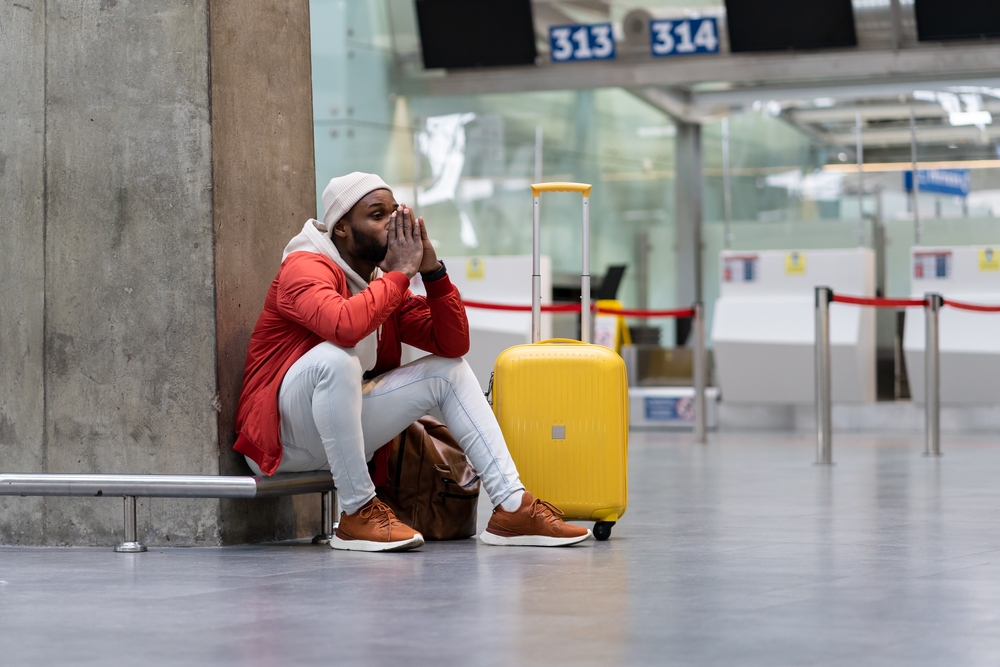
Restricting legal immigration has been a consistent thread running through the Trump administration’s approach to border and visa policy, separate from its well-publicized efforts on illegal immigration. Before this rule, the administration moved to limit asylum claims, ended temporary protected status for nationals of several countries, halted refugee admissions with a narrow exception for White South Africans, and restricted both work and student visas.
After the 2025 shooting of two National Guard soldiers in Washington, D.C., the administration also announced a review of green cards issued to people from 19 countries it labeled as countries of concern. Immigration advocates noted at the time that the alleged perpetrator of that shooting, an Afghan national, had entered through an asylum application filed in 2021 and granted in 2025, a process entirely separate from the green card system the administration was reviewing.
What No One Can Answer Yet
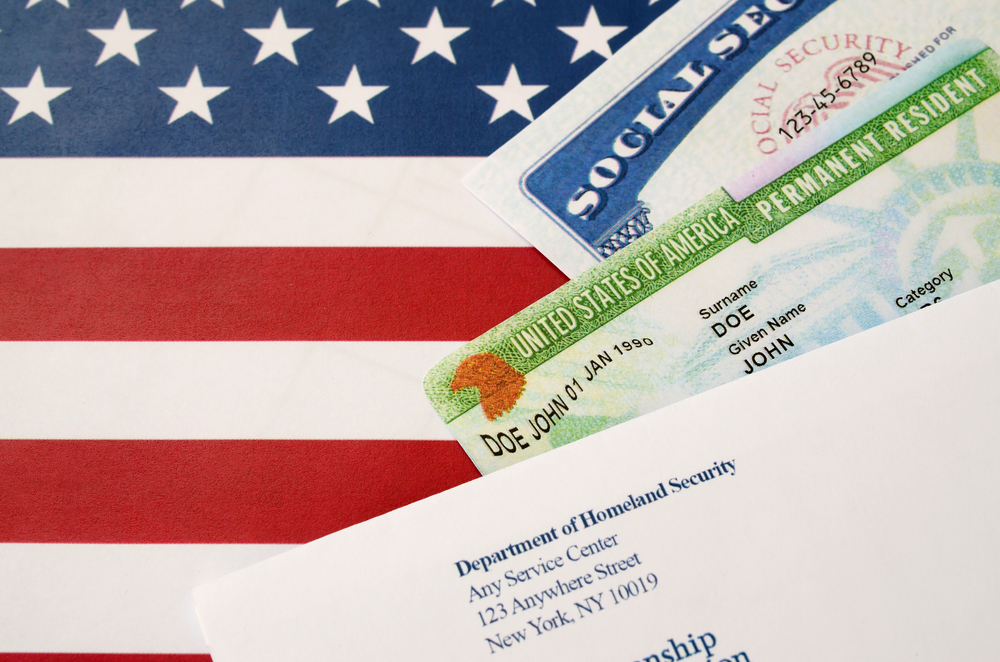
Even for immigration lawyers who have spent careers reading USCIS policy, the memo issued on May 21 leaves meaningful questions without answers. Officers retain significant discretion in applying their guidance, and how consistently they will do so remains to be seen. Whether applicants with cases already in progress face the same requirements is unclear. Whether the extraordinary circumstances exemption will be applied broadly or narrowly is unknown.
What is clear is the scale of what is being asked. Hundreds of thousands of people who arrived legally, paid taxes, held jobs, enrolled in schools, and married American citizens are now reading a government directive that treats their presence as a problem to be corrected rather than a status to be formalized. For many of them, home is no longer a place they left. It is exactly where they are standing, and a memo from USCIS is asking them to go somewhere else before they can make it official.
adjustment of status, Cato Institute, consular processing, family separation, foreign nationals, green card, H-1B visa, Immigrant Families, immigration attorneys, immigration crackdown, immigration law, immigration news, immigration policy 2026, immigration reform, lawful permanent residence, legal immigration, permanent residence, student visa, Trump administration, Trump immigration policy, USCIS, visa holders, work visa, Yum Brands