
Your cart is currently empty!
Astronomers Finally Found the Edge of the Milky Way
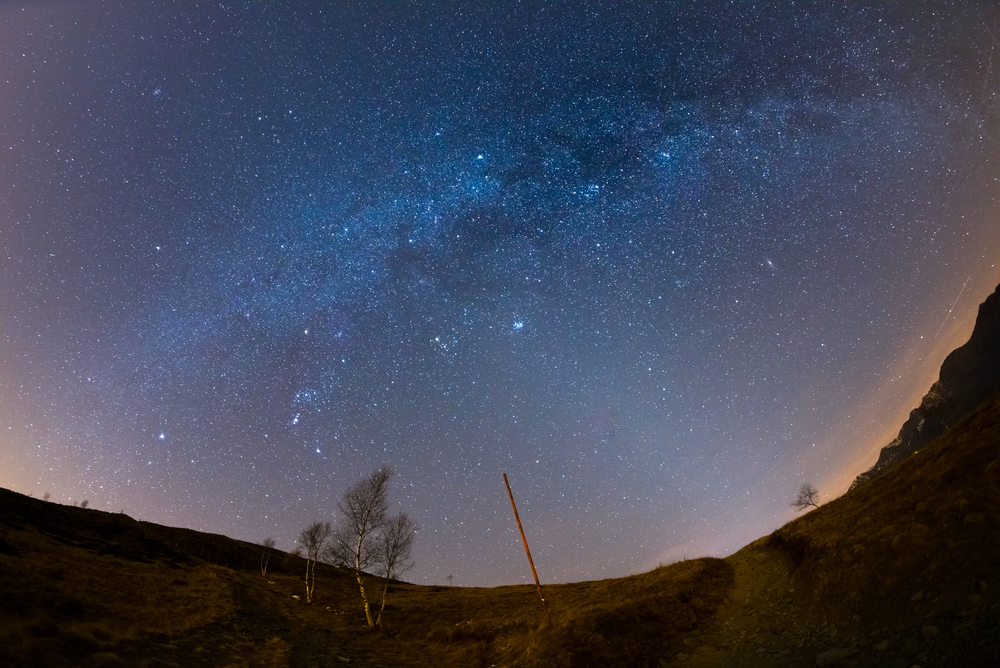
Ask where the Milky Way ends, and you might expect a quick reply. Surely astronomers, who can measure the distance to galaxies billions of light-years away and weigh black holes from across the cosmos, would know where our own galaxy stops. The truth is more complicated, and for a long time, the question had no clear answer.
Contents
show
Part of the problem is that we live inside the thing we are trying to measure, looking outward through dust and stars rather than viewing the galaxy from a comfortable distance. But an international team of astronomers has now found the boundary, and they did it unexpectedly. Rather than searching for where stars stop forming, they read the ages of stars scattered across the galaxy, and a pattern emerged that pointed straight to the edge.
Why Nobody Could Pin It Down Before
The first obstacle is that the Milky Way lacks a tidy outer boundary. Its disk of stars simply thins out the farther you travel from the center, fading gradually into emptiness rather than stopping at a clean line. There is no moment where the galaxy obviously ends and space obviously begins. The light just dims until there is nothing much left to see.
Our location makes things worse. We sit inside the galactic disk, peering outward through clouds of gas and dust that block and scatter light, which makes it genuinely difficult to map how stars are distributed at great distances. Earlier efforts, based largely on counting stars in the direction away from the galactic center, produced rough estimates somewhere in the range of 12 to 15 kiloparsecs from the middle, but they could never settle the matter. The new study, published in the journal Astronomy & Astrophysics, took a different route entirely, and it finally produced a number that the researchers could stand behind.
Reading the Ages of 100,000 Stars

The team behind the discovery, led by Dr. Karl Fiteni during his doctoral work at the University of Malta, analyzed more than 100,000 giant stars. These are large, bright stars that can be seen across great distances, which makes them useful signposts for studying the galaxy’s outer regions.
To do it, the researchers combined information from several major surveys. Two of them, called LAMOST and APOGEE, gathered detailed light measurements that reveal the chemistry and properties of individual stars. The third, the Gaia satellite, has been mapping the positions and movements of stars across the Milky Way with extraordinary precision. By focusing only on stars traveling in the galaxy’s main disk on smooth, near-circular paths, the team was able to filter out a population of older, wandering stars that would have muddied the results and led them astray.
Pulling these data sources together was central to the achievement, and one of the study’s co-authors emphasized how much the mapping satellite contributed. “Gaia is delivering on its promise: by combining its data with ground-based spectroscopy and galaxy simulations, it allows us to decipher the formation history of our Galaxy,” said Prof. Laurent Eyer of the University of Geneva.
The Curve That Revealed the Edge
The key to the whole discovery is a pattern that looks like the letter U. Imagine a graph. Along the bottom, you have the distance from the center of the galaxy. Up the side, you have the age of the stars. When the researchers plotted their stars this way, they found that the oldest stars sit near the galactic center. As you move outward, the stars get steadily younger, which is exactly what astronomers expected to see. But then, at roughly 35,000 to 40,000 light-years from the center, the trend flips. Beyond that point, stars start getting older again the farther out you go.
That turning point, the very bottom of the U, is the edge of the galaxy’s star-forming region. The researchers placed it between 11.28 and 12.15 kiloparsecs from the center, or around 40,000 light-years. After years of uncertainty, they finally had a figure they could defend.
“The extent of the Milky Way’s star-forming disc has long been an open question in Galactic archaeology; by mapping how stellar ages change across the disc, we now have a clear, quantitative answer,” said Fiteni, now based at the University of Insubria.
Why Younger Stars Sit Farther From the Center
The descending side of that U-curve, where stars get younger as you travel outward, comes down to how galaxies grow up. Galaxies do not build all their stars at once across their entire width. They grow from the inside out. In the crowded center, where gas and dust were once thick and abundant, stars began forming early, which is why the oldest stars live there now. Farther out, where the raw material was more spread thin, star formation got going more slowly and arrived later. The result is that, on average, stars get younger the farther they sit from the center, right up until you hit the edge of the star-forming zone.
That long, gradual process of building outward over billions of years left its fingerprint in the ages of the stars, and reading that fingerprint is what made the discovery possible. As one of the project’s supervisors put it, the ability to date stars accurately has opened a new window onto the galaxy’s past. “The data now available allow increasingly precise stellar ages to serve as powerful tools for decoding the story of the Milky Way, ushering in a new era of discovery about our home Galaxy,” said Prof. Joseph Caruana of the University of Malta.
So Why Are There Stars Beyond the Edge?
Here the story takes an interesting turn. If star formation drops off sharply at the boundary, an obvious question follows. Why are there any stars out there beyond the edge at all, and why are the most distant ones old?
The answer is something astronomers call radial migration. Stars do not necessarily stay where they were born. Over enormous stretches of time, they can drift outward from their birthplaces by interacting with the galaxy’s sweeping spiral arms. The comparison the researchers reach for is surfing. Just as a surfer catches a wave that carries them toward shore, a star can catch a ride on a passing spiral arm and gradually move outward over time.
Because this drifting is slow and somewhat random, with different stars catching different waves at different moments, it takes progressively longer for stars to reach the farthest distances. That is why the most remote stars in the outer galaxy tend to be the oldest. They have had the most time to make the long, meandering journey outward.
There is one more crucial detail. These outer stars travel on nearly circular paths, which tells the researchers something important about where they came from. “A key point about the stars in the outer disc is that they are on close to circular orbits, meaning that they had to have formed in the disc. These are not stars that have been scattered to large radii by an infalling satellite galaxy,” said Prof. Victor P. Debattista of the University of Lancashire, a co-supervisor of the study. In other words, these stars were not violently thrown outward by a passing galaxy crashing into ours. They drifted there gently, under the galaxy’s own internal influences.
Testing the Idea on Supercomputers
A pattern in the data is one thing. Proving you understand what causes it is another. To confirm their interpretation, the team turned to computer simulations of how galaxies evolve, run on powerful machines that can model the behavior of stars over billions of years.
When the researchers ran those models, the U-shaped age pattern appeared on its own, exactly as it does in the real galaxy, as long as two things happened: star formation dropped off sharply at a certain radius, and older stars migrated outward beyond it. That match between simulation and observation gave the team confidence that they had correctly identified the edge.
“In astrophysics, we use simulations run on supercomputers to identify the physical mechanisms responsible for the features we observe in galaxies,” said co-author Dr. João A. S. Amarante of Shanghai Jiao Tong University, adding that the models allowed the team to demonstrate how stellar migration shapes the age pattern and to identify where the star-forming region ends.
What Makes Star Formation Stop There
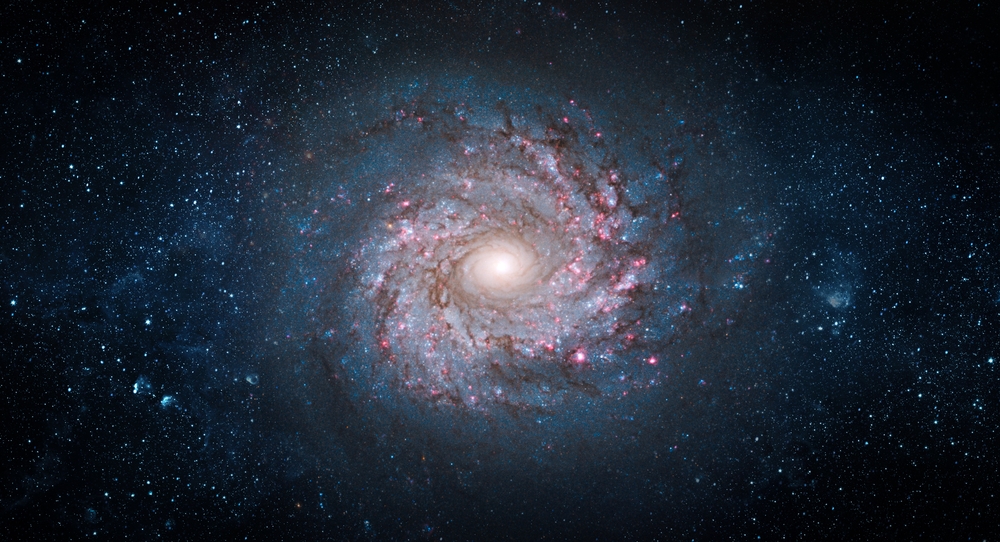
Knowing where the edge is does not fully explain why it sits exactly there, and on this point, the researchers are honest about the remaining uncertainty. They offer three leading possibilities.
The first involves the bar of stars that runs through the galaxy’s center. Its gravitational influence may cause gas to pool at a particular distance, starving the regions beyond it of the raw material stars need. The second is a warp in the galaxy’s disk, a bending of the otherwise flat plane that occurs around this distance and may disrupt the conditions required for new stars to form. The third is simpler still: the gas in the outer galaxy may just become too thin to cool down and collapse into stars. It is also possible that more than one of these is happening at once. For now, the cause remains an open question.
Placing Our Galaxy in Context
Beyond settling a long-standing puzzle, the discovery tells us what kind of galaxy we live in. The pattern the researchers found defines the Milky Way as what astronomers call a Type II, or down-bending, disk galaxy, a category shared by roughly 60% of similar galaxies in the nearby universe. Far from being unusual, our galaxy turns out to be a fairly typical example of its kind, which connects it to patterns observed across the cosmos.
New Telescopes Will Push the Answer Further
The story is not finished. Upcoming surveys with names like 4MOST and WEAVE, along with future data from the Gaia mission, will deliver even more detailed observations. Those will let astronomers sharpen the measurement and, with luck, finally determine which of the three suspects is responsible for drawing the boundary where it falls.
The wider achievement is what stellar dating has made possible. Measuring the ages of stars used to be one of the harder problems in astronomy, and now it has become a tool for reconstructing the entire life story of our galaxy, tracing how it assembled itself over billions of years. Knowing where the Milky Way’s busy, star-building youth gives way to its quiet, sprawling outskirts does something more than fill a gap in a textbook. It tells us a little more about the neighborhood we call home, and where, exactly, that neighborhood ends.
Source: Fiteni, K., Anderson, S. R., Debattista, V. P., Caruana, J., Amarante, J. a. S., Gough-Kelly, S., Eyer, L., Silva, L. B. E., Khachaturyants, T., & Cuomo, V. (2026). The edge of the Milky Way’s star-forming disc: Evidence from a ’U-shaped’ stellar age profile. Astronomy and Astrophysics, 708, A252. https://doi.org/10.1051/0004-6361/202558144
APOGEE survey, astronomy news 2026, Gaia satellite, galactic archaeology, galactic center distance, galactic disk, galaxy formation, inside-out galaxy growth, kiloparsecs Milky Way, LAMOST survey, Milky Way boundary, Milky Way discovery, Milky Way edge, Milky Way structure, radial migration stars, spiral arms star migration, star-forming disk, stellar age mapping, Type II disk galaxy, U-shaped age profile, University of Malta astronomy