
Your cart is currently empty!
A Psychologist’s Blunt Theory on What’s Really Behind Male Loneliness

Something has shifted in how we talk about men and loneliness. Articles appear with increasing frequency, podcasts devote entire episodes to it, and surveys confirm it across age groups and demographics, but most of the conversation tends to circle the same territory without landing anywhere particularly useful. Social media, remote work, declining community structures, and changing gender dynamics all get named and acknowledged, and then everyone moves on without much clarity about what is actually happening beneath the surface.
Contents
show
Dr. JJ Kelly, PsyD, known professionally as the punk-rock psychologist, has a different read. Her argument cuts through the usual discourse with a specific and somewhat uncomfortable diagnosis, one that has less to do with men being physically isolated and more to do with something they were never taught to do in the first place.
A Diagnosis With a Name
Dr. JJ’s central argument is that the male loneliness epidemic is largely a product of low emotional intelligence, something she calls emotional illiteracy. She frames it not as a character flaw but as the product of conditioning that men receive from a very young age, which makes it a systemic problem rather than an individual one.
Women, in her reading, were taught to accommodate, to nurture, and to stay attuned to the emotional temperature of any room they entered. Men were taught something structurally opposite: suppress your feelings, project strength, provide stability, and keep the interior life quiet. Both sets of instructions produce adults operating from incomplete emotional toolkits, but in very different ways that tend to collide precisely when intimacy and genuine connection are what people need most.
Calling it a skills gap rather than a character flaw shifts the conversation. Skills can be learned. What cannot be learned is something nobody ever acknowledged you were missing.
Why Men Won’t Name the Problem
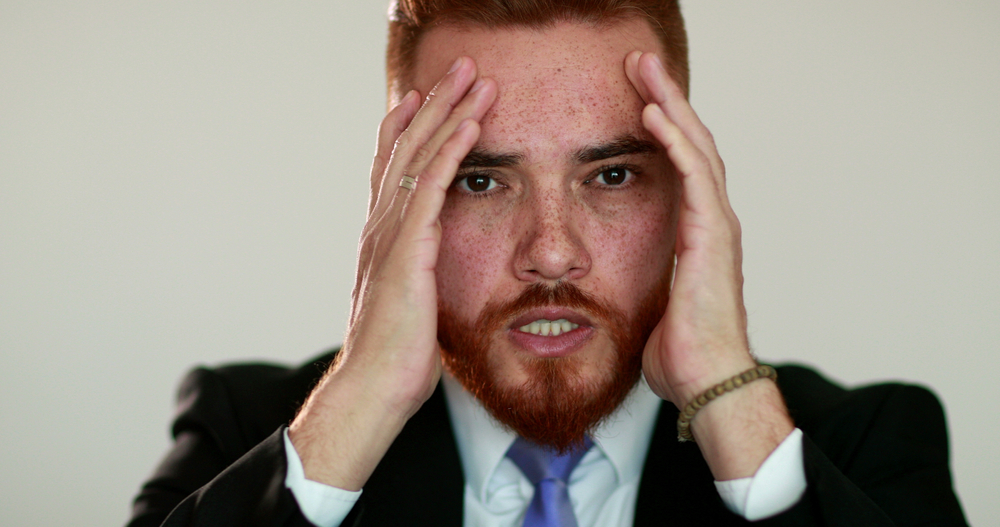
Central to Dr. JJ’s argument is an observation about what men tend not to do when they are struggling, and it comes down to something deceptively simple.
“Here’s the gap I see over and over with men: they won’t name loneliness at all,” Dr. JJ says. “They’re embarrassed by it. And if you can’t name the problem, you can’t solve it.”
Naming what you are actually feeling turns out to be the necessary entry point for everything that follows. Without it, there is no self-awareness, no way to communicate clearly with others, and no path toward change. Naming an emotion does not resolve it, but failing to name it guarantees it stays stuck beneath the surface, shaping behavior in ways the person carrying it may not even recognize.
For many men, the reluctance to name loneliness goes deeper than personal preference. It is a learned response to clear and repeated social feedback. When a man expresses vulnerability and is met with contempt, ridicule, or withdrawal, he absorbs the lesson fast. Men who have cried in front of a partner and had that moment turned into something uncomfortable or dismissive rarely try again. They learn that certain emotional expressions carry real costs, and they adjust their behavior accordingly.
One illustration of how quickly that lesson lands: a woman recounted a conversation with a male friend who cried in front of an ex-girlfriend. She responded that he was giving her “the ick.” That kind of reaction does not stay contained to one relationship. It teaches a lesson that travels with a person for years.
Shame as the Real Mechanism

What keeps men stuck is not only the conditioning to avoid emotion. It is the added weight of shame attached to the emotions they are not supposed to have.
“Society has told men that the only emotion they’re allowed to validate is anger. Everything else, especially loneliness, gets coded as weakness,” Dr. JJ explains. “And everybody finds ‘shame’ uncomfortable. So now you’ve got men who are being shamed for their loneliness and running away from it. We are so far from problem-solving at that point.”
Anger has always carried a kind of social permission for men. It reads as strength, as assertion, as certainty. Loneliness, grief, anxiety, and fear read as something else entirely, as exposure, as inadequacy, as evidence of failing at what men are supposed to be. When those emotions surface and are met with shame, running from them becomes the default.
That running takes predictable forms. Alcohol, excessive gaming, pornography, and hours of mindless scrolling all serve the same basic function: temporary relief from an interior discomfort that feels too threatening to face directly. Dr. JJ describes this as self-medication, and she points out that it solves nothing. It extends the distance between a man and his own emotional life, making genuine connections harder over time rather than easier.
Building Skills That Were Never Taught

Dr. JJ frames her prescription as an invitation rather than a judgment, and she is insistent on that distinction. Emotional intelligence is not a fixed trait that some people are born with, and others are condemned to live without. It is a learnable set of skills, and the starting point is simpler than most people expect: naming emotions as they actually happen, in real time, without immediately converting them into something more socially acceptable.
From there, the deeper work is self-regulation. Not suppression, which is what most men have already been practicing for years, but something closer to genuine curiosity about your own interior experience. What is actually happening when a particular feeling shows up? What triggered it? What does it pull you toward doing? What would you prefer to do instead, if you had a moment to actually choose?
When someone can map that internal territory with any accuracy, they gain some room between a feeling and a response. In that room, choices become possible, ones that align with what a person actually values rather than simply reacting to avoid discomfort. Moving from pure reaction to something more deliberate is where Dr. JJ says real changes in connection and day-to-day wellbeing tend to take place.
What Women Are Getting Wrong

Dr. JJ does not stop with men. Her analysis turns equally on the women in these dynamics, and she is no gentler there. A large part of what she identifies as the problem is enabling, and she is precise about what that word means in practice.
“Enabling is the ‘help that doesn’t help,’” says Dr. JJ. “More specifically, it’s doing for someone else what they are fully capable of doing for themselves. And when you (aka women) do that, you’re not being kind—you’re robbing them (aka men) of the courage points, the self-esteem points, the confidence that only comes from doing hard things yourself.”
Women who manage their partner’s emotional life, who anticipate his reactions, smooth over his discomfort, or absorb the emotional weight he has never learned to carry himself, are not helping him grow. They are removing the exact conditions under which growth could happen. Genuine confidence and self-esteem come from facing difficulty on your own, not from having someone else face it for you.
Her recommendation is direct: stop doing emotional labor for other people, and stop appointing yourself as the regulator of someone else’s emotional state. It drains the person doing it, it fails the person receiving it, and over time, it quietly corrodes both people’s sense of who they actually are in relation to each other.
A Politeness That Costs Everyone
A second pattern Dr. JJ identifies in women is quieter but equally costly: the performance of pleasantness. Women are frequently conditioned to be agreeable, to smooth over friction, and to soften their reactions in the interest of maintaining harmony. Culturally, that gets framed as consideration or grace. Dr. JJ reads it differently. When a woman pretends to be fine when she is not, agrees when she disagrees, or softens her feedback to the point where it carries no real information, she is not protecting the relationship. She is draining herself and depriving her partner of something he actually needs: honest, real contact with another person.
A relationship built on performance is not actually a relationship. It is a managed surface, and both people tend to feel vaguely disconnected within it, even when they cannot say why. Dropping the performance, in Dr. JJ’s framing, is an act of both self-respect and genuine care for the other person. Real connection requires a real person, and a person who constantly agrees has made herself much harder to reach.

What ties all of this together is a recognition that both sides of the equation were handed incomplete tools. Men were taught to suppress and provide. Women were taught to accommodate and perform. Neither set of instructions produces someone well-equipped for genuine, sustained mutual connection, which may explain why so many people across genders report feeling fundamentally alone even within relationships that look functional from the outside.
Dr. JJ’s larger point is that waiting for the other side to change first is the wrong strategy. Each person’s emotional skill set is their own responsibility, and developing it is less about dramatic overhauls than about small and repeated choices: naming what you feel, getting curious about it, choosing a response rather than reacting blindly, and telling the truth instead of performing the more comfortable version of it.
Connection starts with the capacity to listen, including to yourself. It is not a fix for every form of loneliness or a cure for every relationship that has run into trouble, but it is the beginning of something that might actually go somewhere.
Dr JJ Kelly psychologist, emotional illiteracy, emotional intelligence men, emotional intelligence relationships, emotional labor women, emotional skills gap, enabling in relationships, gender conditioning, loneliness and self medication, loneliness and shame, male emotional suppression, male loneliness causes, male loneliness epidemic, male mental health 2026, men and connection, men and emotional vulnerability, men and vulnerability, men expressing emotions, men mental health, psychology of loneliness, punk rock psychologist, relationship dynamics, self regulation emotions, women emotional labor