
Your cart is currently empty!
First Look at the Obama Center That Cost 850 Million to Build
For more than a decade, the Obama Presidential Center existed mostly as architectural renderings, fundraising campaigns, legal battles, and heated public debate. Now, the massive project is finally opening its doors.
Contents
show
On June 19, visitors will get their first chance to explore the $850 million Obama Presidential Center on Chicago’s South Side. Spanning 19.3 acres inside historic Jackson Park, the campus is unlike any presidential library that came before it. Part museum, part community center, part public gathering space, the development is being hailed by supporters as a transformative investment in one of Chicago’s most historically significant neighborhoods.
Others see it differently. Critics have questioned everything from its soaring cost and controversial location to what it represents in an era when presidential libraries are becoming increasingly focused on legacy-building rather than historical preservation.
Whatever side of the debate people fall on, one thing is clear: the Obama Presidential Center is set to become one of the most talked-about political and cultural landmarks in America.
A Presidential Center Unlike Any Before It
At first glance, the centerpiece of the campus is impossible to miss.
Rising 225 feet above Jackson Park is an imposing granite-clad museum tower whose unconventional shape has inspired countless interpretations. Some see four hands reaching upward together. Others see a monolith. Critics have jokingly referred to it as the “Obamalisk,” while some online commentators have compared it to a fortress or even the Death Star from Star Wars.
The building’s architects, Tod Williams and Billie Tsien, insist the design was never intended to resemble power or dominance. Instead, they say it was inspired by the idea of collective action and community participation.
“I don’t care about the names,” Williams said while discussing the various nicknames attached to the structure. “I think we only care about what it is and what it does and what it will be in the future.”
Tsien described the project as something intended to endure for generations.
“We think of it as a 500-year building, so every decision that was made was really about making something that felt lasting and timeless,” she said.
The tower is only one part of the broader development. The campus includes a museum, a branch of the Chicago Public Library, educational spaces, athletic facilities, public gardens, playgrounds, recording studios, and gathering areas designed for community use.
That broader vision is what separates the Obama Presidential Center from traditional presidential libraries.
Unlike previous presidential libraries that focused primarily on preserving archives and serving researchers, the Obama Center was conceived as an active civic campus.
Why the Obama Center Looks Different From Previous Presidential Libraries
One of the most significant departures from tradition is something visitors will never actually see.
President Obama’s presidential records are not housed inside the center.
Instead, the records have been digitized and are managed separately through the National Archives. The Obama Foundation argues that digital access makes the materials more available to the public while allowing the center itself to focus on civic engagement, leadership development, and community programming.
The shift represents a major change in how presidential libraries operate.
For decades, presidential libraries primarily served as repositories for documents, artifacts, and historical research. Visitors would come to learn about a presidency through records preserved by the federal government.
The Obama Center takes a different approach. It places less emphasis on archival storage and more emphasis on encouraging participation, activism, education, and public service.
Inside the museum, visitors are guided through American history before reaching the story of Barack and Michelle Obama themselves.
The experience begins with foundational moments such as the Declaration of Independence, the abolition of slavery, and the struggle for civil rights. Only after moving through those chapters do visitors encounter the story of the Obamas and their rise to national prominence.
According to foundation leaders, that structure is intentional.
“Our overarching theme that we’re trying to achieve, both for our museum visitors and for those who partake in the parkland, for those who partake in our programs, is inspiring, empowering, connecting people to make change in their own communities,” said Tina Tchen, executive vice president of programs for the Obama Foundation.
The museum’s central message is one that Barack Obama emphasized repeatedly during his presidency: democracy functions best when ordinary citizens participate.
Inside the Museum That Tells the Obama Story
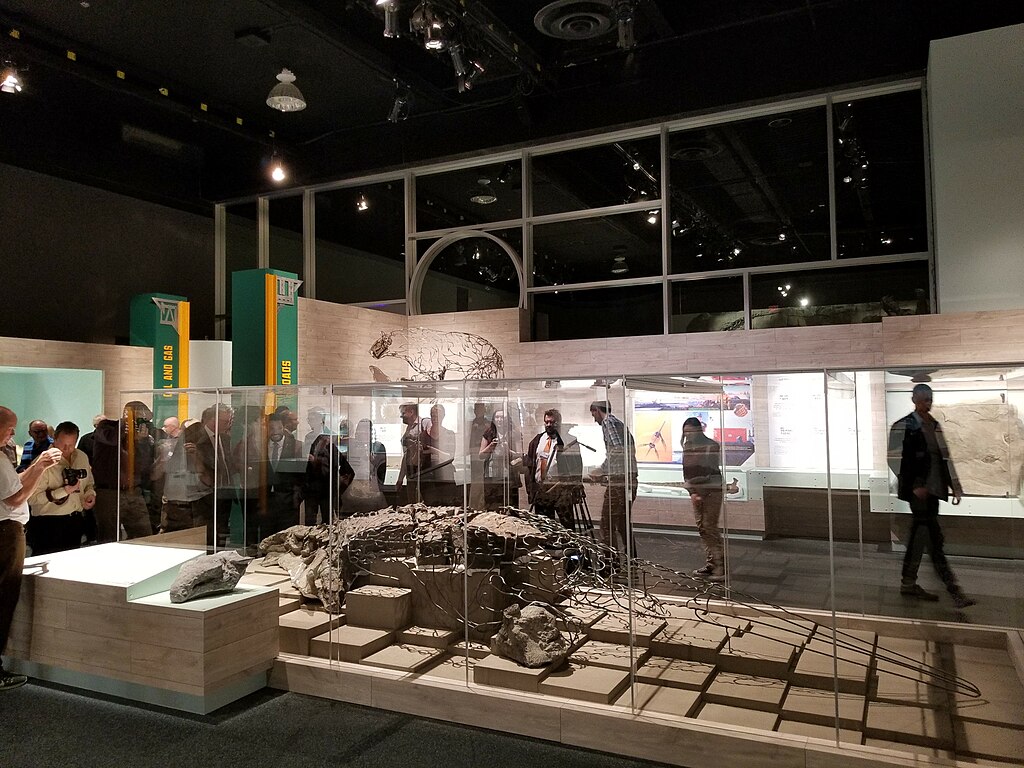
The museum spans multiple floors and traces both Barack and Michelle Obama’s journeys from their childhoods to the White House.
Visitors encounter campaign memorabilia from the 2008 election, personal artifacts, family photographs, videos, and interactive exhibits exploring major moments from the Obama administration.
One section recreates the grassroots energy that fueled Obama’s historic first presidential campaign.
Another focuses on key legislative achievements, including the Affordable Care Act and efforts to address climate change.
Michelle Obama’s influence receives significant attention as well.
Displays highlight initiatives such as Let’s Move, Joining Forces, and Let Girls Learn. The museum also showcases several of her most recognizable fashion moments, including outfits worn during major public appearances and presidential events.
Among the most popular attractions is expected to be a full-scale replica of the Oval Office.
Visitors can sit behind the Resolute Desk and experience a detailed recreation of the room where Obama spent eight years making decisions that shaped both domestic and international policy.
The exhibit follows a long-standing tradition among presidential libraries, but it arrives at a moment when public fascination with the presidency remains especially intense.
The emotional weight of the experience appears to be intentional.
As visitors move upward through the museum, exhibits increasingly focus on civic engagement, activism, and the future of democracy.
The journey ultimately culminates in the building’s Sky Room.
The Sky Room and the View From the Top
Located on the eighth floor, the Sky Room serves as the museum’s final destination.
Floor-to-ceiling windows provide sweeping views of Chicago’s South Side, downtown skyline, and Lake Michigan.
Visitors who reach the top encounter an enormous artwork by British artist Idris Khan that incorporates words from Obama’s 2015 speech commemorating the Selma marches.
The installation reinforces a theme that appears throughout the center: progress is not something delivered by political leaders alone. It requires collective participation.
Obama frequently returned to that message during his presidency, and it remains deeply embedded throughout the museum experience.
Architects and curators have described the ascent through the building as a symbolic journey. The exhibits begin with history, move through the Obama years, and conclude with an invitation for visitors to think about their own role in shaping society.
The result is less a traditional museum and more a civic experience designed to leave visitors with a sense of responsibility.
Whether that mission resonates with guests will likely become one of the defining questions surrounding the center in the years ahead.
A Price Tag That Sparked National Attention
Long before the first visitors arrived, the project’s cost became a story of its own.
At approximately $850 million, the Obama Presidential Center is believed to be the most expensive presidential library project ever built.
The figure grew substantially throughout construction, attracting criticism from opponents who argued the money could have been used elsewhere.
Supporters counter that comparisons to older presidential libraries fail to account for the center’s unique scale and purpose.
Unlike many previous presidential libraries, the Obama Center includes extensive public amenities, major landscaping efforts, athletic facilities, educational programming spaces, public art installations, and infrastructure improvements extending beyond the museum itself.
Still, the cost remains difficult to ignore.
Presidential libraries have historically served as monuments to administrations, but few have approached the scale of the Obama Center.
For critics, the project symbolizes the increasingly ambitious nature of presidential legacy-building.
For supporters, it reflects the importance of creating a lasting institution capable of serving future generations.
The Jackson Park Controversy
The most persistent controversy surrounding the project involved where it would be built.
Jackson Park is one of Chicago’s most historic public spaces. Designed in the nineteenth century by Frederick Law Olmsted and Calvert Vaux, it holds deep cultural and environmental significance.
When plans emerged to build the Obama Center there, opposition developed almost immediately.
Community groups argued that public parkland should not be transferred to a private foundation.
Environmental organizations challenged the project in court, claiming the development would alter a treasured public space and reduce green areas available to residents.
Several lawsuits followed.
Ultimately, those legal challenges failed, allowing construction to move forward.
The Obama Foundation maintained that the project would ultimately improve the park through new landscaping, recreational facilities, walking paths, bike infrastructure, and environmental restoration efforts.
Some of those changes are already visible.
A former roadway that cut through portions of the park has been removed, creating additional pedestrian-friendly spaces and reconnecting sections of the landscape that had been separated for decades.
Supporters point to these improvements as evidence that the center delivers benefits extending beyond the museum itself.
Critics remain unconvinced.
For them, the debate was never solely about landscaping. It was about whether public land should be used to host a privately operated presidential institution.
Gentrification Concerns Have Not Disappeared
The location debate also raised concerns about housing affordability.
Many local residents worried that the arrival of a major tourist destination would accelerate gentrification across surrounding neighborhoods.
Property values often rise near large-scale developments, creating fears that long-time residents could eventually be priced out of communities they have called home for generations.
Activist groups pushed for community benefit agreements that would have provided stronger protections against displacement.
The Obama Foundation declined to adopt some of the specific measures requested by organizers.
Foundation officials have repeatedly emphasized community engagement efforts and investments in local programming.
Valerie Jarrett, chief executive of the Obama Foundation, has highlighted years of meetings with neighborhood residents during the planning process.
“We’ve had thousands of community meetings to ensure that this campus was going to blend into the urban fabric, that the people who live proximate to this center would feel the sense of ownership,” she said.
Whether those efforts will ultimately address concerns about affordability remains an open question.
The true impact of the center on surrounding neighborhoods may not become fully apparent for years.
The Political Meaning of the Obama Center
The center opens during a dramatically different political era from the one that produced Barack Obama’s election in 2008.
When Obama entered the White House, many Americans viewed his presidency as a symbol of historic progress and political possibility.
The years since have been marked by intense polarization, rising distrust in institutions, and fierce debates about democracy itself.
That context gives the center added significance.
Its exhibits repeatedly return to themes of participation, civic responsibility, and collective action.
The message is clear: democracy requires engagement from ordinary citizens, not just elected officials.
Visitors may agree or disagree with Obama’s political legacy.
They may admire the center or criticize it.
But few will leave without recognizing the broader statement it is attempting to make.
The Obama Presidential Center is not simply preserving the story of a presidency. It is making an argument about what citizenship should look like in modern America.
That ambition explains why the project has generated so much attention long before its official opening.
For supporters, the center represents an investment in civic life and future generations. For critics, it raises difficult questions about power, legacy, and the growing role of privately managed presidential institutions.
Starting June 19, those debates will move beyond architectural renderings and political arguments. They will unfold inside a campus that now stands permanently on Chicago’s South Side, where visitors can decide for themselves what the Obama Center ultimately represents.