
Your cart is currently empty!
Twin Born With One Lung Beats The Odds After Six Months In Hospital
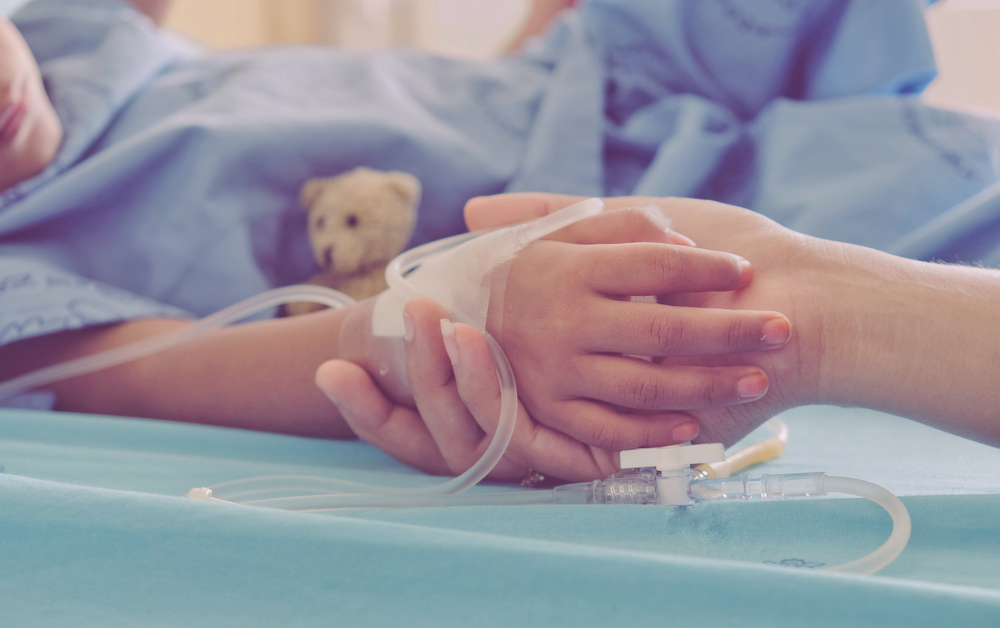
For months, a hospital became the only home a little girl had ever known.
Contents
show
Machines surrounded her crib. Doctors carefully monitored every breath she took. Surgeons prepared for procedures that carried enormous risks. At one point, her chances of surviving were so low that even experienced specialists worried about what might happen next.
Yet despite every obstacle placed in front of her, baby Charlotte kept fighting.
Now, after spending 185 days in the hospital and overcoming medical challenges that few infants ever face, the California baby who was born with just one lung has finally gone home with her family and reunited with her twin sister.
Her journey has captured attention not simply because of the odds she overcame, but because of the extraordinary determination she showed from the very beginning.
A Surprise Pregnancy Turned Into An Even Bigger Surprise
Like many parents, Karla and Joshua Valliere were excited when they learned they were expecting a baby.
Then came the ultrasound appointment that changed everything.
The couple arrived expecting to hear news about one child. Instead, doctors delivered a surprise that would completely reshape their future.
There were two babies.
Joshua later recalled jokingly asking whether there was any chance the doctors could be mistaken. The answer was immediate. They were certain.
The news brought excitement, nervousness, and all the questions that come with preparing for twins.
As the pregnancy progressed, however, doctors began identifying concerns about one of the babies.
The Vallieres would eventually welcome identical twin girls, Olivia and Charlotte, into the world in December 2021. While Olivia appeared healthy, Charlotte’s medical journey was only beginning.

Doctors discovered she had been born with a single lung.
For many parents, hearing those words would be terrifying.
Yet the early signs seemed surprisingly positive.
Charlotte’s remaining lung had adapted remarkably well during development. It had grown larger than expected and appeared capable of handling the work normally shared by two lungs.
After extensive testing, doctors found that her oxygen levels were excellent.
Her breathing appeared normal.
Her parents finally felt they could relax.
After a short stay in the hospital, they were allowed to bring both daughters home.
For six precious weeks, life felt almost perfect.
The twins were together.
The family settled into a routine.
Everything seemed to be moving in the right direction.
Then a sudden medical crisis changed everything.
A Frightening Turn No One Saw Coming

The first signs appeared without warning.
Charlotte suddenly began experiencing breathing difficulties.
For parents of a newborn, any breathing problem is alarming. For the parents of a baby with one lung, it was terrifying.
The Vallieres quickly brought their daughter to Rady Children’s Hospital in San Diego.
At first, they did not know exactly what was wrong.
They only knew their daughter needed help.
Doctors immediately began searching for answers.
What they discovered revealed that Charlotte’s condition was far more complicated than anyone had realized.
Although the single lung had been functioning well, hidden abnormalities inside her airway were creating a dangerous situation.
Specialists diagnosed Charlotte with tracheal stenosis, a condition involving a severe narrowing of the windpipe.
They also discovered complete tracheal rings, a rare birth defect affecting the cartilage that forms the structure of the airway.
As if those challenges were not enough, a blood vessel had wrapped around her trachea, placing additional pressure on an already restricted airway.
Each condition was serious on its own.
Together, they created an exceptionally rare and life-threatening combination.
Dr. Matthew Brigger, chief of pediatric otolaryngology at Rady Children’s Hospital, later explained just how unusual Charlotte’s case was.
“This set of anomalies, with the single lung, with the way the aorta was wrapped around the trachea itself and the trachea being this narrow, is actually fairly rare,” he said.
Doctors quickly realized that traditional treatments would not be enough.
Charlotte needed something much more significant.
She needed time.
And she needed surgery.
The Delicate Waiting Game

One of the most difficult parts of Charlotte’s journey came before the operation itself.
Doctors knew surgery would eventually be necessary.
The problem was that Charlotte was still extremely small.
Because she had arrived a few weeks early, her body needed additional time to grow stronger before surgeons could attempt such a complex procedure.
Unfortunately, waiting carried risks of its own.
Her airway was critically narrow.
Keeping her on a breathing tube for extended periods could potentially damage the airway further and make future repairs more difficult.
Doctors found themselves balancing two competing dangers.
Operate too soon, and her tiny body might not survive.
Wait too long, and her condition could worsen.
To bridge that gap, Charlotte was placed on extracorporeal membrane oxygenation, commonly known as ECMO.
The machine temporarily performed the work of the heart and lungs, giving doctors valuable time while reducing stress on her fragile respiratory system.
For her parents, every day became an emotional roller coaster.
There were encouraging moments when Charlotte appeared stable.
There were frightening moments when complications emerged.
And throughout it all, there was uncertainty.
No one could guarantee what the outcome would be.
Doctors were preparing for one of the most challenging surgeries of Charlotte’s young life.
The Procedure That Carried Only A Small Chance Of Success

Eventually, the moment arrived.
Charlotte had grown enough for doctors to move forward.
The operation would involve reconstructing and widening her airway while addressing the complex anatomical abnormalities contributing to her breathing problems.
It was an enormous undertaking.
Dr. Brigger later revealed the reality he faced while preparing for the procedure.
“Initially I told the parents, ‘Well, if we can get through surgery, I’m gonna give her 50-50,’” he explained.
But privately, he believed the chances were even lower.
“I’m thinking more 20% of getting through surgery at the time, just knowing how much that we had to go through.”
Those numbers would be devastating for any parent to hear.
Yet despite the odds, there was still hope.
Charlotte had already shown remarkable resilience.
Again and again, she had survived situations that might have overwhelmed another child.
The medical team moved forward.
Then something incredible happened.
The surgery worked.
“Fortunately, Charlotte’s a fighter and we got to do the surgery,” Brigger said. “She sailed through surgery.”
For a baby who had been given such slim chances, it was a remarkable victory.
But the journey was far from over.
Recovery Was Not A Straight Line

Movies often portray successful surgeries as the end of a medical story.
Real life is rarely that simple.
Although Charlotte survived the operation, recovery brought its own challenges.
There were additional procedures.
There were complications.
There were setbacks that tested both the family and the medical team.
Days became weeks.
Weeks became months.
Meanwhile, Olivia continued growing at home.
The twins who had entered the world together were spending much of their first year apart.
For Karla and Joshua, balancing life between home and hospital became a constant struggle.
Every milestone carried mixed emotions.
They celebrated progress while remaining aware of how fragile the situation still was.
Yet through every difficult moment, they noticed something remarkable about their daughter.
She never seemed to quit.
Karla later explained that Charlotte herself became the family’s greatest source of strength.
“The thing that I believe got us through was her,” she said. “She never gave any sign of weakness.”
Parents often describe children as fighters.
In Charlotte’s case, doctors and nurses who witnessed her journey seemed to agree.
Again and again, she continued moving forward.
The Day Everyone Had Been Waiting For

After 185 days in the hospital, the moment finally arrived.
Charlotte was ready to leave.
On August 1, surrounded by her family and the medical professionals who had cared for her for months, she was officially discharged.
For the Vallieres, the occasion brought a flood of emotions.
There was excitement.
There was relief.
There was gratitude.
And there was the simple joy of knowing their family could finally be together under one roof.
Karla described the experience as overwhelming.
“It was just a lot of emotions and it was just a roller coaster. But now we have them together, so it’s worth it.”
Perhaps the most meaningful part of the homecoming involved the person who had shared Charlotte’s story from the very beginning.
Her twin sister.
For much of their first year, Olivia and Charlotte had been separated by circumstances beyond anyone’s control.
Now they could finally begin experiencing life side by side.
The image of the twins reunited became a powerful symbol of everything the family had endured.
Life At Home Comes With New Challenges

Leaving the hospital did not mean Charlotte’s medical needs disappeared.
Her family continues providing extensive care at home.
According to her parents, Charlotte requires medications around the clock, often every four to six hours.
Managing those treatments takes significant time, energy, and resources.
The family has worked to raise funds to help cover ongoing expenses associated with her care.
Like many families navigating complex medical conditions, they have faced financial pressures alongside emotional ones.
Medical crises rarely end when patients leave the hospital.
Many families continue adjusting for years afterward.
Yet the challenges of home care represent a very different kind of struggle.
They are the challenges of moving forward.
The challenges of building a future.
The challenges of giving a child every opportunity possible.
For Charlotte’s parents, those are challenges they are grateful to have.
Why One Lung May Not Hold Her Back
One of the most encouraging aspects of Charlotte’s story involves her long-term outlook.
Despite everything she has been through, doctors believe she can live a fulfilling life.
Many people assume living with one lung automatically means severe limitations.
In reality, the human body has a remarkable ability to adapt.
When one lung is absent or removed, the remaining lung often expands and becomes more efficient over time.
That adaptation was visible in Charlotte from the beginning.
Even as a newborn, her single lung had already grown larger to compensate.
Today, doctors do not expect her to need a lung transplant.
Her prognosis remains encouraging.
“Prognosis is very good,” Dr. Brigger said.
He acknowledged there may be some limitations but emphasized the positive outlook.
“She may not be running marathons in the future, but she is Charlotte, so it’s hard to say. She’s proved people wrong all along. I expect her to be able to live a good life.”
It was a fitting observation.
After all, Charlotte had already spent her entire life proving expectations wrong.

Another Charlotte Fighting Her Own Battle
Remarkably, Charlotte Valliere is not the only medically fragile twin named Charlotte whose story has inspired people.
In Colorado, another twin girl named Charlotte spent nearly two years in the hospital after being born at just 27 weeks.
Unlike her twin sister Olivia, who developed normally, Charlotte faced severe complications, including underdeveloped lungs, brain bleeds, and later a diagnosis of cerebral palsy.
Her parents, Shawna Maas and Kevin Konkol, spent nearly every day by her side.
Through countless surgeries and setbacks, they adopted a simple family rule.
“If Charlie fights, we fight,” Konkol said.
After nearly 20 months in Children’s Hospital Colorado, that Charlotte also moved closer to finally going home.
The two stories are different.
Yet they share a common theme.
Both involve children facing extraordinary challenges before they ever had the chance to take their first steps.
Both involve parents refusing to give up.
And both demonstrate how much can happen when determination meets expert medical care.
A Little Girl Who Changed Every Prediction
Medical statistics are important.
Doctors rely on them every day to make decisions and guide families through difficult situations.
But every so often, a child comes along who reminds everyone that statistics are not destiny.
Charlotte entered the world with one lung.
She developed a rare combination of airway abnormalities.
She required life support.
She faced a surgery many feared she would not survive.
Yet after spending more than six months in the hospital, she left through the front doors in her parents’ arms.
The doctors who cared for her see a bright future ahead.
Her family sees a little girl who never stopped fighting.
And somewhere nearby, a twin sister finally has her best friend home where she belongs.