
Your cart is currently empty!
UN Warns AI Growth Could Put Unprecedented Pressure on Earths Resources

Artificial intelligence has become one of the fastest-growing technologies in human history. Millions of people now use AI every day to write emails, generate images, search for information, solve problems, and automate tasks that once required hours of work.
Contents
show
But while the world focuses on what AI can do, a new United Nations report is drawing attention to a very different question: What is AI doing to the planet?
According to researchers from the United Nations University Institute for Water, Environment and Health, the rapid expansion of artificial intelligence is creating a growing environmental burden that extends far beyond carbon emissions. The technology’s enormous demand for electricity, water, land, minerals, and infrastructure could place increasing pressure on already strained natural resources if growth continues at its current pace.
The warning arrives at a time when the global AI market is expected to expand from $189 billion in 2023 to nearly $4.8 trillion by 2033, transforming industries and becoming deeply embedded in everyday life.
AI’s Environmental Footprint Is Much Bigger Than Most People Realize
For many users, AI feels almost invisible.
People type a prompt into a chatbot, generate an image, or receive an instant answer without thinking about the infrastructure operating behind the scenes. Yet every interaction relies on massive data centres packed with powerful servers running around the clock.
These facilities require huge amounts of electricity to process information and maintain operations. They also need cooling systems to prevent equipment from overheating, which often requires vast quantities of water.
According to the UN report, data centres could consume approximately 945 terawatt-hours of electricity annually by 2030. To put that figure into perspective, it is nearly three times the combined annual electricity consumption of Pakistan, Bangladesh, and Nigeria, countries that collectively have more than 650 million residents.
If data centres were considered a country today, they would already rank among the world’s largest electricity consumers.
Researchers say this trend is accelerating as AI becomes integrated into more products, services, and industries.
The concern is not simply that AI uses energy. The concern is the scale at which demand is growing.
Water Consumption Could Reach Astonishing Levels

Electricity is only one part of the environmental equation.
The report highlights another resource that often receives far less attention: water.
Modern data centres depend heavily on water-based cooling systems. Large amounts of water are also indirectly consumed through electricity generation, particularly in regions where power plants require cooling during operation.
By the end of the decade, researchers estimate AI-related infrastructure could consume enough water each year to meet the basic domestic needs of 1.3 billion people living across Sub-Saharan Africa.
The projected figure reaches more than 9 trillion litres annually.
At a time when many regions are already experiencing water shortages, prolonged droughts, and increasing competition for freshwater resources, those numbers have raised concerns among environmental experts.
Kaveh Madani, director of the United Nations University Institute for Water, Environment and Health, told AFP that current estimates may represent only a fraction of the true environmental impact.
“What we are showing here is probably just the tip of the iceberg,” he said.
The report argues that policymakers often focus heavily on carbon emissions while overlooking water use, despite the growing importance of freshwater security around the world.
In several locations, data centres have already been criticized for drawing heavily from local water supplies during periods of drought.
As AI infrastructure expands, similar conflicts could become more common.
Why Everyday AI Use Matters More Than Training Models

Much of the public conversation around artificial intelligence has focused on the enormous computing power required to train advanced AI models.
Training systems such as large language models certainly require substantial resources. However, researchers say the biggest environmental burden may actually come after the models are built.
According to the report, roughly 80% to 90% of AI’s total energy demand comes from day-to-day usage rather than training.
That finding shifts attention toward billions of routine interactions occurring every day.
One widely used AI service is estimated to process around 2.5 billion prompts daily. Even seemingly simple tasks become significant when multiplied across a global user base.
The energy required also varies dramatically depending on what users ask AI to do.
Text-based requests generally consume relatively modest amounts of computing power. Image generation requires far more resources. Video generation is even more demanding.
Researchers found that creating a single AI-generated image can require more than 1,000 times the energy needed for basic text classification tasks.
Short AI-generated videos can consume electricity equivalent to generating hundreds of images.
These differences matter because many of the fastest-growing areas of AI involve increasingly complex multimedia content.
As companies compete to create more advanced image and video tools, resource demands could continue rising.
Efficiency Improvements May Not Solve the Problem

Technology companies frequently point to efficiency gains as evidence that environmental concerns will eventually be reduced.
New chips consume less energy. Software becomes more optimized. Computing systems improve over time.
While these developments are important, the report warns they may not be enough.
Researchers highlight what economists call the rebound effect.
When a technology becomes cheaper, faster, and more efficient, people often use more of it. Increased usage can outweigh the benefits of efficiency improvements.
The internet itself offers a useful example.
Computers today are dramatically more efficient than those of previous decades. Yet total global electricity consumption associated with digital technology has continued to rise because demand has expanded so rapidly.
AI may follow a similar path.
As artificial intelligence becomes easier to access and more affordable, businesses and consumers are likely to use it more frequently, increasing overall resource consumption despite improvements in efficiency.
The report suggests that technological progress alone is unlikely to keep environmental impacts within sustainable limits.
Instead, researchers argue that broader planning and governance measures will be necessary.
The Growing Land and Infrastructure Challenge
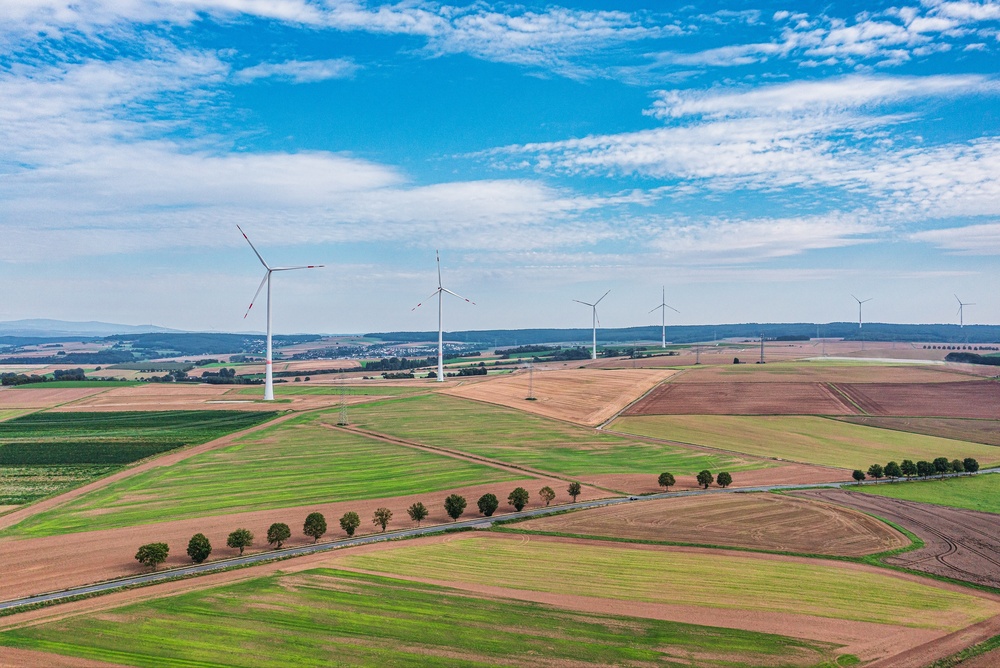
Beyond energy and water, AI’s physical footprint is also expanding.
Data centres occupy substantial amounts of land. They require power infrastructure, cooling facilities, transportation networks, and extensive supply chains.
According to the UN study, AI-related land use could exceed 14,500 square kilometres by 2030.
That area is roughly twice the size of Jakarta’s metropolitan region.
Building and maintaining these facilities requires large quantities of construction materials, specialized equipment, and industrial infrastructure.
The report notes that environmental assessments often focus on operational emissions while underestimating the broader impacts associated with infrastructure development.
As demand for AI services grows, more regions are competing to attract investment from major technology companies eager to build new data centres.
While these projects can create jobs and economic opportunities, they also introduce long-term environmental pressures that local communities may ultimately have to manage.
The challenge becomes even more complicated when infrastructure is developed in areas already facing resource constraints.
Millions of Tonnes of Electronic Waste Are Coming

Another issue receiving increased attention is electronic waste.
Artificial intelligence depends on highly specialized hardware including servers, processors, graphics chips, networking equipment, and storage systems.
These components have limited lifespans and must eventually be replaced.
Researchers estimate AI infrastructure could generate up to 2.5 million tonnes of electronic waste annually by 2030.
Electronic waste presents serious environmental challenges because many devices contain hazardous materials that can contaminate soil and water if not handled properly.
The problem is especially severe in lower-income countries where recycling systems and waste management infrastructure may be limited.
At the same time, demand for critical minerals used in AI hardware continues to increase.
Mining operations required to obtain materials such as lithium, cobalt, nickel, and rare earth elements can contribute to habitat destruction, water pollution, and social conflicts in extraction regions.
The report argues that environmental costs extend far beyond the walls of data centres themselves.
The entire lifecycle of AI hardware carries consequences that are often hidden from public view.
A New Digital Divide Is Emerging

The environmental burden associated with AI is not distributed equally.
Researchers point out that more than 90% of AI-specialized computing capacity is concentrated in just two countries: the United States and China.
Meanwhile, over 150 countries possess little or no significant domestic AI infrastructure.
This imbalance creates difficult questions about who benefits from AI growth and who bears the environmental costs.
Some countries may experience increased mining activity, waste disposal challenges, or resource extraction pressures while receiving relatively few economic benefits from the AI industry itself.
The report describes this as a growing issue of environmental justice.
As nations race to secure advantages in artificial intelligence, disparities in access, influence, and environmental exposure may become more pronounced.
The technology has the potential to generate enormous economic value, but researchers argue that its costs and benefits are currently distributed unevenly across the globe.
The UN’s Call for Responsible AI Development

Despite the alarming findings, the report is not calling for a halt to artificial intelligence development.
Researchers repeatedly emphasize that AI offers significant opportunities in healthcare, education, scientific discovery, climate resilience, and economic growth.
Tshilidzi Marwala, United Nations Under-Secretary-General and co-author of the report, stressed that the technology’s promise remains substantial.
“The promise of AI is immense, particularly in areas such as healthcare, education, scientific discovery and climate resilience,” Marwala said.
“But innovation without stewardship risks deepening inequality and intensifying pressure on already stressed planetary systems.”
Instead of slowing innovation, the UN is urging governments, businesses, investors, and users to incorporate environmental considerations into AI decision-making.
The report calls for standardized environmental reporting from AI companies so the public can better understand the resource demands associated with different technologies.
Researchers also recommend integrating AI infrastructure planning into broader energy, water, and land-use strategies.
Companies are encouraged to design systems that minimize resource consumption, while users are urged to consider whether simpler tools can accomplish the same task with lower environmental impact.
One estimate cited in the report suggests an AI-enhanced internet search may consume roughly ten times more energy than a conventional search.
Small choices made by millions of users can have meaningful cumulative effects.
The Next Phase of the AI Revolution May Depend on Sustainability
Artificial intelligence is often described as the defining technology of the twenty-first century.
Its capabilities continue to expand at extraordinary speed, reshaping industries and influencing how people work, learn, communicate, and create.
Yet the UN report suggests that another conversation must occur alongside discussions about innovation and economic growth.
The environmental resources supporting AI are not unlimited.
Electricity grids, freshwater supplies, land availability, mineral extraction, and waste management systems all face increasing pressure as demand rises. Ignoring those realities could create challenges that become far more difficult to address later.
History is filled with technologies that delivered enormous benefits while producing consequences that only became apparent after widespread adoption.
Researchers believe AI still has time to avoid that pattern. Achieving that outcome will depend on decisions being made now, while the industry is still in a period of explosive growth.
The future of artificial intelligence may not be determined solely by how powerful the technology becomes. It may also depend on whether the world can develop it without exhausting the resources that make modern life possible.