
Your cart is currently empty!
Photographer Finds Strangers He Captured 40 Years Ago And Recreates Their Photos
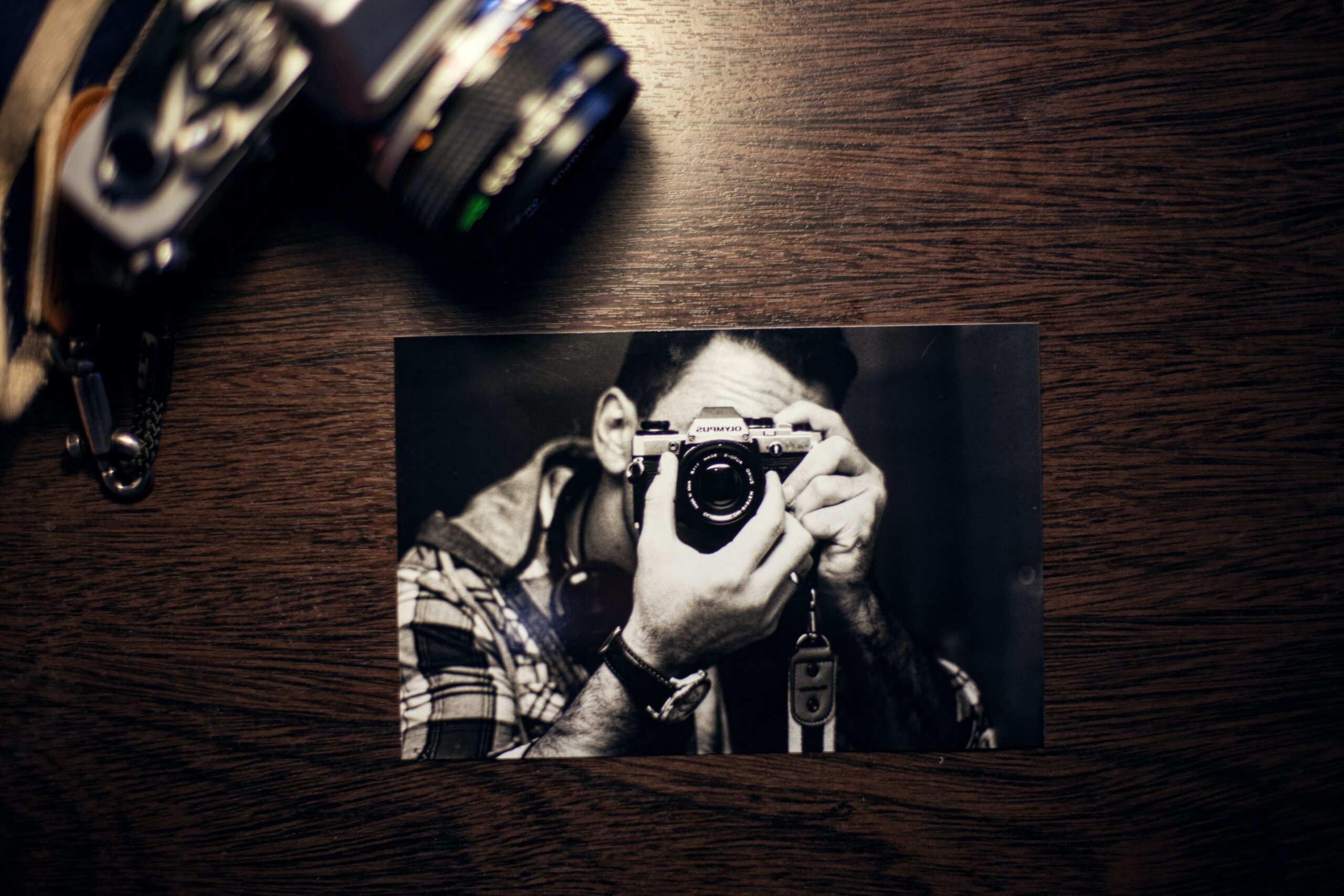
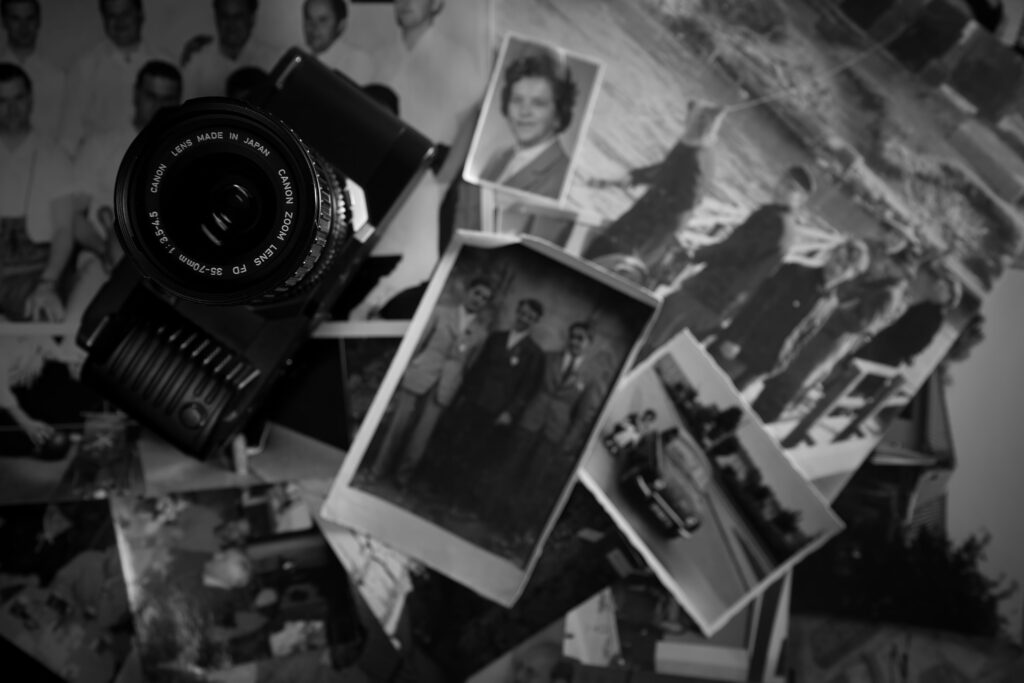
A dusty box of old photographs is usually where memories go to rest.
Contents
show
For British photographer Chris Porsz, it became the start of a remarkable mission that would reconnect long-lost friends, revive forgotten moments, and reveal just how much life can change over the course of a few decades.
What began as a collection of candid street photographs taken in the 1970s, 1980s, and 1990s eventually turned into one of the most heartwarming photography projects in recent memory. Armed with little more than old pictures and determination, Porsz spent years tracking down complete strangers he had photographed decades earlier. Then he asked them to stand in the same place and recreate the moment.
The results are funny, emotional, surprising, and sometimes bittersweet. Together, they offer a rare glimpse into the passage of time and the stories that unfold between two photographs separated by 30 or 40 years.
A Student Who Preferred Streets To Lecture Halls
Long before he became known for his reunion photographs, Chris Porsz was simply a university student who struggled to connect with academic life.
While studying sociology in the 1970s, he found himself increasingly uninterested in lectures focused on statistics and economics. Instead, he discovered something far more fascinating outside the classroom.
Armed with a camera, he wandered through the streets of Peterborough, England, photographing the people he encountered.
Some were eccentric characters who immediately caught his eye. Others were ordinary people going about their day. What united them was that they represented real life as it unfolded naturally.
Porsz became fascinated by the stories hidden behind everyday moments.
Sometimes he would exchange only a few words before taking a picture. Other times, he would spend hours talking to the people he met.
The camera became his way of understanding society.
Years later, he reflected that photographing strangers taught him more about people than many of his university courses ever had.
Over time, he built a substantial archive of candid street photography that captured a unique era of British life. Teenagers hanging around shopping centers, couples kissing goodbye at train stations, children eating ice cream in front gardens, punks showing off elaborate hairstyles, market workers, musicians, and pensioners all became part of his growing collection.
At the time, he had no idea these images would one day become something much bigger.
The Photos That Sat Unseen For 25 Years

Like many creative passions, photography eventually took a back seat to the demands of everyday life.
Porsz became a paramedic and dedicated decades to serving his local community. Meanwhile, thousands of negatives and photographs remained stored away.
For more than 25 years, many of the images gathered dust.
Then something unexpected happened.
While revisiting his archive, Porsz began looking through the old photographs and realized they offered a fascinating snapshot of a vanished world. Fashion trends had changed. Buildings had disappeared. Entire neighborhoods looked different.
Most importantly, the people in those photographs had continued living their lives.
Curious about what had happened to them, he shared some of the old images through local newspapers.
The response was immediate.
People started recognizing younger versions of themselves, family members, friends, and former classmates.
For Porsz, it was a turning point.
“There was this lightbulb moment,” he later explained when recalling the first messages he received from people who had spotted themselves in photographs taken decades earlier.
Suddenly, a simple collection of old images transformed into something much more personal.
The photographs were no longer just records of the past.
They became bridges connecting the past and present.
Tracking Down Complete Strangers Became An Obsession

One challenge stood in the way.
Porsz often had no idea who many of the people in his photographs actually were.
When he originally took the pictures, he had rarely collected names, addresses, or contact details. Decades later, finding these individuals seemed almost impossible.
But he decided to try.
The search soon became a detective mission spanning years.
Some people were located through newspaper appeals. Others were identified by friends and family members who recognized familiar faces.
A few reunions happened through sheer luck.
One of the most remarkable moments occurred while Porsz was working as a paramedic.
Responding to a call in the middle of the night, he discovered that the patient recognized him as the photographer who had taken his picture years earlier.
Another breakthrough came when a local shopkeeper recognized several faces from the old photographs.
As the project gained attention online, more people stepped forward.
The internet helped solve mysteries that might otherwise have remained unsolved forever.
Eventually, Porsz tracked down hundreds of people connected to his photographs.
Some still lived in Peterborough. Others had moved across Britain. A few had emigrated overseas.
Each successful reunion added another chapter to the growing project.
The Stories Hidden Between Two Photographs
What makes the reunion photographs so powerful is not simply the visual transformation.
It is the life story contained within the years separating the images.
Each recreated photograph reveals an entire lifetime compressed into a single frame.
One of the most famous examples features Tony Wilmot and Sally, a young couple photographed kissing goodbye at Peterborough railway station in 1980.
At the time, Tony was a teacher working in Essex while Sally worked for local government in Stafford.
Neither knew they had been photographed.
More than 30 years later, Porsz tracked them down.
The couple had gone on to marry, raise two children, and build successful careers as headteachers.
Their reunion photograph captures the same affection decades later.
Other stories took unexpected turns.
Punks Tina Tarr and her partner Dog became one of the project’s most memorable images. When the original photograph was taken in 1985, they were young, rebellious, and immersed in punk culture.
Years later, their lives had followed very different paths.
The couple were no longer together but remained connected through shared memories and their twin children.
Reflecting on the original image, Tina remembered it as a wonderful period of her life.
Dog offered a more humorous perspective.
“They were good times, I still had hair then,” he joked.
Elsewhere, childhood friends reunited after losing contact for decades.
Schoolgirls who had once been inseparable met again through the project. Groups of boys who had spent their lunch breaks racing to chip shops and arcades found themselves standing together once more as middle-aged adults.
Many admitted they had not seen one another for 30 years or more.
The photographs became catalysts for renewed friendships.
Time Changes People, But Not Always In The Ways We Expect
One of the most fascinating aspects of the project is how it challenges assumptions about aging.
At first glance, the reunion photographs seem to be about physical change.
Hair disappears. Wrinkles appear. Fashion evolves.
Yet the deeper message often points in the opposite direction.
Many participants appear remarkably similar to their younger selves.
The expressions remain familiar.
Certain mannerisms survive unchanged.
Even decades later, traces of youthful personalities continue shining through.
Friends still laugh at the same jokes.
Former troublemakers still carry a mischievous spark.
Couples still look at each other with recognizable affection.
In some photographs, the emotional continuity is more striking than the physical differences.
The images suggest that while life transforms people, it rarely erases who they fundamentally are.
That realization resonates with viewers because it reflects a universal experience.
Most people feel younger inside than the number attached to their age.
Looking at the reunion photographs often feels like seeing that phenomenon captured visually.
A Portrait Of Britain Across Generations
Beyond individual stories, the project also functions as an extraordinary social document.
Taken together, the photographs provide a unique record of everyday British life across several generations.
Unlike traditional historical records, these images focus on ordinary people rather than famous figures.
There are no celebrities or politicians.
Instead, viewers encounter:
- Schoolchildren playing in the street
- Market workers serving customers
- Young couples beginning relationships
- Musicians and performers entertaining crowds
- Friends gathering after school
- Workers finishing long shifts
- Pensioners enjoying ordinary moments
The collection preserves countless small details that might otherwise be forgotten.
Fashion trends, hairstyles, shopfronts, public spaces, and social habits all appear throughout the photographs.
In many cases, the physical locations changed dramatically between the original image and the reunion.
Buildings disappeared.
Businesses closed.
Entire streets evolved.
Yet the people remained the emotional center of every photograph.
That focus on ordinary lives gives the project a powerful sense of authenticity.
History is often told through major events.
Porsz tells it through everyday moments.
The Influence Of A Career As A Paramedic
Porsz has frequently credited his career as a paramedic for helping him become a successful street photographer.
Both professions required many of the same skills.
Approaching strangers.
Building trust quickly.
Observing human behavior.
Remaining calm in unpredictable situations.
As a paramedic, he spent decades meeting people during some of the most important moments of their lives.
That experience made him comfortable engaging with strangers and listening to their stories.
He often described photography and emergency medicine as surprisingly similar.
Both demanded an ability to react instinctively.
Both required empathy.
Both depended on human connection.
Those qualities proved invaluable when trying to persuade people to revisit moments from their distant past.
Many participants arrived at reunions feeling nervous.
Some had not visited the location in decades.
Others were confronting memories they had not thought about for years.
Porsz’s ability to put people at ease helped transform potentially awkward encounters into joyful experiences.
From Local Project To Global Inspiration

What started as a personal experiment eventually captured attention around the world.
The reunion photographs were published in books and exhibited internationally.
Readers from numerous countries connected with the concept.
Part of the appeal lies in its simplicity.
Almost everyone has old photographs tucked away somewhere.
Almost everyone has wondered what became of certain people from their past.
Porsz’s project transforms those universal thoughts into reality.
Viewers often find themselves imagining how their own reunion photographs might look.
Would childhood friends still recognize each other?
Would old couples still be together?
What stories would emerge from the years in between?
Many people contacted Porsz after seeing the project, explaining that they wanted to recreate old family photographs or reconnect with long-lost friends.
His work inspired countless personal reunion projects.
That ripple effect became one of the most rewarding aspects of the entire journey.
A collection of street photographs evolved into a global conversation about memory, connection, and the passage of time.
Why These Images Continue To Captivate People
Photography has always possessed a unique relationship with time.
Every photograph freezes a moment that can never be repeated.
Most images preserve memories.
Chris Porsz’s reunion photographs do something different.
They create a dialogue between two moments separated by decades.
Viewers see both who people were and who they became.
The contrast is often amusing.
Sometimes it is emotional.
Occasionally, it is heartbreaking.
Yet almost every reunion photograph carries a sense of gratitude.
Life may not have unfolded exactly as anyone expected, but the opportunity to revisit a meaningful moment remains extraordinary.
Porsz once said that making people smile was one of his main goals as a photographer because there was already enough sadness in the world.
Looking through the reunion photographs, it becomes clear he succeeded.
The project captures something many people rarely stop to consider.
Time moves relentlessly forward, but the moments that shape us never fully disappear.
They wait quietly in old photographs, ready to tell their stories again when someone takes the time to look.