
Your cart is currently empty!
Unprecedented Winter Heatwave Transforms Antarctica’s Frozen Landscape
Antarctica is known as the coldest place on Earth, yet it recently experienced a winter heatwave so severe that it left scientists deeply alarmed. Right in the middle of its freezing season, temperatures spiked high enough to melt established snowpack and bring unseasonal rain to the icy continent.
Contents
show
This massive weather anomaly transformed solid, white landscapes into exposed, muddy rock in just a matter of days. Understanding exactly how this extreme heat penetrated the South Pole is critical, because what happens at the bottom of the world ultimately dictates the future of coastlines everywhere.
Antarctica’s Unprecedented Three-Week Thaw
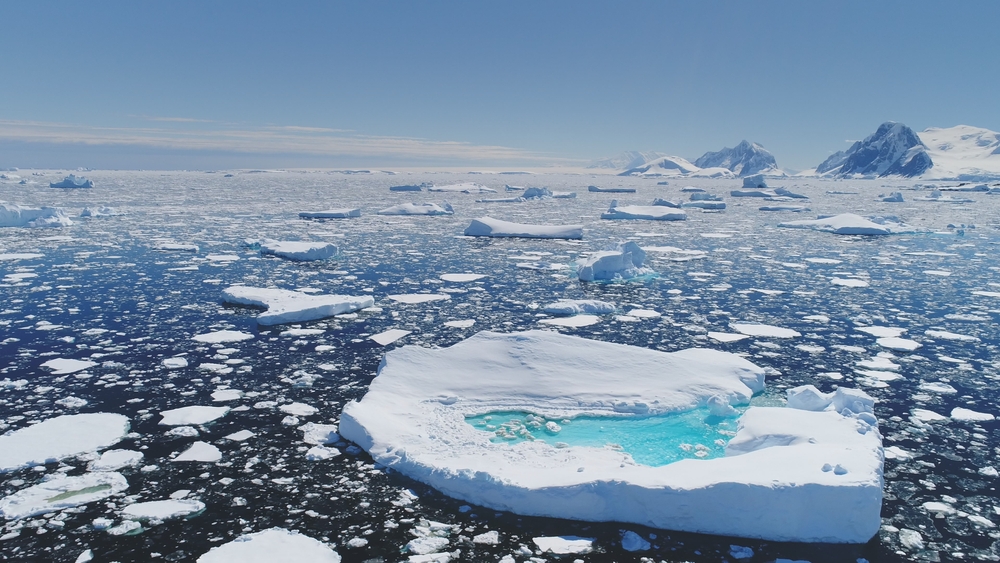
When studying weather patterns in the coldest place on Earth, observing a staggering temperature spike is deeply alarming. During the dead of winter, the Antarctic Peninsula experienced an unprecedented heatwave that registered some of the most anomalous temperatures above local averages ever recorded. At Argentina’s Esperanza base, situated at the northern tip of the peninsula, scientists logged temperatures reaching 15.4 degrees Celsius (59.7 degrees Fahrenheit) on June 6. This reading broke the previous winter heat record, established in 1998, by a full two degrees Celsius.
To put this into perspective, the recorded temperature was roughly 20 degrees Celsius (36 degrees Fahrenheit) higher than normal for that time of year. Dr. Raúl Cordero, a climate scientist at the University of Groningen, described the extreme anomaly directly, calling the event “absolutely crazy.” The sheer magnitude of this spike has left the scientific community on high alert.
This was not a brief or highly localized weather fluctuation. The relentless warmth caused maximum daily temperatures to remain stubbornly above freezing for three consecutive weeks in affected areas. Researchers are unaccustomed to seeing vast swaths of the icy continent battling such heat, particularly during a period when the region should be transitioning into its darkest and coldest months. The unprecedented scale of this event fundamentally challenges historical expectations of Antarctic climate stability.
Why Antarctica’s Winter Shield Failed
To understand how such intense warmth can penetrate the most extreme environment on Earth, meteorologists point to atmospheric rivers. These phenomena are massive, invisible conveyor belts of moisture in the sky that transport warm, humid air from temperate regions directly into the polar environment. Scientific modeling confirms that atmospheric rivers are heavily implicated in extreme polar events, driving severe heatwaves and even introducing unprecedented rainfall over fragile ice shelves.
Normally, a swirling band of strong, freezing winds known as the polar vortex protects Antarctica during the winter. This vortex acts like a protective wall against warmer northern currents. However, when atmospheric disruptions weaken this barrier, the protective gates swing open. The recent temperature spike occurred exactly as these freezing winds faltered, allowing a potent atmospheric river to surge deep into the icy continent.
For the average person, a sudden warm spell might simply mean spending a pleasant afternoon outdoors. For Antarctica, it means introducing liquid water to an environment that must remain entirely frozen to survive. The influx of warmth and moisture does not just melt the surface layer of ice. It can compromise the structural integrity of the deep snowpack and destabilize the massive ice shelves that actively hold back global sea levels.
The erratic behavior of the polar vortex and the intensification of atmospheric rivers offer a sobering reality check. Weather systems are intimately connected across the globe. Warmth generated in milder climates now directly unbalances the polar regions, slowly stripping away the natural atmospheric defenses of our most isolated continent.
A Landscape Stripped of Winter
The abstract data of temperature graphs becomes undeniably real when observing the physical transformation of the Antarctic surface. Only 160 kilometers from the Esperanza base, the terrain on King George Island underwent a sudden and stark visual shift. In a matter of days, the iconic, blinding white expanses normally expected in early June dissolved into dull shades of brown, grey, and green as the underlying rocky ground was exposed to the open air.
Chilean glaciologist Luis Muñoz, who was conducting fieldwork during the extreme warming event, witnessed this rapid degradation firsthand near the Collins glacier. Muñoz noted how deeply abnormal the conditions were for the season, stating, “The temperatures here went very high so everything outside melted.” He emphasized that the region would typically be buried under at least 20 centimeters of snow, with thick, stable ice covering the terrain. Instead, researchers were met with an environment that felt fundamentally out of place for a polar winter.
Perhaps the most alarming manifestation of this heatwave was the shift in precipitation. Rather than the heavy snowfall crucial for maintaining the continent’s mass, researchers observed rain. Liquid rain falling on an established glacier accelerates surface melting and creates pooling water that can fracture solid ice sheets. When warm rain replaces snow during the darkest months of the year, it deprives the glaciers of their essential winter recovery period. As a result, the glacier suffers from ablation, meaning it loses ice mass at the precise time it should be accumulating it. This immediate, physical degradation reveals exactly what happens when extreme heat hits the polar regions: the steady, visible dismantling of the continent’s foundational ice.
The Global Domino Effect
The immediate loss of snowpack is only the beginning of a much larger crisis. The true danger of polar heatwaves lies in their ability to compromise Antarctica’s massive ice shelves. These thick, floating slabs of ice extend over the ocean and act as critical buttresses, essentially serving as giant dams that hold back the continent’s immense inland glaciers.
When extreme warmth and unseasonal rain sweep across the continent, surface meltwater begins to pool. This liquid water is heavier than solid ice, and it seeps into microscopic cracks in the ice shelf. As the water pools and occasionally refreezes, it acts as a wedge, driving the cracks deeper in a destructive process known as hydrofracturing. Once an ice shelf becomes riddled with these fractures, it is incredibly vulnerable to complete structural failure.
We have already witnessed the consequences of this instability. Extreme warming events and the accompanying surface melt have been directly linked to the rapid destabilization and sudden collapse of structures like the Conger Ice Shelf. When an ice shelf collapses, the inland glaciers it once restrained lose their structural brake. With nothing holding them back, these glaciers accelerate their march into the ocean.
This process directly translates to an acceleration of global sea-level rise. What begins as an isolated, anomalous weather event at the bottom of the world quickly becomes a global hazard. The degradation of Antarctica’s icy defenses guarantees that coastal communities thousands of miles away will face higher tides and more frequent flooding
Every Fraction of a Degree Matters
Antarctica acts as the ultimate freezer for the planet. Just like a broken kitchen appliance, when its protective ice melts from unseasonal heat, the water eventually reaches everywhere. It flows into the global ocean, steadily raising sea levels and threatening coastal neighborhoods thousands of miles away. This extreme winter heatwave is not a random glitch. It is a direct result of greenhouse gas emissions trapping heat and throwing global atmospheric systems completely out of balance.
To stabilize the climate, society must stop generating so much heat. While international policymakers must drive large-scale transitions to renewable energy, everyday advocacy holds significant weight. Supporting local clean energy initiatives and demanding strict climate policies from elected officials are practical steps anyone can take to hold major polluters accountable. Every fraction of a degree matters. Protecting the ice at the bottom of the world is the only way to secure the safety of coastlines globally.
Source:
- Tang, H., Li, S., Jones, J. M., González-Herrero, S., Orr, A., Otto, F. E. L., Screen, J. A., Clem, K. R., Bozkurt, D., Catto, J. L., Suitters, C. C., Maclennan, M. L., & Sun, Y. (2026). Unprecedented 2024 East Antarctic winter heatwave driven by polar vortex weakening and amplified by anthropogenic warming. Npj Climate and Atmospheric Science. https://doi.org/10.1038/s41612-026-01392-x