
Your cart is currently empty!
China Axes 12,000 ‘Obsolete’ University Degrees to Brace for the AI Era
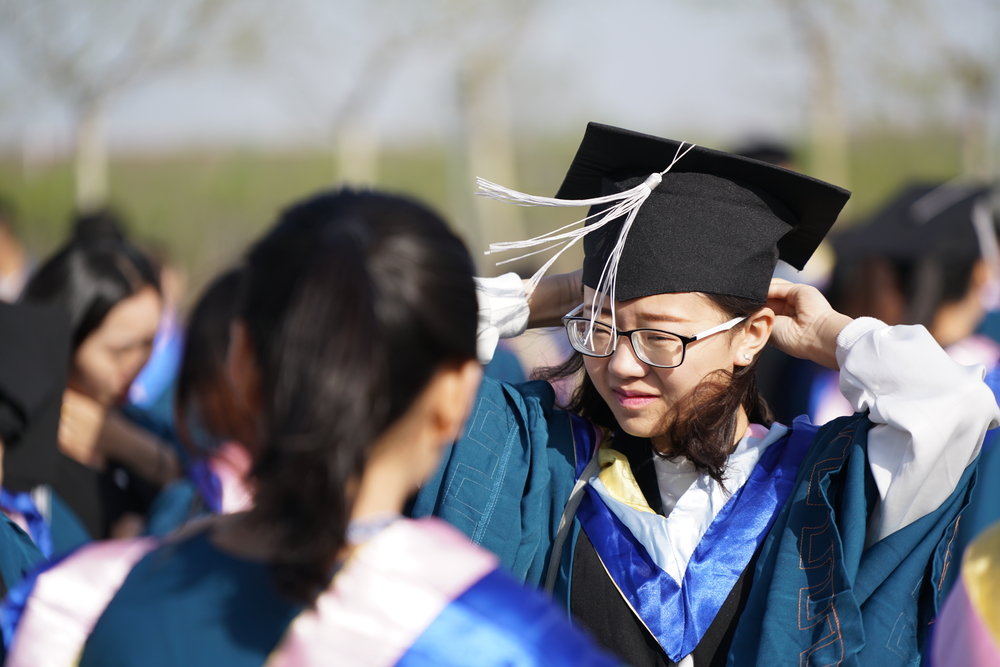
The global landscape of higher education is undergoing a severe, technology-driven identity crisis. As generative artificial intelligence transitions from a specialized tool into a dominant economic force, the fundamental definition of a valuable education is being aggressively rewritten. Institutions are no longer simply updating curricula; they are actively weighing the worth of human-centric skills against the raw efficiency of machines.
Contents
show
This rapid pivot raises an urgent societal question: in the rush to manufacture a workforce perfectly calibrated for an automated world, is the modern educational system engineering the humanity out of future professionals?
China’s Rapid Academic Restructuring in the Age of AI

A university degree in the humanities, arts, or management was once widely considered a reliable path to a stable professional life. Today, the rapid acceleration of artificial intelligence has altered that traditional certainty. In one of the most substantial educational restructurings in recent history, China’s higher education system is fundamentally rewriting the academic requirements for future graduates.
The statistical scale of this transformation highlights the urgency of the shift. Between 2021 and 2025, Chinese universities revoked or suspended approximately 12,200 undergraduate programs. In their place, institutions simultaneously introduced roughly 10,200 new programs. According to figures from China’s Ministry of Education, this means that over 30 percent of the nation’s university programs have undergone major modifications within just a four-year timeframe.
This massive reduction is highly targeted rather than random. Academic tracks in arts, humanities, management, and foreign languages are facing the steepest cuts. These are disciplines where generative AI tools are increasingly demonstrating high efficiency in handling foundational tasks, ranging from content creation and translation to initial data analysis.
Conversely, the newly introduced programs are strictly focused on emerging technologies. Universities are rapidly establishing majors in data science, advanced manufacturing, and “embodied intelligence,” an interdisciplinary field that merges artificial intelligence with physical automation and robotics. At least nine universities have already launched dedicated majors in this specific niche to address upcoming industrial needs.
AI is Squeezing Out Human Workers
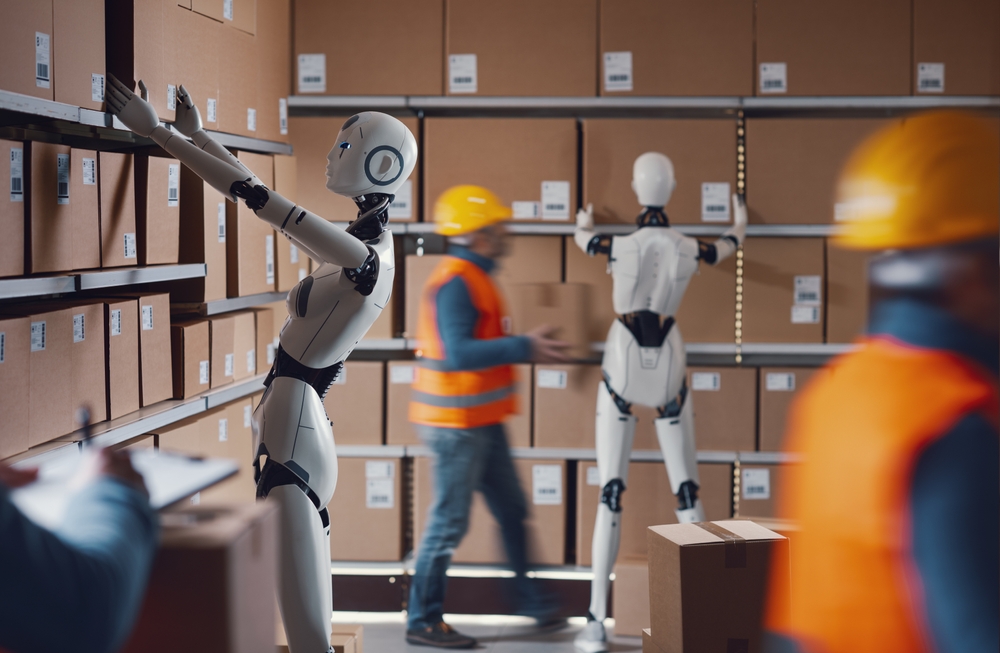
This massive shift in education comes down to a harsh economic reality: there are fewer traditional jobs available, and artificial intelligence is largely to blame. In 2024, nearly 11.8 million students graduated from Chinese universities. However, instead of stepping into promising careers, these young adults entered a job market where youth unemployment had already reached record highs before the government changed how it reports those numbers.
The core problem is that the skills millions of students spent years learning are being devalued. Graduates with degrees in business, public administration, and the arts are finding that the entry-level office jobs they trained for are vanishing. Companies are increasingly replacing these stable, middle-class roles with cost-cutting computer programs.
Generative AI is driving this rapid job displacement. Rather than acting as a helpful tool to make human employees’ lives easier, AI systems are simply taking over the work. Machines are now performing basic administrative tasks, translating documents, and writing reports at a fraction of the cost of hiring a person. Because of this, the unique value of human critical thinking and thoughtful communication is being pushed aside in favor of quick, automated results.
Faced with this tech-driven job crisis, educational authorities are making a drastic choice. By aggressively cutting programs in the arts, humanities, and management, the university system is essentially surrendering to an automated future. This shift forces students away from subjects that explore human culture and ideas. Instead, it pushes the next generation to become the specialized technicians needed to build and maintain the very AI systems that are making traditional human jobs obsolete.
Trading Humanity for Code
The rapid dismantling of arts and humanities programs represents more than just a shift in job training; it points to a profound cultural loss. Subjects like literature, philosophy, sociology, and the arts are not merely academic filler. They are the foundational spaces where individuals develop emotional intelligence, ethical reasoning, and a deep understanding of human relationships. When universities erase these disciplines on a massive scale, they risk molding a generation trained to optimize computer systems but left entirely ill-equipped to navigate the complexities of real human life.
Artificial intelligence is fundamentally incapable of genuine empathy. While a machine can be programmed to string together a polite response or summarize a textbook, it possesses zero lived experience. It cannot understand the emotional weight of a personal crisis, the subtle nuances of human conflict, or the moral gray areas required for strong community leadership. By prioritizing cold, machine-driven logic over human-centric learning, the educational system actively devalues the interpersonal skills that keep societies connected and resilient.
Furthermore, this aggressive push toward tech-focused degrees sends a discouraging message to young adults: human expression and social understanding are considered worthless if they cannot outpace an algorithm. This relentless pressure forces students to abandon their natural inclinations toward caregiving, storytelling, or community building in favor of writing code.
The ultimate danger of this educational overhaul is the society it leaves behind. By stripping away the subjects that explore the human condition, the world moves closer to a highly efficient, automated reality that completely lacks the emotional depth, creativity, and moral compass necessary to thrive outside of a computer screen.
The Tech Trap: STEM Degrees Aren’t a Silver Bullet

The strategy of funneling millions of students into tech-centric degrees operates on a flawed and potentially dangerous assumption: that mastering technology makes a human worker immune to being replaced by it. While universities are rapidly minting new data scientists and software engineers at the expense of the humanities, they are funneling students into the very fields that artificial intelligence is currently learning to master.
This creates a harsh paradox for young adults. Students are being pressured to abandon their interests in communication, art, and management to learn programming, yet coding itself is rapidly becoming an automated task. Prominent figures within the tech industry are already pointing out the futility of this educational pivot. In early 2024, Nvidia CEO Jensen Huang explicitly warned that the era of everyone needing to learn to code is ending. He noted that while the prevailing advice for the last decade was that youth must learn computer science, the reality of AI changes the landscape entirely. “It is our job to create computing technology such that nobody has to program,” Huang stated, emphasizing that the new programming language is simply human language.
Huang’s observation highlights a grim reality: the aggressive push toward specialized, technical degrees is likely a temporary bandage rather than a long-term career cure. When an artificial intelligence system can write, test, and debug complex software code in seconds, the entry-level human software developer becomes just as vulnerable to job loss as the human translator or administrative assistant.
This concern is echoed by leading labor experts. Nobel Prize-winning economist Christopher Pissarides recently cautioned that the technical skills currently in high demand to build and advance AI will eventually become obsolete as the technology becomes sophisticated enough to do the job itself.
By entirely overhauling the educational system to serve immediate, tech-focused industrial needs, institutions are gambling with their students’ futures. They are preparing a generation for a narrow set of technical tasks that machines are already being designed to take over. Instead of providing a safe harbor, this academic restructuring leaves young workers trapped in a relentless, unwinnable race against the very algorithms they are being taught to build.
Championing Human Value in an Automated World
The sweeping elimination of humanities programs reveals a critical misunderstanding of future value. Competing with artificial intelligence on the battleground of speed, efficiency, and data processing is a losing strategy for the human workforce. The rush to transform students into specialized tech workers ignores a fundamental reality: the subjects currently being discarded as “obsolete” cultivate the exact areas where humans hold a permanent, un-automatable advantage.
Resilience in an automated landscape does not stem from mastering programming languages that an algorithm can generate in seconds. It originates from the distinctly human capacities to connect, persuade, and care. A nurse’s intuitive bedside manner, a manager’s ability to mediate complex team dynamics, and a writer’s capacity to articulate shared experiences are not inefficiencies waiting to be automated. They are the essential elements that sustain functional workplaces and communities.
As artificial intelligence inevitably absorbs the mechanical, analytical, and coding tasks of the modern economy, the premium placed on genuine human interaction will naturally rise. A workforce stripped of emotional intelligence and ethical reasoning becomes profoundly fragile. Rather than disposable luxuries, the arts, humanities, and social sciences stand as the definitive counterweight to a cold, automated reality. The ultimate defense against algorithmic replacement lies not in mimicking the machine, but in leaning entirely into the traits that make human beings irreplaceable.