
Your cart is currently empty!
Nvidia CEO Says The AI Revolution Is Coming Faster Than Anyone Expected
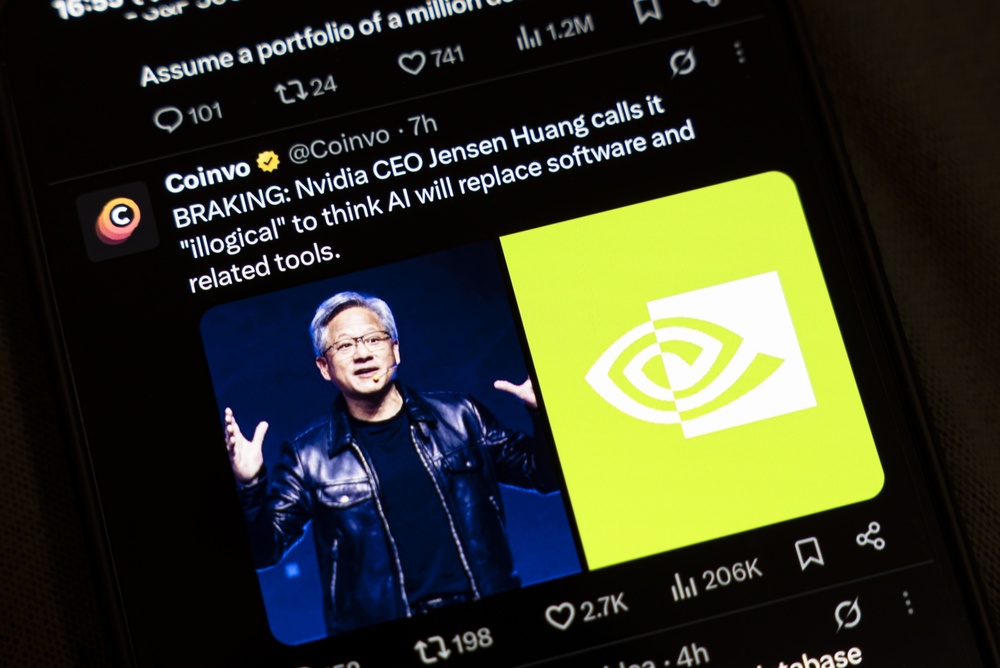
The rapid rise of artificial intelligence has sparked excitement, fear, and fierce debate across the United States. While some see AI as the next great technological leap, others worry it could replace jobs, widen inequality, and transform everyday life in ways people are not prepared for. Few people sit closer to the center of that conversation than Nvidia CEO Jensen Huang, whose company has become one of the biggest beneficiaries of the AI boom.
Contents
show
Speaking during a wide-ranging interview in Sherman, Texas, Huang made it clear that he believes the changes ahead are unavoidable. The technology powering everything from chatbots to advanced scientific research is developing at a pace rarely seen before, and he argues that Americans need to embrace it rather than resist it. His comments arrive as concerns continue to grow over data centers, energy consumption, government regulation, and the long-term impact AI could have on workers across the country.

Jensen Huang Says Americans Need To Start Using AI
Huang believes one of the biggest mistakes people can make is staying away from artificial intelligence because they fear it. While critics often focus on worst-case scenarios, he argues that everyday people can benefit from engaging with the technology now rather than waiting for it to become unavoidable.
“We need to create new social norms,” Huang said. “I would advocate that everybody use AI. Just go engage it.”
The Nvidia chief pointed to the growing ability of AI systems to handle tasks that previously required specialized training. Activities such as building websites, analyzing complicated documents, conducting research, or planning large projects are becoming more accessible because AI tools can perform work that once demanded technical expertise.
Huang believes this development is helping narrow the technology gap in America. People who never learned software engineering or computer programming can now use advanced digital tools to complete tasks that were previously out of reach, opening opportunities for a much broader segment of the population.
Why Huang Compares AI To The Arrival Of Cars
The Nvidia CEO drew a comparison between artificial intelligence and the early days of the automobile industry. At one time, cars were viewed as dangerous machines that threatened public safety and disrupted existing ways of life. Communities had to adapt before automobiles could become a normal part of society.
Huang said society eventually developed rules, infrastructure, and habits that allowed people to coexist safely with cars. Sidewalks, traffic signals, crosswalks, speed limits, and driving laws became part of everyday life because communities adjusted to a technology that was changing the world around them.
He believes artificial intelligence will follow a similar path. Rather than stopping the technology from advancing, governments, businesses, and individuals will gradually establish new standards that allow people to use AI safely and effectively.
For Huang, the challenge is not whether AI will continue developing. The challenge is whether society can adapt quickly enough to keep pace with the changes already taking place.
Fears Over Job Losses Continue To Grow
Concerns about employment remain one of the most controversial parts of the AI debate. Workers in multiple industries have expressed fears that automation could eventually replace positions that currently require human labor.
The discussion has become increasingly political as companies invest billions into AI infrastructure while employees question how technological advances may affect their careers. Some critics argue that workers could face significant disruption if AI systems become capable of performing a growing range of professional tasks.
Huang acknowledges that major changes are coming, but he maintains that technological revolutions have historically created new opportunities alongside disruption. He believes AI will generate demand for new industries, manufacturing facilities, infrastructure projects, and supporting businesses that would not exist otherwise.
The Nvidia chief also argues that increased computing power can strengthen efforts to expand American manufacturing. He sees AI as a tool that could help create the industrial jobs policymakers have promised for years but often struggled to deliver on a large scale.
The Debate Over Who Benefits From AI Wealth
The extraordinary growth of AI companies has fueled concerns about economic inequality. Nvidia’s valuation has soared to roughly $5 trillion, making it one of the most valuable companies in the world. At the same time, other AI-focused firms are rapidly increasing in value as investors pour money into the sector.
Those developments have led to questions about whether the financial rewards created by artificial intelligence are being shared broadly enough. Some political figures have floated the idea that the federal government could own stakes in major AI companies so future gains could benefit a wider group of Americans.
Huang expressed skepticism about that approach and questioned what government ownership would accomplish. He argued that Americans already benefit from successful technology companies through retirement accounts, investment funds, tax revenue, and employment opportunities generated by corporate growth.
“I’m not exactly sure what they’re trying to achieve,” he said regarding government ownership. “I haven’t had a dialogue with them about that. But just remember that these are American companies. Their success benefits the stock price, of which many Americans are investors in. It generates taxes, which helps many Americans. It creates a lot of jobs.”
He added that AI growth could create additional opportunities for industries beyond technology, including energy, construction, and hardware manufacturing.
National Security Has Become A Major Concern
Artificial intelligence has increasingly become a national security issue as governments race to develop advanced systems and maintain technological advantages. Competition between the United States and China has intensified, placing additional pressure on policymakers to balance innovation with security concerns.
The federal government has recently taken a more active role in regulating certain aspects of AI development. Export controls, restrictions on advanced technologies, and new oversight measures have become part of a broader effort to address potential risks associated with rapidly evolving systems.
Huang said security concerns deserve serious attention but stressed that regulations should be targeted and clearly defined. He warned against broad restrictions that could create confusion or unintentionally weaken America’s competitive position.
“National security should always be the top concern of all technologies,” Huang said. “But having said that, you know, you have to be very specific about the risk that you’re concerned about, before setting up policies for export controls.”
His comments reflect a broader debate taking place throughout Washington as lawmakers attempt to determine how much oversight is necessary without slowing innovation.
America’s Energy Problem Could Slow AI Growth
While discussions about AI often focus on software and algorithms, Huang believes a different issue could become one of America’s biggest obstacles. The massive data centers that power AI systems require enormous amounts of electricity, creating growing pressure on the nation’s energy infrastructure.
As demand for computing power rises, technology companies are building increasingly large facilities capable of handling advanced AI workloads. Those facilities consume substantial energy, prompting concerns about power generation capacity and potential effects on utility costs.
Huang did not hide his concerns about the country’s current position. “The United States is woefully behind in energy production,” he said. “We just suffocated energy production for too long.”
His comments came during a visit to a factory expansion in Sherman, Texas, where technology is being developed to improve communication between AI chips while reducing power consumption. The project highlights how energy efficiency is becoming one of the industry’s most important priorities as AI adoption accelerates across the economy.
Trump And Huang Have Developed An Unusual Relationship
Huang’s growing influence in Washington has attracted attention from both supporters and critics. His relationship with President Donald Trump has become a frequent topic of discussion as artificial intelligence moves closer to the center of economic and national security policy.
According to Huang, the connection began after an invitation to dinner at Mar-a-Lago. He attended with his wife and quickly found himself discussing manufacturing, national security, and economic growth with the president.
“He was incredibly engaging, incredibly charismatic, conversational, asked a lot of questions,” Huang recalled. “From the moment that I met him, the only thing that he’s ever talked to me about is creating more jobs, reindustrializing the United States, protecting national security, winning.”
Huang also revealed that Trump regularly contacts him to discuss those topics. “Calls me in the middle of the night and wants to talk about one of these topics,” he said.
The relationship has generated criticism from some Democratic lawmakers, but Huang insisted that Americans should want their leaders to succeed regardless of political differences. “We could differ with politics, but we should want him to succeed,” Huang said. “Because when President Trump succeeds, our country succeeds.”
For a technology that is already reshaping markets, industries, and public policy, Huang’s warning carries a clear message. Artificial intelligence is no longer a future concept being developed in research labs. It is becoming part of everyday life, and the decisions made today will influence how that future unfolds for millions of Americans.
AI Development, AI Infrastructure, AI jobs, AI news, AI regulation, AI Revolution, AI technology, America News, Anthropic, artificial intelligence, Artificial Intelligence News, business news, data centers, Donald Trump, Energy Production, future of work, Jensen Huang, Manufacturing Jobs, national security, Nvidia, Nvidia CEO, OpenAI, tech industry, tech trends, Technology News, trending news, US economy, US Politics, viral news