
Your cart is currently empty!
The Year’s Most Unpredictable Meteor Shower Peaks This Week. Here’s What to Know
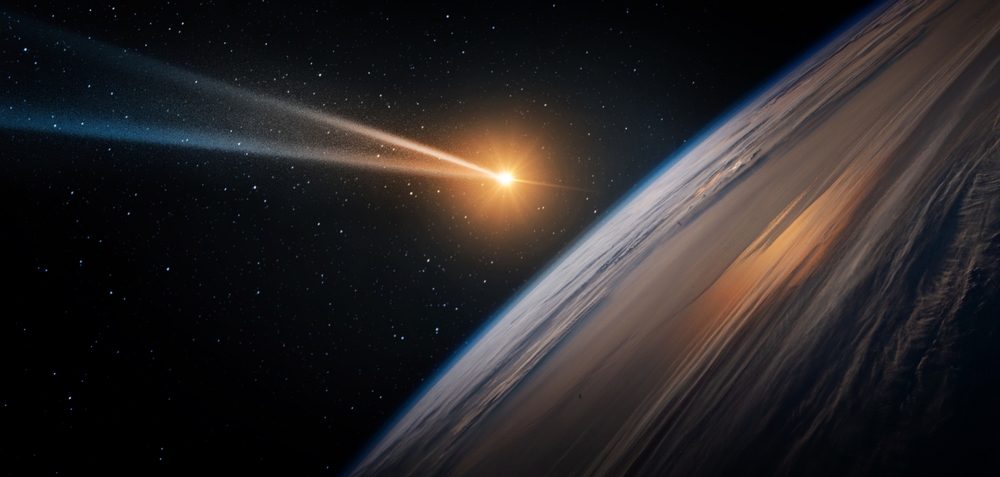
Most meteor showers follow a reliable script. Astronomers know roughly how many shooting stars to expect, when they will appear, and where to look, and skywatchers plan their nights accordingly. The meteor shower peaking over the coming days plays by no such rules. It might deliver almost nothing, a scattered handful of faint streaks across hours of patient watching, or it might erupt into one of the more memorable displays of the year. The unsettling truth, even for the experts who study it, is that no one can say which.
Contents
show
That uncertainty is precisely what draws seasoned observers to look up this week. A shower with a modest reputation and a wild streak, it has both stunned skywatchers and badly disappointed them in years past. Understanding why it behaves this way, and how to give yourself the best chance of catching it at its best, is worth a few minutes before the sky goes dark.
What The June Bootids Are
The shower in question is the June Bootids, set to reach its peak this week. In most years, it is a quiet affair, producing only a few meteors per hour and barely registering on the calendars of casual stargazers. By the standard measures that rank meteor showers, it is a minor player, easily overshadowed by the marquee displays of summer.
Yet the June Bootids carry a reputation out of all proportion to their usual output. Space.com has described them as the most unpredictable meteor shower, a label earned through a long history of surprise outbursts that arrive without warning. That is the dual possibility worth holding in mind this week. The likeliest outcome is a very modest show, but there remains a real, if small, chance of something far more dramatic, and it is that slim chance that keeps experienced observers watching.
Why They’re So Hard To Predict
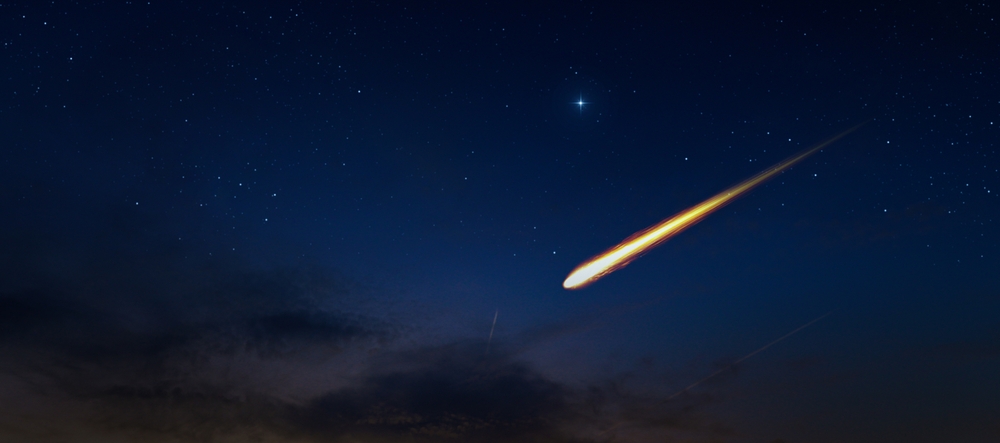
The shower’s reputation rests on a track record that swings between extremes. According to the Society for Popular Astronomy, the June Bootids produced an unexpected outburst on June 27, 1998, when the rate of meteors climbed to somewhere between 50 and 100 or more per hour and sustained that pace for more than 12 hours. For a shower that normally delivers a trickle, that amounted to an extraordinary night.
A second burst followed on June 23, 2004, with observed rates of roughly 20 to 50 per hour, according to the Royal Museums Greenwich, another reminder that the June Bootids are capable of genuine surprise. But the shower cuts both ways, and its unpredictability is not only a matter of pleasant shocks. In 2010, astronomers anticipated another outburst, and skywatchers prepared accordingly, only for the event to fizzle. Fewer than 10 meteors per hour were reported, well short of the forecast. That combination, wildly exceeding expectations in some years and badly undershooting them in others, is exactly what makes the shower so difficult to call in advance, and why no prediction this week should be taken as a guarantee.
What Causes The Shower
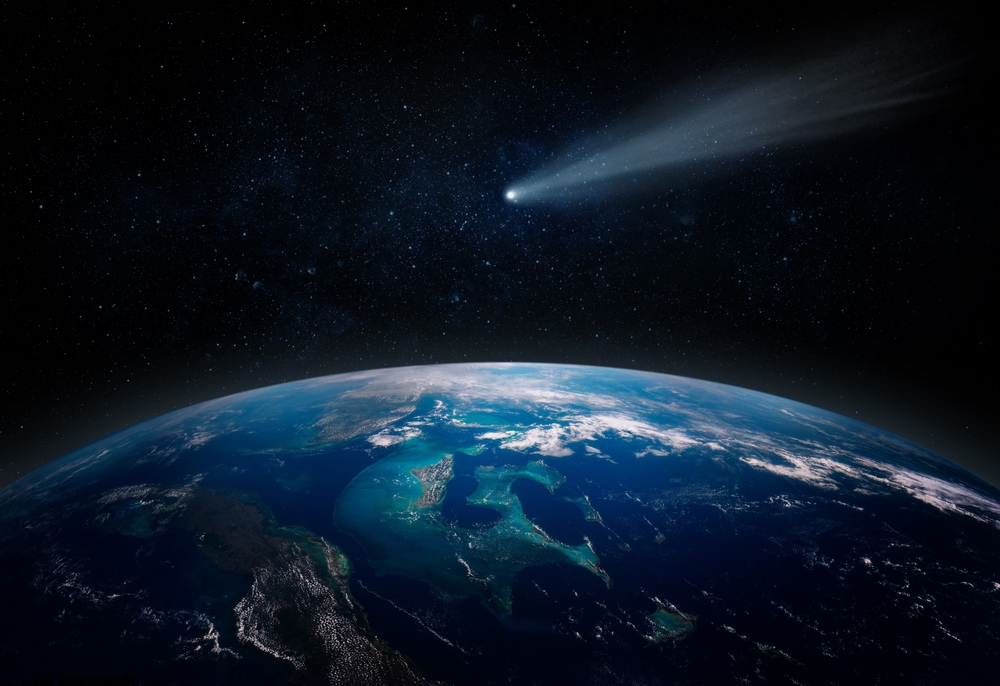
Like all meteor showers, the June Bootids are the product of Earth’s annual journey through the debris that comets and asteroids leave behind. In this case, the source is comet 7P/Pons-Winnecke, an icy body that orbits the sun roughly every six years, shedding fragments of itself along its path.
As Earth passes through that trail of debris, the small fragments enter the atmosphere at high speed and burn up, creating the bright streaks of light we recognize as meteors, or shooting stars. When many of these fragments strike the atmosphere in a concentrated period, the result is a meteor shower. The density and distribution of the debris stream the planet happens to cross in any given year helps explain why the June Bootids can vary so dramatically from one appearance to the next.
When To Watch
Pinning down exactly when to look requires a little tolerance for imprecision, fitting for a shower this erratic. The June Bootids are active across a stretch of late June, roughly from June 11 through July 2, with the various forecasters clustering the peak somewhere between June 20 and June 27. The American Meteor Society places maximum activity toward the earlier end of that window, while other sources point to the night of June 26 into June 27 as a likely high point.
The sensible approach is to treat the peak as a window rather than a single appointed night, and to watch on multiple evenings if you can. Given the shower’s history of arriving early, late, or not at all, hedging across several nights improves your odds. The activity also lingers into early July, so a clear evening anywhere in this range is worth a look upward.
A Rare Shower Best Seen Early In The Evening
One feature sets the June Bootids apart from most of their counterparts and makes them unusually convenient to observe. The majority of meteor showers reward those willing to stay up into the small hours, with activity building toward dawn. The June Bootids reverse that pattern. They are best viewed earlier in the evening, with the shower’s radiant sitting highest in the sky just after dark, around 9 p.m. local time, according to StarWalk.
There is also a clear geographic advantage at play. The American Meteor Society notes that observers in the Northern Hemisphere enjoy a distinct edge over those south of the equator, because the radiant lies much higher in the evening sky for northern viewers. For anyone in the Northern Hemisphere hoping to catch the shower, that combination of an early-evening peak and a well-placed radiant makes the June Bootids about as accessible as meteor showers get, no overnight vigil required.
Where To Look In The Sky
The radiant, the point in the sky from which the meteors appear to stream outward, lies in the constellation Boötes, known also as the Plowman or the Herdsman. For Northern Hemisphere observers, Boötes sits high in the western and northwestern sky during the evening hours, and it remains visible throughout the summer, making it a reliable landmark to find.
A common instinct is to stare directly at the radiant, but that is not the best way to catch meteors. Because the streaks shoot outward from that point, they are often easier to spot when you take in a wide swath of sky rather than fixating on a single spot. Find a comfortable position with a broad, open view, let the radiant sit off to the edge of your field of vision rather than the center, and scan the sky patiently. Meteors traced back toward Boötes are likely genuine June Bootids, while those moving in other directions are probably random sporadic meteors.
Slow Meteors Are A Telltale Sign
A distinctive quality of the June Bootids can help you identify them and adds to their appeal. These are notably slow meteors, entering the atmosphere at roughly 8 to 9 miles per second, according to the American Meteor Society. That is sluggish as meteors go. By comparison, the well-known Leonids tear into the atmosphere at around 43 miles per second, producing quick, brilliant flashes.
That slower speed changes the character of what you see. Rather than brief, darting flashes, slow meteors tend to carve longer, more leisurely streaks across the sky, lingering just enough to register clearly. The slowness also serves a practical purpose for observers, since it helps distinguish true June Bootids from faster meteors that may appear to originate from the same region of sky. If you catch a long, unhurried streak tracing back toward Boötes, there is a good chance you have spotted the real thing.
How To Watch A Meteor Shower
Seeing a meteor shower well requires no special equipment, only the right conditions and a little patience. The single most important factor is darkness. Get as far as you reasonably can from light pollution, away from cities and street lights, since artificial glow washes out all but the brightest meteors. Once you have found a good dark spot, settle in for a wait, dressing for the weather and bringing along blankets or a chair to stay comfortable.
There is no need for a telescope or binoculars, which actually narrow your field of view and work against you when watching for meteors. The most useful preparation is to let your eyes adjust to the dark for at least 20 to 30 minutes, and that means resisting the temptation to glance at a phone, whose bright screen resets your night vision in an instant. With your eyes adapted, lie back, take in as much of the sky as you can, and simply watch. Meteor-watching rewards stillness and time more than anything else.
What Else Is Coming This Summer
Whether or not the June Bootids deliver, the months ahead offer plenty of reasons to keep an eye on the sky. Later in the season, the Southern Delta Aquariids and the Alpha Capricornids are both expected to peak around July 30 and 31, according to the American Meteor Society. Then comes the Perseids, the most celebrated shower of the summer and one of the most dependable of the entire year, forecast to peak on the night of August 12 into August 13.
That same period brings a second spectacle. On August 12, a partial solar eclipse will be visible from parts of the United States, stretching from Alaska to North Carolina, as well as from much of Canada, large portions of Europe, and northwestern Africa, according to NASA. For a fortunate few, the eclipse will reach totality over the Arctic Ocean, Greenland, Iceland, the Atlantic Ocean, Portugal, and northern Spain, according to the National Solar Observatory. Taken together, the meteor showers and the eclipse make the back half of summer a rich stretch for anyone drawn to the night and daytime sky alike.
Why It’s Worth Looking Up
The June Bootids are, in the end, a gamble. The odds favor a quiet night and a sparse scattering of slow, graceful streaks, and there is every chance you will watch for a while and see only a few. Yet the shower’s history holds out the tantalizing possibility of something much greater, a sudden outburst of the kind that lit up the skies in 1998 and 2004 and sent observers home with a story to tell.
That uncertainty is the whole point. Unlike the predictable showers that can be planned to the hour, the June Bootids ask you to take a chance, to step outside on a clear evening this week, not knowing what you will find. Most years, the answer is modest. But every so often, the most unpredictable shower of the year rewards the people who bothered to look up, and there is no way to know in advance whether this will be one of those years. The only way to find out is to go outside and watch.
American Meteor Society, Astronomy, astrophotography, Bootes constellation, Celestial Events, comet 7P/Pons-Winnecke, June Bootids, June Bootids 2026, meteor shower, meteor shower outburst, meteors, night sky, Northern Hemisphere, partial solar eclipse, Perseids, shooting stars, skywatching, stargazing, summer meteor showers, where to see meteors