
Your cart is currently empty!
Remembering Paul the Octopus, Who Got Death Threats for His Perfect World Cup Run
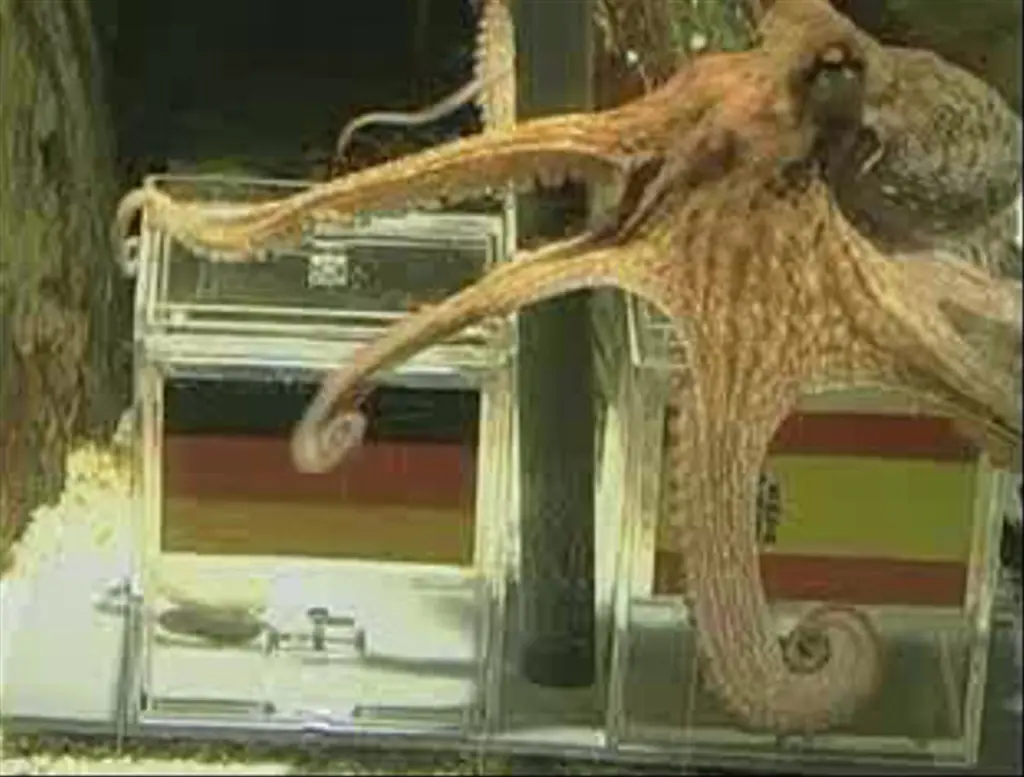
The World Cup is where legends are made, a stage that has given the world Pelé, Diego Maradona, and a long line of footballing icons. Yet one of the most talked-about figures of an entire tournament was not a striker or a goalkeeper, and did not even have two legs. He had eight, and he spent his days in a tank at a German aquarium, where he developed a talent so uncanny that it turned him into a global celebrity and, improbably, a target for the fury of football fans across two continents.
Contents
show
His name was Paul, and during the summer of 2010, he accomplished something that confounded mathematicians, enraged bookmakers, and left hundreds of millions of supporters genuinely unsettled. The strange tale of how an octopus came to outshine the world’s greatest players, and why his remarkable accuracy earned him threats rather than only adoration, remains one of the most peculiar stories the sport has ever produced.
The Cephalopod Who Became A World Cup Star
Paul was a little brown octopus based at the Sea Life Aquarium in Oberhausen, Germany, and by the end of the 2010 World Cup in South Africa, he had emerged as the unlikely breakout star of the tournament. In a competition stacked with household names, it was the eight-armed oracle who commanded the world’s attention, eclipsing the likes of Lionel Messi, Wayne Rooney, Thomas Müller, and Andres Iniesta.
His origins were humble enough. Paul had been hatched at another Sea Life centre in Weymouth, England, in 2008, before making his home in Germany. There was nothing about his beginnings to suggest he would become an international phenomenon. And yet, as the tournament unfolded, this small creature in an Oberhausen tank drew the kind of media frenzy normally reserved for the players themselves, a reminder that the World Cup occasionally crowns the most improbable of stars.
How The Predictions Worked
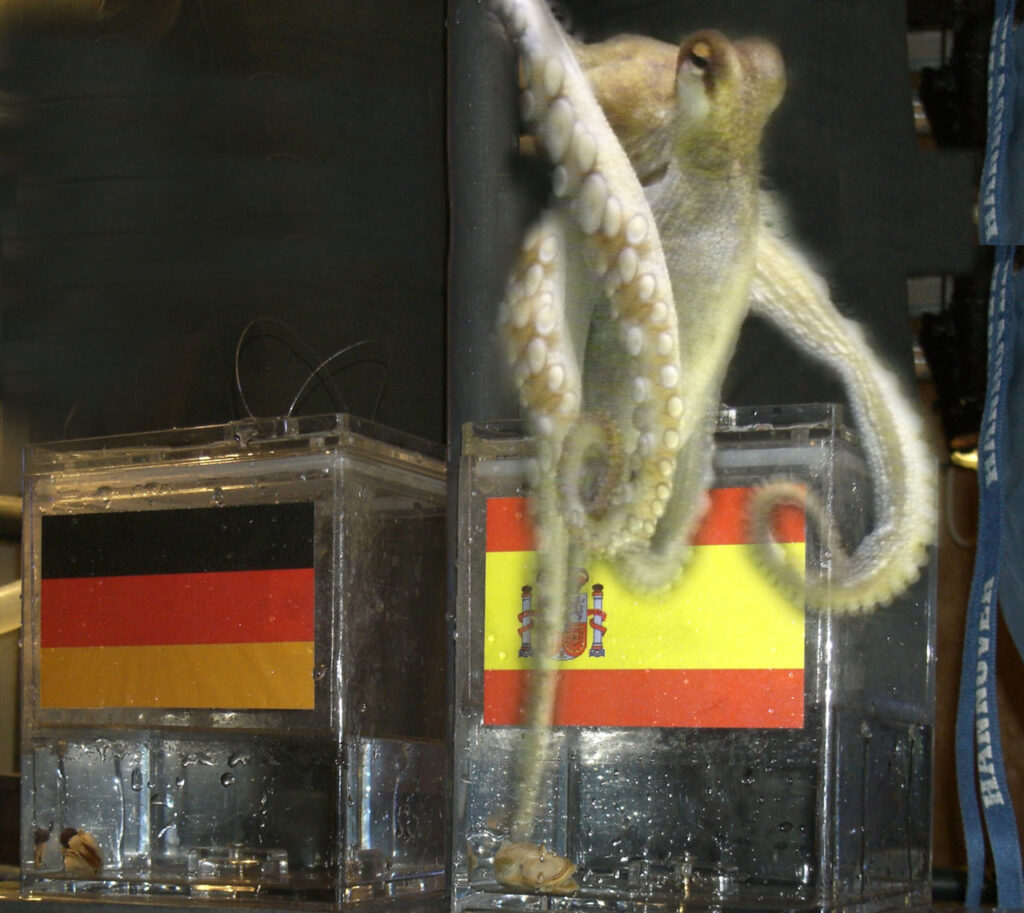
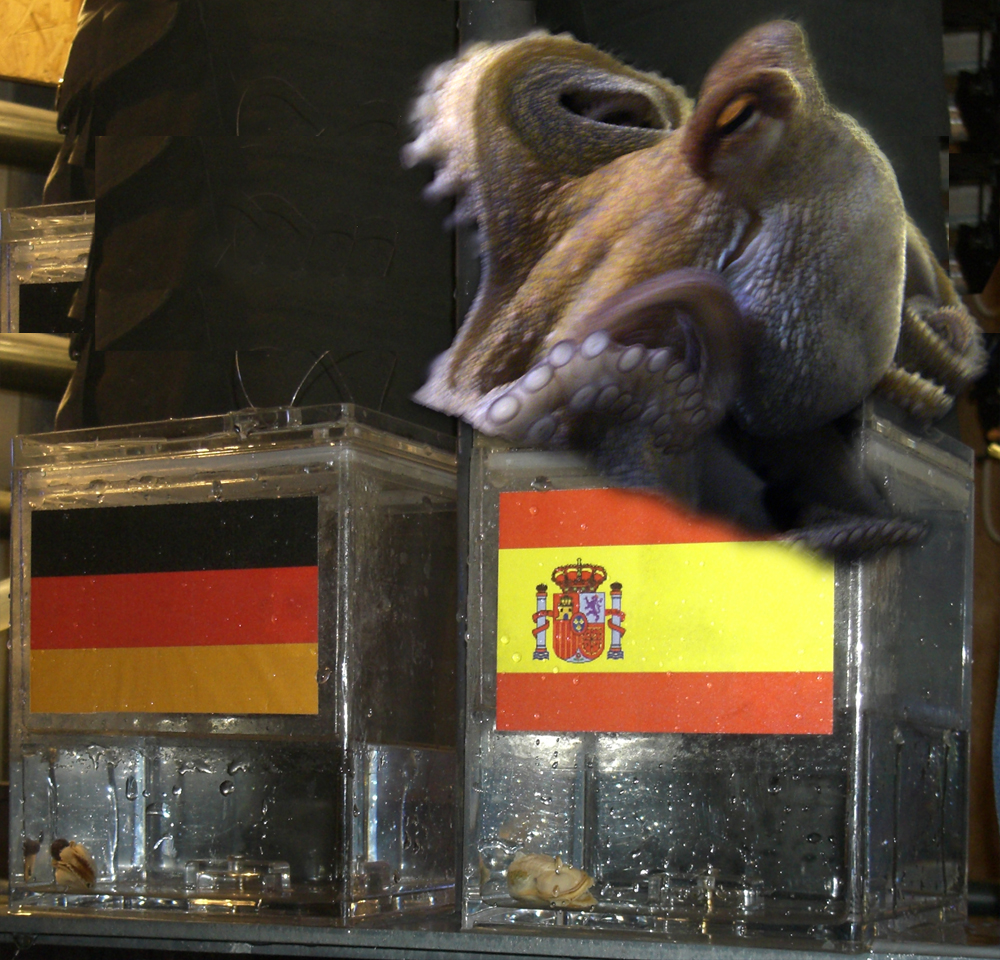
The method behind Paul’s forecasts was simplicity itself, which was much of its appeal. Ahead of a match, his keepers would lower two transparent boxes of food into his tank, each one marked with the national flag of a competing team. The boxes typically contained a tasty mussel, and whichever one Paul chose to open and feed from first was taken as his prediction for the winner.
That was the entire ritual, and it made for irresistible television. There were no complex calculations to explain, no statistical models to parse, just an octopus drifting toward one flag or the other while the world watched. As the tournament progressed, that visual drama proved impossible to resist, and TV channels around the globe began broadcasting Paul’s choices live, hanging on the movements of a mollusk as though awaiting an official result.
A Perfect Run Through The 2010 World Cup
What elevated Paul from a charming curiosity to a genuine sensation was his accuracy. Throughout the 2010 World Cup, he correctly predicted all seven of Germany’s matches, including the games his adopted country lost, before capping his run by correctly forecasting Spain to defeat the Netherlands in the final. Eight matches, eight correct calls, a flawless record.
The statistical improbability of that feat is what gave it weight. There was only a one-in-256 chance that he would get all eight predictions right, and his success rate, against those odds, was genuinely difficult to explain away. It confounded mathematicians who tried to make sense of it, angered bookmakers whose odds the octopus seemed to mock, and spooked football fans the world over, many of whom found themselves taking a cephalopod’s opinion rather more seriously than they cared to admit.
The Backlash And The Death Threats

Paul’s accuracy, however, came with a darker consequence, and it is here that his story takes its strangest turn. Trouble began when he was asked to predict Germany’s semi-final against Spain. With the German public watching live, Paul drifted toward the box bearing the Spanish flag, choosing Spain over his own country, and fans reacted with something close to horror.
The fallout was swift and, in hindsight, absurd. According to a Bleacher Report account at the time, “anti-octopus songs” were sung in Berlin. On social media, some called for Paul to be thrown into the shark tank, while others suggested he be fried, barbecued, or turned into a seafood salad or paella. Nor was Germany the only nation he offended. Paul had earlier infuriated Argentina’s supporters by correctly calling their quarter-final defeat to Germany, and the reaction there was no gentler. The Argentine newspaper El Día went so far as to print a recipe for cooking him, should anyone manage to capture him from his aquatic home, advising: “All you need is four normal potatoes, olive oil for taste and a little pepper.”
For all the menacing humor directed his way, Paul carried on undisturbed. He evaded capture, ignored the culinary suggestions of two angry fanbases, and finished his World Cup with his perfect record intact, the most accurate forecaster of the tournament and, briefly, one of its most hated figures for the crime of being right.
An Earlier, Less Perfect Career
It would be wrong to suggest Paul was infallible, and his fuller record makes his 2010 run all the more striking as a genuine hot streak rather than a permanent gift. His career as a predictor had actually begun two years earlier, during the 2008 European Championship, when his keepers first introduced the flag-marked boxes to his tank.
That debut campaign was a more mixed affair. Paul correctly called four of Germany’s fixtures at Euro 2008, but he also got two wrong, including the team’s defeat to Spain in the final. He was, in other words, a good predictor rather than a perfect one, which makes the unbroken run he produced at the World Cup two years later stand out as something exceptional. The imperfection of his early work lends a certain charm to the legend, casting his 2010 performance not as destiny but as an extraordinary streak that happened to arrive on the biggest stage of all.
A Hero In Spain

If Germany and Argentina turned on Paul, one nation embraced him without reservation. Spain, which lifted the trophy that he had so confidently predicted, took the octopus to its heart, celebrating “Pulpo Paul” as a national hero. To Spanish supporters, he was not a traitor or a target but a good-luck charm who had foreseen their triumph.
The honors that followed reflected that affection. There was a request to put Paul on display at Madrid zoo, and he was even made an honorary citizen of a Spanish town in recognition of his services to the cause. His celebrity reached beyond Spain as well, with Paul appointed as an ambassador for England’s 2018 World Cup bid. For a creature with a lifespan measured in single-digit years, he had accumulated an extraordinary collection of accolades, proof that his fame inspired genuine warmth alongside the more hostile reactions.
His Death And The World’s Mourning

Paul’s remarkable life proved a brief one. On the morning of October 26, 2010, just a few months after his World Cup heroics, staff at the Oberhausen aquarium found him dead in his tank. He had appeared perfectly fine when last checked the previous night, and he died peacefully of natural causes at two and a half years old. Because octopuses rarely live much beyond two years, his death, though deeply felt, was not unexpected.
The aquarium’s staff were stricken all the same. General manager Stefan Porwoll paid tribute to the octopus who had brought the world together around his tank, noting that Paul had correctly guessed the outcomes of Germany’s matches and had “enthused people across every continent.” There was comfort, too, in the circumstances of his passing. “We are consoled by the knowledge that he enjoyed a good life,” Mr. Porwoll said, and the aquarium emphasized that Paul had received the best possible care from a committed team throughout his time with them. His remains were placed in a freezer in the days that followed, with plans for him to be cremated, and his agent, Chris Davies, added his own words of tribute to a creature he called rather special.
A Legacy That Outlived Him
Paul’s brief but extraordinary life was never going to be quietly forgotten. A memorial was erected in his honor at the Sea Life Centre in Oberhausen, and it still stands today, a permanent marker of the summer an octopus captivated the world. His influence spread far beyond the aquarium walls in the years that followed.
The prophetic octopus was immortalized in multiple Google doodles, turned into an iPhone app, and made the subject of a documentary, with books and toys planned in the wake of his fame. His story even reached the cinema, told in a Chinese film bearing the memorable title “Kill Octopus Paul.” The aquarium, mindful of a world in mourning, had offered a measure of consolation at the time of his death, hinting that “Paul II” was already waiting in the wings to carry on the legacy. In the years since, many animals have been enlisted to replicate his success, and all have fallen short of the standard he set.
The Oracle Football Can’t Forget
As the 2026 World Cup approaches, the predictions have begun to flood in once again, arriving from computer simulations and self-styled mystics eager to call the winner. One simulation has tipped Lionel Messi to lead Argentina to a second consecutive triumph, while others have offered their own bold forecasts. Yet none of these would-be soothsayers can claim anything close to the legend of the octopus who came before them.
That is the enduring power of Paul’s story. For one improbable summer, an eight-armed creature in a German tank outshone the finest footballers on the planet, divided nations, dodged the threats of furious fans, and predicted a World Cup with perfect accuracy. He was loved and loathed in equal measure, celebrated as a hero in one country and condemned as a villain in others, all for the simple act of choosing the right box. More than fifteen years later, no animal has matched him, and it seems unlikely any ever will. The strangest icon the World Cup has ever produced remains, quite rightly, unforgettable.
Featured Image Source: Wikimedia Commons
https://garystockbridge617.getarchive.net/amp/ru/media/paul-the-octopus-picks-spain-over-germany-in-2010-world-cup-semi-final-3-bc149b?translate=true
2010 World Cup, 2026 World Cup, animal predictions, animal psychic, FIFA World Cup, football culture, football oracle, Germany football, octopus, octopus predictions, Paul the Octopus, Pulpo Paul, Sea Life Oberhausen, Spain World Cup 2010, sports nostalgia, Stefan Porwoll, viral animals, World Cup history, World Cup predictions, World Cup trivia