
Your cart is currently empty!
US Woman Calls American Healthcare a “Scam” After Finding $1,000 Medicine in India for $25
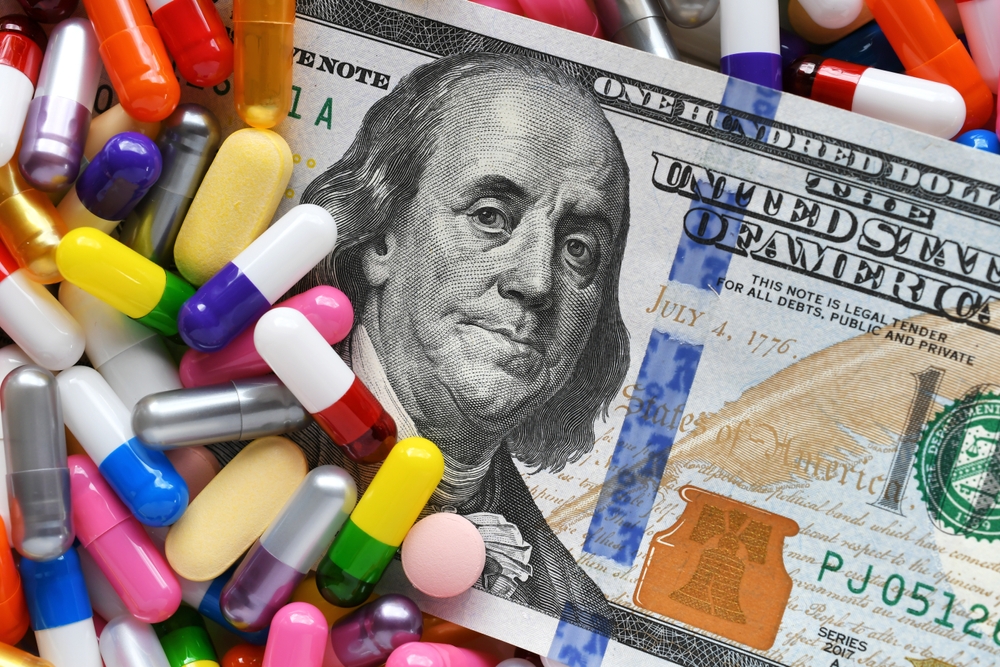
A viral video from an American woman named Victoria has reignited frustration over prescription drug prices in the United States after she said a medication that would have cost her $1,000 out of pocket at home was sourced from India for just $25. Her story struck a nerve not because it was unusual, but because it felt painfully familiar: a patient receives a prescription, insurance refuses coverage, and the price suddenly becomes a barrier to treatment.
Contents
show
What began as one woman’s search for a cheaper option quickly became a wider conversation about why medicine can be financially overwhelming in one country while remaining far more affordable in another.
She Paid $25 for a $1,000 Prescription
When Victoria, an American woman who posts on Instagram as @lemonsnlyme, learned that a medication she needed would cost $1,000 out of pocket in the United States, the issue became more than a frustrating bill. It became a moment that exposed how quickly a prescription can turn into a financial burden when insurance refuses coverage.
In her video, Victoria said the price was for just six pills. Her insurance provider would not cover the medication, leaving her to either pay the full amount or search for another way to access it. Instead of immediately absorbing the cost, she followed her doctor’s advice and sent the prescription to a Canadian pharmacy, which could source the medicine directly from an Indian manufacturer.
The result stunned her. She said the total cost came to $25: $10 for the medication itself and $15 for international shipping. The dramatic price difference led her to openly question what American patients are actually paying for when the same medicine can be obtained elsewhere for a fraction of the cost.
Her reaction resonated because it was not presented as an abstract policy debate. It was a familiar healthcare dilemma: a patient needs medicine, insurance says no, and the final price feels impossible to justify. For many viewers, Victoria’s story became a concrete example of a system where access to basic treatment can depend less on medical need and more on pricing structures, coverage rules, and where a prescription is filled.
It’s Not One Story—It’s Millions

Victoria’s story traveled quickly because it put a human face on a frustration many Americans already recognize: prescription drug prices can feel unpredictable, opaque, and disconnected from the actual cost of making or distributing the medicine. The shock was not only that she found the medication cheaper abroad. It was that the U.S. price appeared so difficult to explain once she saw the same prescription sourced through another country for a fraction of the cost.
That sense of disbelief is supported by broader research. A 2024 RAND Corporation report found that prescription drug prices in the United States were, on average, 2.78 times higher than prices in 33 other countries. For brand-name drugs, the gap was even wider, with U.S. prices averaging 4.22 times those in comparison nations. RAND health economist Andrew Mulcahy summarized the issue plainly, saying the findings offered “further evidence” that manufacturer prices are higher in the United States than in peer countries.
For patients, those differences are not just numbers in a report. They can determine whether someone fills a prescription, delays treatment, splits pills, or goes without medicine entirely. KFF polling updated in 2026 found that six in ten U.S. adults worry about affording prescription drugs, while four in ten say they have taken cost-saving steps such as skipping doses, not filling prescriptions, or using other workarounds because of price.
This is why Victoria’s video struck a chord beyond one viral moment. It captured a familiar question in plain terms: if a necessary medicine can be sold at a dramatically lower price elsewhere, why are American patients so often left facing the highest bill? The answer is rarely simple, but the frustration is easy to understand. For many people, the system feels less like healthcare access and more like a maze of insurance decisions, markups, formularies, and financial pressure.
Why the Same Prescription Can Cost So Much Less Abroad
The sharp price difference in Victoria’s story points to a larger reality: medicine prices are not determined only by what a drug costs to make. They are shaped by patents, market competition, insurance coverage, pharmacy benefit managers, national pricing rules, manufacturing costs, and how many companies are allowed to sell equivalent versions of a drug.
India plays a major role in this global picture because it is one of the world’s largest suppliers of generic medicines. Generic drugs are typically less expensive because they do not carry the same research, development, and marketing costs as original brand-name products. Once patents expire and more manufacturers enter the market, competition can push prices down significantly.
India’s pharmaceutical sector also benefits from large-scale production and lower manufacturing costs. The country’s own Department of Pharmaceuticals notes that factors such as lower labor costs, resource costs, production machinery costs, and integrated manufacturing systems help make low-cost generic alternatives possible. That does not mean every Indian-made medicine is automatically cheap or identical to every U.S. product, but it helps explain why some medicines can be sold at dramatically lower prices in India than in the United States.
Still, the affordability story needs a safety caveat. Patients should not treat viral examples as medical advice to order prescription drugs from abroad without professional guidance. U.S. regulators warn that imported drugs must meet FDA standards for safety, quality, and effectiveness, and foreign-approved drugs are generally considered unapproved in the United States unless they have gone through the proper U.S. process. The lesson is not simply “buy overseas.” It is that patients deserve a system where safe, necessary medicine does not become financially unreachable in the first place.

Victoria’s $25 medicine order became widely discussed because it revealed something many patients already feel: healthcare pricing in the United States often does not make sense at the moment people need clarity most. A person should not have to compare international supply chains, appeal insurance decisions, or search for hidden pharmacy alternatives just to afford a prescribed treatment. Her story is striking, but it is not unusual in the broader emotional reality of American healthcare, where the price of medicine can shape whether someone gets care on time.
The takeaway is not that every patient should look overseas for medicine. Safety, quality, legality, and medical supervision all matter. The more urgent lesson is that patients deserve transparent pricing, stronger access to affordable generics, clearer insurance explanations, and doctors who are willing to discuss cost as part of treatment. Asking about price should be treated as a normal part of healthcare, not a last resort.
Until the system becomes easier to navigate, patients can protect themselves by asking specific questions before walking away from a prescription: Is there a generic version? Is there a lower-cost alternative? Can the insurance denial be appealed? Are there manufacturer coupons, assistance programs, or reputable pharmacy discount options? Victoria’s story may have gone viral because of the shocking price gap, but its most useful message is practical: no patient should feel ashamed to question a bill that stands between them and the care they need.