
Your cart is currently empty!
Inside Akashinga, the All-Women Ranger Unit Protecting Zimbabwe’s Elephants
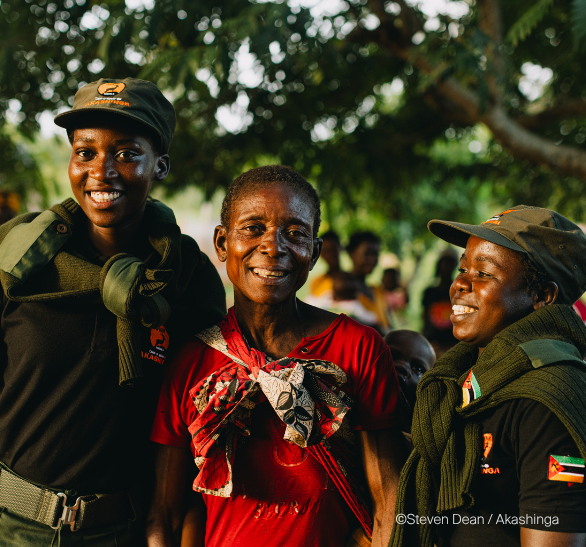
Kelly Lyee Chigumbura was seventeen when she was raped near her family’s home in Zimbabwe’s Lower Zambezi Valley. She discovered she was pregnant, dropped out of school, and set aside the future she had imagined for herself, one in which she became a nurse.
Contents
show
What happened next followed a custom she had no power to refuse. Among the Shona, a mother without the resources to raise her child surrenders that child to the father’s parents. So the woman who had given birth to a daughter she named Yearn Cleopatra watched as her rapist’s mother took the baby away to raise as her own. Chigumbura was not permitted to visit. When she came to the house, the grandmother invented stories to send her away, once claiming the child had been taken to Mozambique.
Three years passed in that condition. Jobless, without skills, without prospects, without her daughter. Then, when Chigumbura was twenty, the head of her village pulled her aside with a strange piece of news. An Australian man had come to the region looking for women. He wanted to train them for something that no one in Zimbabwe had ever asked a woman to do, and the village head believed Chigumbura would be good at it.
What Akashinga Means and Who Chose the Name
The Australian was Damien Mander, and the job he was offering was armed wildlife ranger.
Seventeen women survived the selection process, many of them arriving from backgrounds much like Chigumbura’s. Mander asked the group to choose a name for themselves. They settled on Akashinga, which in Shona means “the Brave Ones.”
Their assignment was Phundundu Wildlife Park, a 115-square-mile former trophy hunting block sitting inside a larger ecosystem that holds roughly 11,000 elephants. As far as Mander knew, no nature reserve anywhere in the world had ever been managed and protected entirely by women.
The Man Who Built It, and the Career He Left Behind
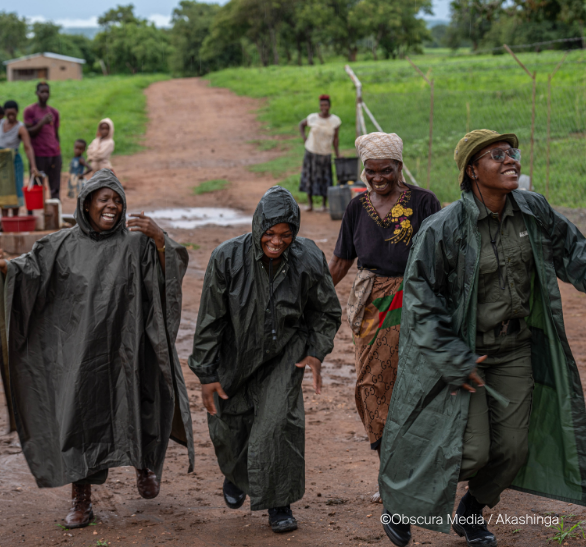
To understand how an all-women ranger unit came to exist in rural Zimbabwe, it helps to know how thoroughly its founder had spent his life in the opposite kind of institution.
Mander began as a clearance diver in the Australian Royal Navy. From 2003 to 2005 he worked as a special operations sniper with Tactical Assault Group East, an elite counter-terrorism unit within the Australian Defence Force, a posting he describes without sentiment as the ultimate boys’ club. In the Special Forces, he says, they had never had women and never wanted them, and they took pride in being the only male unit in the military.
He moved to the private sector in Iraq, becoming a project manager at the Iraq Special Police Training Academy at twenty-seven. The pay was good and the work was corrosive. He had six weeks to prepare recruits before sending them to the front, where they reliably did one of three things: desert, join the militia, or die. He acknowledges now that he was too young and too inexperienced to ask the right questions about the wrong practices. He left Iraq in 2008 and spent a year drifting through South America, dissatisfied with everything.
From Militarised Anti-Poaching to Something Else
Southern Africa changed the direction of his life. Elephants were being slaughtered again for ivory after nearly two decades of relative calm, and over the following seven years, their populations fell by thirty percent across the continent. Rhinos were being killed for their horns at a rate exceeding 7,000 in a decade.
Mander sold his homes in Australia and used the proceeds to establish the International Anti-Poaching Foundation, bringing a special operations approach to protecting wildlife. The results were real. Incursions into Kruger National Park from Mozambique declined under his watch, and across the eight years his group operated in Victoria Falls National Park, not a single rhino was lost, the only such record in Zimbabwe during that period.
And yet he came to believe he was applying a bandage rather than a cure. Evidence was accumulating that a war on poaching cannot conserve wildlife over the long term, because you cannot sustain an indefinite offensive against the people who live there. What actually works is community buy-in. By 2015 he had begun backing away from the seek-and-destroy model and started searching for something that would engage communities without depending on tourism, which is fickle, or trophy hunting, which he opposed as a vegan and which was declining anyway.
Why He Turned to Women
The idea arrived from an unlikely source. Mander read a New York Times article about women graduating from the US Army’s elite ranger school, and the question presented itself with an obviousness that unsettled him. If women could serve as military rangers, why not as wildlife rangers on Africa’s front lines?
The reasoning that followed was partly practical and partly financial. Employing women doubled the pool of potential recruits. It also opened access to a category of funding that dwarfs what conservation can attract, since money earmarked for women’s empowerment is at least two and a half times greater than money available for conservation, according to the Organisation for Economic Co-operation and Development.
The idea was nearly without precedent. Between 20,000 and 25,000 rangers work across Africa, overwhelmingly men. A World Wildlife Fund survey of 570 rangers across twelve African countries found that just nineteen percent were women. Women serve routinely as rangers in North and South America, Europe, and Australia. In much of Africa, the role of protector, and certainly of armed protector, has belonged to men.
The Critics Who Said Arming Women Was Wrong
The pushback came quickly, and not only from the expected quarters. Craig Spencer founded the Black Mamba Anti-Poaching Unit in South Africa, the continent’s first all-women ranger team, whose members carry no firearms. He questioned what he saw as the marketing appeal of the whole enterprise, asking how much of it was really about cool, black GI Janes drawn from downtrodden communities in a country where wildlife is dying. Placing guns in the hands of a young woman, he argued, makes her incredibly vulnerable. His alternative was that women rangers should play to genuine strengths in community-building and education.
“Women are the single biggest untapped resource in Sub-Saharan Africa, but trying to make them into men, I think, is self-destructive. We need an armed component, sure, but we need to start moving more and more of our resources into communities, and the best people for that are women.” He argued.
Mander’s answer is that this presents a false choice, that women can be armed and act as custodians of both wildlife and community at once, and that sending them into the bush without a means of defence would be irresponsible. He agrees it is unfortunate that rangers must carry guns to protect animals, while insisting they be given every tool and every hour of training the job might demand.
Spencer was not alone in his misgivings. For months Mander searched for a trial site, first in South Africa and then in Zimbabwe, offering to cover all costs and absorb all risks. He was refused repeatedly. The excuses were hollow, he says, and the reality was that men did not want women doing a man’s job. He eventually found a taker in the manager of an abandoned trophy hunting block who was desperate enough to gamble.
The Selection, and the Women It Was Built For
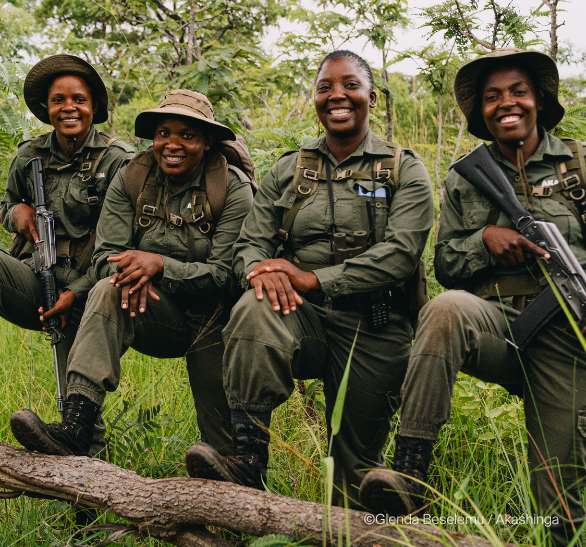
Word went out to twenty-nine surrounding villages, and the recruitment criteria were unusually specific. Mander wanted women between eighteen and thirty-five who were survivors of sexual assault or domestic violence, single mothers, abandoned wives, sex workers, wives of poachers serving prison sentences, widows, or AIDS orphans.
He was looking, in plain terms, for the women who stood to gain the most from a different life. Nearly ninety appeared for pre-selection. Thirty-seven advanced to a three-day tryout modelled on special forces selection, three days of what Mander calls the four pillars of misery: hungry, tired, cold, and wet. They packed up a two-hundred-pound tent, dragged it up a mountain with their legs bound together, and reassembled it.
Three women dropped out. Among the male recruits Mander had worked with across a long career, the majority typically quit in the opening days. Future Sibanda, a divorced mother of two, put the difference plainly when she said the selection was not easy but that she never thought about quitting.
Mander, who has built a career on three continents bringing hardened men to the point of breaking, was startled. The women worked quietly and diligently, often smiling. The distance a person puts between suffering and breaking, he concluded, is what defines character, and these women had it.
The Harassment They Walked Through
Their communities did not celebrate. As some of the recruits made their way toward the training grounds, a group of drunken men shouted after them that the job was not for them, that it never had been, and that they should go home where they belonged.
Sibanda was told repeatedly that patrolling the bush was difficult for a woman and that the work was meant for men. She found it discouraging until she decided it was simply jealousy, because she could do the job.
Even the instructors arrived skeptical. Leon Varley, a safari operator and war veteran who had run wildlife areas before, doubted the women could handle the physical demands and worried that recruiting locally would expose them to intimidation and reprisal. Then he walked twelve-mile patrols with them and taught them wilderness survival, much of which they already knew. Afterward he said he had no complaints at all.
What Happens on Patrol
Abigail Malzanyaire raises a clenched fist, then lowers her palm, and the rangers behind her freeze and drop into waist-high grass without a word.
They found fresh lion tracks at dawn. Since then there have been droppings of every size, the coffee-bean scatterings of eland, the heavier heaps of zebra. Now Malzanyaire is checking a water hole downhill, one of the last remaining in a park deep into its dry season, for elephants. She finds footprints the size of frisbees pressed into the mud, and more droppings, and nothing else.
It is an unusually quiet morning. The rangers now encounter wildlife on nearly every patrol, a marked change from earlier years when sightings came roughly once a week.
A Pattern in How the Animals Respond
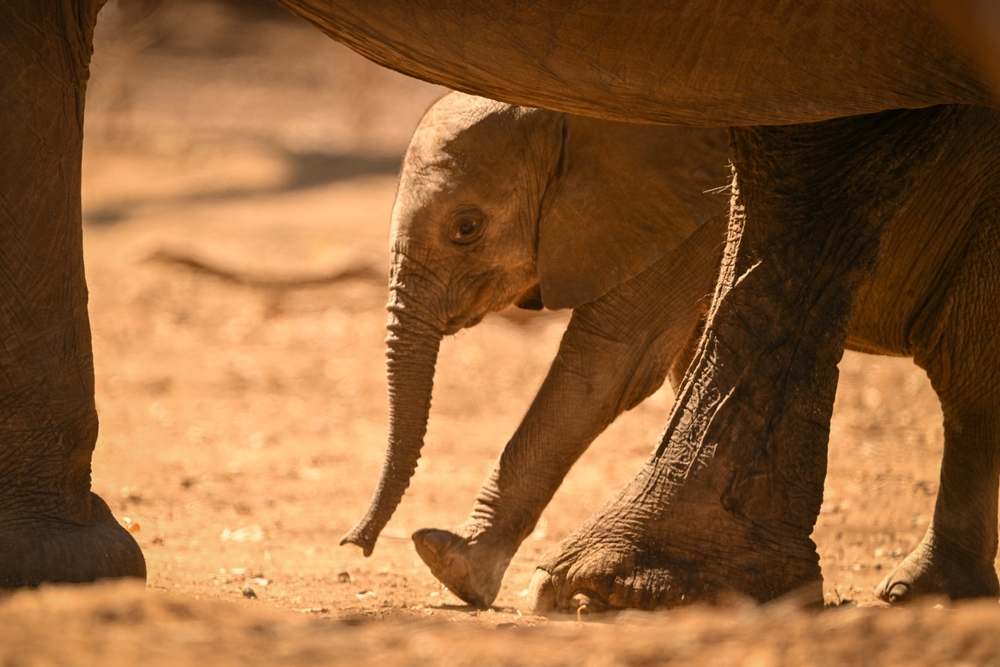
Mander has noticed something he cannot yet explain. Based on ranger reports, dangerous species such as buffalo and elephant appear to behave less aggressively toward the women than they did toward the male rangers who preceded them.
He brought the observation to Victor Muposhi, an ecologist at Chinhoyi University, who wants to test it in the field and has meanwhile offered a working hypothesis. Animals are intelligent, Muposhi suggests, and capable of distinguishing what threatens them from what does not, and men register as threats because most poachers are men.
It is worth being clear that this remains untested. It is a hypothesis awaiting a study, not a finding.
Arrests Without a Shot Fired
The operational record, as documented in the reporting available, covers the unit’s first stretch of work. Since October 2017, the Akashinga rangers made or contributed to seventy-two arrests without firing a single shot. Mander also reports no hints of corruption, which he considers half the battle in African conservation.
Varley, the skeptic, describes himself as having moved from ninety percent doubter to ninety percent believer. The remaining ten percent hinges on something that has not yet happened, which is a genuine armed confrontation. There have been physical altercations, resolved through de-escalation and non-lethal force, and Varley believes those instincts come naturally. “We men tend to go in guns blazing, all aggression and machismo, but they are different. They have empathy.”
The Danger That Cannot Be Trained Away
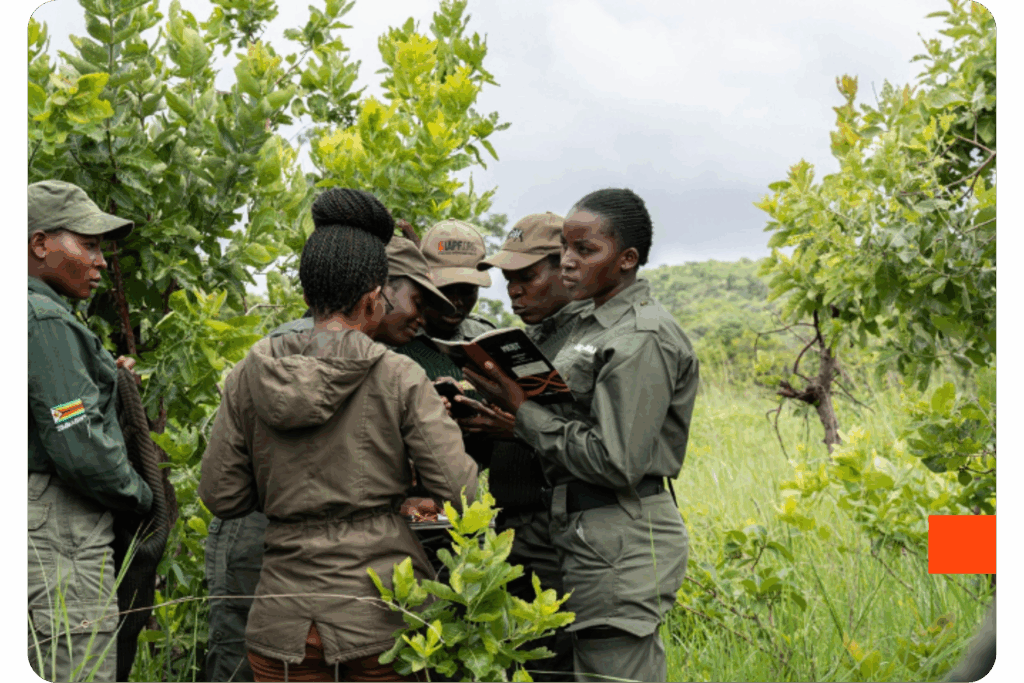
Empathy does not cancel risk. More than a thousand rangers have been killed on the job worldwide over the past decade, by poachers, by animals, and by accident.
In March 2018, two Akashinga rangers and a male trainer leading them drowned crossing a river. The unit came apart. Mervis Chiware, a counsellor and lecturer at the University of Zimbabwe whom Mander brought in, found a team that believed everyone might die and had lost its commitment entirely. She helped them understand that misfortune happens and that misjudgement had contributed to the accident.
They emerged more committed than before. Chiware, herself a survivor of abuse, now works with the rangers on relationships, sexual health, and past trauma, telling them that self-reliance and a wage of one’s own is what gives a woman the power to leave an abusive relationship.
The Economics That Make the Model Work
Strip away the human drama and there is a financial argument underneath, which is the part Mander believes makes the model replicable.
Trophy hunting areas occupy one-sixth of the landmass across participating African countries, an expanse larger than France, and the industry is contracting under public pressure, import restrictions, and dwindling wildlife. Jan Stander, director of Phundundu, watched his business collapse after the United States banned elephant trophy imports from Zimbabwe in 2014, and says the area went from viable to non-viable, costing the industry hundreds of thousands of dollars. Commercially, in his words, they are dead.
With nothing left, Stander invited the IAPF in and helped negotiate a forty-six-year lease. Depending on which accounting you read, between sixty-two and seventy-two cents of every operating dollar returns to the local community, funding salaries, a dam, a greenhouse, local goods and labour, and rewards for anyone who assists an arrest or helps recover ivory or illegal weapons. A woman with a salary in rural Africa invests up to three times more into her family than a man does. The claim is that this delivers a better return to the community than trophy hunting ever did.
What the Job Gave the Women Back
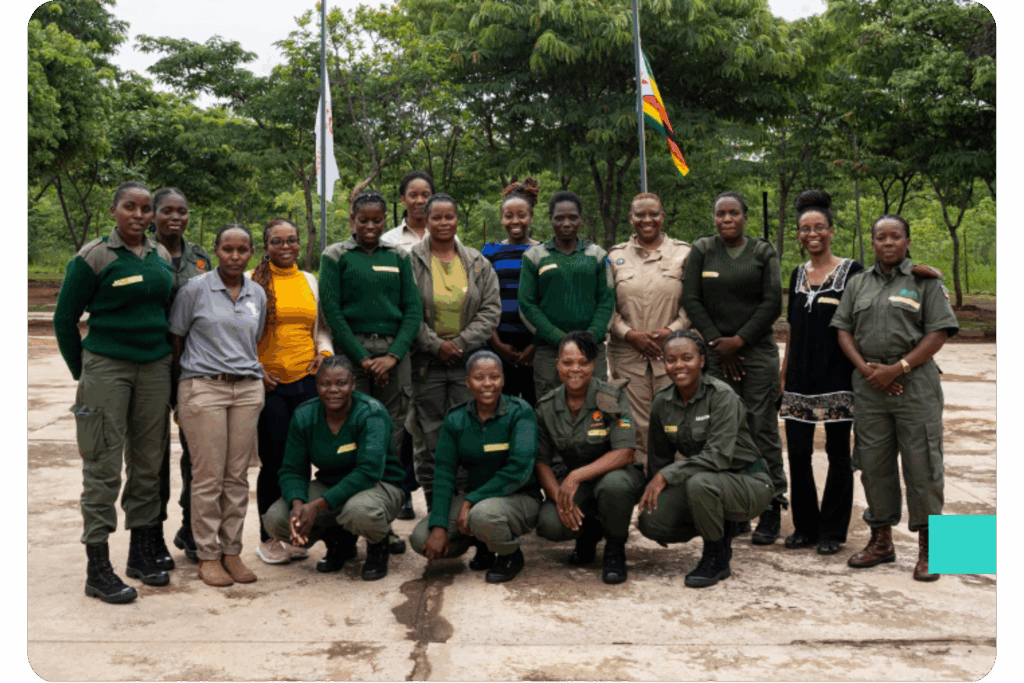
The rangers buy property and build houses. They send children to school, obtain driver’s licences, finish high school, enrol in college, and provide for their families. Many have adopted vegan diets at home following Mander’s example, and none drink. They take up to two weeks off per month, considerably more than most rangers, and they visit local schools where, Mander says, they are mobbed like rock stars.
That last detail may matter more than it appears. James Danoff-Burg, conservation director at the Living Desert Zoo and Gardens in California, interviewed 120 residents across four South African communities where Black Mamba rangers live. In the village where the Mambas run a children’s education program, two-thirds of adults had heard of them and praised them. Through children, the rangers were shifting how adults thought.
Ambition, Doubt, and What Comes Next
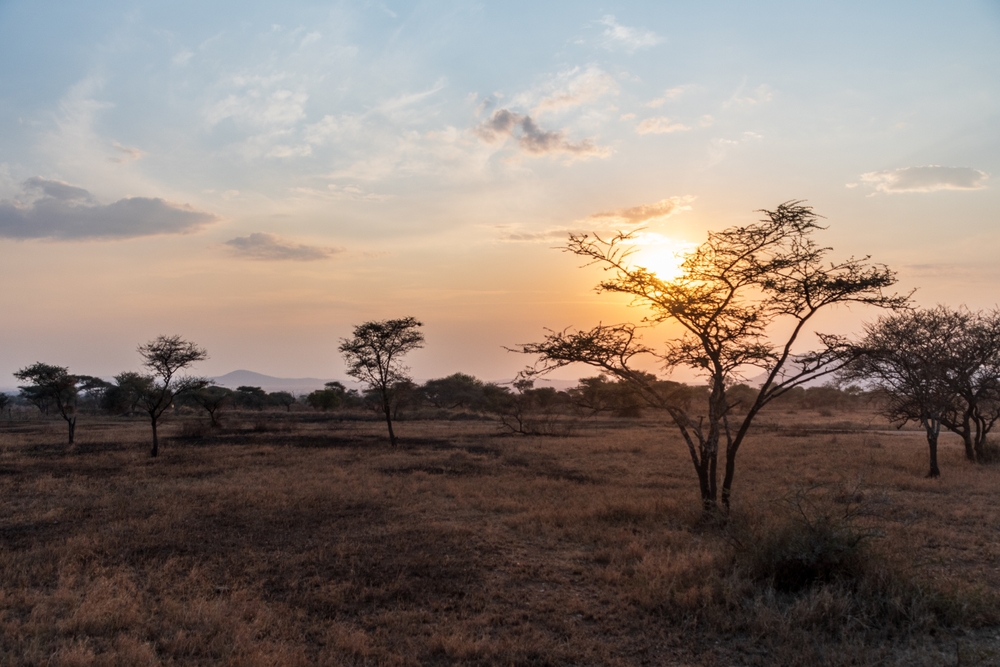
Plans exist to extend the model to Segera, a conservancy in Kenya, and to expand across the Lower Zambezi. Zimbabwe’s president, Emmerson Mnangagwa, has met the rangers and voiced support, and his daughter Tariro has trained and patrolled alongside them.
Mander’s stated targets vary across the available material, ranging from 2,000 to 4,500 women protecting somewhere between 30 million acres and 96,500 square miles by 2030. The ambition is enormous and the arithmetic is inconsistent, which is worth saying plainly.
It is also too early to declare the model proven, in Zimbabwe or anywhere else. Spencer’s objection about arming vulnerable women has not been resolved by evidence. Varley’s final ten percent still waits on a confrontation that has not come. Muposhi, for his part, believes something has already shifted, and says that women are equally as good as men and could be even better.
What is not in question is what happened to Kelly Lyee Chigumbura. In September 2018, two years after she last saw her daughter, she was awarded custody. She can care for her child now, she says. She can return to high school. She can have a life as a professional. She sees herself, she says, as a better person.
Featured image Source: akashinga.org
https://www.akashinga.org/about-us/akashinga-rangers
African wildlife, Akashinga, anti-poaching, Black Mambas, community conservation, conservation model, Craig Spencer, Damien Mander, elephant poaching, female empowerment, International Anti-Poaching Foundation, ivory trade, Kelly Lyee Chigumbura, Lower Zambezi Valley, Phundundu Wildlife Park, trophy hunting, wildlife conservation, wildlife rangers, women rangers, Zimbabwe