
Your cart is currently empty!
Bride and Groom Let Their Families Compete to Decide Their Married Surname, and the Winner Surprised Everyone
A wedding day is filled with traditions that have been passed down for generations. Couples spend months choosing the perfect venue, writing heartfelt vows, planning the menu, and deciding how they want to celebrate one of the biggest milestones of their lives. Yet for many modern couples, one important question often remains unanswered until the very end: what surname should they share after saying “I do”? While some follow long-standing customs without hesitation, others find themselves balancing personal identity, family history, and the desire to build a shared future under one name. It is a conversation that has become increasingly common as more couples rethink traditions that previous generations rarely questioned.
Contents
show
One Australian couple found themselves facing exactly that dilemma, but instead of quietly discussing the decision behind closed doors, they transformed it into the centerpiece of their wedding reception. Their solution was equal parts creative, competitive, and unforgettable. By inviting both sides of the family to compete in a series of entertaining challenges, they turned a potentially difficult decision into a celebration that brought strangers together, filled the venue with laughter, and eventually captured the attention of millions of people across social media.
A Marriage Tradition That More Couples Are Beginning to Question
For decades, changing a surname after marriage was viewed as a natural step in beginning a new chapter together. In many countries, the groom’s surname automatically became the family name, and few people questioned the tradition. Today, however, attitudes have shifted dramatically. Couples are increasingly choosing options that better reflect their own values, careers, and identities. Some keep their original surnames, others combine both names, while some even create entirely new family names that represent both partners equally.
That growing flexibility has made surname conversations much more meaningful than they once were. A last name is more than a word written on official documents. It often represents family heritage, childhood memories, professional identity, and a connection to generations that came before. Giving it up can feel surprisingly emotional, even when both partners completely support one another’s choices.
The Australian newlyweds found themselves having exactly those conversations as they planned their future together. Neither wanted the decision to feel one-sided, and neither believed there was an obvious answer. They both imagined raising children one day under a shared surname, but deciding which family name would continue into the next generation proved far more complicated than either expected.
Instead of allowing the discussion to become stressful or symbolic of winning and losing, they began asking themselves a completely different question. Rather than deciding the outcome alone, was there a way to involve the two families who had shaped them into the people they had become? That single idea would eventually inspire one of the most unusual wedding celebrations seen in recent years.
One Creative Conversation Changed the Entire Wedding Plan
Long before invitations were mailed or decorations were finalized, the couple had already agreed on one thing: they wanted their wedding to feel less like a formal event and more like a genuine family gathering. Both came from exceptionally large families, meaning many guests would be meeting one another for the very first time. Like many weddings, there was a real possibility that relatives would spend the evening sitting with people they already knew before heading home without making many new connections.
That thought bothered the couple more than they expected. Weddings often unite two families for a single day, yet meaningful conversations between both sides can sometimes be surprisingly limited. They wanted everyone to leave feeling as though they had become part of one extended family instead of simply attending the same celebration.
As those discussions continued, the surname question naturally resurfaced. Rather than treating the two issues separately, they suddenly realized they could solve both at once. If the families were already coming together for one unforgettable occasion, why not invite them to help settle the surname debate in a way nobody would ever forget?
The concept sounded playful at first, but the more they explored it, the more it made sense. Friendly competition would encourage complete strangers to work together, cheer for one another, and create shared memories. At the same time, whichever family emerged victorious would also earn the bragging rights of passing on its surname to the newly married couple.
Guests Thought They Were Attending a Traditional Reception
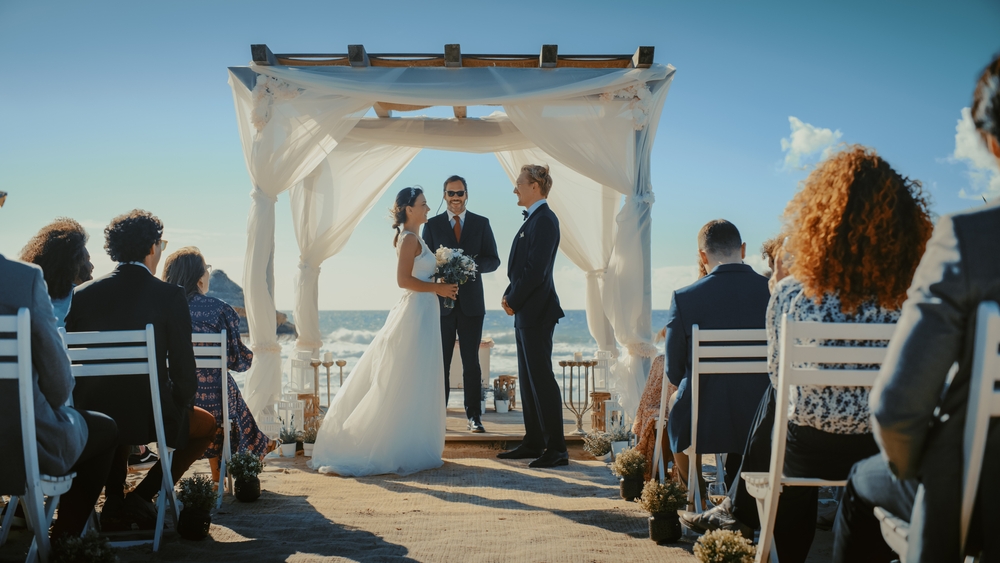
Everything about the ceremony unfolded exactly as guests expected. Friends and relatives watched the couple exchange vows, celebrated as they were officially pronounced married, and gathered for photographs before making their way toward the reception. There was little reason to suspect that the carefully planned schedule was about to take a dramatic and entertaining turn.
Behind the scenes, however, only a handful of people knew what was waiting. The newlyweds had intentionally kept their biggest surprise secret, revealing almost nothing during the months leading up to the wedding. Invitations contained no clues, family members received no advance warning, and even close relatives believed the reception would follow the familiar pattern of speeches, dinner, and dancing.
That changed the moment everyone settled into the celebration. Instead of introducing the evening’s entertainment, the couple unveiled an entirely different challenge. Guests soon learned they had become participants in a family competition that would decide something far more meaningful than a trophy or prize. The winning side would earn the right to have its surname carried forward into the couple’s married life.
The announcement immediately transformed the atmosphere. Confused expressions quickly turned into laughter, followed by enthusiastic cheers as relatives realised the contest was genuine. Within minutes, grandparents, cousins, siblings, and lifelong friends were discussing strategy, choosing teammates, and preparing to represent their family name with surprising determination.
Every Game Turned the Reception Into a Family Festival
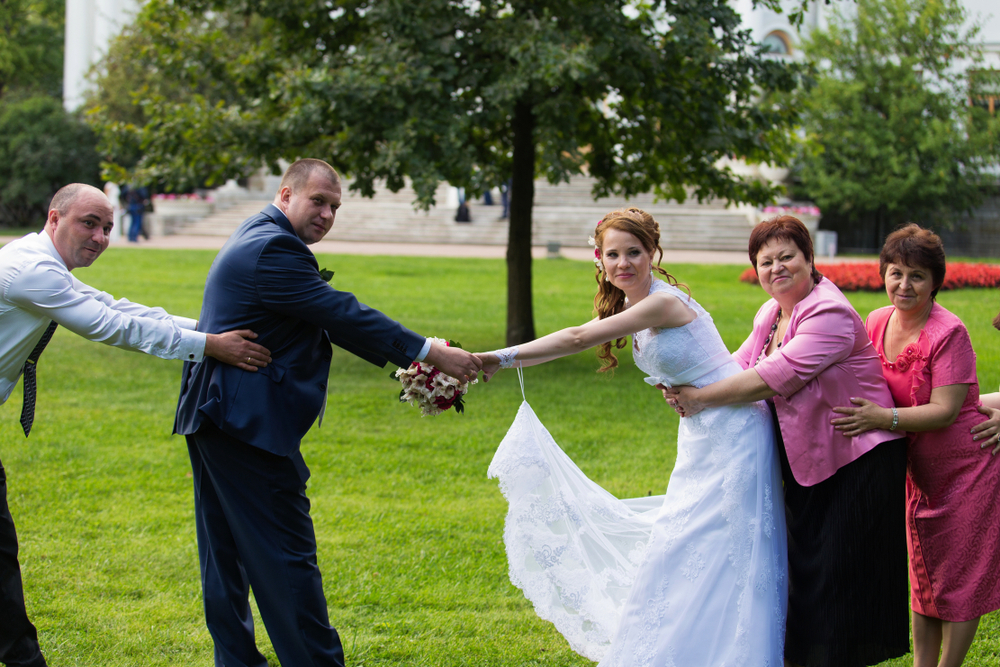
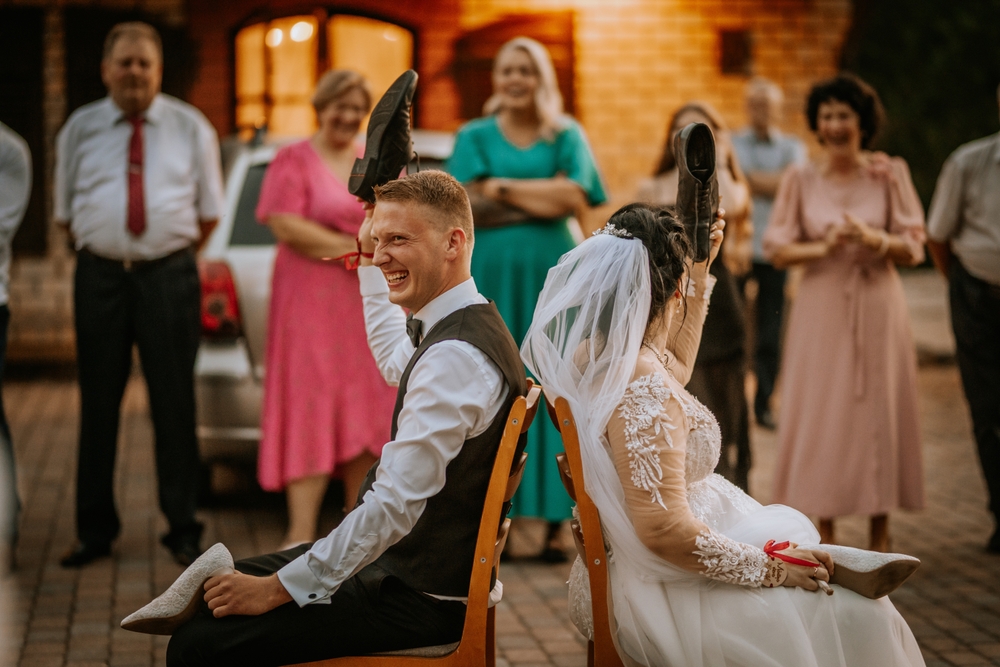
The newlyweds chose activities that almost anyone could join, regardless of age or athletic ability. Rather than testing professional-level skills, the games rewarded teamwork, enthusiasm, and a willingness to have fun in front of dozens of cheering relatives. The lineup included a tug of war, a potato sack race, a soccer shootout, and even a twerk contest that quickly became one of the most talked-about moments of the evening. A giant Connect 4 game was also prepared in case the competition needed a deciding round.
What surprised everyone was how quickly the playful contest became a matter of family pride. Relatives who had only exchanged polite greetings earlier in the day suddenly found themselves celebrating every point as though they were watching a championship final. Children cheered beside grandparents, cousins encouraged complete strangers, and every victory sparked loud celebrations from one side while the other immediately focused on the next challenge.
The atmosphere felt less like a formal wedding reception and more like a community sports festival. Guests who might otherwise have spent the evening seated at separate tables were now laughing together between events, sharing jokes, and congratulating competitors regardless of which family they represented. By the time the games reached their final stages, the competition had achieved exactly what the couple had hoped for. It had broken down the invisible barriers that often exist when two large families meet for the first time.
Millions Online Loved the Idea
After the wedding, short videos from the reception began appearing on social media. The clips captured the excitement, the laughter, and the determination shown by family members competing for bragging rights. Viewers were fascinated by the originality of the idea, with many commenting that they had never seen a wedding reception transformed into something so interactive.
The story quickly spread across multiple platforms as people tagged friends, shared the videos, and imagined how their own families might react in a similar situation. Wedding traditions often evolve slowly, but social media has created a space where creative celebrations can inspire couples around the world almost overnight.
Many viewers admired the fact that the competition balanced humor with genuine meaning. Rather than arguing over a personal decision, the newlyweds found a way to turn it into an unforgettable experience that celebrated both families equally. Others said the games showed that weddings do not always have to follow the same familiar script to become meaningful occasions.