
Your cart is currently empty!
Dad Gets Matching Tattoo of Son’s Heart Surgery Scar So He’ll Never Feel Different
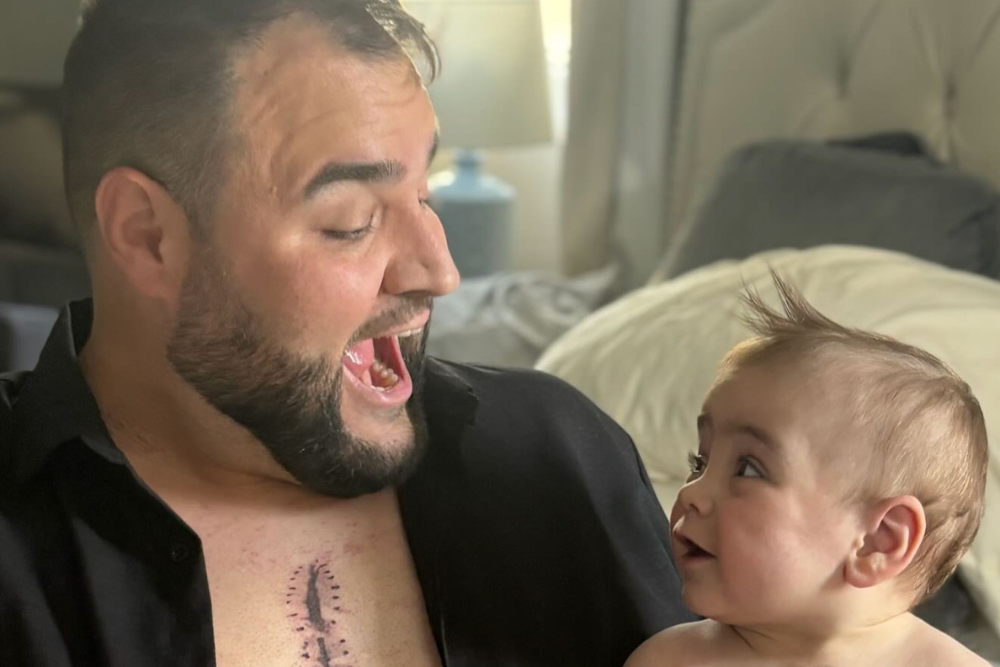
Some parents will do anything to protect their children. Others spend sleepless nights beside hospital beds, praying for good news they have no control over. But one New Jersey father found a deeply personal way to remind his little boy that he will never have to carry the weight of his medical journey alone. Instead of simply telling his son that his scars are something to be proud of, he chose to wear them himself, turning a painful chapter in their lives into a permanent symbol of unconditional love.
Contents
show
For Eric Conklin, the tattoo is far more than ink. It mirrors the open-heart surgery scar that runs down the chest of his son, Bennett, who has already survived multiple life-saving procedures before celebrating his first birthday. Every line represents months of fear, hope, and resilience that tested the entire family. Eric hopes that as Bennett grows older and begins to notice the scar that sets him apart, he’ll be able to look at his father and realize they share the same mark, and that he has never been alone in this fight.
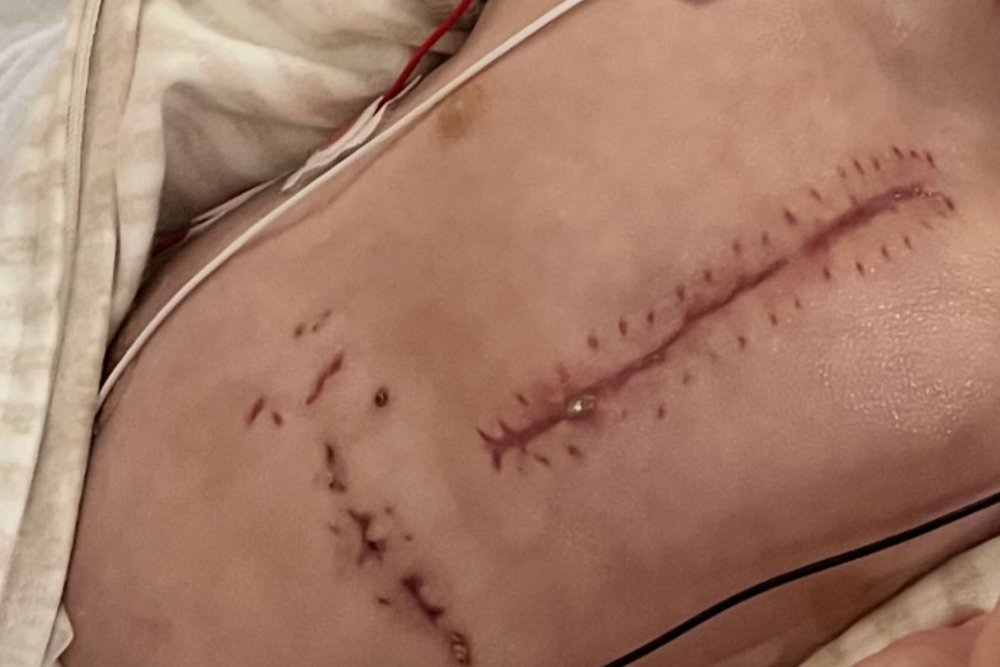
Image via econks66
A Dream Life Was Suddenly Turned Upside Down
Before Bennett arrived, Eric and his wife Cristina believed life was unfolding exactly as they had hoped. They had fallen in love quickly, built a happy marriage, and purchased the home where they planned to raise their family. When they learned they were expecting their first child, the future looked brighter than ever.
Eric later admitted he often found himself wondering how everything had fallen into place so perfectly. He remembered constantly thinking, “We’re so lucky, we’re so lucky, we’re so lucky. How did I get this lucky?” It was a feeling that stayed with him throughout the early months of Cristina’s pregnancy.
Everything changed during their routine 20-week anatomy scan.
Doctors discovered that their unborn son had pulmonary atresia, a serious congenital heart defect that prevents the pulmonary valve from developing properly. Although Bennett remained safe inside the womb, his parents were told that once he was born, immediate medical intervention would be essential. Without a functioning pulmonary valve, blood would not be able to travel properly from his heart to his lungs, making survival impossible without surgery.
The diagnosis was overwhelming for two first-time parents who had spent months imagining a normal delivery and those precious first moments together. Instead, they suddenly found themselves preparing for surgeries, intensive care, and an uncertain future long before their baby had even entered the world.
Bennett Began Fighting for His Life Just Days After Birth
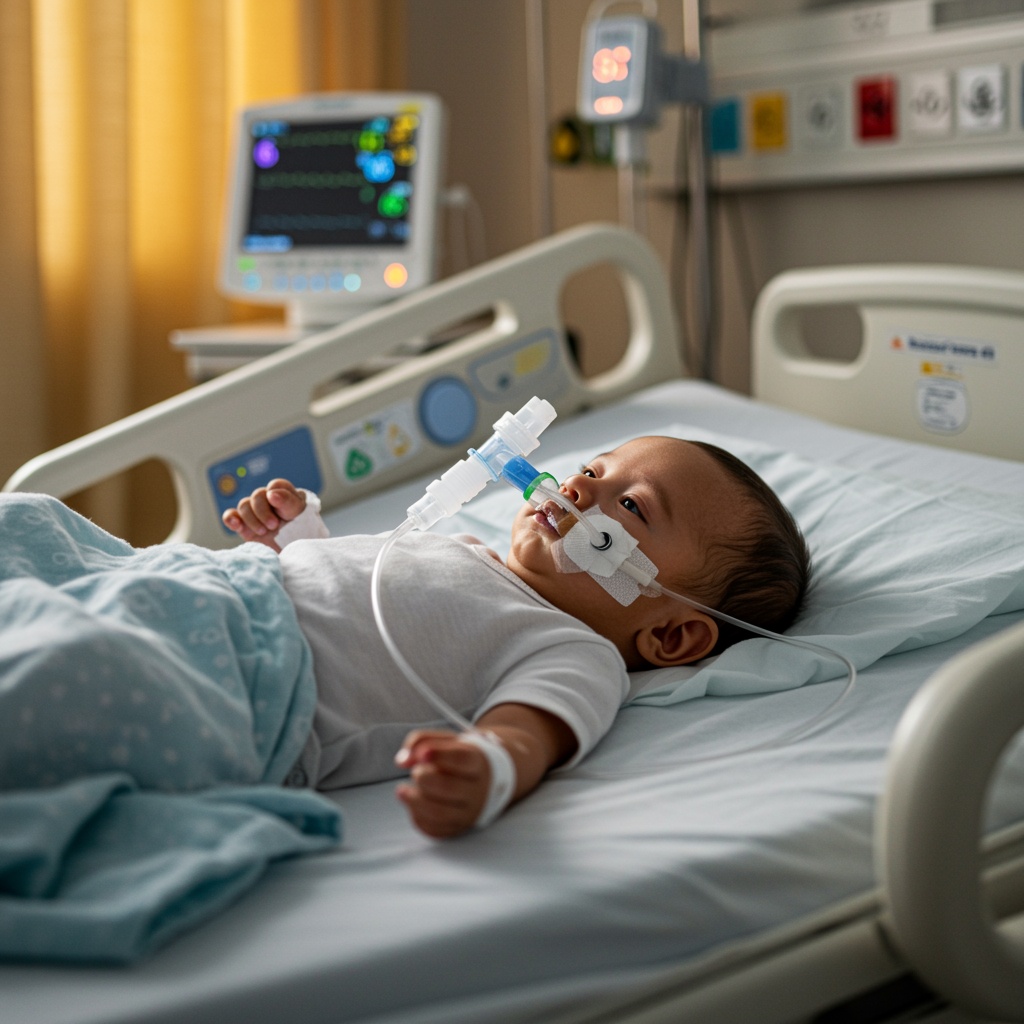
Bennett was born on October 7, 2024, but there was little time for celebration. Within moments of entering the world, he was rushed directly to the neonatal intensive care unit at Mount Sinai Hospital in New York City, where specialists were already waiting to begin treating his condition.
At only four days old, doctors performed Bennett’s first procedure by inserting a balloon into his pulmonary valve to improve blood flow. While the surgery itself was successful, his parents were unable to enjoy the relief most families feel after an operation. Their newborn remained intubated in the NICU, and they couldn’t even hold him in their arms.
Just when it seemed things might finally be moving in the right direction, another emergency unfolded.
At only 10 days old, Bennett suffered sudden cardiac arrest.
Cristina remembers watching as medical staff rushed into the room. Within seconds, nearly 20 doctors and nurses surrounded her son’s bedside while chest compressions began immediately. Bennett flatlined as his terrified parents stood nearby, powerless to help.
The medical team soon asked Eric and Cristina to make an unimaginable decision. Doctors believed Bennett’s best chance of survival was to place him on ECMO, an advanced life-support system that temporarily performs the work of the heart and lungs, giving critically ill patients time to recover or undergo surgery.
Despite the shock of the moment, the couple never hesitated.
“We were just kind of in a stunned shock, but still feeling some hope there because we just knew that we were in the only place that we could be for him to have a chance,” Eric later recalled.
For six agonizing days, Bennett remained on the machine while his parents waited beside him, hoping their tiny son would be strong enough for the operation that could save his life.
A Tiny Baby Underwent Open-Heart Surgery
After nearly a week on ECMO, surgeons performed Bennett’s first open-heart surgery when he was just two weeks old.
The procedure was successful, marking the biggest step forward since his birth. While Bennett still had a long road ahead, doctors were finally able to stabilize his condition enough for him to continue recovering.
For Eric and Cristina, the days that followed brought emotions they had almost forgotten were possible. After weeks spent surrounded by hospital monitors, IV lines, and constant uncertainty, they were finally given the news they had desperately hoped to hear.
Just two days before Thanksgiving, Bennett was healthy enough to go home with his parents.
Their relief didn’t mean the journey was over.
Five months later, Bennett returned to the hospital for a second heart surgery, which doctors also completed successfully. Specialists expect he will need another operation between the ages of three and five as his heart continues to develop, something that is common for children born with complex congenital heart defects.
Although more challenges remain ahead, every successful procedure has brought Bennett one step closer to living the active childhood his parents have always dreamed of for him.
A Matching Scar Became a Father’s Greatest Promise
As Bennett recovered from his second surgery, Eric found himself thinking about the scar that now stretched across his son’s chest. While many parents might see it as a painful reminder of everything their child had endured, Eric wanted Bennett to grow up seeing it differently. To him, the scar represented survival, courage, and every obstacle his son had already overcome before learning to walk.
That idea stayed with him throughout Bennett’s hospital stays until it eventually became something he couldn’t ignore. Eric decided he wanted to carry the same scar on his own body, ensuring his son would never feel different because of the mark left behind by lifesaving surgery.
“I want to wear what he wears,” Eric explained. “I want him as he grows up to be able to look at me and say, daddy looks the same. Daddy has what I have. It’ll give me a way to be able to say, I am in this with you.”
Almost 11 months after Bennett’s birth, Eric visited a tattoo artist and had the surgical scar carefully recreated across his own chest. It became only his second tattoo, but unlike his first, which honored his great-grandfather, this one carried the story of his son’s fight for life.
A Reminder He’ll Carry Forever
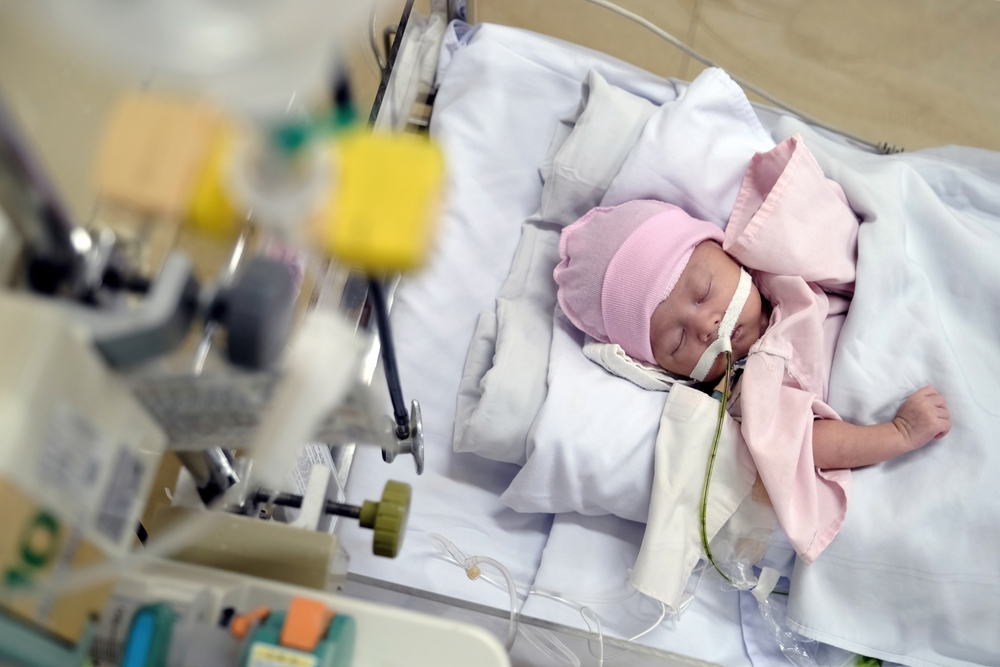
Cristina immediately supported the idea when Eric first mentioned it inside Bennett’s hospital room. Like many parents of children who undergo open-heart surgery, she admitted seeing her baby’s scar for the first time was heartbreaking. Knowing her husband wanted to share that burden made the gesture even more meaningful.
Not long after getting the tattoo, the family traveled to Florida for a vacation. Eric remembers taking off his shirt before getting into the pool and feeling something he hadn’t expected.
“Just me being with my shirt off in the pool kind of wearing it, I feel complete having it there,” he said. “It feels very good to look down and see it there.”
For Eric, the tattoo also represents the emotional wounds their family will always carry. Those memories cannot be erased, but neither can the love that helped them survive every frightening moment together.
What Is Pulmonary Atresia?
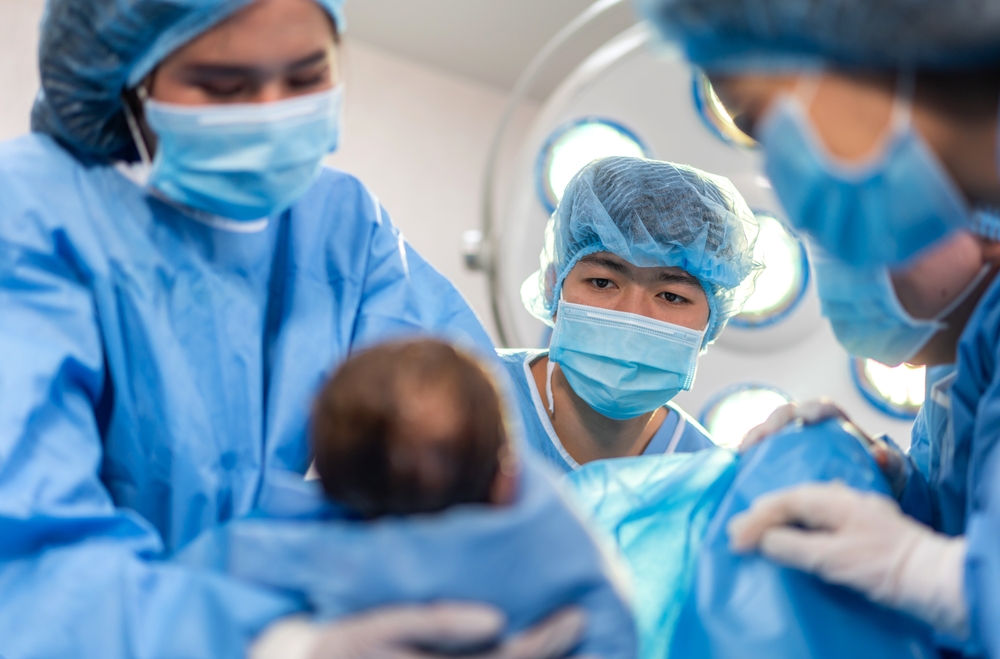
Pulmonary atresia is a rare congenital heart defect that develops before birth when the pulmonary valve fails to form correctly. Without that valve working as it should, blood cannot flow normally from the heart to the lungs, making immediate medical treatment necessary after birth.
Although every child is different, treatment often involves several stages as the heart develops during childhood.
Children born with pulmonary atresia commonly require:
- Early intervention after birth: Many newborns need emergency procedures or medication within the first few days of life to stabilize blood flow.
- Open-heart surgery: Surgeons reconstruct or reroute blood flow to help the heart pump oxygen-rich blood effectively.
- Additional surgeries: As children grow, further operations are often needed because the heart changes over time.
- Long-term specialist care: Regular monitoring allows doctors to track heart function and determine whether future treatment is necessary.
Advances in pediatric heart surgery have dramatically improved outcomes over recent decades, allowing many children with congenital heart defects to enjoy active and fulfilling lives despite ongoing medical care.
Other Fathers Have Made Similar Sacrifices
Eric’s story has resonated with families around the world because he isn’t the only father who has chosen to wear his child’s scar with pride.
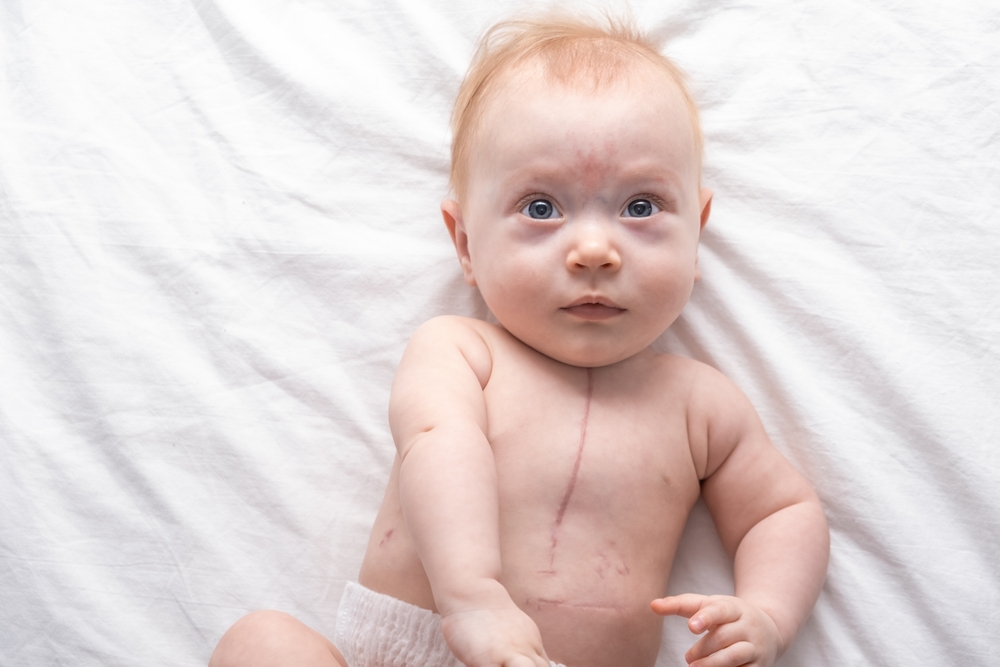
In Wales, Richard Davies made headlines after getting a tattoo matching the chest scar of his son Bobby, who was born with several complex congenital heart defects, including Tricuspid Atresia and Hypoplastic Right Heart Syndrome. Bobby underwent open-heart surgery as an infant and, like Bennett, is expected to need additional procedures as he grows older.
Richard said the tattoo was his way of making sure Bobby would never feel isolated because of the scar left behind by surgery. His wife Natasha later described the gesture as a permanent reminder that their son would always have his family’s support, no matter how many challenges still lay ahead.
Stories like these have become powerful symbols within the congenital heart disease community. While every family’s experience is unique, many parents understand the desire to help their children see surgical scars not as something to hide, but as proof of extraordinary strength.
Bennett Is Now Thriving One Smile at a Time
Today, Bennett looks very different from the tiny newborn who once depended on life-support machines to survive. According to Eric, he has grown into a cheerful baby who spends his days smiling, giggling, and filling their home with laughter. Like any infant, he has his fussy moments, but his parents say he has developed into a happy little boy who even sleeps through the night.
Doctors have also been encouraged by his progress. Bennett continues moving up the growth charts, and his medical team remains pleased with how well he has recovered from two major heart surgeries before reaching his first birthday. Although another operation still awaits him in the coming years, each milestone feels like another victory for the family that once feared losing him.
Looking back, Eric no longer believes their journey was built on luck alone.
“The universe knew that this special little boy that was going to need a lot of care was coming into this world one way or another,” he reflected. “It was the universe setting us up to make sure that we could take care of this little boy.”
For Bennett, the scar on his chest will always tell the story of the battle he fought before he could even speak. His father’s matching tattoo tells another story entirely: that no matter what lies ahead, someone will always be standing beside him, wearing the same mark with pride.
Featured Image via econks66