
Your cart is currently empty!
New DNA Study Reveals the Shroud of Turin Is Covered in Animal and Food Traces

For centuries, the Shroud of Turin has stood at the center of one of history’s most enduring religious mysteries. Believed by many Christians to be the burial cloth of Jesus Christ, the linen has inspired countless scientific investigations, fierce debates, and deeply held beliefs. Every new study tends to reignite the same question: could this famous relic really date back to the time of Jesus, or is it a medieval creation that later became one of Christianity’s most revered objects?
Contents
show
A newly published study has now added another unexpected chapter to that story, although it is unlikely to settle the debate. Using advanced DNA sequencing technology, researchers discovered that the Shroud carries traces of DNA from numerous people, animals, plants, and even foods collected over centuries of handling and environmental exposure. Rather than providing definitive proof about the cloth’s origins, the findings paint a remarkable picture of its long journey through history, revealing just how many lives, places, and environments this famous relic has encountered.

Scientists Used Modern DNA Technology to Revisit a Famous Mystery
The research, published in Scientific Reports, marks the first time scientists have applied rigorous PCR-free next-generation metagenomic sequencing to official samples collected from the Shroud during examinations carried out in 1978. Instead of focusing solely on the cloth’s age or authenticity, the team set out to analyze every trace of biological material preserved within its linen fibers.
By examining fragments of genomic DNA, researchers uncovered a surprisingly complex biological record that had accumulated over hundreds of years. Rather than identifying a single source of DNA, the sequencing revealed an intricate mixture of human, animal, plant, bacterial, fungal, and microbial genetic material embedded throughout the fabric.
The study was part of an international collaboration that included Professor Noemi Procopio, a forensic scientist at the University of Lancashire. According to the researchers, the objective was not to prove or disprove the Shroud’s authenticity, but to understand what centuries of contact had left behind.
Professor Procopio explained, “The Shroud of Turin continues to fascinate historians, scientists and the public, and we’re thrilled to reveal new information about the biological complexity preserved within samples collected almost 50 years ago by applying new cutting-edge forensic DNA technologies.”
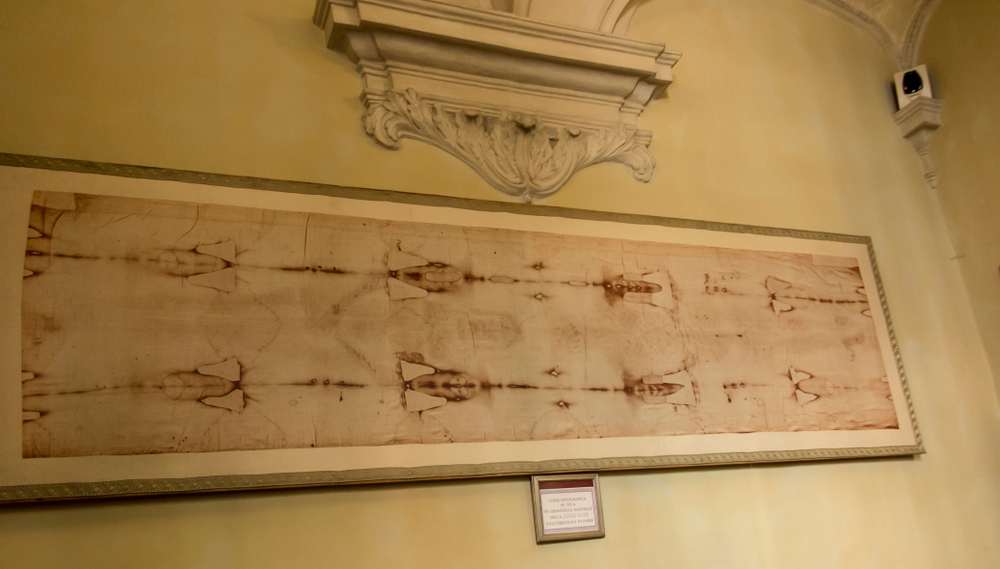
A Biological Archive Hidden Inside Linen Fibers
Unlike previous investigations that focused on blood stains, weave patterns, or carbon dating, this research treated the Shroud as a biological archive. Every person who touched it, every place where it was stored, and every environment it passed through potentially left behind microscopic traces that became trapped within the ancient linen.
Researchers also identified multiple human mitochondrial DNA lineages, alongside bacteria, fungi, and salt-loving microorganisms that commonly survive in challenging environments. Together, these microscopic organisms help tell the story of where the cloth has been stored and how it has interacted with the surrounding environment throughout its history.
The Shroud Contains DNA From People Across Several Regions
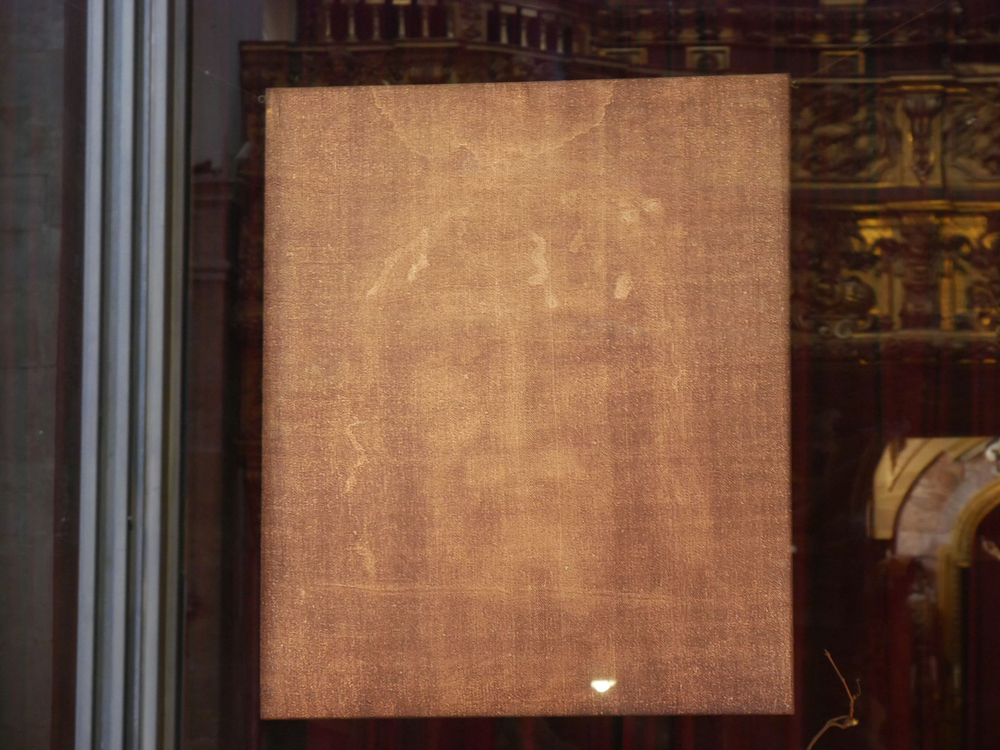
One of the study’s most intriguing discoveries involved the human DNA recovered from the samples. Scientists identified genetic material from at least 14 different individuals, including one of the researchers who originally handled the cloth during the 1978 investigation. This alone demonstrates how easily DNA can accumulate on an object that has been examined and displayed countless times.
The analysis also revealed mitochondrial DNA lineages associated with several different regions of the world. Researchers detected genetic signatures linked to Europe and the Middle East, areas already closely connected to the Shroud’s documented history. However, they also found that around 40 percent of one genetic profile showed ancestry associated with the Indian subcontinent.
That unexpected finding has attracted particular interest because some historians have suggested the linen itself may have originated in the Indus Valley before eventually reaching the Middle East and later Europe through ancient trade routes. While the DNA evidence does not prove that theory, it adds another piece to an already complicated historical puzzle.
The researchers also caution against drawing sweeping conclusions from these results. DNA can be transferred through direct contact, clothing, dust particles, or even microscopic environmental contamination. Because the Shroud has been handled by pilgrims, religious officials, scientists, conservators, and museum staff over many centuries, distinguishing ancient biological traces from more recent contamination is extremely difficult.
Scientists Also Found DNA From Animals, Crops, and Everyday Foods
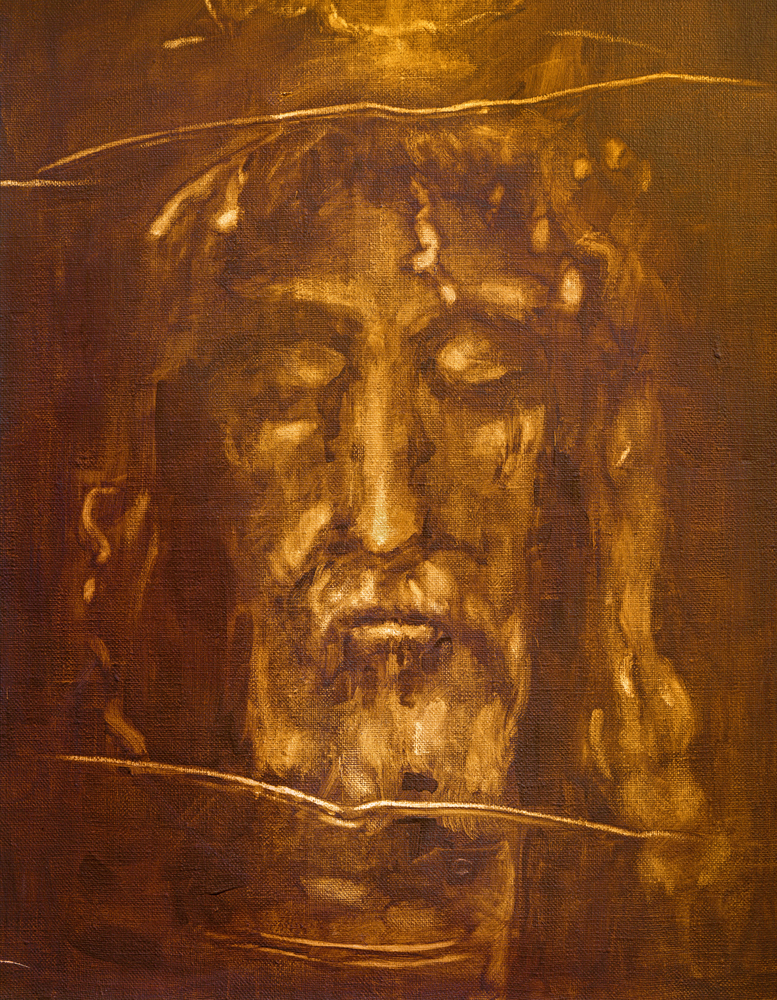
Perhaps the most surprising aspect of the study was the sheer variety of non-human DNA detected within the linen. Instead of finding only environmental microorganisms, researchers uncovered genetic traces from numerous domesticated animals, cultivated crops, and even marine organisms.
Among the DNA identified were traces connected to:
- Dogs and cats
- Chickens, cattle, pigs, and rabbits
- Horses and fish
- Wheat and maize
- Carrots, tomatoes, cucumbers, peppers, and melons
- Bananas and peanuts
- Mediterranean red coral
At first glance, the list almost sounds unbelievable. Yet researchers say these discoveries simply reflect centuries of ordinary human activity surrounding one of the world’s most visited religious artifacts. People carrying food, working with animals, traveling between regions, or even touching the cloth after eating could all have unintentionally contributed tiny fragments of DNA that became trapped within the fabric.
The discovery also highlights one of the biggest challenges facing scientists who study historical objects. Every exhibition, restoration effort, religious ceremony, or scientific examination introduces new biological material. Over hundreds of years, those traces accumulate layer upon layer, creating an increasingly complex genetic record that reflects the artifact’s entire history rather than a single moment in time.
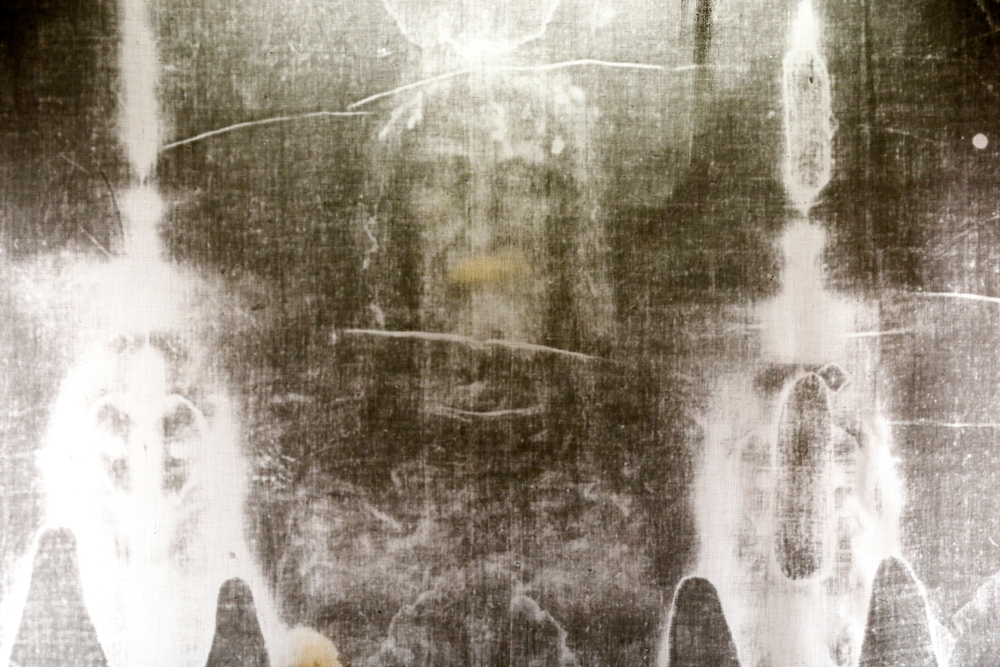
Why the Findings Do Not Prove the Shroud’s Authenticity
As surprising as the DNA discoveries are, the researchers stress that none of them answer the question that has fueled debate for generations: whether the Shroud of Turin was actually the burial cloth of Jesus. Instead, the study demonstrates just how difficult it is to extract meaningful historical evidence from an object that has been touched, transported, displayed, and examined for centuries.
Every person who came into contact with the linen likely left behind microscopic traces of skin cells, sweat, dust, or other biological material. Over time, those traces mixed with environmental contaminants, making it virtually impossible to determine which DNA fragments, if any, date back to the cloth’s earliest history. The researchers emphasize that the biological signatures now preserved in the fabric represent centuries of accumulated exposure rather than a single historical event.
Professor Noemi Procopio explained that while the technology offers remarkable new ways to study ancient artifacts, it cannot isolate an “original” genetic profile associated with the cloth itself. “The Shroud represents a rich archive of genetic information that has accumulated over centuries of human interaction and environmental exposure,” she said. “While the DNA evidence cannot answer all the questions about the age or authenticity of the cloth, it provides novel insights into its biological history and demonstrates how advances in forensic science can unlock new information from historical artifacts.”
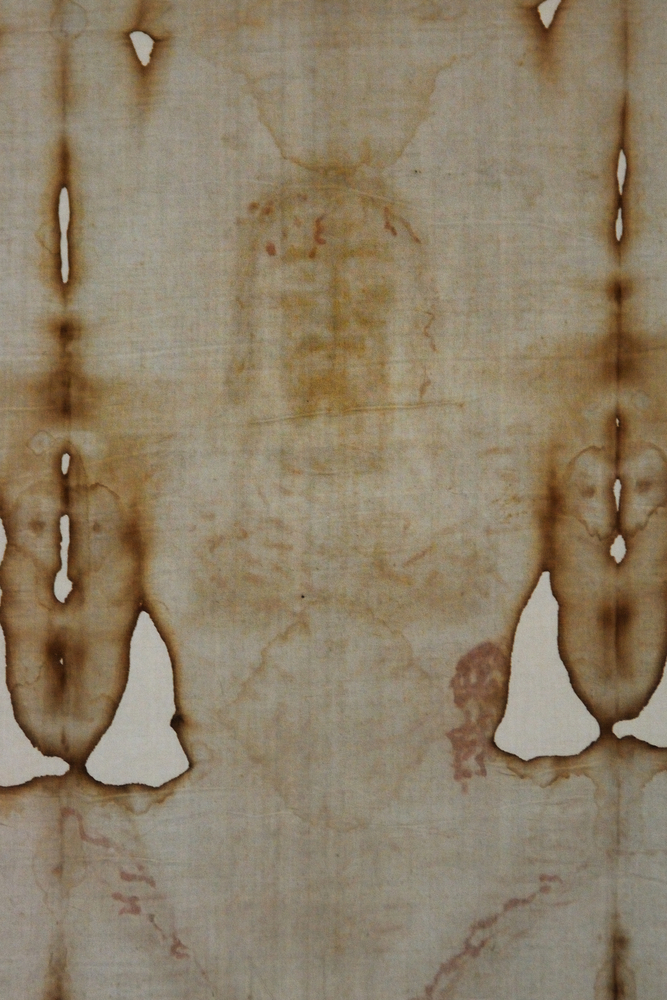
That distinction is crucial. The findings neither strengthen nor weaken claims that the Shroud once wrapped Jesus. Instead, they reveal how centuries of public display, religious devotion, scientific examination, and environmental exposure have transformed the cloth into an enormous repository of biological information.
Why Contamination Is Almost Impossible to Avoid
Historical artifacts rarely exist in sterile conditions, especially those that have become objects of religious significance. The Shroud has been viewed by millions of pilgrims, handled by clergy, examined by scientists, repaired after fires, and stored under different environmental conditions throughout its documented history.
Every one of those moments increases the chance of introducing new DNA. Modern forensic science is extremely sensitive, capable of detecting microscopic genetic fragments that earlier generations of researchers could never have identified. That sensitivity is both a strength and a limitation. While scientists can recover extraordinary amounts of information, distinguishing ancient biological material from contamination that occurred decades or centuries later becomes far more difficult.
The results also explain why many researchers now see the Shroud as valuable for reasons beyond the authenticity debate. Even if the original DNA can never be recovered, the accumulated biological evidence still tells a fascinating story about the object’s preservation and history.
The DNA Offers New Clues About the Shroud’s Long Journey
Although the research cannot identify where the Shroud originated, some of its findings may provide fresh clues about the artifact’s travels across different regions over many centuries. The diverse mix of human ancestry, cultivated plants, domesticated animals, and microorganisms suggests the cloth has passed through a remarkable variety of environments before reaching its current home in Turin, Italy.
One particularly interesting detail is the presence of mitochondrial DNA linked to individuals with ancestry associated with the Indian subcontinent. Researchers caution that this does not prove the cloth originated there, but it does align with one long-standing theory suggesting the linen may have been produced in the Indus Valley before moving west through ancient trade routes.
The wide range of plant DNA tells a similar story. Crops such as wheat, maize, carrots, bananas, tomatoes, peppers, cucumbers, and peanuts point toward repeated contact with people from different regions and historical periods. Some of these plants were introduced into Europe only after global trade expanded, highlighting how the cloth continued accumulating biological material long after its earliest documented appearances.
Scientists also detected DNA from Mediterranean red coral, along with numerous domesticated animals including cattle, pigs, horses, rabbits, chickens, dogs, and cats. Rather than representing anything mysterious, these traces likely reflect ordinary human life surrounding the relic as it moved through churches, collections, laboratories, and public exhibitions.
Modern Science Is Revealing More Than Ever Before
The Shroud of Turin has been examined for decades using photography, textile analysis, blood chemistry, pollen studies, and carbon dating. This latest research adds another powerful tool to that growing scientific arsenal by demonstrating how forensic genomics can uncover biological histories hidden inside ancient materials.
Instead of focusing on proving religious claims, scientists increasingly view these techniques as ways to reconstruct an object’s environmental and cultural history. Similar approaches could eventually be applied to other historical textiles, manuscripts, archaeological artifacts, and museum collections that have been handled by generations of people.
The study also highlights how advances in DNA sequencing continue to transform forensic science. Samples collected nearly 50 years ago using methods available at the time can now reveal information that researchers in the 1970s had no ability to detect. As sequencing technology continues to improve, scientists may uncover even more details from historical artifacts that have been sitting in museum collections for decades.
For now, the Shroud remains exactly what it has been for centuries: one of history’s most fascinating and debated relics. The latest DNA study doesn’t resolve the mystery surrounding its origins, but it does reveal something equally remarkable. Hidden within its linen fibers is a biological record of countless people, places, and environments that have shaped its journey through history. While the identity of the person it may have covered remains uncertain, the cloth itself has become a living archive of centuries of human contact, preserving a story far more complex than anyone expected.
Sources:
- Procopio, N., et al. (2026). [Article title]. Scientific Reports, 16, Article 60684. https://www.nature.com/articles/s41598-026-60684-7
- Barcaccia, G., Rambaldi Migliore, N., Gabelli, G., Agostini, V., Palumbo, F., Moroni, E., Nicolini, V., Gao, L., Mattutino, G., Porter, A., Palmowski, P., Procopio, N., Perego, U. A., Iorizzo, M., Sharbel, T. F., Baima Bollone, P., Torroni, A., Squartini, A., & Achilli, A. (2026). DNA signatures preserved in the official 1978 sample collection of the Shroud of Turin. Scientific Reports, 16, Article 60684. https://doi.org/10.1038/s41598-026-60684-7