
Your cart is currently empty!
Rashida Tlaib Pushes Nationwide Ban On AI Data Centers
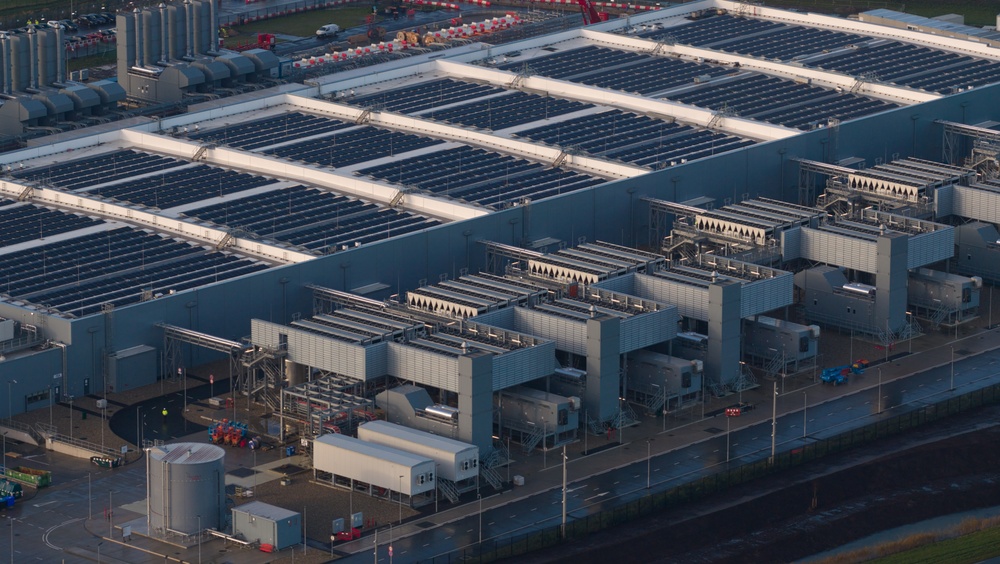
The race to dominate artificial intelligence has sparked one of the biggest infrastructure booms in modern American history. Across the country, giant data centers are being planned or built to power everything from ChatGPT-style systems to military technologies. But as these facilities spread, so has public opposition.
Contents
show
Now, Representative Rashida Tlaib has introduced legislation that would permanently prohibit large AI data centers from being built on federally owned land. The proposal arrives as states, environmental groups, and local communities increasingly question whether the rapid expansion of AI infrastructure is coming at too high a cost.
Tlaib Introduces Sweeping Federal Ban
Representative Rashida Tlaib of Michigan announced the No AI Data Centers on Federal Lands Act, legislation that would permanently ban large AI data centers and related infrastructure from land owned or managed by the federal government, including military installations.
The bill goes beyond preventing future development. It would also require any qualifying AI data centers already operating on federal property to be removed, with affected sites restored through environmental remediation.
Tlaib framed the proposal as a response to growing concerns from residents who say data center projects are placing additional burdens on communities already dealing with environmental and economic challenges.
“Everywhere I go in our district, our residents tell me loud and clear, data centers are not welcome in our communities. AI data centers bring noise, light, air, and water pollution, and can increase energy costs by as much as 267%,” Tlaib said while introducing the legislation.
She also criticized the Trump administration’s approach to expanding AI infrastructure, arguing that public resources should not be used to benefit major technology companies.
“Our residents are choking on smog and already paying too much for their utility bills, yet the Trump administration wants to place heavier cost burdens on the shoulders of hardworking Americans. Our corrupt, AI-addicted President cannot be allowed to sacrifice our federal lands so that Big Tech oligarchs can get richer. I will continue to push back against harmful AI data centers alongside our residents to protect our public lands, health, and environment.”
The bill has attracted support from Democratic lawmakers including Representatives Jim McGovern, Adelita Grijalva, Delia Ramirez, Mark Pocan, and Bonnie Watson Coleman.
Why AI Data Centers Have Become So Controversial
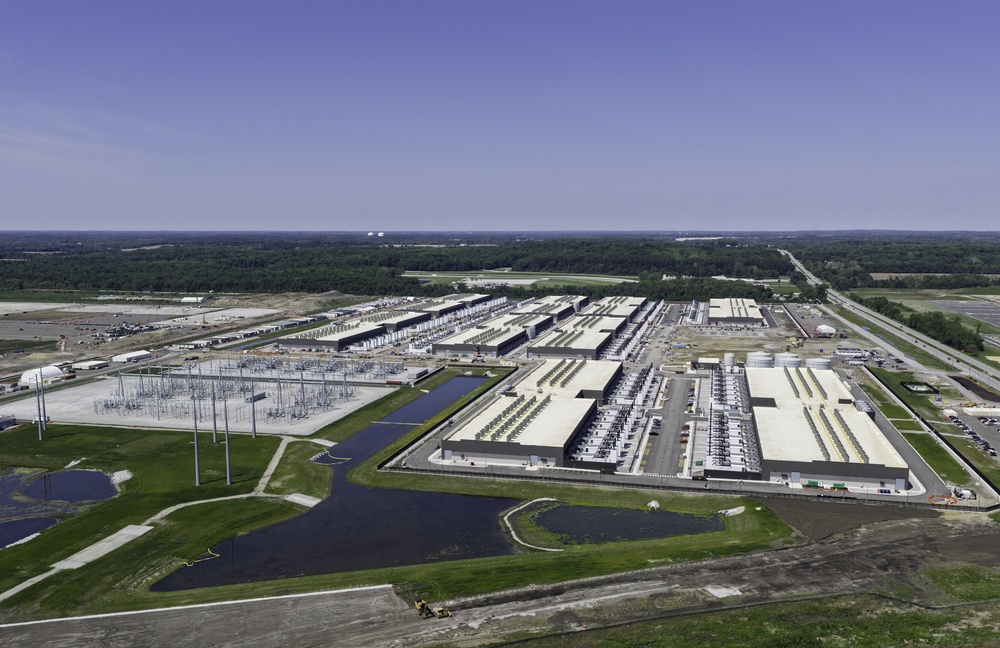
Artificial intelligence depends on enormous computing power. Every chatbot response, image generation request, or AI-powered search requires thousands of specialized computer chips working simultaneously inside massive facilities that consume extraordinary amounts of electricity and water.
Unlike traditional office buildings or manufacturing plants, hyperscale data centers often operate around the clock. Cooling systems run continuously to prevent overheating, while backup generators and electrical infrastructure occupy large areas of land.
Supporters argue these facilities are essential if the United States hopes to remain competitive with China and other countries investing heavily in artificial intelligence.
Critics, however, argue that nearby communities often absorb the environmental costs while receiving relatively few long-term benefits.
Among the concerns raised by opponents are:
- Increased electricity demand that could contribute to higher utility bills.
- Heavy water consumption needed to cool computing equipment.
- Noise generated by cooling systems and backup generators.
- Light pollution from facilities operating throughout the night.
- Air pollution associated with backup power systems.
- Loss of open space and environmental habitat.
Tlaib’s proposal reflects those concerns by focusing specifically on federal lands, arguing they should remain protected rather than becoming industrial sites for AI infrastructure.
Federal Agencies Are Accelerating AI Development

The legislation comes as multiple federal agencies have begun exploring ways to expand AI infrastructure on government-owned property.
One of the most significant developments came earlier this year when the Department of Defense requested approximately $30 billion to develop hyperscale data centers capable of supporting advanced military applications.
According to supporters of Tlaib’s bill, those facilities could eventually integrate AI systems into military decision-making, raising broader concerns about both environmental impacts and national security policy.
At the same time, the Department of Energy has reportedly identified as many as 16 federal locations that could host future AI data centers.
Another development that intensified criticism occurred when the Bureau of Land Management approved what supporters of the legislation describe as the first AI data center on Bureau-managed land in Nevada.
Environmental advocates also object to changes made under the Trump administration that they argue reduce environmental oversight for certain projects. According to supporters of the bill, new federal rules could allow qualifying facilities to move forward without Clean Air Act permits that would normally apply to similar developments.
These actions have fueled concerns among environmental organizations that public lands could increasingly become locations for large-scale industrial AI projects.
Environmental Groups Rally Behind The Proposal

Several national advocacy organizations quickly endorsed the legislation, arguing that AI expansion should not override environmental protections.
Camden Weber, senior climate and energy policy specialist at the Center for Biological Diversity, said the legislation establishes important limits on where these facilities should be built.
“While the Trump administration willingly serves up our environment on a platter to Big Tech and their data centers, Rep. Tlaib’s proposed legislation is drawing a line in the sand. Public lands belong to the people, not to Big Tech’s bottom line. This bill is a necessary step toward holding the industry accountable and protecting the air, water and places all species depend on.”
Climate Justice Alliance also supported the measure, describing it as an effort to strengthen community oversight over major infrastructure projects.
Legislative Director Mar Zepeda Salazar said, “Everyone deserves clean air, safe water, affordable energy, and healthy neighborhoods. But right now, the accelerated build out of AI data centers threatens this.”
She added that communities have consistently asked for greater transparency regarding projects that could reshape their neighborhoods.
Food & Water Watch similarly argued that public lands should remain protected from industrial development connected to AI infrastructure.
Jim Walsh of the organization said, “With this legislation, Rep. Tlaib is showing the leadership required to protect public lands from massive data center development and industrial destruction.”
Win Without War focused on the military implications of expanding AI infrastructure.
Deputy Director Shayna Lewis argued that public lands “should not be turned into sacrifice zones for the AI arms race,” while expressing concern about increasing reliance on technology companies in defense planning.
Opposition Extends Beyond Federal Land
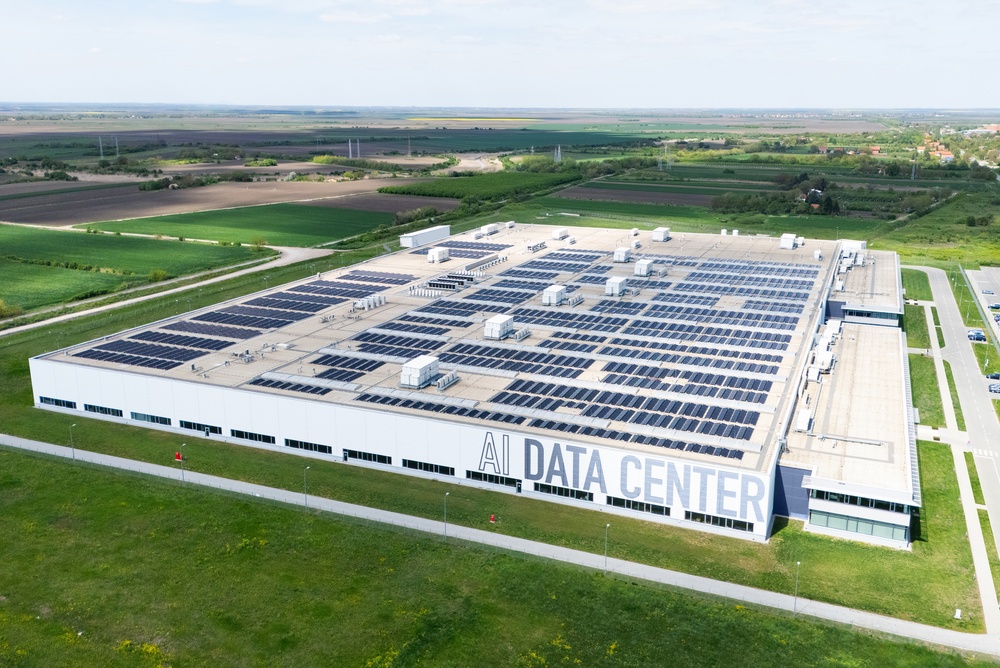
The debate surrounding AI data centers stretches well beyond Washington.
Communities across the United States have increasingly pushed back against proposals to construct new facilities near residential neighborhoods. Polling cited by supporters of Tlaib’s legislation suggests this resistance is becoming widespread.
A Reuters/Ipsos survey found that only 14 percent of Americans would be comfortable having a data center built near their community.
Another national Gallup poll found that roughly seven in ten Americans oppose new data center construction in their local areas, with nearly half saying they strongly oppose such projects.
Those numbers reflect growing concerns over issues ranging from electricity costs to environmental impacts.
The backlash has also begun influencing state politics.
In New York, Governor Kathy Hochul recently announced a one-year moratorium on new hyperscale data center projects requiring discretionary state permits. The temporary pause is intended to allow regulators to study electricity demand, water use, and broader impacts on local communities before approving additional large facilities.
State officials also announced plans requiring developers to shoulder more of the costs associated with grid upgrades and electricity usage instead of passing those expenses onto consumers.
The move made New York the first state to adopt such a statewide pause on major data center development.
Land Seizures Have Added Fuel To The Debate
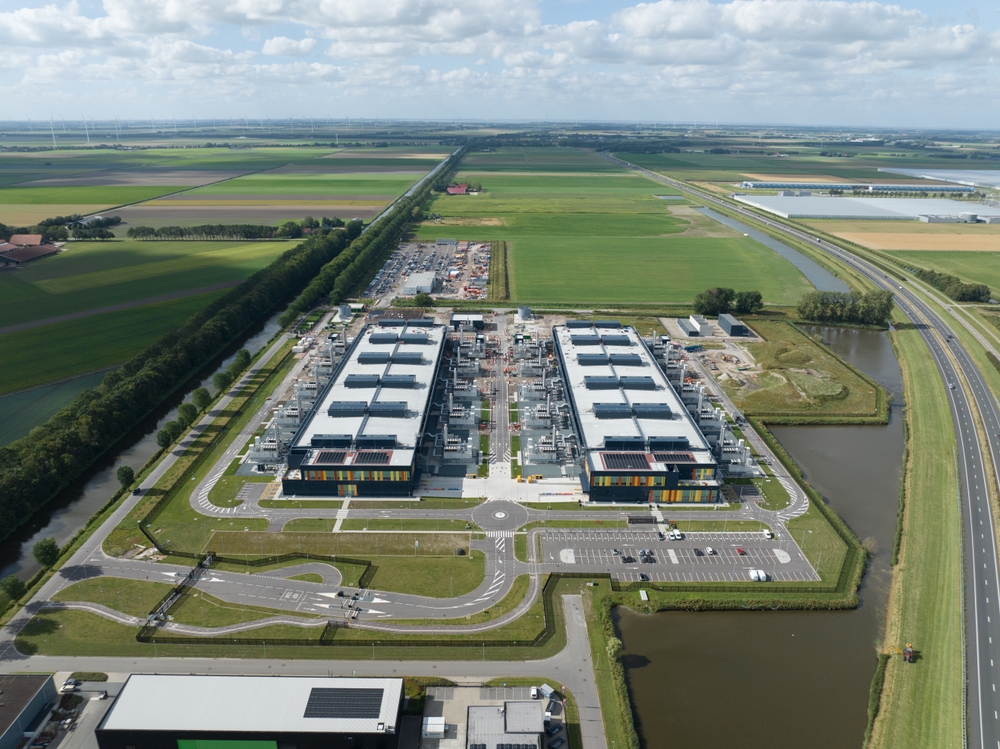
The controversy surrounding AI infrastructure extends beyond the data centers themselves. The transmission lines needed to power these facilities have become another major source of conflict, particularly in rural communities where landowners have found themselves facing the possibility of losing property through eminent domain.
As AI systems demand ever larger amounts of electricity, utility companies are expanding high-voltage transmission networks across multiple states. Those projects often require crossing privately owned land, and when negotiations with landowners fail, companies may ask governments to use eminent domain to obtain the necessary easements.
Eminent domain allows governments to take private property for public use, provided landowners receive what the Constitution describes as “just compensation.” The power has traditionally been used for highways, railroads, schools, and public utilities.
The growing question is whether infrastructure built primarily to serve privately owned AI data centers should qualify under that same standard.
Legal experts say the issue sits at the center of a constitutional debate that has existed for decades.
Across states including Georgia and Pennsylvania, utility companies have already explored using eminent domain to acquire land needed for transmission lines tied to rising electricity demand.
Whether those projects satisfy the constitutional requirement of serving a public use may depend on who ultimately benefits.
If a transmission line improves reliability for ordinary electricity customers, courts have often upheld condemnation actions. If the line exists primarily to benefit one private company, the legal argument becomes more complicated.
Courts Have Long Struggled With The Definition Of “Public Use”

The legal battle surrounding AI infrastructure echoes earlier disputes over economic development.
One of the most famous examples came in 2005 when the U.S. Supreme Court decided Kelo v. City of New London. In that case, the Court ruled that economic development could qualify as a public use, allowing private homes to be seized for redevelopment connected to a Pfizer research facility.
The decision sparked a national backlash.
Although the redevelopment project never materialized and Pfizer eventually left the area, the ruling prompted 45 states to pass laws restricting the use of eminent domain for private economic development.
Some state supreme courts have adopted even stricter interpretations.
Michigan, Ohio, and Oklahoma have each ruled that governments cannot simply transfer private property to another private party solely because economic development might result.
That legal history could become increasingly relevant as more transmission projects are proposed to support expanding AI infrastructure.
Some previous court decisions suggest utilities will continue to have broad authority when transmission lines improve reliability for local customers.
Other rulings indicate that projects serving little public benefit within a state could face greater legal challenges.
One Mississippi Supreme Court decision, for example, rejected a condemnation request because the proposed transmission line primarily benefited customers outside the state.
As more AI facilities are announced, similar lawsuits may become increasingly common.
States Are Beginning To Push Back

Federal legislation is only one piece of a much broader political movement emerging across the country.
New York recently became the first state to temporarily halt construction of major hyperscale data centers through a one-year moratorium announced by Governor Kathy Hochul.
The state said it would use the pause to develop a regulatory framework addressing concerns over electricity demand, water usage, environmental impacts, and rising utility costs.
Rather than shifting infrastructure expenses onto consumers, New York plans to require developers to contribute more toward electrical grid upgrades, generate more of their own power, and invest in clean energy resources to support their operations.
Officials are also exploring the repeal of certain tax incentives that currently benefit data center developers.
The decision reflects growing political pressure surrounding AI infrastructure.
New York currently hosts nearly 150 operational data centers, making it one of the country’s largest markets for the industry.
Similar moratorium proposals have appeared in states including Michigan, Vermont, and Virginia.
In Maine, lawmakers approved legislation calling for a pause before Governor Janet Mills vetoed the measure.
The issue has even influenced election campaigns.
In Utah, controversy surrounding a proposed data center backed by investor Kevin O’Leary became a major issue during state primary elections. Senate President J. Stuart Adams, who supported the project despite local opposition, was defeated in the primary.
These developments suggest that data center expansion has become more than a technology issue. It is increasingly becoming a political issue capable of influencing voters at both state and local levels.
Supporters Say AI Infrastructure Is Essential

While environmental groups and many local communities have expressed growing concern, supporters of rapid AI expansion argue that slowing construction carries significant risks of its own.
Artificial intelligence has become central to economic competition between the United States and China.
Technology companies have invested hundreds of billions of dollars into developing advanced AI systems that require enormous computing capacity.
Federal agencies also view AI as increasingly important to national defense, cybersecurity, intelligence analysis, and scientific research.
Supporters of continued expansion argue that limiting access to suitable locations for data centers could slow innovation and weaken America’s competitive position.
They also note that AI facilities create construction jobs, generate tax revenue, and encourage additional investment in surrounding communities.
Critics of Tlaib’s legislation contend that an outright federal ban may eliminate opportunities to build facilities in locations where environmental impacts could be carefully managed.
Others argue that modern data centers are becoming more energy efficient and increasingly powered by renewable electricity, reducing some of the concerns raised by opponents.
The debate illustrates the difficult balance policymakers face between encouraging technological leadership and responding to growing public concerns over environmental impacts.
The Fight Over AI’s Physical Footprint Is Just Beginning
For years, conversations about artificial intelligence focused almost entirely on software.
Now attention has shifted toward the enormous physical infrastructure required to keep that software running.
The rapid expansion of data centers has created new political alliances that cut across traditional ideological lines. Environmental organizations, local residents, property rights advocates, and some lawmakers have found common ground in questioning how quickly these projects are moving forward.
Representative Tlaib’s legislation represents one of the strongest attempts yet to place firm limits on where AI infrastructure can be built.
Whether the bill ultimately advances through Congress remains uncertain, particularly given competing priorities around national security and technological competitiveness.
Even if it does not become law, the proposal reflects a broader shift in the national conversation.
As artificial intelligence continues reshaping the economy, the debate is no longer limited to algorithms and innovation. It has expanded to include land use, energy policy, environmental protection, property rights, and the role government should play in balancing technological progress against the concerns of the communities expected to host the infrastructure powering the AI revolution.