
Your cart is currently empty!
A Strange Monkey Hidden in Congo’s Rainforest Has Finally Been Identified After Years of Mystery
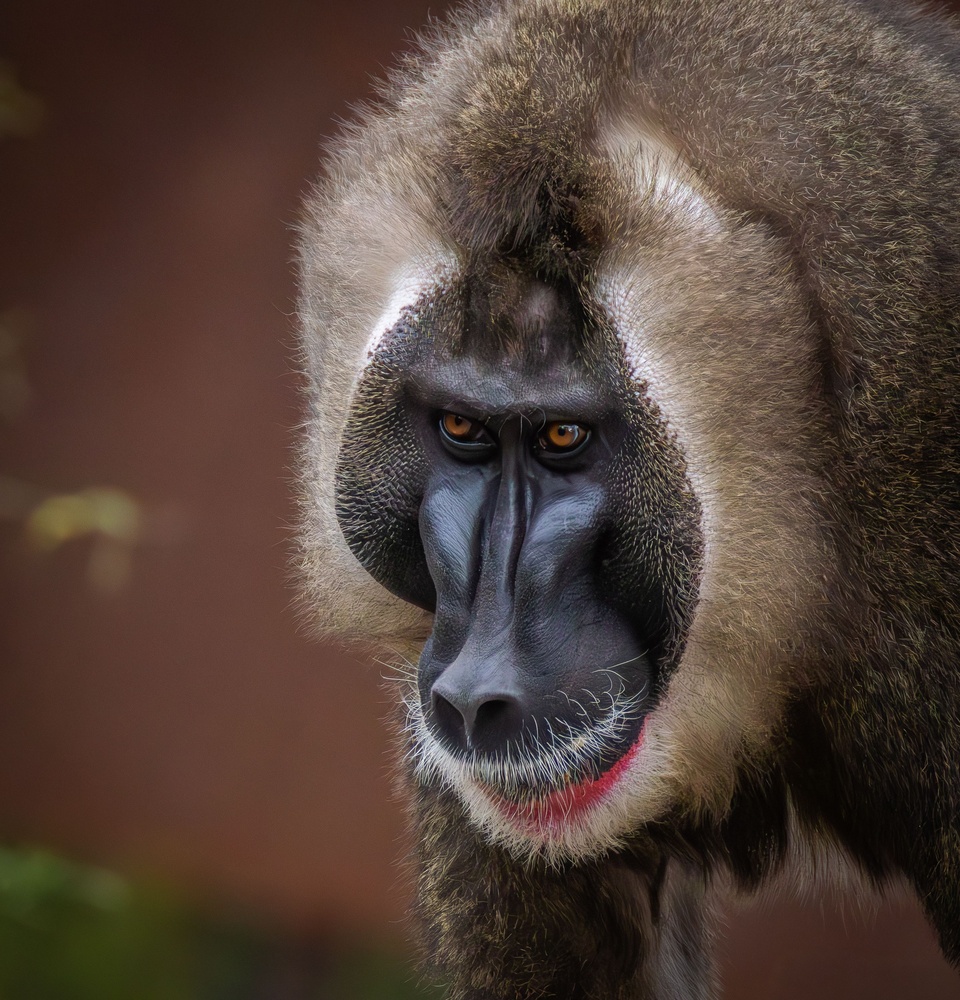
For nearly two decades, a blurry photograph taken deep inside one of the world’s largest rainforests left scientists with more questions than answers. The image captured only part of an unfamiliar black monkey perched high in the trees of the Democratic Republic of the Congo (DRC), but even that incomplete glimpse suggested researchers had stumbled across something extraordinary. After the animal vanished without a trace, the mystery lingered for years, fueling speculation that an undiscovered primate could still be hiding in one of Africa’s least explored wildernesses.
Contents
show
Now, after years of painstaking fieldwork and genetic analysis, researchers have confirmed those suspicions. The elusive animal, known locally as the “Likweli” monkey, has officially been identified as a completely new species. The remarkable discovery, published in PLOS One, makes it only the fifth new African monkey species described in the last 75 years. Alongside its striking orange-cream lips, spiky black coat, and unusual behavior, the discovery has become another reminder that even today, vast stretches of the Congo Basin continue to hold wildlife that science has never documented.
A Chance Photograph Sparked a 10-Year Wildlife Mystery
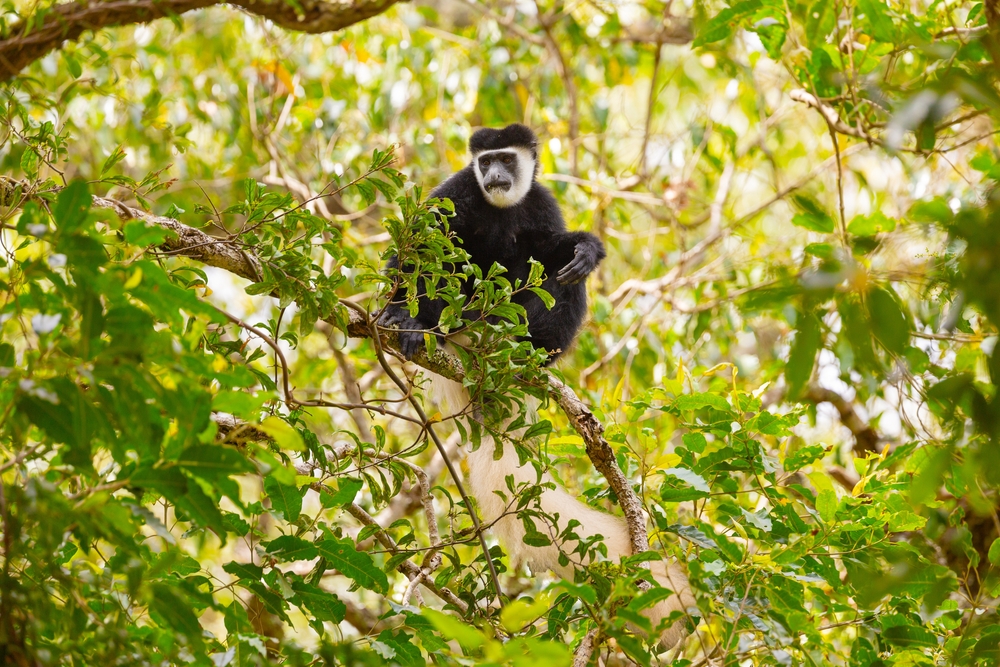
The story of the Likweli monkey began in 2008 during a biological expedition along the Lomami River in central Democratic Republic of the Congo. Conservation scientists working in the dense rainforest captured a blurry photograph of an unfamiliar monkey sitting high in the canopy. The image revealed only part of the animal, making identification nearly impossible, but experienced primatologists immediately noticed that several physical features didn’t match any known African monkey species.
Despite their excitement, the researchers had little evidence to work with. The monkey disappeared back into the vast rainforest, and for years no additional sightings were recorded. With thousands of square miles of dense forest covering the region, tracking a small group of elusive primates proved to be an enormous challenge. Many wondered whether the unusual animal had simply been an isolated variation of an already known species rather than something completely new.
Everything changed in November 2018 when Jean Pierre Kapale, a field researcher with the Lukuru Wildlife Research Foundation, photographed the mysterious monkey once again. This second encounter confirmed that the strange primate was real and still inhabiting the forests around Lomami National Park. Encouraged by the discovery, Kapale and his colleagues launched dedicated surveillance patrols across the region, spending the next 10 months searching for additional groups.
Their persistence paid off. Researchers documented seven more sightings during the expedition, allowing them to observe the monkeys in their natural habitat for the first time. Those repeated encounters provided enough evidence to begin detailed behavioral studies while opening the door for the scientific investigations that would eventually confirm the monkey’s identity.
The Orange-Lipped Monkey Looks Unlike Anything Scientists Have Seen
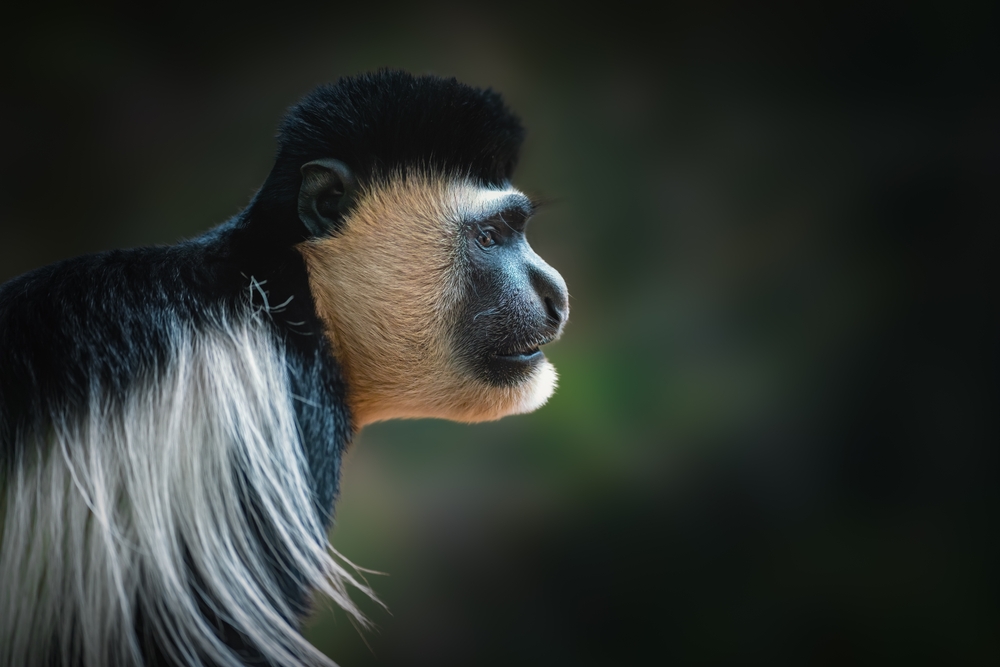
One of the first things that caught researchers’ attention was the monkey’s unusual appearance. Although it belongs to the Colobus genus, a group of monkeys found across West and Central Africa, the Likweli possesses several distinctive features that immediately separate it from its closest relatives. Adults weigh around 15 pounds, roughly the size of a small dog, and measure close to four feet from nose to tail.
Its thick black fur stands upright in short, spiky tufts that give the animal a rugged appearance. Surrounding its mouth is a bright orange-cream patch that resembles a mask, while a contrasting white patch on its rump makes it even easier to distinguish from other African monkeys. Together, these characteristics create a striking appearance unlike any previously documented member of the Colobus family.

Its Personality Surprised Researchers
Appearance wasn’t the only thing that made the Likweli stand out. Researchers quickly noticed that the monkeys behaved differently from many other primates living in the Congo rainforest. Instead of fleeing the moment humans approached, the animals remained calm and watchful, climbing higher into the forest canopy while quietly observing the scientists below.
Study co-authors Kate Detwiler and Junior Amboko described the experience as surprisingly personal. “When we encounter a group, the monkeys don’t usually flee as many other primates do. Instead, they climb higher into the canopy and simply watch us. It often feels as though we’re studying each other.”
The monkeys also travel in relatively small groups of about six individuals, spending most of their lives high above the forest floor where the dense canopy offers both food and protection. Their secluded lifestyle helps explain why they managed to avoid scientific recognition for so many years.
Even Their Calls Sound Different
Researchers added another important piece to the puzzle by recording the animals’ vocalizations. Instead of producing the loud calls often associated with monkeys, the Likweli emits deep, low-pitched sounds that researchers compared to a frog croaking or a pig snorting. These distinctive calls differed noticeably from those of related Colobus species.
Combined with the monkey’s physical appearance and unique behavior, the vocal evidence strengthened the growing suspicion that scientists weren’t simply looking at a regional variation of a known species. Every new observation pointed toward the same conclusion: the Likweli represented something entirely new.
Years of Scientific Testing Finally Solved the Mystery
While unusual appearances can hint at a new species, scientists needed much stronger evidence before making such an important announcement. Over the next several years, researchers combined field observations with detailed anatomical studies and genetic analysis to determine whether the Likweli truly deserved recognition as a separate species.
The team examined skin, skeleton, and tissue samples taken from three monkeys that had been confiscated from hunters before entering the illegal bushmeat trade. Those specimens provided an invaluable opportunity to study the animals in detail without harming wild populations. Researchers compared the Likweli’s skull, bones, fur patterns, and body proportions with museum collections containing other African monkey species.
According to Yale University anthropologist Julia Arenson, the anatomical comparisons left little room for doubt. The differences were significant enough to separate the monkey from every known member of the Colobus group. Still, the researchers wanted one final piece of evidence before reaching a conclusion.
That final confirmation came through DNA sequencing. Genetic analysis revealed that the Likweli is most closely related to the black colobus, a species living more than 700 miles away in west-central Africa. Despite that relationship, scientists discovered the two lineages split from a common ancestor roughly five million years ago, providing clear proof that the mysterious monkey represents an entirely separate species.

DNA Revealed the Monkey’s Ancient Family History
The biggest surprise came after scientists examined the monkey’s DNA. While the Likweli shared certain features with other members of the Colobus genus, the genetic evidence told a much deeper story. Researchers discovered that its closest living relative is the black colobus, a species found more than 700 miles away in west-central Africa. Despite their similarities, the two species have been evolving separately for around five million years.
“We were shocked with the genetic data because it gave us such a signal of deep divergence,” primatologist Kate Detwiler told Scientific American. The findings confirmed that the Likweli was far more than an isolated population or regional variation. It represented a branch of the primate family tree that had remained hidden from science for millions of years.
Based on the overwhelming evidence, researchers officially named the new species Colobus congoensis. The name pays tribute to the Congo Basin, one of the most biologically diverse ecosystems on Earth and the only place where the monkey is currently known to exist. Scientists said they wanted the species’ name to recognize the global importance of the region’s wildlife.
The discovery also highlights how little scientists still know about the Congo rainforest. Despite decades of research, enormous areas remain difficult to access, allowing species like the Likweli to survive largely unnoticed. For researchers, that makes the Congo Basin one of the last great frontiers for wildlife exploration.
Local Communities Helped Scientists Piece Together the Puzzle
Although the monkey was unknown to science, it wasn’t entirely unknown to the people who have lived in the region for generations. The Balanga people had long referred to the animal as “Likweli,” a name the research team adopted throughout the study. Their local knowledge became an important resource as scientists searched for the elusive primate across Lomami National Park.
Researchers also visited 52 villages surrounding the protected area to learn more about the monkey’s range and behavior. Surprisingly, only eight communities recognized the animal, suggesting it occupies an exceptionally small and isolated section of the rainforest. Even many people living nearby had never encountered it.
Those conversations helped researchers understand where the monkeys were most likely to be found while providing valuable insight into their habits. Community members also assisted conservation teams working throughout the region, demonstrating how local knowledge can play a crucial role in scientific discovery.
The collaboration between scientists and local communities proved especially important because the Likweli spends nearly all of its time high in the forest canopy. Spotting one requires patience, experience, and familiarity with the rainforest, qualities that local residents have developed over generations.
Scientists Fear the Newly Discovered Species Is Already in Danger
Finding a new species is always exciting, but researchers say the discovery comes with an urgent warning. Unlike widespread animals that occupy large territories, the Likweli appears to exist within a very limited range of roughly 1,700 square kilometers around Lomami National Park. Such a small population makes the species particularly vulnerable to environmental change.
The researchers have recommended that Colobus congoensis be classified as endangered because several growing threats could quickly reduce its numbers. Illegal hunting remains one of the biggest concerns. During the study, scientists examined specimens that had been confiscated from hunters before they entered the bushmeat trade, highlighting the ongoing pressure wildlife faces across the region.
Habitat loss presents another serious challenge. Expanding agriculture and human activity around the park’s buffer zones continue to reduce suitable forest habitat. Because the monkey depends on mature rainforest canopy, even relatively small changes to the landscape could have significant consequences.
The main threats identified by researchers include:
- Illegal hunting for bushmeat.
- Habitat loss caused by agricultural expansion.
- Human activity near protected forests.
- A naturally small geographic range that increases extinction risk.
Ecologist Thomas Gillespie, who was not involved in the research, said the discovery is both exciting and concerning. “It’s very exciting, but also very sobering to be finding a new species of primate when tropical forests are under so much stress right now.”
The Congo Rainforest Is Still Full of Surprises
The discovery of the Likweli monkey serves as another reminder that even in the twenty-first century, Earth’s largest rainforests continue to hold remarkable secrets. Scientists have explored the Congo Basin for decades, yet entirely new mammals are still emerging from regions that remain difficult to access.
Lomami National Park has become one of Africa’s most important biodiversity hotspots in recent years. The Likweli is the second new monkey species identified there, reinforcing the area’s reputation as one of the continent’s richest wildlife habitats. Every new discovery also strengthens the argument for protecting these forests before species disappear without ever being documented.
For researchers, the orange-lipped monkey represents far more than an unusual-looking primate. It is evidence that nature still has the power to surprise us, even in an age when satellites can map nearly every corner of the planet. Hidden high above the forest floor, the Likweli remained unseen for millions of years. Its discovery is a powerful reminder that some of the world’s greatest wildlife stories are still waiting to be told.
As pressure on tropical forests continues to grow, scientists hope the attention surrounding Colobus congoensis will encourage stronger conservation efforts. Protecting the Congo Basin may not only save one newly discovered species, but countless others that have yet to step into the scientific spotlight.
Sources:
- Hart, J. A., Amboko, J. D., Arenson, J. L., Horton, E. R., Coates, K. F., Kapale, J. I., Koko, M. B., Hart, T. B., Gilbert, C. C., Sargis, E. J., & Detwiler, K. M. (2026). Likweli: A remarkable new species of Colobus monkey from the Lomami National Park, Democratic Republic of Congo. PLoS ONE, 21(7), e0349857. https://doi.org/10.1371/journal.pone.0349857