
Your cart is currently empty!
The Colourful Crochet Canopy Transforming One Spanish Town Every Summer
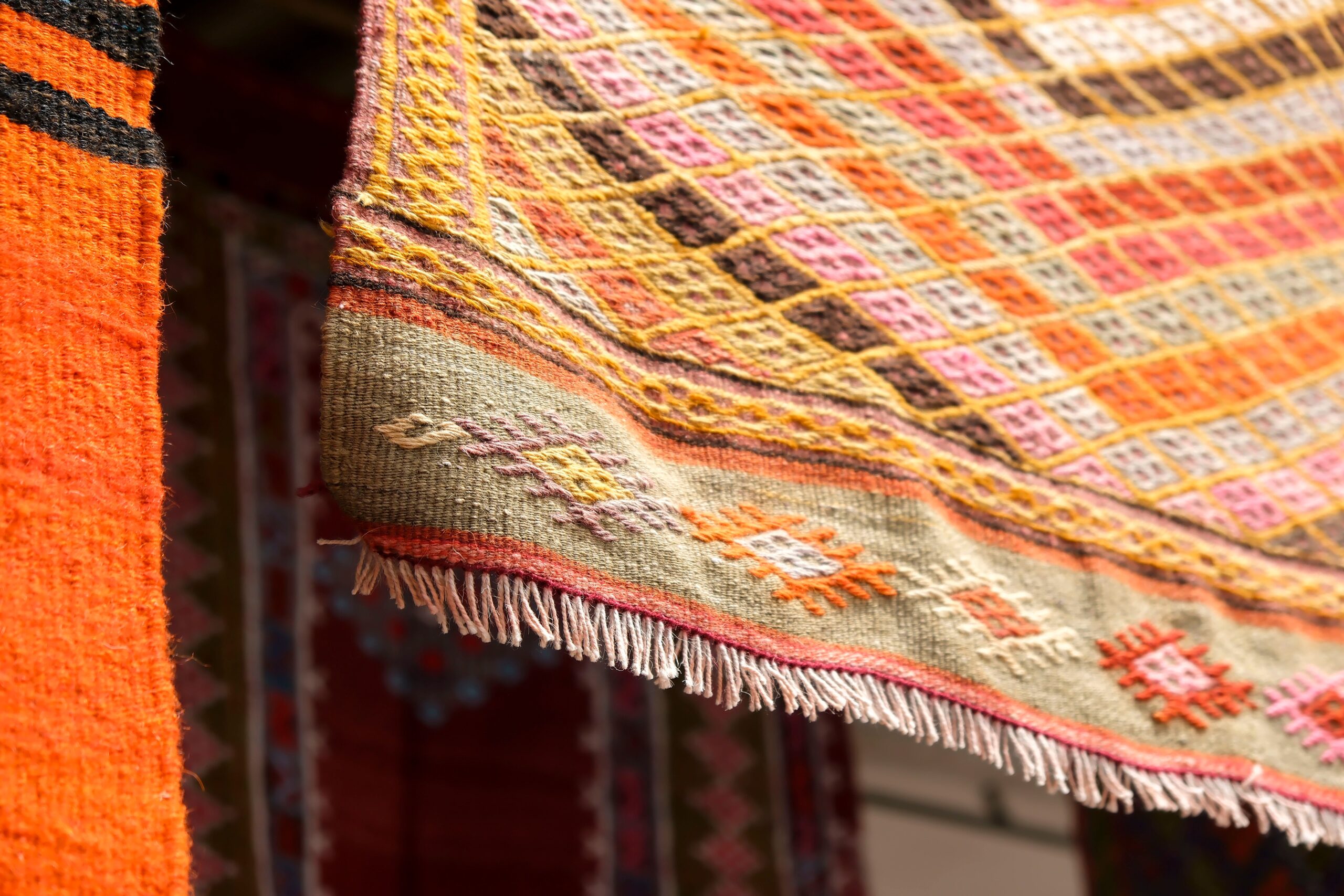
Summer on Spain’s southern coast has always attracted visitors looking for sunshine, beaches, and long afternoons wandering through historic streets. In recent years, though, those same sunny days have become increasingly difficult to enjoy. Rising temperatures have pushed many towns to search for new ways of protecting residents and tourists from relentless heat.
Contents
show
One community just outside Málaga found an answer that few people could have predicted. Instead of investing in expensive technology or covering its streets with industrial materials, it looked to a group of retired women armed with crochet hooks, colourful yarn, and decades of experience.
What began as a modest community activity has since become one of Spain’s most remarkable public art projects. It cools an entire shopping district, brings neighbours together, attracts visitors from around the world, and proves that sometimes the simplest ideas leave the biggest impression.
When Summer Heat Became More Than Just an Inconvenience
Located on the Costa del Sol, Alhaurín de la Torre enjoys the same Mediterranean climate that has helped make southern Spain one of Europe’s most popular holiday destinations. Warm weather is part of its identity, but recent summers have pushed conditions into territory that can be dangerous for anyone spending long periods outdoors.
The town’s busiest commercial area, Málaga Street, is especially exposed during the hottest months of the year. Shoppers, café visitors, business owners, and tourists all spend hours walking beneath direct sunlight with very little natural shade available.
High temperatures create far more than simple discomfort. Prolonged exposure increases the risk of dehydration, heat exhaustion, sunburn, and heat stroke, particularly for older adults and young children. As climate patterns continue to shift, many Spanish communities have been forced to rethink how public spaces can remain safe without sacrificing the open-air atmosphere that defines daily life.
Local leaders understood that finding shade would become increasingly important if businesses were to continue welcoming visitors throughout the summer.
Instead of accepting the problem as unavoidable, the town decided to try something completely different.
A Crochet Teacher With an Unusual Vision
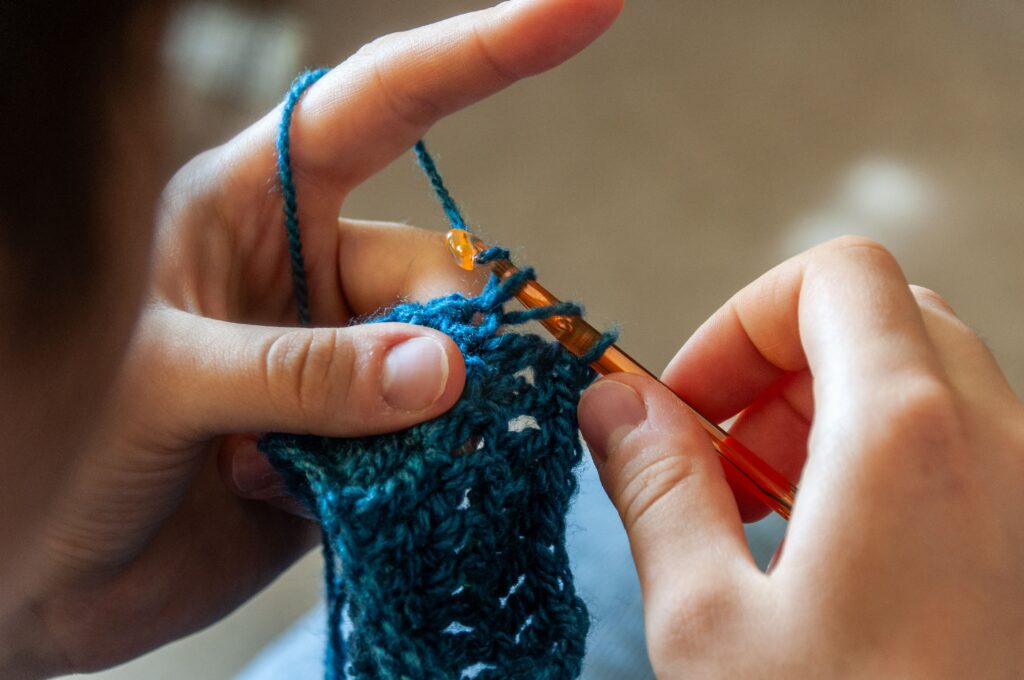
In 2019, local crochet instructor Eva Pacheco partnered with the town’s Senior Citizens’ Social Center to launch a project that blended creativity with practical problem solving.
The original goal sounded surprisingly modest. Volunteers would crochet individual squares and stitch them together into one giant canopy capable of shading part of Málaga Street.
Every Wednesday morning, around 40 elderly women gathered for three hours to knit, crochet, chat, laugh, and slowly build what would become one enormous textile roof.
For many participants, the weekly sessions quickly became about much more than yarn.
Several of the women were widows who had lost many of their regular social connections. The workshops offered a welcoming place where friendships could grow naturally while everyone contributed to a shared purpose.
Instead of creating blankets that would remain folded away inside cupboards, every stitch would eventually become part of something the entire town could use.
The first completed awning covered approximately 500 square feet. Even at that size, the colourful installation immediately transformed the atmosphere of the shopping street beneath it.
A Blanket That Changed an Entire Street

Visitors walking beneath the crochet canopy notice the colours before anything else.
Hundreds of individually crafted pieces combine into a vibrant ceiling filled with geometric patterns, flowers, circles, and intricate designs. Sunlight filters through tiny openings in the fabric, creating constantly shifting patterns across the pavement below.
The installation quickly became far more than an attractive decoration.
According to the project organisers, temperatures beneath the canopy dropped by as much as ten degrees compared with areas directly exposed to the sun. The shade also reduced exposure to harmful ultraviolet rays, allowing shoppers to spend more time outdoors during the hottest part of the day.
Unlike many temporary shade structures, the crochet canopy was designed with long-term use in mind.
Much of the project used water-resistant synthetic yarn that could withstand seasonal weather while remaining light enough to install and remove each year. At the end of summer, the enormous blanket comes down, is cleaned, repaired where necessary, and then stored until the following season.
That practical approach has helped ensure the project continues growing instead of needing to be rebuilt from scratch every year.
More Than a Craft Project
Although the colourful canopy now attracts photographers, travel bloggers, and curious visitors, its greatest impact may have been on the people who created it.
Community projects often begin with a physical goal, but they frequently produce social benefits that are much harder to measure.
The weekly crochet gatherings gave participants a consistent reason to leave home, meet friends, exchange stories, and work towards a visible achievement that everyone could celebrate together.
Research has long suggested that knitting and crocheting may offer cognitive and emotional benefits for older adults. Activities requiring concentration, hand coordination, and repetitive movement have been associated with improved wellbeing and may help keep the mind actively engaged later in life.
For many volunteers, however, the greatest reward came from seeing complete strangers enjoy something they had created by hand.
Every customer walking beneath the shade, every family taking photographs, and every tourist sharing images online became part of a project that connected generations through simple acts of craftsmanship.
Rather than viewing retirement as the end of meaningful contribution, these women demonstrated how experience and patience could solve a modern problem in a surprisingly elegant way.
From Local Improvement to Tourist Attraction

No one expected the crochet roof to become one of the town’s defining landmarks.
At first, its purpose was purely practical. It existed to protect shoppers from intense summer heat while supporting businesses along Málaga Street.
Then photographs began appearing across social media.
Travellers shared colourful images looking upward through the woven canopy. Travel websites highlighted the installation as one of southern Spain’s most unusual attractions. Visitors who originally planned to stop only briefly in Alhaurín de la Torre often found themselves lingering to admire the artwork overhead.
The project continued evolving as its popularity increased.
Each year brought additional crochet panels, expanding both the size and complexity of the installation. New colours appeared alongside increasingly ambitious artistic designs that reflected the growing confidence of the volunteer creators.
By 2024, the canopy had grown to cover more than 13,000 square feet, making it dramatically larger than the original installation that first stretched across the shopping street in 2019.
The latest additions also introduced portraits of internationally recognised celebrities, including Tom Cruise and Antonio Banderas, giving returning visitors something new to discover each summer.
What started as protection from the sun had become an attraction in its own right, drawing attention not because of expensive engineering or cutting-edge technology, but because dozens of local residents chose to spend their Wednesday mornings creating something beautiful together.
A Project That Continued to Grow Every Summer
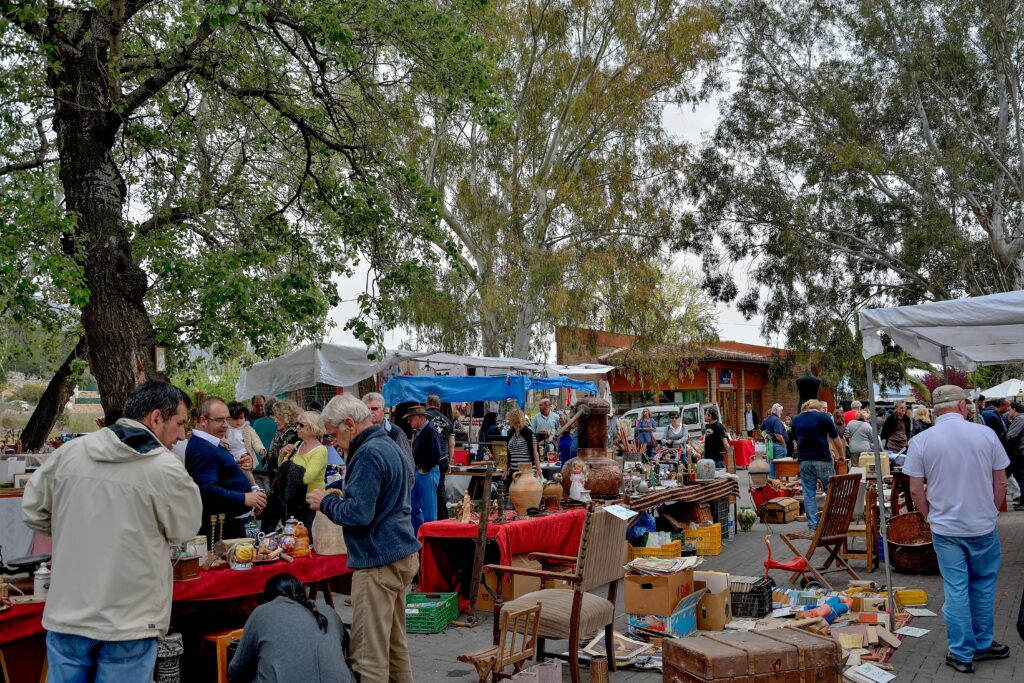
Success often encourages communities to think bigger, and that is exactly what happened in Alhaurín de la Torre.
After the first crochet canopy proved its value, the volunteers returned to their weekly gatherings with fresh ideas and renewed enthusiasm. Instead of simply maintaining the original installation, they began adding new sections, experimenting with different patterns, colours, and artistic styles.
The project steadily expanded from its original 500-square-foot awning into a vast textile ceiling stretching across much of Málaga Street. Every new panel represented hours of patient work, with each volunteer contributing pieces that eventually became part of a much larger design.
The result was more than just a larger canopy.
It became an evolving artwork that changed from one summer to the next, giving both residents and returning visitors something new to admire.
In 2024, the group introduced one of its most ambitious additions yet. Alongside geometric patterns and colourful motifs, they incorporated the faces of well-known figures including Tom Cruise, Antonio Banderas, Marilyn Monroe and Charlie Chaplin into the crochet designs. The portraits added another layer of creativity and quickly became favourite photo spots for visitors exploring the town.
The artists also experimented with crocheted umbrellas suspended above the streets. Rather than creating solid shade, these intricate pieces allowed sunlight to filter through, casting decorative patterns across the pavement below.
The shopping district had evolved into an open-air gallery that happened to provide relief from Spain’s summer sun.
Helping Local Businesses Along the Way
The canopy’s popularity produced benefits that extended beyond comfort.
As photographs spread across social media and travel websites, visitors began making special trips to Alhaurín de la Torre simply to experience the colourful streets for themselves. What had started as a practical solution for excessive heat gradually became one of the town’s most recognisable attractions.
For local shop owners, restaurants and cafés, the increased attention was welcome.
Visitors who may otherwise have passed through the town often stayed longer, browsing shops, enjoying meals outdoors and exploring nearby attractions after walking beneath the crochet ceiling.
The shade itself also encouraged people to spend more time outside.
Instead of rushing between air-conditioned buildings, shoppers could comfortably stroll along Málaga Street even during the warmest hours of the day. That extra time naturally benefited businesses that rely on pedestrian traffic throughout the tourist season.
The project demonstrated that relatively simple community initiatives can sometimes support local economies in unexpected ways.
Rather than investing in expensive infrastructure alone, the town created something functional that also gave people a reason to visit.
A Sustainable Alternative With Lasting Value
Environmental considerations also played an important role in the canopy’s success.
Before the crochet installation, plastic awnings had commonly been used to provide shade in public spaces. While effective, they lacked the character of the handmade alternative and did little to involve local residents.
Eva Pacheco’s project offered a different approach.
Many of the materials incorporated recycled thread, leftover yarn and synthetic fibres that could withstand changing weather conditions while remaining lightweight enough to remove each year.
The canopy’s seasonal design also made maintenance straightforward.
Once summer ends, the enormous blanket is carefully taken down, washed, repaired where necessary and stored until temperatures begin rising again. Rather than producing waste every season, the same installation continues serving the community year after year while gradually expanding with new additions.
The combination of creativity, recycling and reusability has helped the project receive recognition well beyond southern Spain.
It illustrates how environmental thinking does not always require complicated technology. Sometimes the most practical solutions come from making better use of existing materials and local talent.
Other Communities Began Following Their Example
Alhaurín de la Torre’s colourful streets soon attracted attention from other towns searching for ways to deal with increasingly hot summers.
Nearby Coín developed its own crochet shade installations after seeing what could be achieved through volunteer effort.
La Línea de la Concepción created another eye-catching version using crocheted mandalas suspended above its streets, transforming public spaces into vibrant works of art while providing welcome relief from direct sunlight.
The idea even crossed the Atlantic.
New Iberia, Louisiana, which shares a sister-city relationship with Alhaurín de la Torre, introduced its own “crochet ceilings,” drawing inspiration from the Spanish project and adapting the concept for its own community.
Although each installation reflects local culture and artistic preferences, they all share the same underlying principle.
Communities working together can create attractive public spaces that serve practical purposes while strengthening neighbourhood connections.
The ripple effect demonstrates how one creative idea can inspire similar projects thousands of miles away.
Why This Story Resonates Far Beyond Spain
There is no shortage of stories about climate challenges, rising temperatures and expensive engineering projects designed to address them.
This story feels different because it places people at the centre of the solution.
Rather than waiting for someone else to solve the problem, a group of retired women gathered every Wednesday with yarn, crochet hooks and a willingness to contribute their time.
The result was something that improved daily life in several ways at once.
It made streets cooler during dangerous heat.
It created meaningful social connections for older residents.
It encouraged tourism and supported local businesses.
It celebrated handmade craftsmanship at a time when so much of modern life feels mass-produced.
Perhaps most importantly, it showed that experience remains a valuable resource.
Many of the volunteers had spent decades knitting and crocheting for family members without imagining those same skills could one day shape an entire town’s identity.
Their work transformed an ordinary shopping street into one of southern Spain’s most distinctive landmarks.
Visitors now arrive carrying cameras, eager to photograph the colourful ceiling overhead.
Residents continue walking beneath a canopy built stitch by stitch by neighbours they know personally.
As summers continue growing hotter across parts of Europe, communities will undoubtedly keep searching for new ways to make public spaces more comfortable. Some solutions will involve advanced technology and significant investment.
Alhaurín de la Torre found another path.
Its answer came from friendship, patience, creativity and thousands upon thousands of carefully placed stitches. Years after the first blanket was hung above Málaga Street, those colourful threads continue bringing shade, conversation and visitors to a town that proved one handmade idea can leave a lasting mark.