
Your cart is currently empty!
Why More Travelers Are Being Arrested at US Airports by ICE
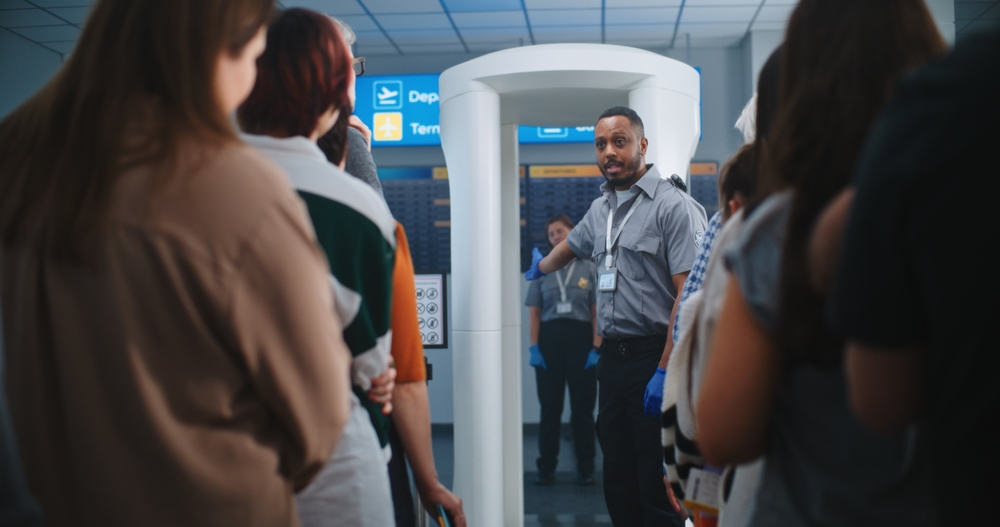
For many people, airports have long represented the beginning of a vacation, a business trip, or a visit home to family. In recent weeks, however, they have also become a new setting for immigration enforcement, leaving some travelers detained moments before boarding their flights.
Contents
show
Immigration attorneys across the United States say Immigration and Customs Enforcement (ICE) has stepped up arrests at airports, targeting people with expired visas as well as some individuals who are legally pursuing immigration benefits. The shift comes as the Trump administration pushes for higher daily immigration arrests, opening what lawyers describe as a significant new phase in the country’s deportation campaign.
Attorneys Say Airport Arrests Are Becoming More Common
While ICE has previously conducted enforcement operations at airports, immigration lawyers interviewed by CNN, ABC News, and The New York Times say the frequency and scope of those arrests have changed noticeably in recent weeks. Rather than focusing primarily on people with final deportation orders, officers are increasingly detaining travelers whose visas have expired, including some who have pending immigration applications or work authorization.
The Department of Homeland Security has not confirmed that airport arrests have increased. However, officials have made no secret of the administration’s broader immigration objectives.
In a statement provided to CNN, a DHS spokesperson said, “This administration is working diligently to ensure that aliens in our country illegally can no longer fly unless it is out of our country to self-deport.”
According to multiple reports, the administration has set an internal goal of approximately 2,000 immigration arrests each day as it seeks to accelerate deportations nationwide. Airport enforcement represents one of several strategies being used to reach those targets.
Jeff Joseph, president of the American Immigration Lawyers Association, said the level of cooperation between airport security and immigration authorities is unlike anything many attorneys have witnessed before.
“Not that an airport is a sacred place, but for sure, enforcement at airports is nothing we’ve ever seen, neither is cooperation between TSA and ICE,” Joseph told CNN.
Why Airports Have Become an Attractive Enforcement Location
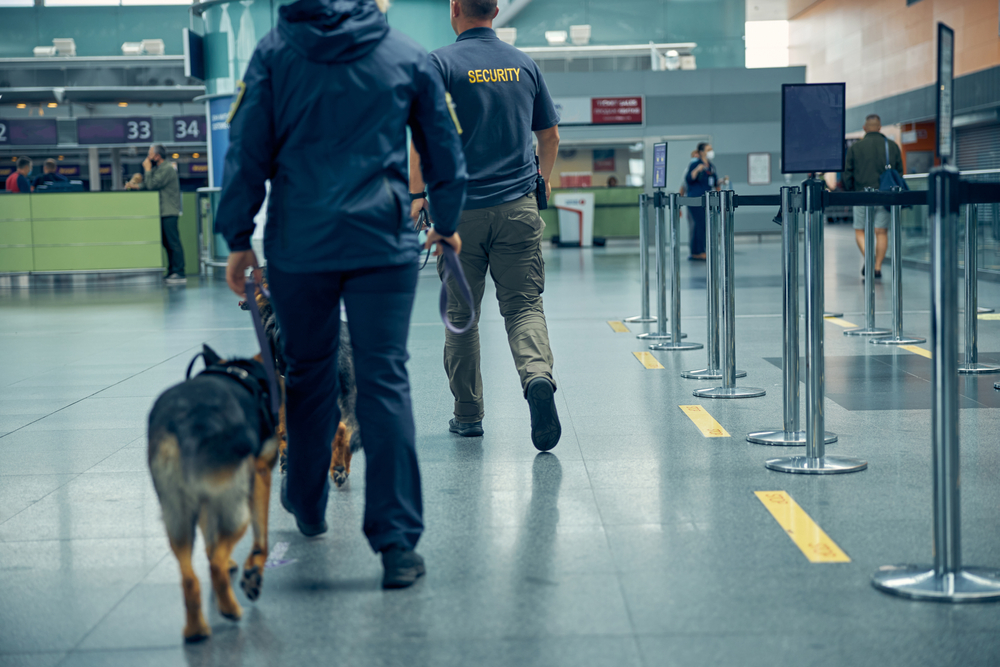
Former Acting ICE Director John Sandweg believes airports offer federal agents several practical advantages over traditional enforcement methods.
Unlike home visits or lengthy investigations, airports provide immigration officers with precise information about where a traveler will be and exactly when they will arrive. Since the Transportation Security Administration already receives passenger information before flights, officers can identify potential targets before they enter security screening.
Sandweg explained that airports also reduce operational risks because passengers have already entered controlled environments where weapons are prohibited.
“It makes for an easy immigration arrest for ICE,” Sandweg said. “You can now take custody of that person in a secure environment. They come to you. You know exactly when and where they’re going to be.”
Documents obtained through Freedom of Information Act requests indicate that cooperation between TSA and ICE has expanded in recent years. According to reporting by ABC News and The New York Times, passenger information shared through TSA systems can be used to identify individuals who may have immigration issues requiring enforcement action.
Rosanna Berardi, an immigration attorney interviewed by ABC News, said the legal authority for ICE arrests has always existed. What has changed is where those arrests now occur.
“ICE is working with TSA and targeting people at check-in counters and gates, sidestepping the warrants and surveillance operations used in the past,” Berardi said. “It’s simply a name match at a checkpoint, and that’s what makes this approach so efficient for ICE and so unsettling for travelers.”
Lawyers Warn That People in Legal Immigration Processes Are Being Swept Up

One of the biggest concerns raised by immigration attorneys is that some of those being detained are not people hiding from authorities or attempting to evade immigration enforcement.
Several lawyers interviewed by major news organizations described clients who had entered the United States legally, maintained communication with immigration authorities, and were actively pursuing lawful immigration pathways.
CNN reported that one woman was detained at a Washington-area airport while traveling to Texas for her father’s funeral. According to her attorney, Joe Moravec, she entered the United States legally and remains in the asylum process. Despite that pending case, she was taken into ICE custody and transferred to a detention facility in Virginia.
Moravec also described another client who was detained while traveling through Chicago despite also being legally present in the United States during ongoing immigration proceedings.
The New York Times interviewed lawyers representing more than 25 individuals detained at airports. According to those attorneys, the group included engineers awaiting work visa extensions, spouses of American citizens applying for permanent residency, former exchange visitors, and asylum applicants.
Charles Kuck, an Atlanta immigration lawyer with decades of experience, described the recent enforcement trend as unprecedented.
“In 38 years practicing immigration law, I had never seen this,” Kuck said. “And I know it’s happening to lots of people.”
Shannon Shepherd, vice chair of the Chicago chapter of the American Immigration Lawyers Association, said she has changed the advice she gives clients.
“Before, I was saying, ‘As long as you have an ID, you can travel domestically,’” Shepherd told The New York Times. “Now I am turning around and saying, ‘If you are in the process of changing status, avoid any travel.’”
Several High-Profile Airport Arrests Drew National Attention
Public awareness of the new enforcement approach has grown rapidly after several airport encounters were captured on video and widely shared online.
One of the earliest incidents involved Phu Nguyen, an Australian citizen born in Vietnam, whose visa had expired in 2015. ICE agents attempted to arrest him at Harry Reid International Airport in Las Vegas on July 13.
The arrest did not unfold as planned. Video showed bystanders confronting the officers, prompting them to abandon the operation and leave Nguyen with one handcuff still attached after officials decided to de-escalate the situation. Las Vegas police later removed the handcuff and released him after determining he had no outstanding warrants.
According to DHS, Nguyen was taken into custody the following day after arriving at Los Angeles International Airport.
The agency stated that his visa had expired years earlier and said he would remain in ICE custody while removal proceedings continued.
Another incident involved Southwest Airlines flight attendant Lorenzo Thompson, who was arrested while working at Nashville International Airport.
DHS said Thompson, a Jamaican citizen, entered the United States in April 2021 on a six-month visa and remained after that visa expired. His union later announced it was working with his attorney while offering support to him and his family during the immigration process.
The growing number of incidents has attracted widespread attention because they involve airports that millions of travelers pass through every year, placing immigration enforcement in one of the country’s most visible public spaces.
The Denver Arrest That Sparked Widespread Debate

Perhaps the most widely shared airport arrest involved Chantal Alejandra Morales Rojas, an Ecuadorian national who was detained while boarding a Southwest Airlines flight at Denver International Airport on July 20.
Video recorded by a fellow passenger showed two men in plain clothes approaching Morales Rojas inside the jet bridge before escorting her away. As the situation unfolded, her friend shouted, “ICE is here, help us!” to other travelers waiting nearby. The footage quickly spread across social media, drawing national attention to the government’s airport enforcement strategy.
According to the Department of Homeland Security, Morales Rojas had entered the United States legally in January 2023 through the J-1 au pair program. The agency said her visa expired on January 4, 2025, and argued that a pending immigration application did not provide lawful immigration status.
DHS stated, “A pending application and work authorization does NOT confer any type of legal status in the United States.”
Her attorneys presented a different picture. They said Morales Rojas had lived openly in the United States for more than three years, received work authorization from DHS while awaiting a decision on her application, passed repeated background checks, and had no criminal history.
Her lawyer argued that “the process she’s pursuing is completely lawful.” Following legal challenges, an immigration judge later granted her release on bond while her case continues through the courts.
The New York Times also reported on the close relationship Morales Rojas maintained with the family she had worked for as an au pair. Her former employers described her as an important part of their family and launched fundraising efforts to help cover her legal expenses after her detention.
Other Arrests Highlight the Broad Scope of the Enforcement Campaign
Morales Rojas was not the only traveler whose detention attracted public attention.
On July 22, Ukrainian national Iryna Gorb was arrested at San Francisco International Airport after ICE agents attempted to take her into custody near a departure gate.
Witnesses reported hearing Gorb repeatedly call for help as officers restrained her. Richmond City Councilwoman Doria Robinson, who happened to be waiting for her own flight, recorded part of the encounter after noticing what appeared to be plainclothes officers surrounding the woman.
The Department of Homeland Security said Gorb had overstayed a visa that expired in 2011 and alleged that she resisted arrest.
Supporters pointed to another side of her story.
According to a previously verified fundraiser referenced by CNN, Gorb had been supporting family members displaced by Russia’s invasion of Ukraine after their home in Kharkiv was destroyed. California State Senator Scott Wiener criticized the arrest, saying she had committed no crime while warning that deportation would send her back to a country still affected by war.
ABC News reported that at least 27 airport arrests have taken place under the newer enforcement strategy, spanning airports across at least nine states. Immigration attorneys interviewed by the network said some of those detained held valid work permits or parole documents despite unresolved immigration cases.
Immigration Attorneys Say Longstanding Advice Has Changed
For years, many immigration attorneys advised clients that domestic travel generally posed little risk as long as they carried valid identification and complied with airline requirements.
Recent events have altered that guidance.
Lawyers now say travelers with pending green card applications, asylum claims, visa extensions, or other unresolved immigration matters should carefully evaluate the risks before boarding domestic flights.
Rosanna Berardi told ABC News that airports are increasingly becoming places where people living in what she described as a legal gray area face heightened scrutiny.
“Airports are becoming a new enforcement zone for people who have been living in the U.S. lawfully, holding valid work permits, complying with immigration law, but still in pending status awaiting their green cards,” Berardi said.
“These individuals are technically in a legal gray area, since a pending application does not carry the same protection as an approved one.”
Similarly, immigration lawyer Ghassan Shamieh told The New York Times that the current strategy reaches beyond individuals with criminal histories.
“The net they are casting for people they want to detain is far wider,” he said.
“You are talking about people with legitimate pending applications.”

Supporters and Critics Offer Very Different Views
The expanding airport enforcement strategy has generated sharply different reactions.
Supporters argue that individuals who remain in the United States after their visas expire are violating immigration law regardless of whether they have submitted later applications. From that perspective, airports provide an efficient and secure location for officers to carry out lawful arrests while reducing risks associated with roadside stops or home operations.
The Department of Homeland Security has consistently defended the policy, stating that it is intended to ensure individuals who are unlawfully present cannot continue traveling freely within the United States.
Critics, however, argue that the policy reaches far beyond dangerous offenders and instead affects people who have maintained employment, built families, and remained in regular contact with immigration authorities while waiting for their cases to be decided.
Several attorneys contend that individuals with pending immigration petitions often believed they were complying with the legal process, making airport detentions especially unexpected. They also argue that the practice may discourage people from traveling even for family emergencies or work obligations.
What This Could Mean Going Forward
Whether airport arrests continue at their current pace may depend on the broader direction of federal immigration policy in the months ahead.
For now, attorneys across the country say the landscape has changed. Advice that was once considered routine has been replaced with more cautious recommendations for clients whose immigration status remains unresolved.
The reported cooperation between TSA and ICE, together with the administration’s emphasis on increasing arrests, suggests airports may remain an important part of immigration enforcement for the foreseeable future. At the same time, legal challenges filed on behalf of several detained travelers could determine how courts evaluate these practices moving forward.
As additional cases emerge, the debate is likely to continue over where immigration enforcement should take place, how pending immigration applications should be treated, and how federal authorities balance enforcement priorities with due process for people whose legal status remains unresolved.