
Your cart is currently empty!
Former NOAA Employees Launch Independent Climate Website After Government Shutdown

Climate information that millions of Americans once relied on quietly disappeared behind a new government web address last year. For teachers looking for classroom resources, journalists covering extreme weather, farmers tracking changing conditions, and ordinary people trying to understand climate trends, finding trusted federal information suddenly became much harder.
Contents
show
Now, many of the people who originally built that resource have returned with a solution of their own.
A team of former National Oceanic and Atmospheric Administration (NOAA) employees has launched Climate.us, an independent nonprofit website that recreates much of the content once available on Climate.gov. The project restores years of climate data, educational resources, scientific reports, and analysis after the Trump administration effectively dismantled the original platform during broader federal workforce reductions.
Former NOAA Staff Recreate a Trusted Public Resource
Climate.us officially launched this week after months of work by former NOAA employees who once managed Climate.gov, a government website widely regarded as one of the country’s most accessible sources of climate science.
For years, Climate.gov translated complex scientific research into information that the public could understand. Alongside raw climate data, the website featured articles, visual explainers, educational materials, maps, and regularly updated climate indicators covering everything from rising temperatures to drought conditions and hurricanes.
According to Rebecca Lindsey, who previously served as Climate.gov’s program manager before being laid off, nearly one million people visited the government website every month.
Although much of the underlying data technically remains on government servers, Lindsey said accessing it became significantly more difficult after the site’s shutdown.
“As of June 24, 2025, users going to the NOAA climate site are presented with a page saying: ‘In compliance with Executive Order 14303 … Future research products previously housed under Climate.gov will be available at NOAA.gov/climate and its affiliate websites,’” NOAA communications director Kim Doster said in a statement responding to questions about the transition.
Lindsey believes that explanation does not reflect what users actually experience.
She described the redesign with a memorable comparison.
“They renovated a store, and they had the front door open into a closet.”
The comment captures the frustration many educators, researchers, and science communicators expressed after Climate.gov’s disappearance. While some materials still existed elsewhere within NOAA’s online infrastructure, the centralized, easy-to-navigate platform had effectively vanished.
A Response Born From Government Layoffs

Climate.us did not begin as a planned nonprofit organization.
Instead, it emerged after sweeping federal workforce reductions dramatically reshaped several U.S. science agencies.
Since late 2024, federal agencies involved in scientific research have experienced extensive staffing cuts. NOAA was among the organizations most heavily affected as the Department of Government Efficiency, commonly known as DOGE, pursued efforts to reduce the size of the federal workforce.
Rebecca Lindsey was one of hundreds of NOAA employees who lost their jobs.
Rather than watching years of publicly funded scientific communication fade away, she joined forces with former colleagues Anna Eshelman and her sister, Mary Lindsey, to preserve what they had helped build.
The three women formed the core leadership behind Climate.us.
Rebecca Lindsey now serves as managing editor.
Anna Eshelman leads design.
Mary Lindsey oversees data visualization, drawing on more than a decade of experience creating graphics for Climate.gov.
Rebecca Lindsey emphasized that the group’s expertise lies in communication rather than conducting original climate research.
“We are communicators. We are not climate scientists,” she told The 19th. “Climate.us will be a bridge between scientists and the public.”
That distinction shapes the project’s mission.
Instead of producing new scientific findings, Climate.us focuses on making existing research understandable and accessible for everyone, from policymakers and journalists to teachers and families.
Rebuilding Fifteen Years of Climate Information
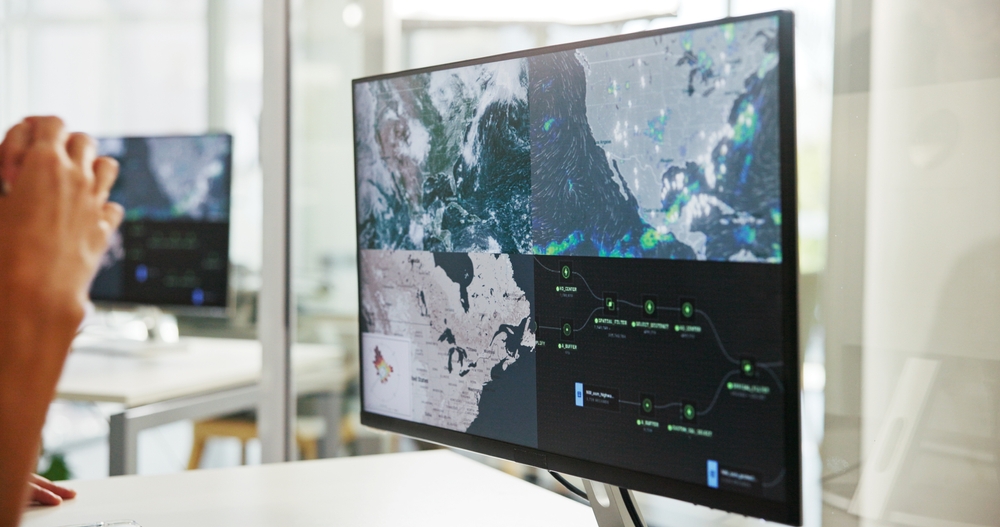
Recreating Climate.gov involved far more than copying web pages.
After the government website was redirected, Lindsey and her team spent months locating archived materials, reconnecting broken links, rebuilding navigation systems, and reorganizing thousands of individual resources.
Among the most difficult challenges was replacing specialized search tools that had powered the original government website.
“The technical issues were more challenging than the content issues,” Lindsey explained.
Because NOAA’s climate data remains public information, the team could legally reuse much of the material. The real challenge involved making everything searchable and usable again.
The finished website now contains much of what made Climate.gov valuable in the first place, including:
- Climate indicator dashboards tracking long-term environmental changes.
- Reports covering hurricanes, droughts, wildfires, and other climate-related events.
- Educational materials designed for teachers and classrooms.
- Scientific blogs and explanatory articles.
- Maps and interactive climate resources.
- National Climate Assessment reports required by Congress.
The project also restores approximately 15 years of climate reporting and public education materials that had become difficult for many users to locate.
According to Lindsey, preserving those resources was about protecting information that taxpayers had already funded and scientists had already produced.
“This information is too important. It should remain in a protected place,” she said.
Scientists Say the Loss Left a Major Gap

The disappearance of Climate.gov extended beyond inconvenience for researchers.
Scientists who regularly relied on the site say its greatest value was translating technical science into plain language.
Katharine Hayhoe, a climate scientist at Texas Tech University, frequently directed students, journalists, and members of the public to Climate.gov because it combined scientific accuracy with accessible explanations.
After the website disappeared, she said that became much harder.
“They’re really helping people connect what’s happening at the global scale to how it matters to their lives,” Hayhoe said of Climate.us.
She argued that public understanding remains one of the most important ingredients in addressing climate challenges.
According to Hayhoe, people need more than data alone. They need context explaining what those numbers mean for communities, businesses, agriculture, and daily life.
Amanda Townley, executive director of the National Center for Science Education, echoed that assessment.
“It was literally the translation to the public,” she said when describing Climate.gov.
“It wasn’t just for scientists or researchers. It was for teachers. It was for the average person.”
Townley also noted that the former government site responded quickly to real-world events, publishing scientific context during hurricane seasons, cold snaps, and other major weather developments while addressing misinformation circulating online.
That role helped distinguish Climate.gov from databases designed primarily for professional researchers.
Building an Independent Platform Instead of Waiting

Rather than campaigning for Climate.gov’s restoration, the former NOAA team chose a different strategy.
They built an entirely independent platform.
The effort relied heavily on public support.
Early crowdfunding raised roughly $280,000 to launch the technical infrastructure, while later donations and grants expanded that funding. According to more recent updates from the project’s organizers, public contributions have continued growing, giving Climate.us financial stability through at least early 2027.
The project has also assembled a volunteer science review panel consisting of roughly 80 scientists and subject matter experts.
Their role is not to produce advocacy material.
Instead, they review content for scientific accuracy before publication.
Lindsey said the editorial philosophy remains almost identical to the one that guided Climate.gov throughout its existence.
“Climate.gov was never about, and Climate.us will never be about, telling Americans what to do about climate change,” she said.
“The site will continue to be nonpartisan but will be focusing on the science and explaining science and showing people what the data show.”
That commitment reflects one of the project’s central goals: maintaining public trust regardless of which political party controls the federal government.
Why Climate.gov Mattered Beyond the Scientific Community
Climate.gov was never intended to be a database reserved for scientists. Its primary purpose was to explain climate science in language that ordinary people could understand and use.
That mission made it valuable across a surprisingly wide range of professions.
Teachers used classroom materials to explain weather and climate concepts. Journalists relied on graphics and background information when reporting on hurricanes, wildfires, floods, and heat waves. Local officials consulted climate indicators while planning infrastructure projects, while businesses and insurance analysts used long-term climate trends to better understand environmental risks.
Gretchen Gehrke, a science communicator with the nonprofit Environmental Data & Governance Initiative (EDGI), said the website succeeded because it transformed enormous amounts of technical information into something accessible.
“I think what it did was take this huge amount of climate data that we have and make it much, much more accessible for the public and for policymakers,” she said.
That accessibility became difficult to replace after the site’s removal. While experienced researchers could still locate much of NOAA’s data through specialized databases, many non-specialists found themselves without the familiar starting point they had relied on for years.
Amanda Townley of the National Center for Science Education described Climate.gov as a translator between scientific institutions and the public.
“It wasn’t just for scientists or researchers. It was for teachers. It was for the average person,” she said.
That public-facing role is one Climate.us hopes to continue.
Funding a Project Built Outside Government

Launching an independent replacement for a major federal information portal required more than technical expertise.
It also required public support.
The Climate.us team initially raised roughly $280,000 through crowdfunding campaigns to cover development costs. Thousands of individual donors contributed, reflecting strong interest from people who wanted climate information to remain widely available.
Later, the organization also received a one-time anonymous grant that Rebecca Lindsey said should allow the nonprofit to continue operating until at least early 2027.
Even with that financial stability, Climate.us remains a relatively small operation.
The project currently employs only a handful of full-time staff members, with much of the scientific review handled by volunteers. More than 80 scientists and subject-matter experts have agreed to review articles, educational resources, and other material before publication to help maintain scientific accuracy.
Former NOAA Administrator Richard Spinrad praised the effort, arguing that the new organization preserves an important public service.
“The value and impact that Climate.gov produced cannot be overstated,” he said in a statement. “Climate.us will continue that critical function, and ensure the legacy of providing essential data products and services is sustained, even in the face of political manipulation of the scientific enterprise.”
Rather than functioning as a political advocacy organization, the team says it intends to operate much like Climate.gov once did by emphasizing verified scientific information over opinion.
The Debate Over Public Information and Political Change

The creation of Climate.us arrives during a broader debate about how government scientific information should be managed as presidential administrations change.
Climate.gov was among several climate-related resources that changed during the Trump administration’s wider restructuring of federal science programs. Staffing reductions affected agencies including NOAA and the Environmental Protection Agency, while several climate-focused websites and reports became more difficult to access.
Supporters of Climate.us argue that publicly funded scientific information should remain consistently available regardless of changes in political leadership.
Rebecca Lindsey believes the events surrounding Climate.gov demonstrate why independent stewardship deserves serious consideration.
“The fact that they got rid of it so easily is proof that we shouldn’t make it vulnerable again,” she said.
Her comments reflect an ongoing discussion within Climate.us itself.
The organization has considered whether its role should simply be preserving climate information until a future administration restores government support, or whether it should continue operating permanently as an independent nonprofit.
For now, no final decision has been made.
The team’s immediate priority remains maintaining and expanding the website while continuing to update its scientific resources.
NOAA has maintained that research previously available through Climate.gov continues to exist elsewhere within NOAA.gov and affiliated government websites.
Critics, however, argue that availability alone is not enough if information becomes difficult for educators, journalists, and members of the public to locate and understand.
Looking Beyond NOAA
Although Climate.us began as a recreation of Climate.gov, its founders see opportunities that did not exist while they worked inside the federal government.
Operating independently gives the organization greater flexibility to include information from agencies and institutions beyond NOAA.
Rebecca Lindsey said that future plans could include regional climate resources, locally relevant datasets, and educational materials from a broader range of scientific organizations.
The goal is not simply to preserve what once existed.
It is to build upon it.
Because the organization is no longer limited by the structure of a single federal agency, the team hopes to create a more comprehensive public resource while maintaining the same editorial standards that made Climate.gov widely respected.
Lindsey also believes scientific communication plays a central role in helping people understand complex issues affecting their communities.
“The best solutions to our climate challenges are going to come from a climate literate public,” she said.
That emphasis on education explains why the site continues to feature classroom resources, visual explainers, and articles written for general audiences rather than scientific specialists alone.
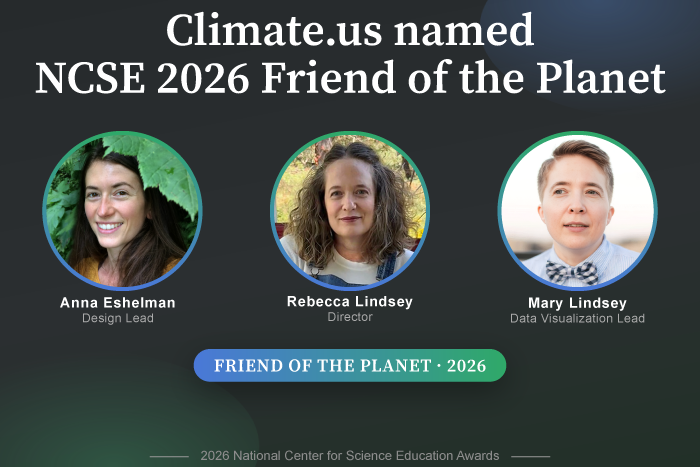
Image Credits : Website @Climate.us
Three Women Behind an Unlikely Revival
Although Climate.us has attracted support from dozens of volunteers and scientific reviewers, its day-to-day operations remain driven by a remarkably small leadership team.
Rebecca Lindsey serves as managing editor.
Her sister, Mary Lindsey, oversees the site’s visualizations and climate dashboards after more than a decade creating graphics for Climate.gov.
Anna Eshelman leads design, helping recreate the site’s familiar appearance while adapting it for an independent platform.
All three women lost their positions during the federal workforce reductions.
Rather than leaving climate communication behind, they chose to rebuild the work outside government.
Rebecca Lindsey credits her upbringing for encouraging the curiosity that eventually shaped her career. She recalled being taught from an early age that asking questions was something to value rather than avoid.
She also hopes the project demonstrates that women continue to play an important role in science communication and public education.
“I would be thrilled if our example made other women feel empowered,” she said.
Eshelman shared a similar view, saying she hopes the visibility of the team encourages more women to see opportunities within scientific careers and communication.
Their work has transformed what began as a response to losing their jobs into an organization serving educators, journalists, researchers, and members of the public across the United States.
A Resource Built to Outlast Political Cycles
Climate.us is more than a replacement for a website that disappeared.
It reflects a larger effort to preserve public access to scientific information during a period of significant change across federal agencies.
Whether the nonprofit eventually returns its work to government stewardship or continues operating independently remains an open question. For now, its founders are focused on maintaining accurate climate information and making it easier for people to understand what the data shows.
For millions of Americans who once turned to Climate.gov for reliable explanations of hurricanes, droughts, rising temperatures, and other climate issues, Climate.us offers a familiar doorway that many feared had been permanently closed.