
Your cart is currently empty!
The Giant Spider On Your Wall Has A Surprisingly Useful Job
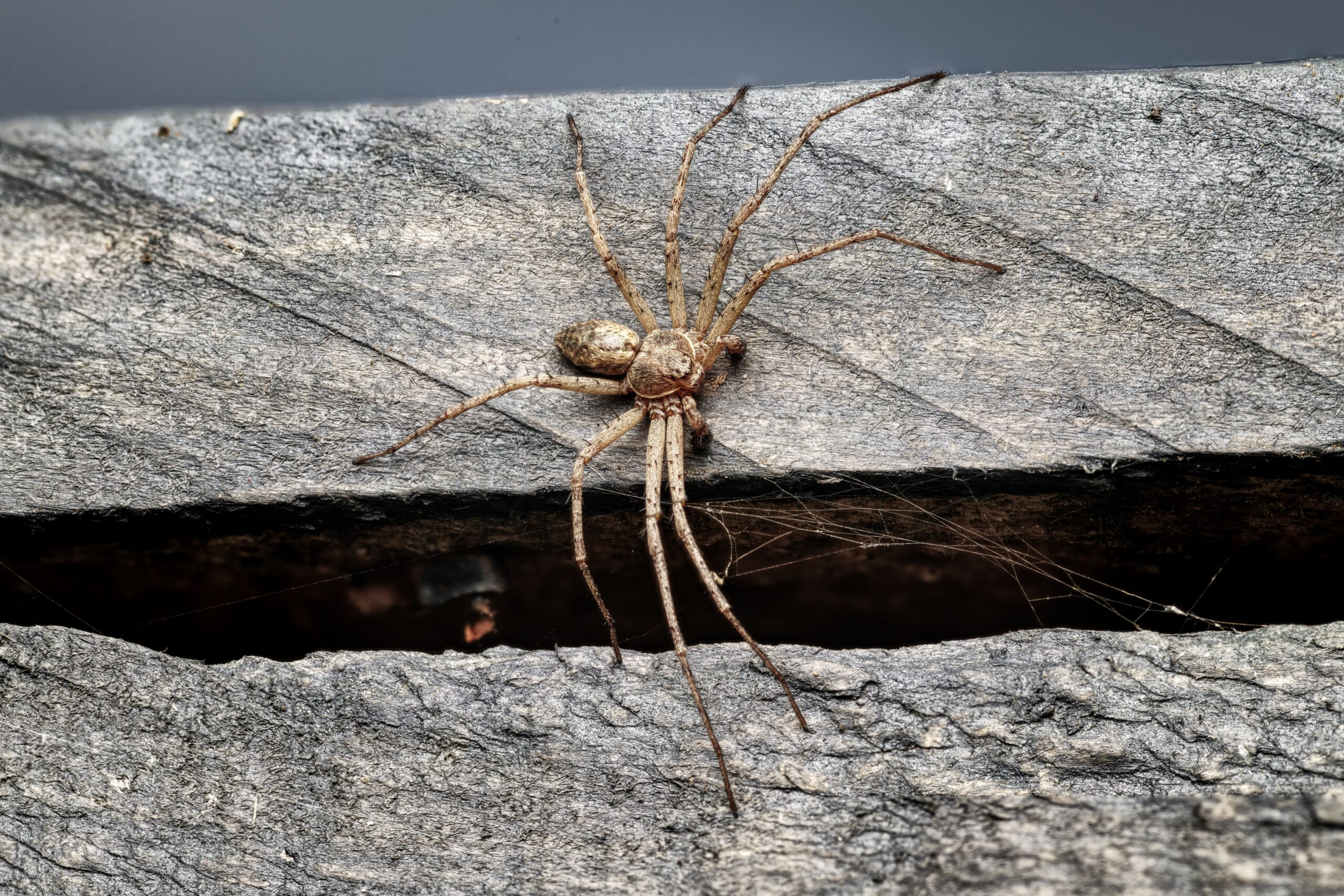
The next time a giant spider suddenly appears on your wall, reaching for a slipper might not be the best first move.
Contents
show
That enormous, long-legged creature that seems determined to make your home its personal hunting ground may have arrived for a surprisingly practical reason: there are insects to eat.
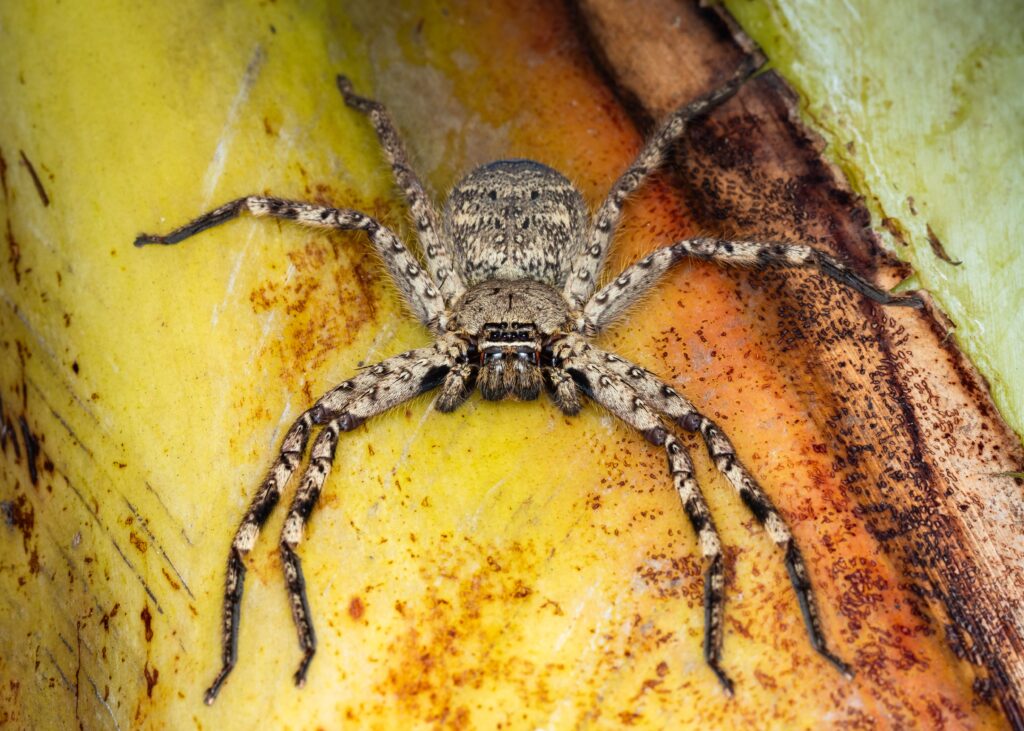
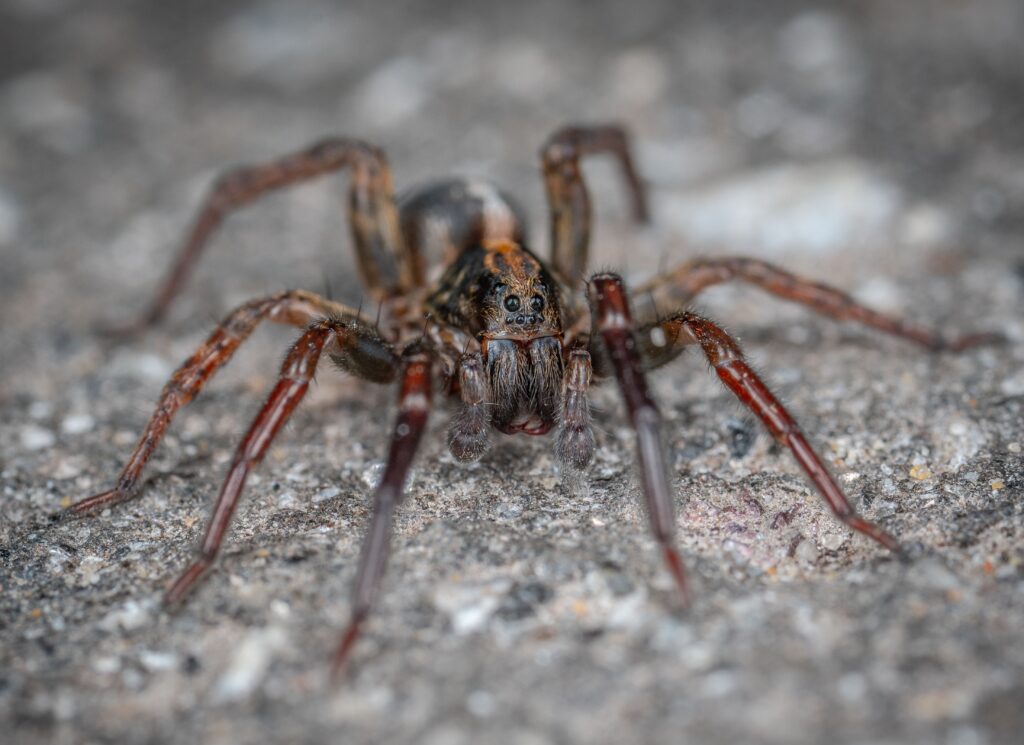
Huntsman spiders have a reputation for being terrifying house guests. They are large, fast, hairy, and capable of appearing in some of the worst possible places, including walls, ceilings, garages and even cars. Yet much of what makes them frightening also makes them effective predators.
Rather than building webs and waiting for prey to wander into them, huntsman spiders actively hunt. They use speed, their legs and their senses to track down insects, including cockroaches and mosquitoes.
And if one has decided to move into your home, there may be a simple explanation.
Your house has food.
The Spider May Be There Because Your House Has Bugs
Huntsman spiders are hunters in the most literal sense.
They do not depend on large webs to catch their meals. Instead, they hide during the day and become active when conditions are right, moving through their surroundings in search of prey.
That can make a huntsman particularly useful around homes.
Cockroaches, flies, mosquitoes, crickets and other insects can all become prey. The spider is not entering the house because it has developed a fascination with humans. It is following the same basic rule that governs most predators: go where the food is.
Reference material from Australia describes huntsman spiders as useful natural insect controllers, particularly because they prey on cockroaches and disease-carrying mosquitoes.
That creates an amusing situation for homeowners.
You may look at the giant spider on your wall and think it is the problem. The spider may be there because the actual problem is hiding somewhere else.
A huntsman does not need to understand your feelings about housework. It only needs to find a steady supply of prey.
That is also why killing one spider may not solve the underlying issue.
If insects continue entering the home, another predator may eventually follow.
There are several reasons a house can become attractive to a huntsman:
- Warm, sheltered spaces can provide protection from weather and predators.
- Cracks and gaps around doors and walls can provide easy access.
- Outdoor lighting can attract insects, creating a food source nearby.
- A home with plenty of insects can effectively become a hunting ground.
In other words, the giant spider may be a symptom of an environment that is already attracting smaller creatures.
Why Huntsman Spiders Look So Much Worse Than They Are
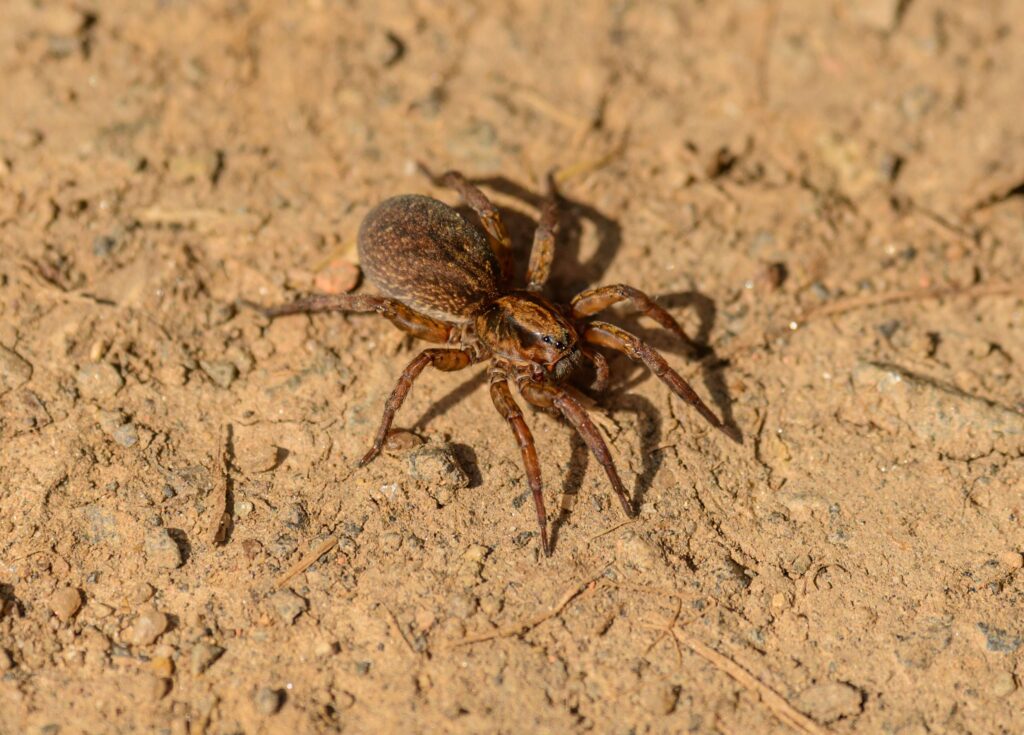
Part of the problem is their appearance.
Huntsman spiders can be remarkably large. Reference material on Australian species says some can reach around 15 centimetres across when their legs are included.
Their bodies are also built differently from the spiders many people are accustomed to seeing.
Their legs extend outward, giving them a flattened appearance. Their front legs are larger than their back legs, and the overall shape can resemble the stance of a crab.
That unusual body structure is more than an aesthetic nightmare for anyone with arachnophobia.
It helps them move.
Huntsman spiders can move rapidly across walls and other surfaces, and their leg arrangement allows them to move in several directions with impressive speed.
One Australian reference cites researchers recording certain huntsman species reaching speeds of around 110 centimetres per second.
For a human watching from the other side of the room, that can feel considerably faster.
There is another reason their speed can create panic.
If a huntsman is disturbed, it may suddenly run.
That does not necessarily mean it is chasing someone.
In fact, according to behavioural ecologist Dr Linda Rayor, a huntsman running toward a person may simply be trying to reach somewhere it considers safer.
Huntsman spiders have relatively poor eyesight, according to the reference material. They also rely on vibrations detected through their legs when locating prey.
So when a huge spider appears to charge directly at you, there is a decent chance the spider has no idea where you are going.
It is simply trying to get away.
Huntsman Spiders Usually Want To Avoid You
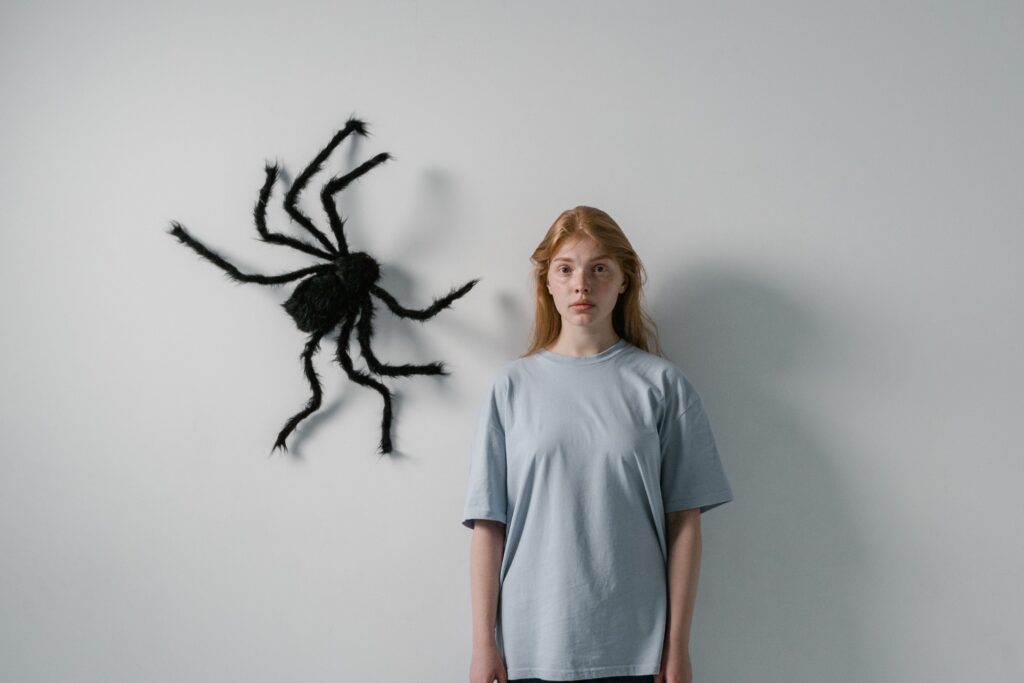
The image of a giant spider deliberately hunting humans makes for a frightening story, but it does not match the behaviour described in the source material.
Huntsman spiders are predators, but humans are not their preferred prey.
Their natural food consists mainly of insects and other invertebrates. Cockroaches are described as a particular favourite.
That means the giant creature sitting behind your curtain is probably more interested in whatever is crawling around nearby than in the person standing in the doorway.
Reference material also explains why huntsman spiders are sometimes discovered in strange places.
In nature, they often shelter beneath tree bark, rocks, logs, leaf litter and other protected spaces. A house, garage or car can accidentally provide a similar environment.
A dark space behind something is still a dark space, whether it happens to be beneath tree bark or behind a piece of furniture.
Heavy rain can also push outdoor huntsman spiders toward buildings. A dry home can become an appealing temporary shelter when conditions outside become unpleasant.
That does not necessarily mean the spider has decided to stay permanently.
In many cases, it may eventually disappear on its own.
This is one of the more frustrating aspects of encountering a huntsman. You can spend several minutes trying to keep track of it, only to discover that it has vanished completely.
That is partly because the spider’s flattened body allows it to squeeze into surprisingly narrow spaces.
So the spider may not have disappeared.
It may simply have found a better hiding place.
Are Huntsman Spiders Dangerous?
The answer is more complicated than simply calling them harmless.
Huntsman spiders can bite, but the reference material describes bites as uncommon. They generally do not want to defend themselves against humans unless they are provoked or handled.
Dr Rayor, who has studied Australian huntsman spiders and handled thousands of them, reportedly experienced 12 bites, with the bites occurring while the spiders were defending themselves.
That is a useful piece of context.
A spider that is capable of biting is not automatically a spider that wants to bite.
Huntsman spiders possess venom, which they use to subdue prey. Most encounters with people do not result in a bite.
However, the reference material also identifies an exception.
The badge huntsman spider, from the genus Neosparassus, can produce a more significant reaction. Symptoms can include prolonged pain, inflammation or vomiting.
Anyone who develops concerning symptoms after a suspected spider bite should seek medical attention.
For ordinary encounters, the safest approach is still to avoid grabbing the spider with bare hands.
The fact that a huntsman is unlikely to attack does not make picking one up a sensible idea.
If you do not know what species you are dealing with, there is another reason to be cautious. A large spider seen from a distance can be difficult to identify accurately.
The sensible approach is simple: give it space.
The Strange Social Life Of Some Huntsman Spiders
The giant spider hiding in your home may seem like the ultimate symbol of solitary living.
Some huntsman species, however, have a surprisingly social side.
Most spiders are associated with solitary behaviour, particularly when it comes to hunting and living arrangements. Huntsman spiders include species that break that pattern.
Reference material describes the social or flat huntsman as capable of living in groups of up to 300 individuals.
That sounds like the exact opposite of the image most people have of a spider.
These groups can include a breeding female and several generations of offspring. Family members can remain together for extended periods, and some species have been observed sharing prey.
Dr Rayor’s research has documented social behaviour in several huntsman species.
As she explained, “If you’ve got 30, 60 animals, a hundred animals staying together for a year, you’ve got social animals.”
That behaviour becomes even more interesting when the family group’s survival is considered.
Some members can help defend themselves and their siblings against predators. Staying together may therefore give younger spiders a better chance of surviving until they reach maturity.
For a creature that most people instinctively associate with isolation, the family structure is surprisingly complex.
It also demonstrates why common assumptions about spiders can be misleading.
The huntsman sitting on your wall may look like a solitary monster.
Its relatives may be living in a large family group somewhere nearby.
Huntsman Spiders Have A Complicated Family Life
The reproductive behaviour of huntsman spiders is another part of their biology that rarely enters the conversation when someone screams after finding one in the bathroom.
During warm and humid conditions, huntsman spiders may mate.
Females then create a silken egg sac containing hundreds of eggs. One reference estimates around 200 eggs in a typical egg sac.
The female guards the sac for several weeks.
During this period, she can become defensive if disturbed.
Eventually, the young spiders emerge and begin their lives independently or within the social structure characteristic of their species.
This protective behaviour is particularly striking because it contrasts with the stereotype of spiders as creatures that simply abandon their young.
Some huntsman species demonstrate a much more complicated relationship between parents and offspring.
The Spider Has An Important Job In The Ecosystem
The biggest reason to reconsider the automatic urge to kill a huntsman is not that every spider should be welcomed into your bedroom.
It is that predators such as huntsman spiders perform a useful ecological role.
They eat other animals.
That sounds obvious, but the effect can be significant.
Spiders help regulate insect populations in gardens, forests and other environments. Huntsman spiders can prey on insects that humans generally do not want around their homes.
Cockroaches are one example.
Mosquitoes are another.
The reference material describes huntsman spiders as useful in controlling insect numbers, including insects that can carry disease or damage plants.
That puts the spider in a different light.
The creature that looks like a household invader may actually be participating in a much larger system of natural pest control.
It does not use chemicals.
It does not need a trap.
It does not require electricity.
It simply hunts.
That does not mean homeowners should deliberately fill their houses with spiders. A giant huntsman in your living room can be an unwelcome surprise, particularly if someone in the household has a severe fear of spiders.
But there is a difference between removing an animal from your home and killing it on sight.
If the spider can safely be relocated, that is often an option.
What To Do If You Find One In Your House
The first reaction to a large spider is often panic.
The second is usually an attempt to find something heavy enough to hit it.
There is another option.
If the spider is in a location where it can be approached safely, the reference material recommends using a container and a piece of paper or cardboard.
The basic process is straightforward.
Place the container over the spider. Carefully slide the cardboard underneath the opening until the spider is contained. Then carry the container outside and release it somewhere suitable.
The important word is carefully.
Huntsman spiders can move extremely quickly. Trying to catch one with your hands or cornering it unnecessarily can increase the chance of a defensive bite.
If you are uncomfortable handling the spider, leave it alone and seek assistance.
Prevention can also reduce the number of unexpected encounters.
Since huntsman spiders can enter through gaps and crevices, reducing access points can make a difference. The Australian reference material recommends checking doors and windows and sealing gaps where possible.
Fly screens can also make it harder for insects and spiders to enter.
There is a practical benefit to this approach beyond spiders.
If you reduce the number of insects entering your home, you also reduce the food available to the predators that follow them.
That means the most effective spider-control strategy may sometimes begin with insect control.
Why You Should Not Blame The Spider
There is something slightly ironic about finding a giant huntsman in a house.
The spider may have entered because the house provides exactly what it needs: shelter and food.
Humans build homes to create protection from the outside world. Other animals occasionally recognize those same benefits.
A warm, dry building is attractive to more than one species.
If insects are already getting inside, predators can follow.
That does not mean the homeowner has done something wrong. It simply reflects how ecosystems work.
A house is not completely separated from nature. Tiny openings, gardens, lights, weather and food sources connect indoor spaces with the world outside.
Huntsman spiders take advantage of those connections.
And there is an important lesson hidden inside the seemingly ridiculous sight of a giant spider crawling across a ceiling.
The creature may not be the cause of the problem.
It may be responding to it.
If a home repeatedly attracts huntsman spiders, looking for gaps around doors, windows and walls may be more useful than repeatedly killing the spiders that enter.
The same goes for food sources.
A home with fewer insects is less attractive to a hunting spider.
The Spider In Your Home May Be A Sign, Not The Enemy
Huntsman spiders have everything needed to trigger a human fear response.
They are large. They are fast. They can appear without warning. They can vanish just as quickly.
Yet their reputation often tells only half the story.
They are predators that help control insect populations. Most species described in the references are not considered dangerous to humans, and they generally avoid confrontation.
Some species are even surprisingly social, living in large family groups and sharing food.
The next time one appears on the wall, there is no requirement to invite it to stay.
But there may also be no reason to panic.
If you can safely relocate it, do that. Then take a look around the house.
Because if a giant huntsman has moved in, there may be a much smaller reason why.
Somewhere nearby, something it likes to eat may already be living there.
And that giant spider may simply have arrived for dinner.