
Your cart is currently empty!
Artemis II Astronauts Capture Earth Image That Confuses Viewers
The moment NASA released a new image of Earth taken by the Artemis II crew, it was supposed to be simple. A breathtaking glimpse of our home planet from deep space. A reminder of how far humanity has come since the days of Apollo. A celebration of science, exploration, and progress.
Contents
show
Instead, it quickly became something else entirely.
Across social media, people began asking the same unexpected question. Why does Earth look duller now than it did more than fifty years ago?
The comparison was immediate. On one side stood the iconic 1972 “Blue Marble” image taken during Apollo 17. On the other, a modern photograph captured in 2026 by astronauts aboard the Artemis II mission. Both showed the same planet, yet they appeared strikingly different.
What followed was a mix of curiosity, concern, and confusion. But behind the debate lies a much more meaningful story, one that goes far beyond camera quality and color balance.
A Mission That Marked Humanity’s Return To Deep Space
The Artemis II mission represents a historic milestone for NASA and for humanity as a whole. For the first time since 1972, humans traveled beyond Earth’s orbit and journeyed toward the Moon.
Four astronauts made up the crew. Reid Wiseman, Victor Glover, Christina Koch, and Jeremy Hansen embarked on a ten day mission aboard the Orion spacecraft. Their goal was not just symbolic. They were testing the systems that will eventually support long term lunar exploration and future missions to Mars.
Launched from Kennedy Space Center on April 1, the mission covered nearly 695,000 miles. It carried the crew farther from Earth than any humans have traveled in over half a century.
As the spacecraft moved away from Earth, something remarkable happened. The planet began to shrink into the distance, transforming from a vast world into a fragile blue sphere suspended in darkness. For the astronauts, this was more than a visual experience. It was deeply emotional.
Christina Koch described the view as breathtaking. Reid Wiseman said one particular moment stopped all four crew members in their tracks. The sunlight shifted behind Earth, revealing the full curve of the planet glowing against space. It was a sight that words struggle to capture.
The Image That Sparked A Global Conversation

Among the many photographs taken during the mission, one stood out immediately. The image, later nicknamed “Hello, World,” showed Earth from tens of thousands of miles away.
The photograph captured several unique features. The planet appeared as a crescent, with its night side partially visible. Auroras glowed at both poles, painting faint green arcs across the atmosphere. Venus appeared as a bright point nearby, and a soft haze of zodiacal light stretched across the background.
It was a technically impressive image and a rare perspective that few humans will ever witness firsthand.
Yet when NASA shared the image alongside the Apollo 17 “Blue Marble,” many viewers noticed a difference. The older photo looked brighter, more vivid, and sharper. The new image seemed softer and less saturated.
Social media quickly filled with reactions. Some people wondered if the planet itself had changed. Others speculated about climate effects or environmental decline. A few questioned whether modern technology had somehow failed to match the capabilities of the past.
While most comments were rooted in curiosity, they revealed how powerful images of Earth can be. Even subtle differences can trigger big questions about the state of our world.
Why The Two Images Look So Different
Despite the speculation, the explanation behind the visual differences is far less alarming and far more grounded in science.
One of the most important factors is lighting. The Apollo 17 “Blue Marble” was taken with the Sun fully illuminating Earth. The result was a bright, evenly lit image with strong contrast and vibrant colors.
The Artemis II image, by contrast, was taken when Earth was partially in darkness. The Sun was positioned behind the planet, creating a crescent effect. Much of the surface was in shadow, and the visible light came from a combination of sunlight, reflected light, and faint atmospheric glow.
This alone dramatically changes how the planet appears in a photograph.
Camera technology also plays a role. The Apollo astronauts used film cameras, which often enhanced color saturation and contrast naturally. Film can produce richer tones that feel more vivid to the human eye.
Modern digital cameras, including the Nikon D5 cameras and even smartphones used by the Artemis II crew, are designed for accuracy rather than enhancement. They capture a more realistic representation of light and color. In addition, modern images are often processed with calibration techniques that reduce artificial vibrancy.
Another key difference lies in exposure. Capturing a dimly lit subject in space requires longer exposure times and careful adjustments. As Wiseman himself explained, photographing Earth from that distance can feel like trying to take a picture of the Moon from your backyard. It is not as simple as pointing and shooting.
Taken together, these factors explain why the newer image may appear less vivid. It is not a sign that Earth has lost its color or brightness. It is simply a result of different conditions and more precise imaging methods.
The Power Of Perspective In Space
While the debate focused on image quality, the astronauts themselves experienced something much more profound.
Looking back at Earth from deep space often triggers what scientists call the overview effect. This psychological phenomenon describes the shift in awareness that astronauts feel when they see the planet as a whole.
From that vantage point, borders disappear. Political divisions vanish. The planet appears as a single, interconnected system floating in the vastness of space.
Christina Koch described seeing the entire globe from pole to pole. Wiseman spoke about being able to identify continents, cloud systems, and even subtle atmospheric details. Victor Glover reflected on how, from that distance, humanity appears as one unified group rather than separate nations.
These experiences often leave lasting impressions. Astronauts return to Earth with a renewed sense of responsibility toward the planet and its people.
This perspective also reframes the conversation about the image itself. Whether the colors appear vivid or muted becomes less important when compared to the larger message the image conveys.
The Human Stories Behind The Mission

Beyond the science and technology, Artemis II is also a deeply human story.
Each astronaut brought personal items that reflected their lives and relationships on Earth. Reid Wiseman carried a notepad to record his thoughts, shaped in part by his experience as a single parent raising two daughters after the loss of his wife.
Christina Koch brought handwritten notes from loved ones, creating a tangible connection to home during the journey. Jeremy Hansen carried engraved pendants for his family, along with small reminders of his Canadian roots. Victor Glover brought meaningful personal items, including family heirlooms and inspirational writings.
These details highlight a simple truth. Even as humans venture into deep space, they remain deeply connected to life on Earth.
The mission also marked several historic milestones. Koch became the first woman to travel beyond Earth’s orbit toward the Moon. Hansen became the first Canadian to journey into deep space. Glover became the first Black astronaut to take part in a lunar mission.
These achievements reflect not only technological progress but also the growing inclusivity of space exploration.
A Journey Filled With Extraordinary Moments
Throughout the ten day mission, the Artemis II crew captured a series of remarkable images and experiences.
They witnessed a total solar eclipse from a vantage point impossible on Earth. For nearly an hour, the Sun’s corona was visible as the Moon blocked its light, revealing stars and distant planets in the background.
They observed the terminator line on both Earth and the Moon, where light and darkness meet. From space, this boundary creates dramatic contrasts that highlight the textures of planetary surfaces.
They also saw the Moon’s far side, a region that remains hidden from Earth’s view. For a brief window, sunlight illuminated parts of this mysterious landscape, offering a rare glimpse into an otherwise unseen world.
Each of these moments contributed to a growing collection of images that tell the story of humanity’s return to deep space.
What The Image Really Represents
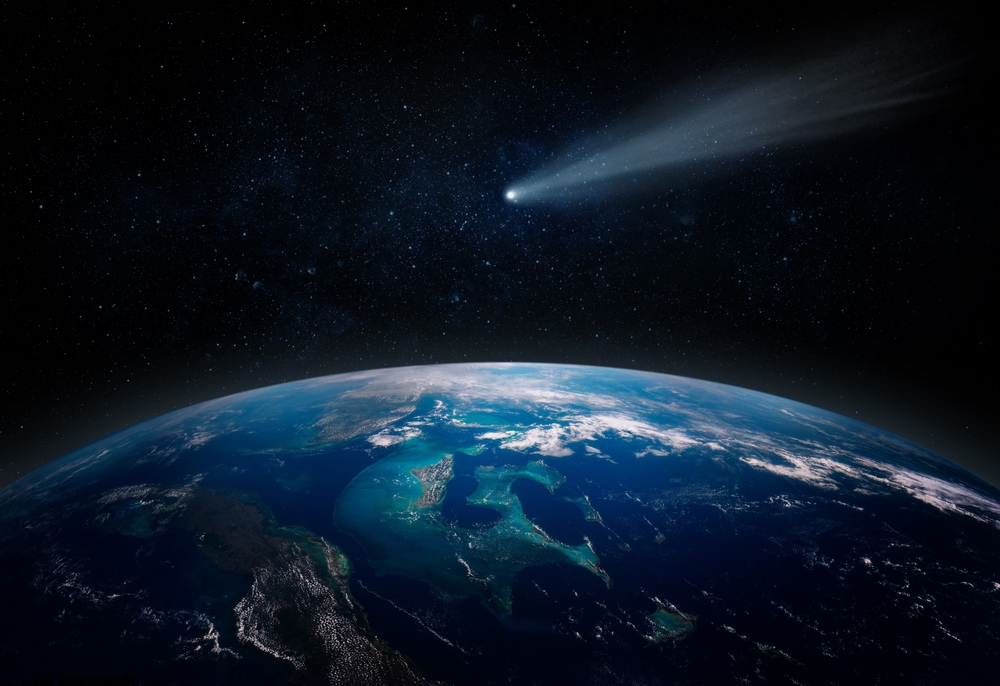
At its core, the viral debate about Earth’s appearance misses the bigger picture.
The Artemis II image is not just a photograph. It is a symbol of progress, curiosity, and exploration. It represents humanity’s ability to leave its home planet, look back, and reflect on its place in the universe.
It also serves as a reminder of how fragile that home is. From space, Earth appears as a thin layer of life surrounded by vast emptiness. The atmosphere, which sustains every living being, looks like a delicate line hugging the planet’s surface.
This perspective has inspired generations of astronauts and continues to resonate with people on Earth.
NASA imagery lead David Melendrez captured this idea when he spoke about the importance of these photos. When people look at Earth from space, they do not see borders or divisions. They see a shared home.
That message remains as powerful today as it was in 1972.
A Reflection On Progress And Perception
The comparison between the 1972 and 2026 images reveals more about human perception than about the planet itself.
It shows how expectations evolve with technology. It highlights how quickly people draw conclusions based on visual differences. And it underscores how deeply we care about the state of our world.
At the same time, it reminds us that progress is not always about making things look better. Sometimes it is about seeing things more clearly and more honestly.
The Artemis II image may not have the same saturated vibrancy as the “Blue Marble,” but it offers something equally valuable. It provides a more nuanced and realistic view of Earth under specific conditions.
It also captures details that were not visible in earlier images, including subtle atmospheric effects and auroras at both poles.
More Than Just A Photo
In the end, the question that captured the internet’s attention has a simple answer rooted in science and perspective.
Earth has not lost its color. It has not grown dimmer. The difference lies in how and when the images were taken.
But the conversation itself reveals something meaningful. People are paying attention. They are looking at images of Earth and asking what they mean.
That curiosity is valuable. It opens the door to deeper understanding, not just of technology and space, but of our relationship with the planet we call home.
The Artemis II mission has already achieved something remarkable. It has brought humanity back into deep space. It has captured new views of Earth and the Moon. And it has reminded millions of people to look up and reflect.
In a world often defined by division, a single image of Earth can still unite people in wonder. That may be the most powerful outcome of all.