
Your cart is currently empty!
Missing Man’s Face Is Suddenly Appearing On Bags Of Lime Across Mexico

A 26-year-old Mexican man disappeared after boarding public transport in 2022. Four years later, his face is being carried through hardware stores, warehouses and construction sites across Guanajuato, printed on something most people would never expect to become part of a missing-person search: a bag of hydrated lime.
Contents
show
The unusual campaign has turned ordinary construction packaging into a moving search notice. Instead of filling every inch of the bag with branding, Grupo Bertrán has placed photographs of missing people where customers would normally see the company’s marketing. One of those faces belongs to Jonathan Segundo Ventura, whose family has continued searching for him since he vanished.
🥺 ¡TREMENDA INICIATIVA!
— Negocios y Emprendimiento (@negociosyempren) August 14, 2026
Imagina esto: vas a comprar cal para una obra, para tapar una grieta, para lo que sea. Volteas el bulto… y en lugar de solo ver el logo de la marca, ves el rostro de alguien. Un nombre. Una fecha. Un "se busca". pic.twitter.com/CMzKDNLmWO
Jonathan Segundo Ventura Disappeared After Boarding A Bus
Jonathan was 26 when he was last seen on February 23, 2022, in Valle de Chalco, in Mexico’s State of Mexico. According to reporting on his case, he boarded a public transport unit and disappeared. A television report broadcast later that year said he vanished after an argument with his partner.
There has been no confirmed sighting of Jonathan since that day. His family has continued looking for him, with his photograph appearing in the familiar places associated with missing-person searches: social media posts, search notices and files connected to the investigation.
For families facing a disappearance, time creates a brutal problem. The photograph remains the same while fewer people may recognize it, and a notice posted in one location can only reach the people who happen to see it. Jonathan’s photograph has now been given a much wider route.
Instead of remaining on a poster or online post, his face is travelling with a product that moves through an entire commercial supply chain. A driver can transport the bags, a hardware store can stack them, a contractor can purchase them and workers can eventually open them at a construction site.
#NosFaltanMásDe135Mil
— DRA. MERCEDES PAVON "SUPERMUELITA FIFÍ" (@GARCIPAVON) August 5, 2026
En lugar de poner un anuncio, decidieron poner la fotografía de alguien a quien su familia sigue esperando.
Mientras muchas familias siguen buscando a un ser querido, Grupo Bertran decidió hacer algo diferente.
En una parte de los bultos de cal que… pic.twitter.com/D928VB5JyJ
A Company Put Missing People Where Its Branding Usually Goes
Grupo Bertrán produces hydrated lime for construction, agriculture and industry, with products sold through operations including Caleras Bertrán and Caleras de Bernal. Its bags already travel through the Bajío region, including León, Guanajuato, where the missing-person campaign has been observed.
The company’s decision changes the purpose of that packaging space. A section that could have been used exclusively to promote the product is instead being used to display information about people who remain missing.

That creates an unusual kind of advertising space. The company does not need to convince somebody to visit a particular website or notice a poster on a wall. The product itself carries the photograph from one location to another.
Reporting on the campaign described the bags as carrying search cards that can reach people through hardware stores, construction sites, warehouses, distributors and homes. The strategy effectively turns an existing distribution network into another way of distributing missing-person information.

The Packaging Can Travel Further Than A Poster
A traditional missing-person poster depends on location. Someone has to walk past it, recognize the face and remember the information.
The lime bags operate differently. They can be stacked, transported, sold and handled by dozens of people before they are finally used. Each stage creates another chance for somebody to notice the photograph.
For Jonathan’s family, that means his face can reach people who would probably never encounter a conventional search notice. A person who has never seen his photograph online could encounter it while buying construction supplies.
The idea is striking because it requires no new infrastructure. The trucks already exist. The warehouses already exist. The stores already exist. The company is simply using an existing route to put missing people’s faces in front of more people.

Mexico Is Still Searching For More Than 130,000 Missing People
Jonathan’s disappearance is part of a much larger crisis in Mexico. More than 130,000 people were registered as missing in the country as of January 2026, according to the International Committee of the Red Cross.
The size of that figure has become the subject of intense disagreement between government officials and families of missing people. In March, federal officials said they had cross-referenced the national registry against government databases, including vaccination records, birth and marriage records and tax information.
Officials said 40,367 people, around 31% of those registered as missing, had shown some activity in government records after being reported missing. Security official Marcela Figueroa said “not all disappearances are the same” and described some cases as voluntary absences, including people who left relationships or homes.
Families and search collectives challenged that interpretation. Search collective leader Héctor Flores called the report “misleading” and described it as another attempt to hide or downplay the scale of the problem.
The dispute leaves families dealing with a difficult reality. Records may show that a person has interacted with the state, but that does not necessarily answer where that person is or what happened to them. For families still searching, an unresolved case remains unresolved.
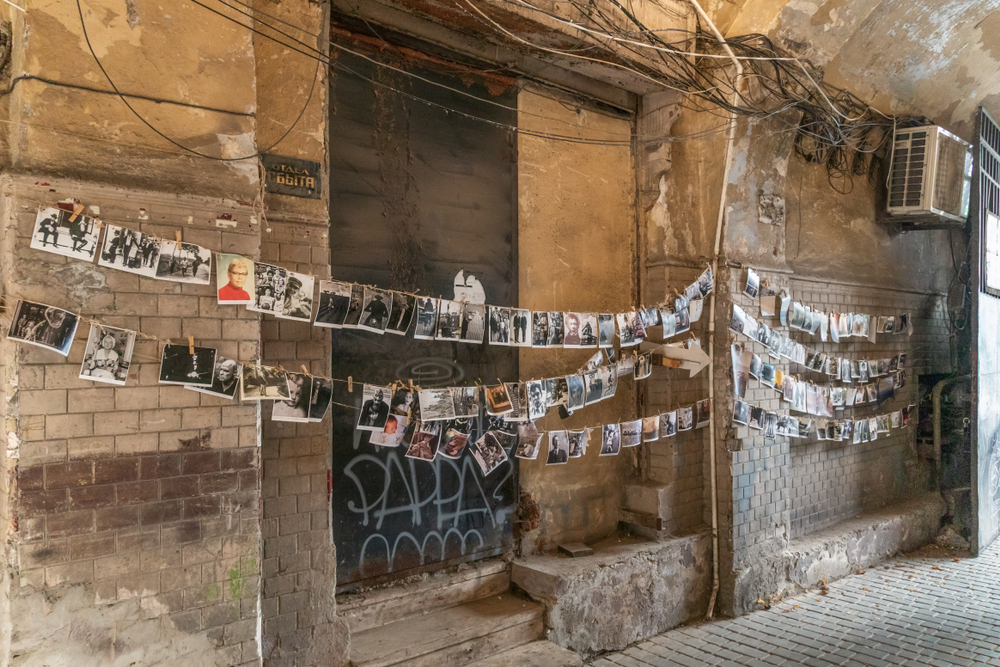
Search Collectives Are Doing Work Families Say Authorities Have Not Done
In Guanajuato, one group has taken the search directly into the field. Hasta Encontrarte was formed in 2021, and Amnesty International has documented its work with families searching for missing relatives.
The collective includes 86 families, 99% of them women. Together, members have located 203 missing people and uncovered 23 clandestine graves, according to Amnesty International’s reporting.
The work is dangerous as well as emotionally exhausting. Members search locations where they believe missing people could be found, sometimes entering areas where criminal groups may still operate.
Karla Martínez, whose brother disappeared, told Amnesty International, “Although an investigation file into my brother’s disappearance has been open for four years, nobody will look for him unless I do.” She also described the risks involved in conducting searches herself.
“Searching for someone is dangerous. I have been chased and shot at,” Martínez said.
Families Are Paying A Heavy Personal Price
The psychological toll can continue for years. Verónica Durán joined the collective after reading the investigation file concerning her missing son.
She said the file made her realize that authorities were not looking for him in the way she expected. “I read the investigation file. I realized that they were not looking for my son… I was very angry,” she told Amnesty International.
Durán also described what the prolonged search had done to her emotionally. “Nowadays, I have anxiety. I feel as though I have depression,” she said.
That reality helps explain why seemingly simple ideas, such as putting a photograph on a bag of lime, can matter to families. The search does not end when an official file is opened, and a photograph can lose visibility as years pass.
A campaign that puts those photographs into everyday places gives families another way to keep the cases visible without requiring them to personally reach every street, store or workplace.
The Idea Has Already Been Used On Milk Cartons
Using everyday products to search for missing people is not a completely new idea. In the United States, a dairy company began printing photographs of missing children on milk cartons in 1984.
The campaign eventually became widespread, with photographs of missing children appearing on billions of cartons. Among those featured were Johnny Gosch and Eugene Martin.
The concept has recently returned in a different form. In Brazil, dairy company Piracanjuba used AI age progression to update decades-old photographs of missing people before placing them on more than 300 million milk cartons in 2025.
The Brazilian campaign reportedly helped locate eight people during its first month. The approach gave families something that social media campaigns often struggle to provide: repeated exposure in ordinary physical spaces.
The lesson for companies is straightforward. Packaging reaches people who may never deliberately search for missing-person information, and the product can carry that information into homes, workplaces and stores.
Mexican Search Groups Want Other Companies To Follow
The success of similar campaigns has led Mexican search collectives to approach companies about using their own products to display photographs of missing people.
Collectives in the State of Mexico have reportedly approached major dairy companies such as Lala and Alpura with requests to replicate the milk-carton model. So far, those efforts have not succeeded.
That makes Grupo Bertrán’s decision particularly noticeable. The company has taken a form of advertising that usually exists to sell a product and used part of it for something entirely different.
The potential scale is also significant because companies already have established distribution systems. A manufacturer does not need to create a new network to distribute the photographs. The products are already moving.
For families, that can mean thousands of additional opportunities for recognition. A photograph that might otherwise be seen by a limited local audience can travel with products into new stores and new communities.
Jonathan’s Face Is Now Travelling Through Mexico
There is something striking about where Jonathan’s photograph can now appear.
A bag of lime may sit quietly on a hardware-store pallet before being loaded onto a truck. It can then travel to another town, sit in a warehouse or be carried onto a construction site. Eventually, someone will open it and use the contents to build something.
The bag will be consumed as a product. The photograph, however, has another purpose.
It asks every person who sees it to stop for a moment and look at a face that might otherwise have remained on a missing-person notice. For Jonathan’s family, that extra glance could be significant.
The campaign also points to three simple advantages of putting missing-person information on everyday products:
- Wider exposure: Products can reach people who never encounter traditional missing-person posters.
- Repeated visibility: Packaging can pass through multiple hands before reaching its final destination.
- Existing distribution: Companies can use established supply chains instead of creating new ones.
Jonathan was last seen in February 2022. His family is still searching for him.
Now his photograph is moving through the same commercial system that carries thousands of ordinary products across Mexico. A company looked at a bag that could have carried nothing but a logo and decided to use some of that space for a person who is still waiting to be found.
construction lime, family search, Grupo Bertrán, Guanajuato, Hasta Encontrarte, Human Interest, Jonathan Segundo Ventura, León Mexico, Mexico disappearances, Mexico missing persons, missing man Mexico, missing people, missing person search, missing persons awareness, missing persons campaign, trending news, unusual campaign, Valle de Chalco, viral story