
Your cart is currently empty!
107 Dogs Were Found Chained Across A Georgia Property. The Sentence That Followed Was Unthinkable
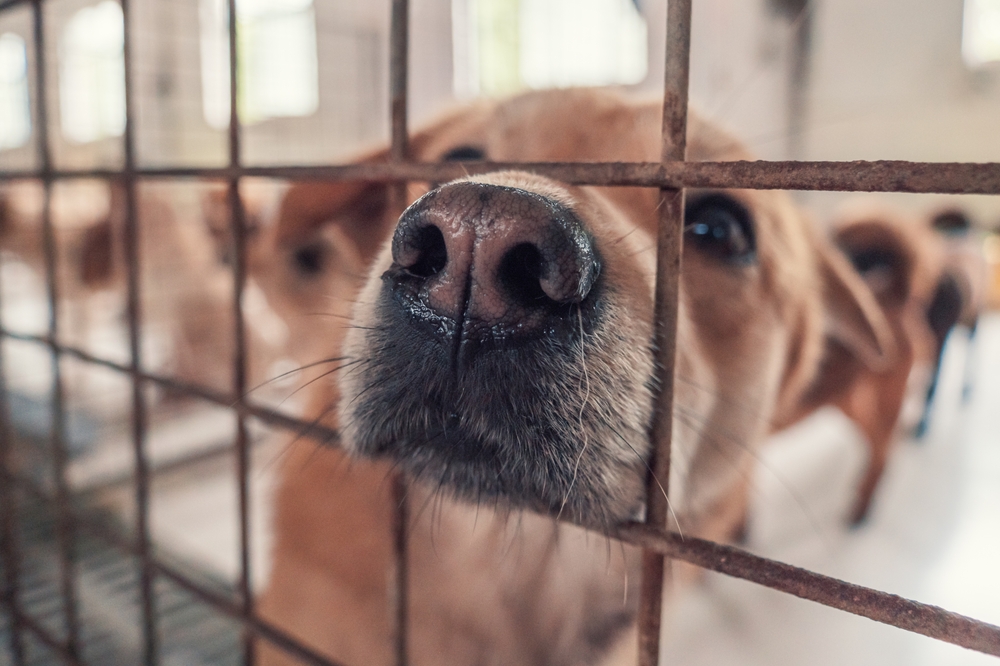
For more than two years, investigators in Georgia worked on a case that began with an ordinary Amazon delivery and ended with one of the most extraordinary prison sentences ever handed down in a dogfighting case. When deputies arrived at a property in Dallas, Georgia, in November 2022, they found 107 dogs, most of them pit bulls, restrained around the property on heavy logging chains. Many were underweight, some showed injuries consistent with fighting, and investigators found equipment and records they said pointed to an organized operation.
Contents
show
By the time Vincent Lemark Burrell, 57, appeared in a Paulding County courtroom on January 30, 2025, a jury had already convicted him on all 103 counts after a four-day trial. Assistant District Attorney K.C. Pagnotta had helped prosecute the case, but she still had no idea what sentence Judge Dean Bucci would impose. Then the judge began reading the individual sentences, eventually reaching a total that left Pagnotta stunned. “I kind of lost my breath a little bit,” she later told Fox 5 Atlanta.
An Amazon Driver First Alerted Police To The Property
The investigation started in November 2022 when an Amazon driver arrived at a home in Dallas, Georgia, northwest of Atlanta, and noticed dogs chained to fence posts. The driver reported what they had seen, prompting deputies to obtain a search warrant. On November 8, authorities executed that warrant and discovered 107 dogs across the property.
Most of the animals were pit bulls, according to the case details. They were attached to heavy logging chains and thick collars, with advocates who reviewed the case saying the dogs had been positioned so they could see one another but could never reach each other. That arrangement became one of the details that helped investigators understand the scale of what they had walked into.
Pagnotta later described the scene as overwhelming, saying there seemed to be another chained dog wherever investigators looked. “Everywhere you looked, you couldn’t take a step in any one direction without there being another pit bull staked out on a chain,” she said. Many of the dogs were underweight, while investigators reported that numerous animals did not have adequate access to food or water.
The property contained far more than a collection of neglected animals. Investigators said the dogs, equipment, records and physical evidence pointed toward organized dogfighting, turning a report from a delivery driver into a major criminal investigation.
The Dogs Showed Signs Of Severe Neglect And Injuries
The condition of the animals became one of the most disturbing parts of the investigation. Some dogs were kept outside on chains, while others were confined inside the property’s basement. The conditions in that area were so severe that officers used protective equipment before entering because of the strong smell of urine and feces.
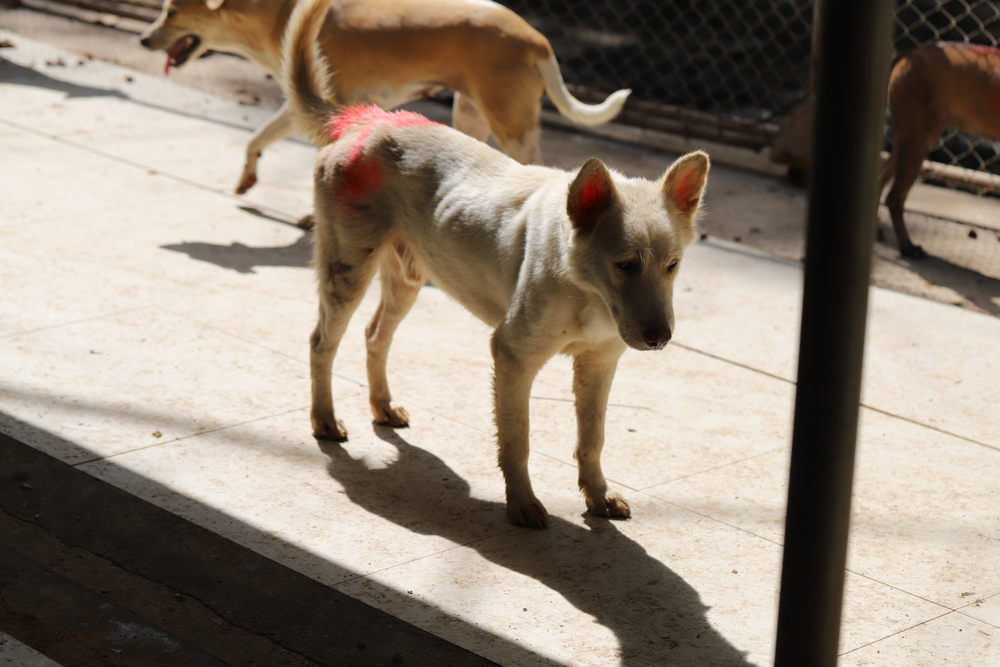
Several dogs had scars that investigators said were consistent with fighting. Others had rashes around their necks from their collars, and some had reportedly had their teeth forcibly removed. The case also described animals in extremely poor physical condition, including dogs that were emaciated.
Not every dog appeared to have been in the same condition. Some were described as “strong and extremely aggressive toward other dogs,” while others showed signs of malnutrition or physical injury. The differences between the animals did not change the broader picture investigators were documenting across the property.
The evidence suggested that the dogs were being maintained for purposes beyond ordinary breeding or ownership. Investigators began cataloguing equipment, medications and documents that would later become important pieces of the prosecution’s case against Burrell.

Investigators Found Equipment Linked To Dogfighting
The search uncovered several items associated with preparing dogs for fights and dealing with injuries afterward. Among them was a break stick, a tool used to pry a dog’s jaws apart during a fight. Investigators also seized a treadmill designed for dogs, a breeding stand and a crash kit used to treat injuries after bouts.
Authorities found medications that, according to the case, should have been held by a licensed veterinarian. They also recovered contracts involving the sale of specific dogs and documents that prosecutors said connected Burrell with other people involved in dogfighting.
There was another detail that prosecutors pointed to when describing the operation. Investigators found a chicken being kept on the property as bait for the dogs. Bait animals are used in some dogfighting operations, and the presence of one became another piece of evidence in the case.
Taken together, the equipment and records gave investigators more than evidence of poor conditions. They had physical items associated with conditioning dogs, treating injuries and moving animals through an organized network. The prosecution would eventually present that evidence to a jury alongside the testimony and condition of the 107 rescued dogs.

Baby Shark Was Just Eight Weeks Old When She Was Rescued
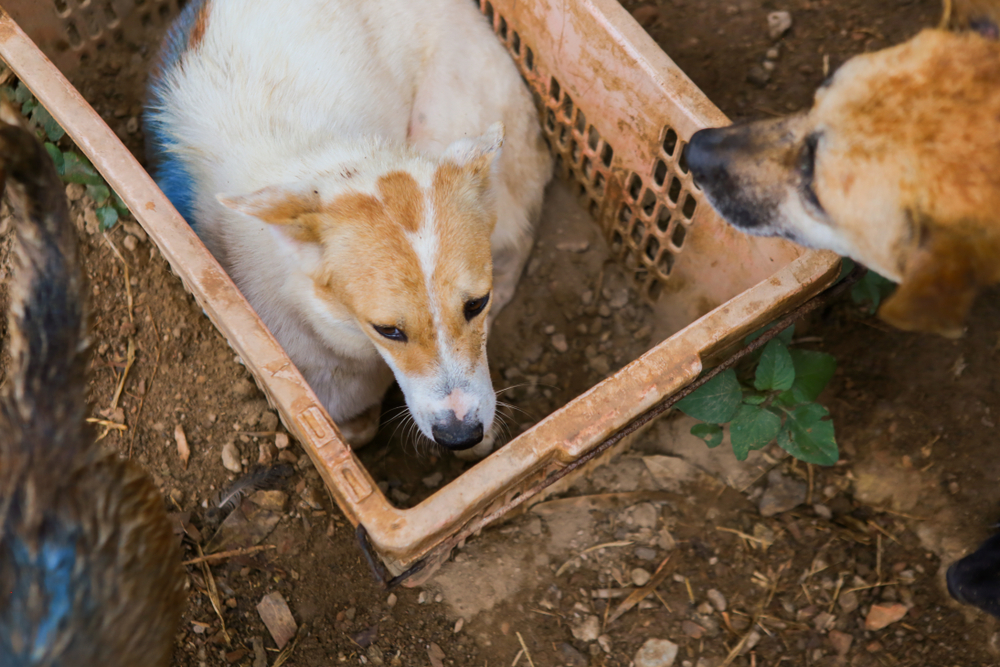
Among the dogs removed from the property was a puppy known through the case as Baby Shark. She was approximately eight weeks old when investigators found her, making her one of the youngest animals connected to the case. Unlike some of the larger dogs, Baby Shark’s story began with a problem that was immediately visible: she was suffering from rickets.
Pagnotta said the puppy developed the condition because of poor nutrition and had also been kept in a crate that was too small. “She developed rickets from poor nutrition, and also, the crate she was in was entirely too small,” Pagnotta said. Baby Shark required a series of casts on her front legs as rescuers worked to address the damage.
She was eventually placed with a pit bull rescue, where she received treatment and began the rehabilitation process. Her recovery became a particularly memorable part of the case because she represented what happened to the animals after investigators removed them from the property.
Jessica Rock, Georgia’s statewide animal crimes prosecutor, said Baby Shark also played an unexpected role for the people involved in the rescue effort. The puppy “served almost like a support dog for the people working through the trauma of what they were witnessing,” Rock said.

Burrell Was Convicted On All 103 Counts
After investigators documented the conditions at the property and collected the equipment and records, the case eventually went before a jury. Burrell, 57, was tried in Paulding County and convicted on all 103 counts following a four-day trial. The convictions covered both dogfighting and animal cruelty charges connected to what authorities had uncovered.
The scale of the conviction became important when Judge Dean Bucci prepared to sentence Burrell. Georgia law allows a first dogfighting conviction to carry between one and five years in prison, and that penalty applied to each of the 93 dogfighting counts in the case. Burrell was also convicted on 10 animal cruelty misdemeanor counts, each carrying a maximum sentence of 12 months.
The judge chose the maximum sentence on every count. He then ordered the sentences to run consecutively, meaning they would be served one after another rather than at the same time. That decision transformed a collection of individual sentences into a total that would become the defining number of the case.
The calculation itself was straightforward. The 93 dogfighting counts produced 465 years when five years was imposed on each. The additional 10 misdemeanor sentences added another 10 years, bringing Burrell’s total sentence to 475 years in prison.
The 475-Year Sentence Left The Prosecutor Stunned
The number was so large that even members of the prosecution team were caught off guard when it was announced. Pagnotta had spent more than two years working on the case, but she still did not know exactly how Judge Bucci would handle the individual counts when Burrell appeared for sentencing on January 30, 2025.
As the judge read through the sentences and the total continued to climb, the courtroom heard the result of applying the maximum penalty to every conviction while requiring the terms to run consecutively. When the calculation finally reached 475 years, Pagnotta said the figure took her by surprise.
“I kind of lost my breath a little bit,” she later told Fox 5 Atlanta.
The sentence was not based on an unusual law or a special penalty created specifically for Burrell. Instead, it came from applying the existing maximum sentences across 103 separate convictions. The extraordinary number was therefore a direct result of the number of counts, the maximum penalties and the judge’s decision to make them consecutive.
Prosecutors also viewed the sentence as a warning to anyone involved in organized dogfighting. Jessica Rock said she believed the punishment would send a message far beyond Paulding County and described it as the longest dogfighting sentence handed down anywhere.
Prosecutors Wanted Other Dogfighters To Take Notice
Rock said the case was significant because of the scale of the operation and the number of animals involved. She said the sentence would reach people involved in dogfighting well beyond the Georgia community where Burrell was prosecuted.
“This will definitely send a very strong message to the dogfighters not just here in the U.S., but other parts of the world,” Rock said. Her comments reflected the prosecution’s view that the case could become an example of how aggressively authorities can pursue large-scale animal cruelty and dogfighting operations.
District Attorney Robert Lane was even more direct after the sentencing. “If you come to Paulding County and you engage in evil acts, we will make an example out of you,” Lane said, making clear that his office wanted the sentence to serve as a warning as well as a punishment.
Sheriff Ashley Henson focused on the animals at the center of the investigation. “Justice was served today for the voiceless. This type of activity will not be tolerated in Paulding County,” Henson said. For authorities, the conclusion of the criminal case represented accountability for what investigators had found when they first entered the property more than two years earlier.
All 107 Dogs Were Given A Chance To Recover
The criminal case was only one part of what happened after the property was searched. Federal authorities obtained a warrant to take custody of all 107 dogs, allowing the animals to be moved into rescue facilities where they could receive medical treatment and begin rehabilitation.
The dogs had arrived at the rescue system with very different needs. Some had visible injuries or signs of poor nutrition, while others needed help adjusting after being removed from an environment where they had spent much of their lives chained or confined. The recovery process therefore involved more than treating physical wounds.
Rock said dogs rescued from these types of operations can sometimes surprise the people who meet them. She said they “tend to be friendly and trusting with humans,” and added that “the majority ultimately become adoptable.” That meant the dogs discovered at the property were not simply evidence in a criminal case. Many could eventually become pets in homes far removed from the conditions in which they were found.
Baby Shark was one of the clearest examples of that possibility. The puppy who had arrived with rickets and required casts for her front legs recovered through treatment and rehabilitation and was eventually listed for adoption. Her circumstances had changed completely from the day investigators first found her.
Baby Shark’s Story Continued After The Sentencing
When Burrell appeared in court on January 30, 2025, Baby Shark was also brought to the courtroom. She had been only about eight weeks old when investigators removed her from the property, but by the time of sentencing she had already gone through medical treatment and rehabilitation.
Her presence created a striking contrast with the proceedings happening around her. Burrell was facing a sentence of 475 years after being convicted on 103 counts, while Baby Shark represented one of the animals that had survived the operation and was now moving toward a completely different future.
The puppy’s recovery also showed what happened after the headlines and courtroom proceedings were over. She had needed casts because of rickets, had been placed with a rescue organization, and had worked through the effects of the conditions in which she was found. By the time she was listed for adoption, the eight-week-old puppy discovered during the original search had become a dog with a chance at a normal life.
The investigation itself had started with one delivery driver noticing something was wrong. That report brought deputies to a Georgia property where they found 107 chained dogs, and the evidence collected there ultimately produced 103 convictions and a 475-year sentence.
For Baby Shark, however, the most important outcome was much simpler. The chains were gone, the casts had come off, and the puppy who was once confined to a small crate was waiting for someone to give her a permanent home.