
Your cart is currently empty!
15-Year-Old Girl Was The Only Person On A 300-Passenger Flight Who Could Talk To A Deafblind Man
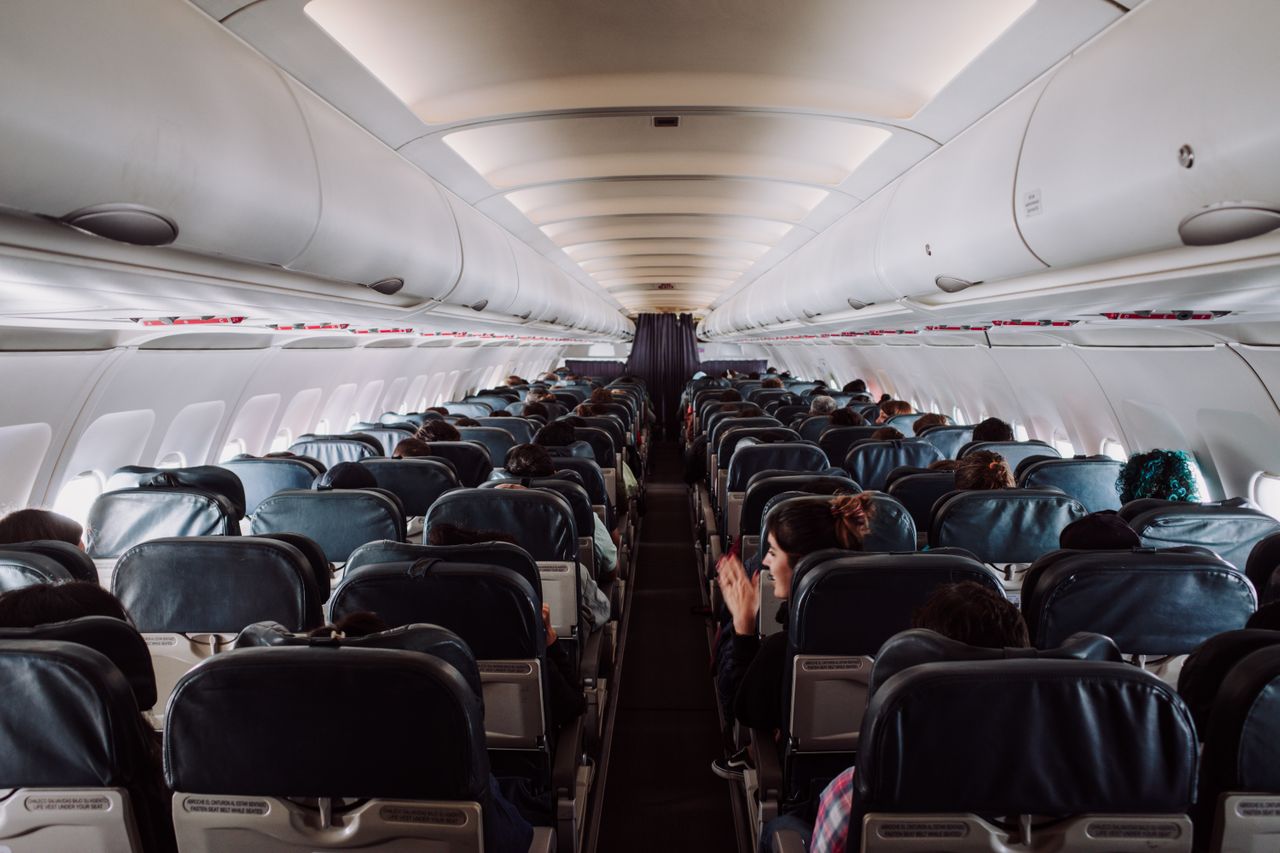
About an hour into an Alaska Airlines flight from Boston, a flight attendant made an unusual announcement over the plane’s public address system. A passenger was both deaf and blind, the crew needed to communicate with him, and they wanted to know if anyone onboard knew American Sign Language. On a plane carrying roughly 300 people, only one passenger pressed the call button. It was 15-year-old Clara Daly, a teenager who had been learning ASL for about a year.
Contents
show
Clara was nervous. She knew enough sign language to help, but she was worried she might spell something incorrectly or misunderstand the man. Still, she got out of her seat and walked over to Tim Cook, a 64-year-old passenger traveling alone to Portland. What started with a simple request for water soon turned into something much more personal, as Clara discovered that Cook did not only need help with basic communication. He wanted someone to talk to.
Clara Was Not Even Supposed To Be On That Flight
Clara’s presence on the flight was the result of a last-minute change in travel plans. She and her mother, Jane, had originally been booked on a nonstop flight from Boston to Los Angeles, but that flight was canceled. They were instead rerouted onto a longer journey with a layover in Portland, putting Clara and Cook on the same replacement aircraft.
Nobody could have known at the time that the canceled flight would lead to the encounter that followed. Around an hour into the flight, the crew became aware that Cook might need something. The problem was figuring out how to ask him. Because he was both deaf and blind, ordinary spoken conversation or visual sign language would not work.
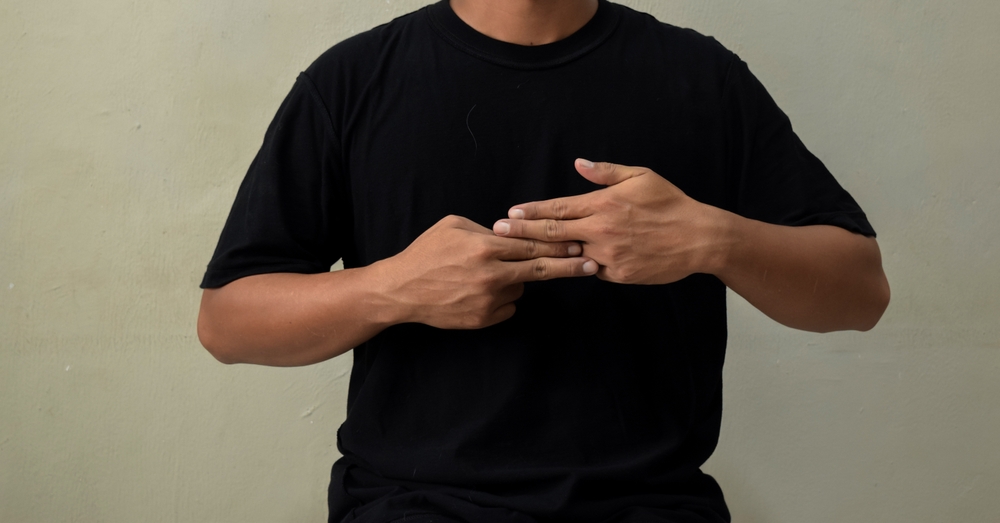
The flight attendant therefore asked whether anyone knew how to finger spell in American Sign Language. Clara was the only person who responded.
“I pressed the call button and then she came and she was like, ‘So we have a passenger on the plane who’s blind and deaf, so do you know how to finger spell?’ And I was like, ‘Yeah, I totally know how to finger spell,’” Clara later told CBS News.

She Had Learned ASL Because She Was Dyslexic
Clara had a personal reason for studying sign language. She is dyslexic and had found that communicating through ASL was easier for her than learning another spoken language that depended heavily on reading and writing.
She had been studying the language for roughly a year, which meant she had enough knowledge to communicate with Cook. She did not, however, feel like an expert.
That distinction mattered to Clara because she knew Cook would be relying on her hands to understand every word. If she made a mistake while spelling something into his palm, there would be no easy way for him to see what she had intended to say.
“I hope I don’t spell anything wrong,” Clara remembered thinking before she approached him.
The teenager also understood just how unusual the situation was. On a plane with hundreds of people, she was apparently the only passenger who could provide the kind of communication Cook needed.
“Out of a flight of like 300 people, only one person knew sign language,” she said.
Clara Knelt Beside Him And Started Spelling Into His Hand
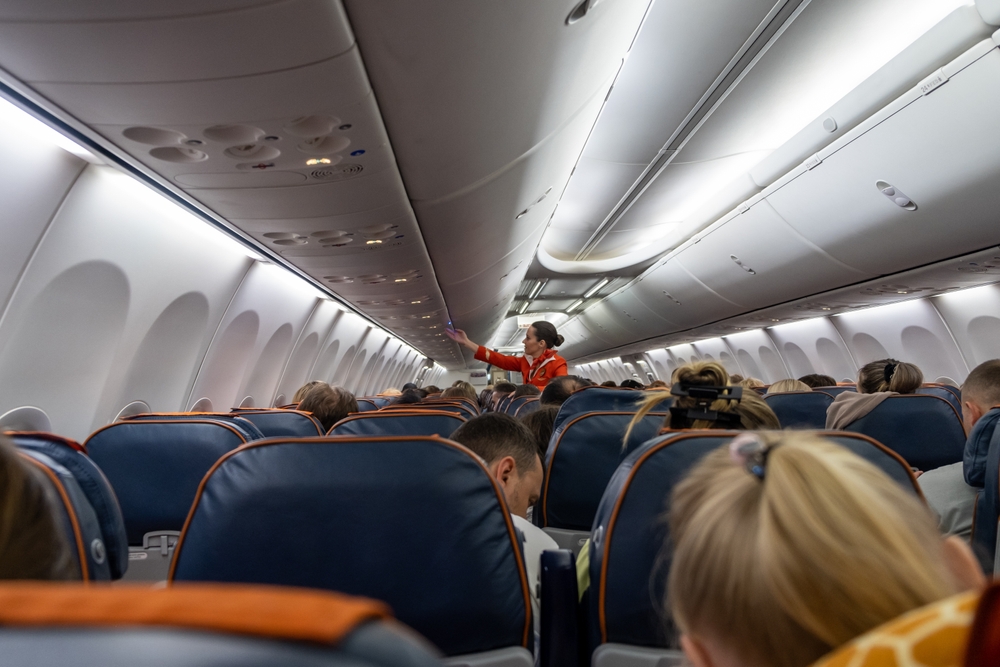
Clara approached Cook and knelt beside him in the aisle. Because he could not see her signs, she placed her hands inside his and began spelling words through touch.
“I knelt down, I put my hands inside his hands. I started asking, ‘How are you?’ ‘Are you okay?’ ‘Do you need anything?’” she said.
The first thing Cook told her was that he needed water. Clara helped him get it, solving the immediate problem that had prompted the flight crew to make the announcement. But their conversation did not end there.
Clara returned later to tell Cook the time and explain how much longer remained in the journey. She eventually came back for a third time, but by then she was no longer simply helping the crew communicate with a passenger who needed assistance. Cook wanted to talk.

Tim Cook Had Been Traveling Alone After Visiting His Sister
Cook was 64 and lived at a Brookdale Senior Living community in Portland. He had been visiting his sister in Boston and was making the journey home alone when he boarded the Alaska Airlines flight.
Clara learned that Cook had once worked as a travel salesman. His life had changed significantly after he became fully deaf and blind, but he was still eager to communicate with the teenager who had taken the time to sit with him.
“He told me how he used to be a travel salesman before he went fully deaf and blind,” Clara said.
Another passenger, Lynette Scribner, had noticed Cook earlier at the airport. Scribner later recalled seeing a woman signing into a man’s hand and eventually realized the passenger was both deaf and blind.
She was seated in Cook’s row during the flight and later photographed the interaction between him and Clara.
For Clara, however, the most important part of the encounter came during the final hour of the flight.

He Did Not Need Anything Except Someone To Talk To
Clara returned to Cook three times. The first visit was to help him get water. The second was to tell him the time. The third lasted much longer because Cook wanted to have a conversation.
“I went to him a total of three times, once to get him water, another to tell him the time, and the last hour of the flight to just talk to him,” Clara said.
They talked about Clara’s family and her plans for the future. The teenager gradually realized that Cook was no longer asking her for practical help.
“He, like, didn’t need anything. He was lonely and wanted to talk,” Clara said.
That observation stayed with Clara after the flight. What she had initially viewed as a task she needed to get right had become a simple conversation between two people who otherwise might never have met.
“He took such joy in a small conversation that we take for granted being able to have,” she said.
One of the flight attendants also told Alaska Airlines about what had happened. “Clara was amazing. You could tell Tim was very excited to have someone he could speak to and she was such an angel.”
One Teenager Ended Up Doing Three Different Things
The encounter became memorable because Clara did more than simply translate for Cook. Over the course of the flight, she helped him in several practical and personal ways:
- She helped him communicate: Clara used finger spelling through touch so Cook could understand what she was saying.
- She helped him with basic needs: She got him water and returned to tell him the time and remaining flight duration.
- She gave him companionship: During the final hour, Clara stayed with him and talked about her family and future plans.
None of those things required Clara to be an expert or a professional caregiver. She simply had a skill that happened to be exactly what another passenger needed at that moment.
Cook later explained why the interaction had such an effect on him. “Communication with Clara was good I went from bad mood to good mood really fast,” he said.
Speaking about the experience afterward, Cook also offered advice to people who encounter someone who is deaf and blind. “I would encourage them to be comfortable touching, because many people are not comfortable.”
A Photo From The Plane Sent The Story Around The Internet
Scribner’s photograph of Clara communicating with Cook became the image that introduced the encounter to a much larger audience. She posted about what she had witnessed on Facebook, and the story quickly spread.
Alaska Airlines reported that the post had received more than 110,000 likes and 40,000 shares within a couple of days. By the following Monday, it had been shared close to 700,000 times, with reactions climbing past a million.
Scribner’s account focused on the wider response inside the cabin as well as Clara herself. She described seeing passengers come together to help another person and wrote, “I don’t know when I’ve ever seen so many people rally to take care of another human being.”
The photograph gave people a visual snapshot of what had happened, but Clara’s account revealed something the picture could not show. She had not spent the final hour simply translating instructions for Cook. She had sat with him because he wanted company.
Clara Did Not Think She Had Done Anything Extraordinary
The attention surprised Clara because she did not see the encounter as a heroic act. “Doing something like that is what anyone would have done. I think it’s weird that it’s getting so much attention,” she said.
Her mother, Jane, viewed the circumstances differently. After the flight, Clara told her that she believed the canceled original flight had led her onto the replacement plane for a reason. Jane said Clara felt that she had been placed on the flight so she could be there when Cook needed someone who knew sign language.
Clara herself expressed the idea in more practical terms. She believed more people should learn ASL because situations like this can arise when nobody expects them.
“It’s important for more people to learn the language,” she said.
She also described what she believed the final hour had given Cook: “It’s good to make someone feel like they’re not as alone as they might have thought.”
The Announcement Could Have Gone Unanswered
The moment began with a flight attendant asking a cabin full of strangers for help. Hundreds of passengers heard the same question, but only one person knew enough sign language to answer it.
Clara was 15, unsure of herself and worried about making a mistake. She still pressed the button, walked down the aisle and placed her hands into Cook’s.
By the time the plane reached Portland, the teenager had done more than help a passenger get water. She had given a man who could not see or hear the cabin around him something far simpler: a conversation. Sometimes the most important person on a crowded flight is the one willing to get out of their seat.