
Your cart is currently empty!
Entire Elementary School Learns ASL After One Student Felt Isolated

A seven-year-old boy spent his school days surrounded by classmates, teachers, and busy hallways, yet he had almost no one he could truly talk to.
Contents
show
Then a handful of children decided they wanted to be his friend.
What happened next transformed not only one student’s life but an entire school community. A simple effort to learn a few signs grew into a movement that spread from one classroom to every corner of the school. By the end, nearly every student and staff member had learned at least some American Sign Language, giving one young boy something he had never really experienced before: a community he could communicate with.
For Ben O’Reilly, that change meant everything.
The Only Deaf Student in the District
Ben O’Reilly was a first-grade student at Campton Elementary School in Campton, New Hampshire.
Born deaf and living with additional special needs, Ben faced challenges that many of his classmates could hardly imagine. While other children chatted freely during lunch, played games on the playground, and formed friendships through conversation, Ben often found himself on the outside looking in.
His aide, Cheryl Ulicny, witnessed that loneliness every day.
“He didn’t have relationships with his peers or teachers, for that matter,” Ulicny told CBS News. “He was very alone. And he acted very alone.”
The circumstances around Ben’s education made the situation even more difficult.
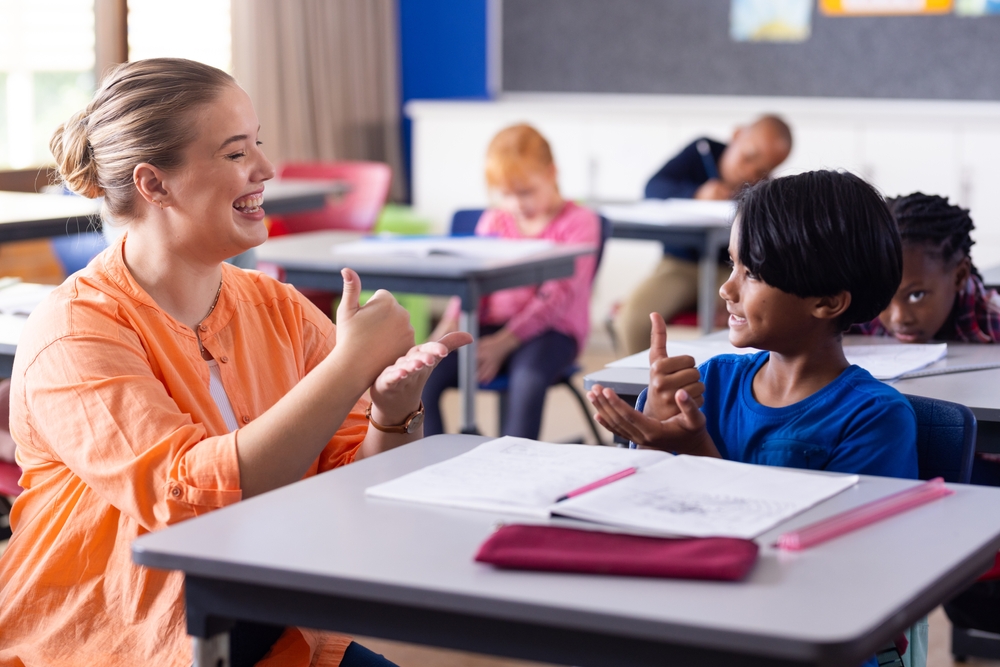
New Hampshire is one of the few states in the country without a dedicated school for deaf students. Ben was not just the only deaf child in his classroom. He was the only deaf student in the entire school district.
That meant there were very few people around him who understood sign language.
Aside from Ulicny, communication opportunities were limited.
For many hearing people, conversation happens so naturally that it is easy to overlook how much of life depends on communication. Friendships begin with conversation. Games are organized through conversation. Trust is built through conversation.
Without those daily interactions, children can become isolated even when they are physically surrounded by others.
That was the reality Ben faced every day at school.
A Friendship That Sparked Change

The transformation did not begin with administrators.
It did not begin with a formal district initiative or a state-funded program.
Instead, it started with a few children.
Some of Ben’s classmates began picking up basic signs so they could communicate with him. One of those students was a boy named Reid Spring.
When adults later asked Reid why he wanted to learn sign language, his answer was simple and direct.
“If he’s your friend, you can play with him, and he’s my friend,” Reid said.
There was no complicated explanation. No discussion about accessibility policies or inclusion strategies.
Just a child recognizing that another child deserved friendship.
The effort quickly spread.
More students wanted to learn.
The classroom began practicing signs together.
Children started communicating with Ben during class and on the playground.
Before long, what began as a small act of kindness became something much larger.
Teachers in other grades joined in.
Staff members started learning signs.
People practiced even when Ben was not around.
The school community embraced sign language because they wanted communication with Ben to become a normal part of everyday life.
A School Learns a New Language
The change did not happen overnight.
Learning any language requires patience, repetition, and effort.
Students practiced basic greetings, common phrases, and everyday words. Teachers incorporated signs into classroom activities. Staff members made a conscious effort to continue learning.
Eventually, sign language became visible throughout the school.
Children signed to each other.
Teachers signed while teaching.
Staff members greeted students using ASL.
The goal was never perfection.
The goal was connection.
That distinction made all the difference.
Many people hesitate to learn another language because they worry about making mistakes. Young children often approach things differently. They are willing to try, willing to learn, and willing to look silly if it means connecting with someone.
That openness helped create an environment where communication barriers started disappearing.
For Ben, it meant he was no longer dependent on a single adult to communicate throughout the day.
He suddenly had classmates he could joke with.
Friends he could play with.
People who could understand him.
The difference was visible.
According to his mother, Etta O’Reilly, something important clicked for Ben once he saw so many people using sign language around him.
“It clicked for him that the sign language had value,” she said.
His aide noticed the transformation as well.
“You could just watch his world open up with communication,” Ulicny said. “It was amazing.”
Those words capture something many people overlook.
Communication is about far more than exchanging information.
It is about belonging.
The Emotional Impact on Ben’s Family
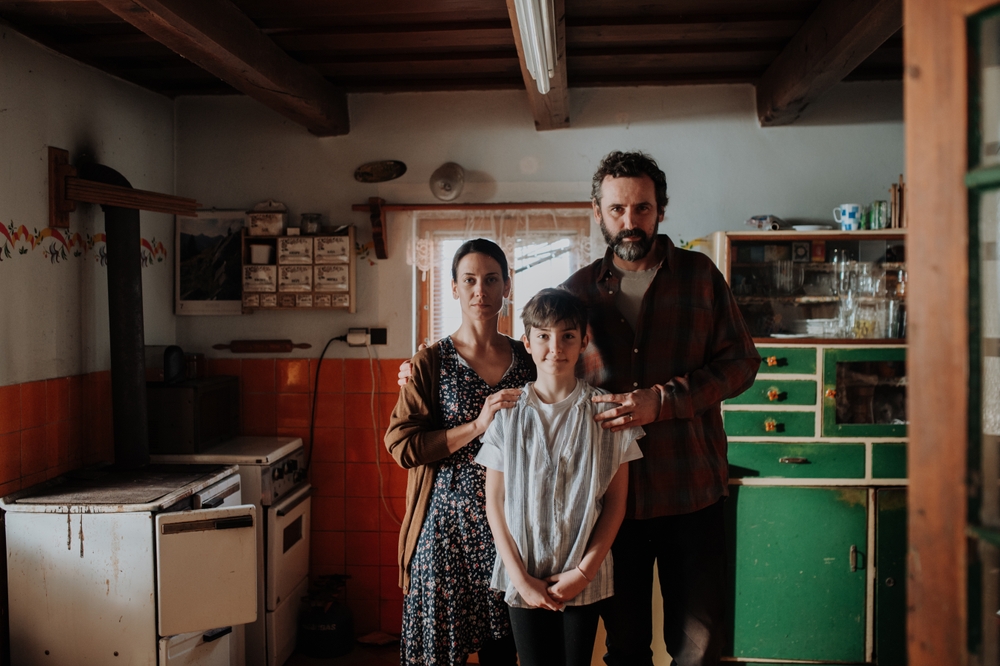
For Ben’s adoptive mothers, Etta and Marlaina O’Reilly, discovering what the school had done was overwhelming.
Parents of children with disabilities often spend years advocating for support, accommodations, and understanding.
Many become accustomed to fighting for resources that other families take for granted.
That is why the school’s response came as such a powerful surprise.
“It’s incredible,” Etta O’Reilly told CBS News. “I could barely breathe. Like it was just so overwhelming.”
Imagine sending your child to school worried that they may feel isolated.
Then discovering that an entire school community voluntarily chose to learn a new language just so they could include them.
The gesture went far beyond academics.
It sent a message that Ben mattered.
That he belonged.
That his voice deserved to be heard.
For many families raising deaf children, that level of acceptance can feel rare.
The response from viewers who later watched Ben’s story reflected that reality.
Many people shared personal experiences about growing up deaf or having deaf family members.
Some recalled years of loneliness.
Others described feeling excluded during their school years.
Many wished they had experienced the same level of support Ben received.
One viewer who identified as a child of deaf adults wrote that classmates had often mocked their family because their parents were deaf. Seeing Ben’s story felt emotional because it represented the kind of acceptance they had hoped for growing up.
Another commenter described how their deaf husband still dislikes thinking about his school years because of the isolation he experienced.
For those viewers, Ben’s story was not simply heartwarming.
It represented a possibility that many had never experienced themselves.
Similar Stories Are Appearing Across America
Campton Elementary is not alone.
In recent years, several schools across the country have embraced sign language to support deaf students.
Each story is different, yet they share a common theme.
Children often become catalysts for inclusion.
In Maine, six-year-old Morey Belanger became the first deaf student to attend Dayton Consolidated School.
Rather than treating her hearing impairment as an obstacle, the school made learning sign language part of its culture.
Teachers hung educational posters throughout the building.
Students learned signs during daily activities.
Many children learned the alphabet in ASL.
Staff members continued expanding their vocabulary throughout the year.
The school eventually organized a special celebration featuring a Cinderella performer who sang while signing in ASL.
Morey even joined the performance.
Her mother, Shannon Belanger, said the support made a tremendous difference.
“From the get-go she was really well supported,” she said. “It makes me happy to see her supported, loved and accepted.”
School principal Kimberly Sampietro explained that sign language became embedded throughout the building.
Students encountered it constantly, whether in classrooms, hallways, or common areas.
The goal was to make communication natural.
The results were powerful.
Morey looked forward to school every day.
She built friendships.
She felt included.
For her family, that sense of belonging was invaluable.
One Teacher’s Decision Changed a Classroom
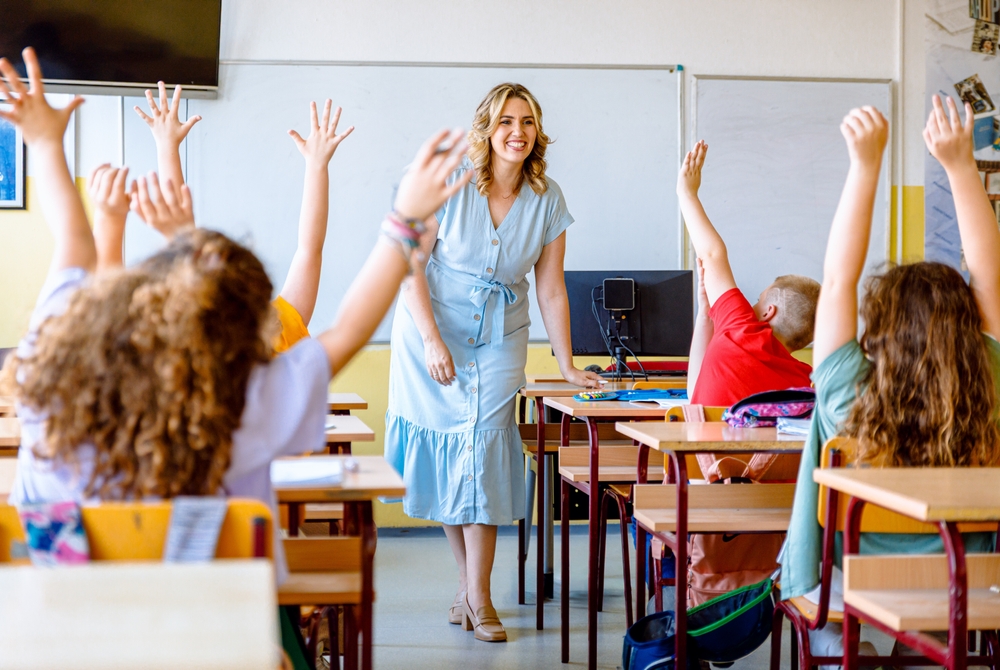
A similar story unfolded in Aspen, Colorado.
When kindergarten teacher Hollis Magee learned that one of her students, Otto Bontempo, was deaf and hard of hearing, she decided to incorporate sign language into her curriculum.
The results exceeded everyone’s expectations.
All 16 students in the classroom learned sign language.
They used it regularly.
They sought out opportunities to communicate with Otto.
Most importantly, they treated his deafness as something completely normal.
His mother, Katrina Gallant, described the impact in simple but powerful terms.
“They made being deaf feel completely natural.”
That achievement carried special significance.
When Otto was diagnosed, Gallant had been encouraged to relocate to a community with stronger resources for deaf children.
Instead, the family stayed and worked to build support around him.
The classroom became exactly the kind of community they hoped for.
Students actively looked for ways to connect with Otto.
Parents noticed their children bringing sign language home.
Some children began using signs interchangeably with spoken words.
Others showed improvements in communication and literacy skills.
The experience demonstrated that learning sign language benefits far more than one student.
It can enrich an entire learning environment.
Why Inclusion Often Starts With Children
Adults sometimes assume that major social change requires complicated systems and policies.
Those things can help.
But stories like Ben’s reveal another truth.
Inclusion often begins with ordinary human decisions.
Children are particularly good at making those decisions.
Young students tend to approach differences with curiosity rather than fear.
They ask questions.
They try new things.
They adapt quickly.
Most importantly, they often focus on what they have in common rather than what separates them.
The students who learned sign language for Ben did not see themselves as activists.
They saw themselves as friends.
That perspective removed many of the barriers adults sometimes create.
There was no debate about whether learning sign language was worth the effort.
There was simply a child who wanted to communicate with another child.
The simplicity of that motivation may be exactly why it proved so effective.

The Growing Popularity of American Sign Language
The movement toward greater ASL education has been gaining momentum for years.
American Sign Language is now recognized as a foreign language in many school systems and universities across the United States.
More schools are introducing ASL classes.
More students are choosing to study it.
Technology has also accelerated access.
Video platforms, educational apps, social media creators, and online courses have made learning basic signs easier than ever before.
Many hearing individuals are discovering that ASL provides practical communication skills while also helping create more inclusive communities.
The growing visibility of sign language benefits everyone.
For deaf individuals, it increases opportunities for communication.
For hearing individuals, it broadens understanding and empathy.
For schools, it creates environments where more students feel seen and included.
Stories like Ben’s highlight what can happen when accessibility becomes part of everyday life rather than an afterthought.
A Lesson That Reached Far Beyond One Student
The most remarkable aspect of Ben O’Reilly’s story is that nobody set out to create a national headline.
No one expected television cameras.
No one anticipated viral attention.
A few children simply wanted to talk to their friend.
That choice spread from one student to another, then another, until an entire school community was participating.
The result changed Ben’s daily life.
It also changed the people around him.
Students gained a new language.
Teachers developed new skills.
Families witnessed what genuine inclusion looks like in practice.
The story resonates because it demonstrates how meaningful change often begins.
Not with grand gestures.
Not with complicated plans.
But with a willingness to meet someone where they are.
Ben entered school as the only deaf student in his district.
Thanks to the efforts of classmates, teachers, and staff, he found something far more valuable than accommodation. He found a community that chose to learn his language, so he would never have to face school alone.