
Your cart is currently empty!
A Roman Villa Was Buried Beneath an Italian Vineyard for 1,800 Years
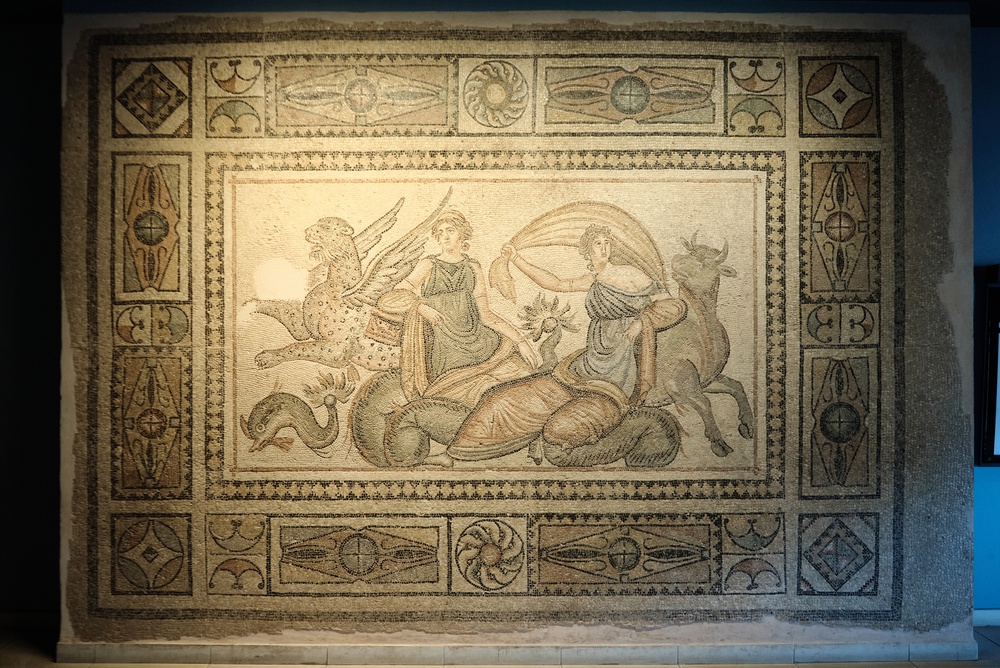
For generations, archaeologists knew a remarkable Roman villa was somewhere beneath a vineyard in northern Italy. They had found its mosaic floors before, photographed them, studied them, and then watched the site disappear beneath the soil. Every attempt to locate the villa again had ended with more questions than answers.
Contents
show
Then an archaeologist tried something far less dramatic than a major excavation. Instead of tearing open the vineyard, Gianni De Zuccato used targeted soil cores to search beneath the rows of vines. The gamble paid off. Hidden several meters underground was an astonishingly well-preserved Roman mosaic, still carrying its intricate geometric patterns after roughly 1,800 years.
The Search Took More Than a Century
The villa’s story began long before the latest discovery. Roman remains were first uncovered at the site in 1887, when workers found sections of mosaic pavement in a field known as Cortesele di Villa. Some of those pieces were removed and eventually became part of Verona’s archaeological collections, giving experts a glimpse of the luxurious residence that once occupied the hillside.
The search became more serious in 1922, when archaeologist Tina Campanile excavated roughly 270 square meters of the villa’s residential wing. She uncovered polychrome mosaic floors that had survived in remarkable condition. Photographs from the excavation documented the rooms, but the site was eventually covered again, and its exact location faded from memory.
Another attempt came in 1975 after ploughing exposed part of another room. Archaeologists identified it as the vestibulum, or entrance area, and opened another investigation. Once again, resources ran out before the full villa could be understood. The excavation was filled back in, leaving the Roman residence hidden beneath the vineyard.
That history created an unusual archaeological problem. Researchers knew the villa existed, but they lacked a reliable map showing exactly where its surviving rooms were located. Digging blindly across an active vineyard would have been costly and disruptive, so De Zuccato and his team needed another way to find what previous generations had lost.
A Small Hole Finally Revealed the Hidden Floor
The breakthrough came from a surprisingly modest piece of equipment. Archaeologists began taking targeted core samples, using a coring drill to investigate what lay beneath the surface without immediately opening large trenches. The method allowed them to test specific locations while leaving most of the vineyard undisturbed.
Excavation began during the summer of 2019 and continued into the following months. In some areas, the team had to reach more than 13 feet below the surface before encountering evidence of the villa. Then the coronavirus pandemic forced the archaeological work to stop, leaving the hillside quiet once again.
When the team returned after Italy began reopening, the search quickly produced the result they had been hoping for. About a week after work resumed, the mosaic appeared beneath a row of vines several meters below the vineyard surface.
De Zuccato later admitted that the discovery overwhelmed even his professional composure. “It was an unbelievable sensation. I have to admit that I couldn’t stay cool,” he said. After decades of failed searches, the team had finally located part of the Roman villa that had effectively vanished from the landscape.
The Mosaic Still Has Its Roman Colors
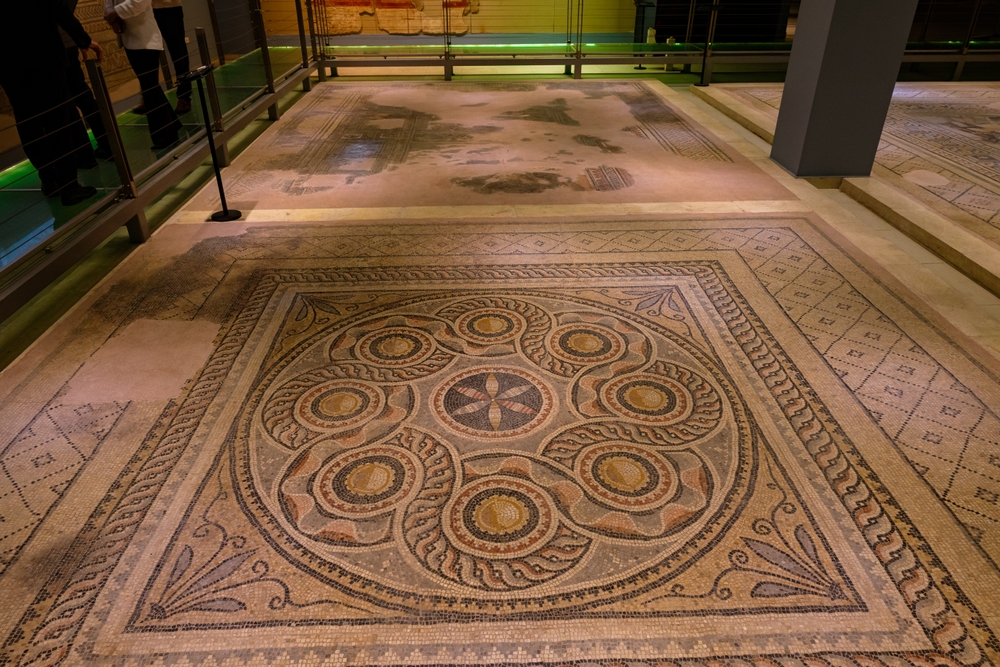
What emerged from the earth was far more than a few scattered fragments. Archaeologists found long stretches of patterned mosaic flooring containing red, gray, white and brown tones. The design includes interlocking Solomon’s knots arranged inside octagons and rhomboids, alongside braided guilloche patterns, wave bands, floral elements and the distinctive semi-circular pelta motif.
The floors have been dated broadly between the third and fifth centuries AD, with De Zuccato placing them around 250 to 400 AD. Either way, the mosaic belongs to a period when the Roman Empire still dominated much of Europe and the Mediterranean world.
The scale of the complex also suggests that this was no ordinary rural dwelling. Around 300 square meters had been exposed during the investigations, while service areas indicate that the wider complex may have covered roughly 1,000 square meters.
The villa’s surviving decoration tells its own story. Mosaic floors of this quality required considerable skill, materials and money. They were designed for rooms belonging to people wealthy enough to commission elaborate floors rather than simply functional surfaces.
Objects Beneath the Floor Add Another Layer
The mosaic was not the only discovery made at the site. Excavators also recovered a ring, a bracelet and a coin carrying the emblem of Lucius Verus, the Roman emperor who ruled alongside Marcus Aurelius between 161 and 169 AD.
The coin is especially interesting because it predates the mosaic above it. That difference in age shows that the site’s history did not begin with the surviving floor. Objects and structures accumulated across different periods, creating a record that extends beyond the moment when the mosaic was installed.
The villa itself was identified as a domus, meaning an upper-class Roman residence. Yet it was also connected to agricultural production. Its complex included a pars rustica, the working section of a Roman estate where agricultural goods could be processed and stored.
That combination makes the location particularly striking. The residence belonged to a wealthy rural estate, and the surrounding landscape was connected to wine production. Nearly eighteen centuries later, the same hillside remains covered with grapevines.
The Roman Villa Was Part Of A Wine-Growing Estate
The vineyard above the ruins is more than an accidental modern covering. Archaeological evidence indicates that the ancient estate itself had an agricultural function, including wine production. The region was associated with the Rhaetian wines that were known in the Roman world.
That creates an extraordinary continuity between the ancient landscape and the modern one. Roman landowners once managed agricultural production here, while today’s growers continue cultivating grapes across the same hillside.
The modern vineyard also explains why excavating the site is complicated. The archaeological remains are valuable, but the land remains productive agricultural property. Any large-scale excavation could require removing vines and changing how the plot is used.
For the archaeologists, that means discovery is only the beginning. The team has to balance the preservation of a rare archaeological site with the practical reality of a working vineyard that has continued its own story for centuries.
People Lived There Long After The Mosaic Was Laid
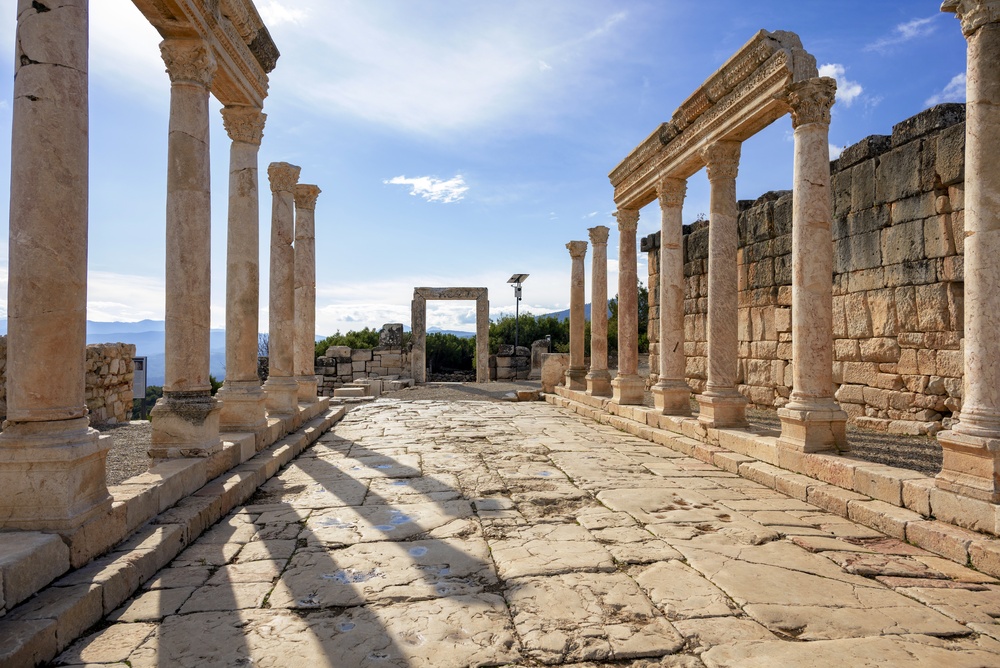
The villa’s history did not end when the Roman period changed. Archaeologists found evidence that people continued using the site after the empire’s decline, but the later inhabitants treated the old luxury residence very differently.
One of the clearest signs is a fireplace built from large recycled tiles. Its construction damaged the mosaic beneath it, showing that the later occupants had practical priorities. A valuable decorative floor could become building material when people needed a functioning hearth.
The team also found evidence that later inhabitants buried their dead inside the villa. The building had shifted from an elite residence to a place used for more basic forms of shelter and burial.
That transformation is one of the most revealing parts of the discovery. The mosaic captures one period when the building represented wealth and status, while the later remains show how the same structure could be repurposed as circumstances changed.
The villa therefore preserves more than an impressive floor. It contains traces of people using the same space for very different purposes across generations.
A 2,000-Year History of Wine-Growing
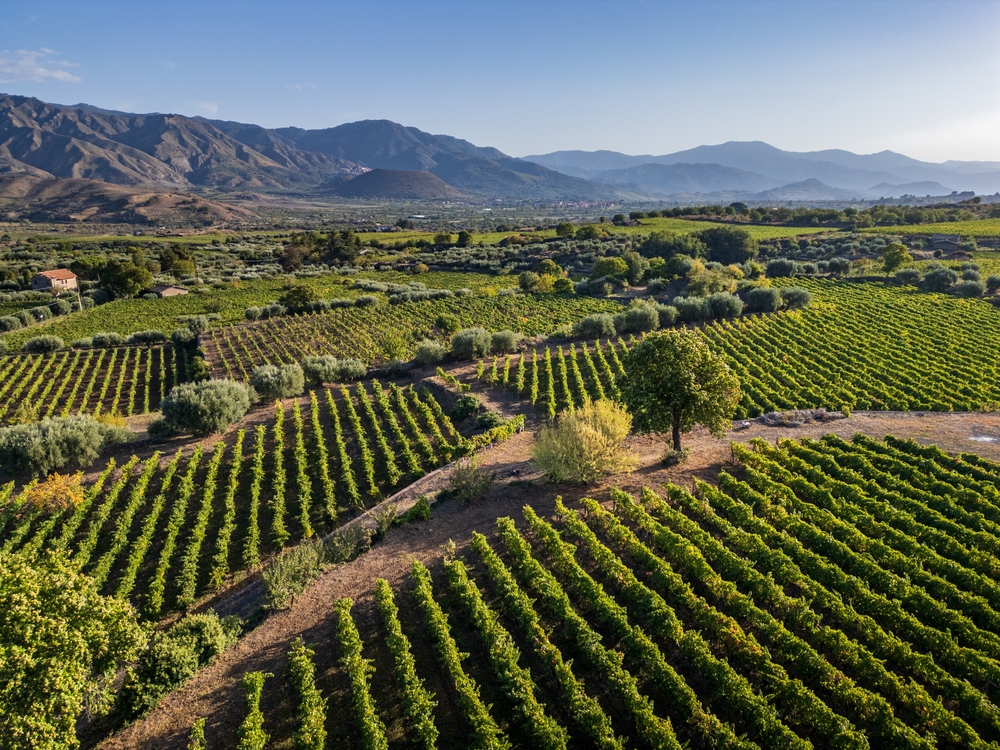
The fact that this Roman villa sits beneath a vineyard isn’t just a coincidence. Nearly two thousand years ago, this wealthy estate was a working farm known for producing famous Roman wines. Today, modern farmers are still growing grapes on the exact same hillside, keeping an incredible agricultural tradition alive.
But this shared history creates a modern dilemma: how do you excavate a priceless archaeological site without destroying a working farm?
Manuele Bronzo, who helps run the vineyard for his uncle, admits the discovery was a shock, but a welcome one. He estimates that fully uncovering the ruins would mean pulling up about 50 vines. “If they want to uncover all of it, we have to take off some of the vines,” he said. “But it’s just a small site… Not much.”
Local officials, including the mayor, want to find a way to fund the excavation and eventually open the site to the public. The challenge now is striking the right balance—figuring out how to bring this ancient Roman home into the daylight without erasing the vineyard that kept it safe for centuries.
ancient artifacts, ancient history, Ancient Rome, ancient ruins, Archaeological Discovery, archaeology, archaeology news, hidden history, historical discoveries, Italian vineyard, Italy, mosaic floor, Negrar di Valpolicella, Roman architecture, Roman Empire, Roman history, Roman mosaic, Roman villa, Verona, Viral History