
Your cart is currently empty!
Scientists Put Two Leading Theories of Consciousness to the Test, and the Brain Refused to Cooperate

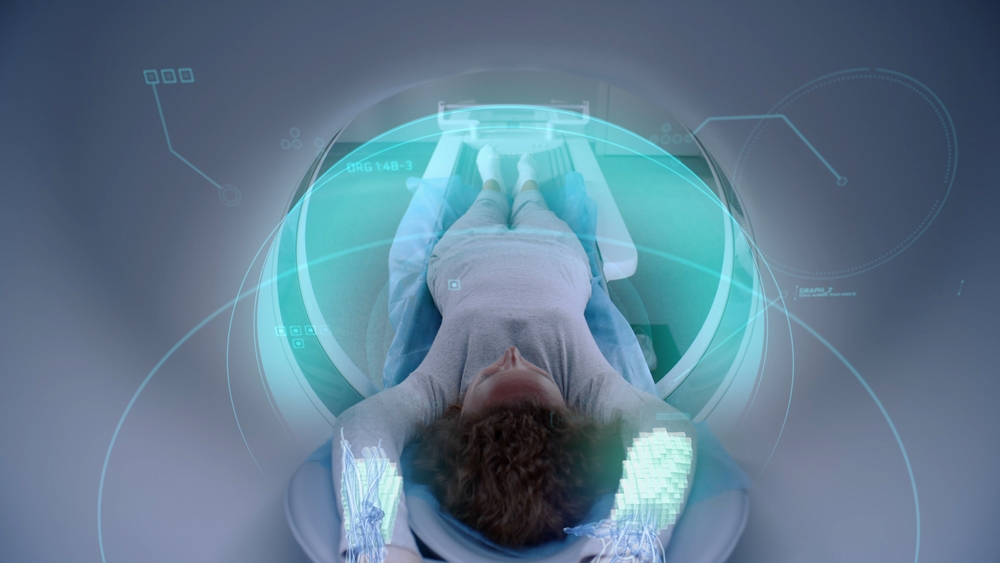
A face flashes across a screen for half a second, then disappears. A letter follows. Then comes a symbol designed to resemble a letter while carrying no meaning at all. Inside a scanner, a volunteer watches as machines track one of science’s deepest mysteries: the moment a brain becomes aware of what it sees.
Contents
show
The experiment involved 256 people across seven laboratories and put two of the world’s most influential theories of consciousness through a test neither side could rewrite afterward. The predictions were agreed in advance. The data arrived later. One theory was supposed to fail, but the results delivered a far stranger outcome.
Two Major Theories Faced the Same Test
Consciousness is the one experience every person knows firsthand, yet scientists still cannot fully explain how physical brain activity becomes the experience of seeing, feeling, remembering, fearing, loving, or imagining. For decades, researchers developed competing theories that often remained difficult to test directly against one another.
The Cogitate Consortium took a different approach through an adversarial collaboration. Supporters of Global Neuronal Workspace Theory and Integrated Information Theory worked with a neutral team to agree on specific predictions before the experiment began, making it far harder to reinterpret the results once the data arrived.
What Each Theory Predicted
Global Neuronal Workspace Theory proposes that information becomes conscious when it is widely broadcast across the brain, particularly through networks involving the prefrontal cortex. Integrated Information Theory takes a different view, placing greater importance on a posterior “hot zone” toward the back of the brain, where information is thought to become unified into conscious experience.
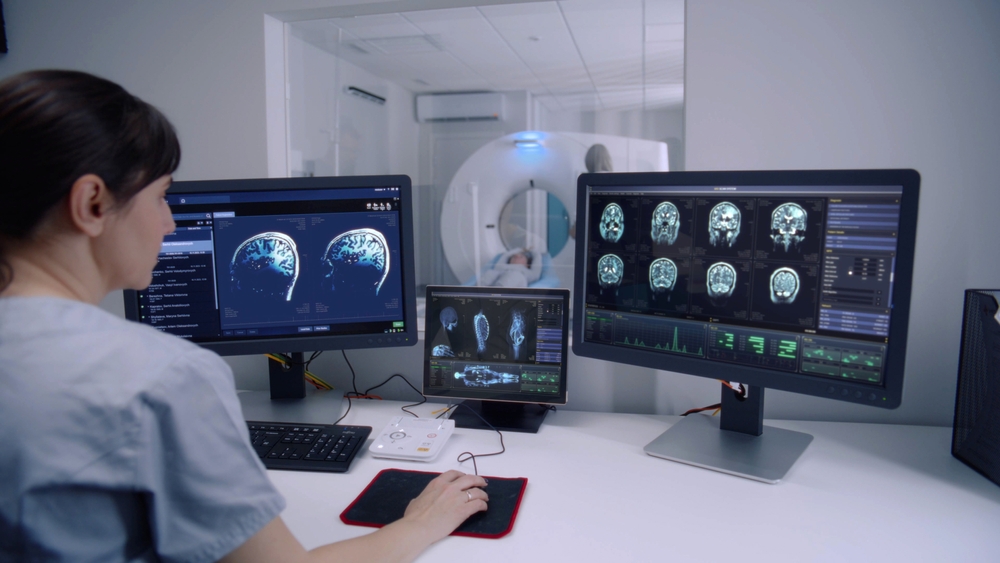
Volunteers watched faces, objects, letters, and false fonts for half a second, one second, or one and a half seconds. Researchers measured brain activity using functional MRI in 120 participants, magnetoencephalography in 102, and intracranial EEG in 34 epilepsy patients who already had electrodes implanted ahead of surgery.

The Brain Did Not Deliver Either Prediction
The results were far from empty. Researchers found information about what people consciously saw in visual, ventrotemporal, and inferior frontal areas of the brain. They also detected synchronization linked to specific visual content between frontal and early visual regions.
However, the signatures that each theory had specifically predicted did not appear as expected. Integrated Information Theory required sustained synchronization within the posterior cortex, yet researchers did not find the expected pattern.
The study stated that there was “a lack of sustained synchronization within the posterior cortex contradicts the claim that network connectivity specifies consciousness.” At the same time, Global Neuronal Workspace Theory predicted a burst of neural ignition when a conscious experience ended, but that signal was generally absent.
What Researchers Did Find
The prefrontal cortex appeared capable of carrying broad information about what participants were viewing. Yet finer details that volunteers consciously experienced, including the orientation of an image and the identity of a face, were not consistently represented there.
Lucia Melloni, one of the study’s lead researchers, described the outcome as “a humbling reminder that even our most established ideas need to be rigorously tested.” The findings did not erase either theory, but they forced both camps to confront predictions the data failed to support.
The study only tested a particular type of visual experience, and researchers involved in the project have stressed that one experiment cannot settle the consciousness debate. Alex Lepauvre, a consortium researcher, put the scale of the challenge into perspective when he said, “There are over twenty theories of consciousness out there. We’ve tested two.”
Why The Experiment Was Different
The most unusual part of the project may have been its structure. Scientific theories can survive for years because experiments are designed around broad ideas rather than precise predictions. This study forced competing groups to commit before anyone knew what the scans would show.
That approach produced several important outcomes:
- Specific predictions were locked in: Researchers agreed on what evidence would support each theory before collecting the results.
- Multiple laboratories took part: The experiment involved seven laboratories and 256 participants.
- Three brain-recording methods were used: Functional MRI, magnetoencephalography, and intracranial EEG provided different views of neural activity.
- Both theories faced the same evidence: Neither group could choose a separate experiment designed around its preferred model.
- The full dataset was released: Other researchers can examine the findings and test competing interpretations.
The result was narrower than declaring either theory dead, but it was still uncomfortable for both. Two major explanations for consciousness made clear predictions, and the human brain did not behave as either side had expected.
Three Pounds of Matter Still Hold the Mystery
The problem has frustrated scientists and philosophers for generations. In 1998, neuroscientist Christof Koch made a wager with philosopher David Chalmers that researchers would identify a clear neural pattern underlying consciousness within 25 years.
Koch eventually handed over the case of wine in June 2023, acknowledging that the question remained unresolved. Yet the wager did not end there, because the mystery of consciousness has only grown more complicated as brain science has advanced.
By April 2026, Koch was publicly discussing an even more radical possibility. Perhaps the brain does not produce consciousness in the way scientists often assume. Perhaps it filters or shapes something more fundamental, much like an eye detects light without creating it.
A Proposal That Still Needs Proof
Koch said, “Nothing in science explains how three pounds of matter, a piece of furniture of the Universe like any other, subjects to the same natural laws, can love, hate, dream, imagine, fear or hope for its future.”
The idea is philosophical rather than an established scientific result. Koch has connected the proposal to analytic idealism and has openly acknowledged the challenge ahead: turning such ideas into hypotheses that can actually be tested.
Until that happens, the proposal remains an interpretation rather than evidence. Still, the failure of two major theories to meet their predictions has given scientists another reason to ask whether the existing frameworks are looking in the wrong place.
Some Scientists Think the Mystery Is Psychological
Not every researcher believes consciousness itself requires a dramatic new scientific framework. Iris Berent, a psychology professor at Northeastern University, has argued that part of the mystery may come from how human beings think about minds and bodies.
Her work uses familiar thought experiments to expose a strange contradiction. When people imagine a physically identical twin with no inner experience, they often treat the mind as something separate from the body.
Yet when participants consider Mary, a neuroscientist who understands everything about color before seeing red for the first time, they also tend to believe that the new experience would produce a significant change in the brain.
Why Our Intuitions Keep Shifting
Berent said, “The point is that our perception of consciousness changes depending on the situation.” Her explanation traces that inconsistency to an evolutionary shortcut that encourages people to divide the world into minds and physical objects.
Her conclusion is far more direct than many philosophical theories: “Consciousness likely comes down to electrochemical functions in the brain.” Her evidence focuses on how people reason about consciousness rather than identifying its neural mechanism.
That distinction matters. Berent’s work may help explain why consciousness feels so impossible to understand, even if it does not answer the biological question itself.
Scientists Are Also Asking When Consciousness Begins
The mystery is not limited to adult brains lying inside scanners. Scientists are also trying to determine when conscious experience first emerges during early development.
Neuroscientist Joel Frohlich and philosopher Tim Bayne have proposed a cluster-based approach. Rather than searching for one decisive sign, they argue that researchers should look for several indicators appearing together.
The Markers Researchers Are Watching
The proposed markers include:
- Activity linked to the brain’s resting default mode network.
- The ability to detect when an expected pattern is broken.
- The capacity to direct attention toward particular information.
- Multiple developmental signals appearing together rather than in isolation.
By around five months of age, researchers have observed a convergence of several such markers in infants. That could indicate more than simple wakefulness and may suggest that babies are genuinely experiencing aspects of the world around them.
Frohlich explained the caution behind the approach by saying, “Any one marker by itself, we shouldn’t fully trust. But if you see a convergence of mini markers, that’s a pretty good indicator that consciousness might be arising.”
The Question Gets Even Harder Before Birth
Studying consciousness before birth presents a far greater challenge because researchers cannot simply ask a fetus what it experiences. Scientists instead rely on indirect measurements, including recordings of faint magnetic fields produced by the developing brain.
One major question involves the thalamus, a brain structure that plays an important role in processing and transmitting signals. Connections between the thalamus and cerebral cortex develop later in pregnancy, with synaptic connections forming around 24 to 26 weeks.
Frohlich has been careful about the limits of those findings and the conclusions people might draw from them. He has emphasized that discussions of possible fetal consciousness concern the final trimester rather than the earliest stages of pregnancy.
The science remains uncertain, but the research shows how difficult it is to locate consciousness on a single biological timeline. Scientists may need several converging forms of evidence instead of one dramatic moment when the lights suddenly switch on.
The 25-Year Bet Is Back On
The experiment was designed to force a confrontation between two leading theories, yet the result created more questions than answers. Both models identified patterns they believed should appear, and the evidence failed to match those predictions in the expected way.
Instead of ending the debate, researchers released the data and continued working. A second experiment is being finalized, while other theories remain waiting for their own direct tests.
Koch also refused to walk away from his original wager. After handing Chalmers the wine, he offered the same bet again: another 25 years for science to produce greater clarity about consciousness. Chalmers accepted.
The new wager comes due in 2048. By then, researchers may finally understand how a physical brain produces an inner world. Or they may discover that the question was far stranger than anyone expected.
Sources:
- Ferrante, O., Gorska-Klimowska, U., Henin, S., Hirschhorn, R., Khalaf, A., Lepauvre, A., Liu, L., Richter, D., Vidal, Y., Bonacchi, N., Brown, T., Sripad, P., Armendariz, M., Bendtz, K., Ghafari, T., Hetenyi, D., Jeschke, J., Kozma, C., Mazumder, D. R., . . . Melloni, L. (2025). Adversarial testing of global neuronal workspace and integrated information theories of consciousness. Nature, 642(8066), 133–142. https://doi.org/10.1038/s41586-025-08888-1
- Max Planck Neuroscience. (2025, May 14). Rethinking consciousness: When science puts itself to the test – Max Planck Neuroscience. Max Planck Neuroscience –. https://maxplanckneuroscience.org/rethinking-consciousness-when-science-puts-itself-to-the-test/