
Your cart is currently empty!
She Couldn’t Find Anyone Her Age Talking About Fashion, So This 70-Something Started Posting and Millions Watched
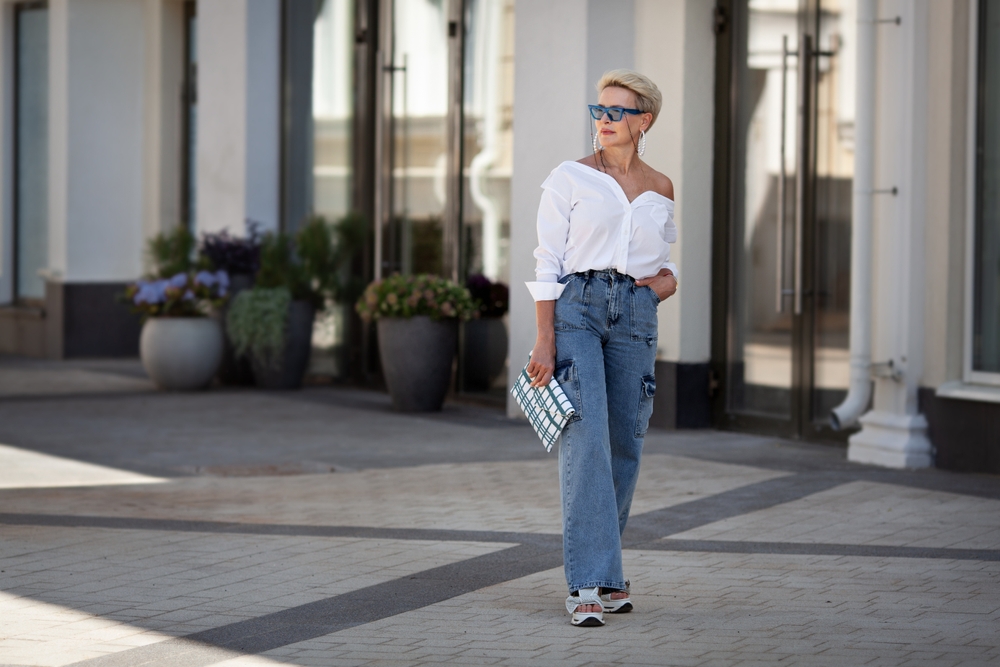
Candace Leslie Cima went looking for fashion advice that applied to women her age and found a glaring problem instead: they were barely there. At the supermarket checkout, magazine covers promised readers tips on looking their best at 20, 30 and 40, but the decades that followed seemed to disappear from the conversation. Cima had noticed the pattern long before she became the kind of woman those magazines should have been speaking to. Years later, after opening an Instagram account at 72, she turned that absence into something millions of people would watch.
Contents
show
What began while she was recovering from pneumonia has grown into a major social media presence built around one simple idea: getting older does not mean disappearing from fashion, culture or public life. Cima posts outfits, swimsuits, exercise routines and glimpses of her everyday life under the name Life in My 70s. Some videos have attracted millions of views, while her comment sections have also exposed just how strongly some people still believe women should follow a different set of rules once they reach a certain age.
A Fashion Gap She Could No Longer Ignore
Cima had been interested in aging since she was young, but the absence of older women from fashion coverage became harder to ignore as she got older herself. She remembered standing near magazine racks and seeing advice aimed repeatedly at younger age groups, with little attention paid to women in their 50s, 60s or 70s. “Never did they mention 50, 60 and 70,” she said while discussing the gap she had noticed. The message was subtle but persistent: fashion seemed to have an expiry date, and hardly anyone was questioning why.
The problem was not that older women had stopped caring about clothes. They still attended weddings, went on holiday, worked, exercised and lived active lives. Their bodies may have changed, but that did not erase their interest in personal style. Cima saw a growing disconnect between the way older women actually lived and the way they were represented in mainstream fashion and advertising.
That disconnect would eventually become the foundation of her online career, although she had no plan to become an influencer. In fact, when the idea first entered her life, she had barely heard the word. Her decision to start posting came during a period when she was ill and spending more time than usual sitting at home.
She Started Posting At 72
Cima was recovering from pneumonia when she came across an article about influencers. The concept was unfamiliar to her. “Until that time I had never even heard the term ‘influencer,’” she said. The people featured were much younger, and their content focused largely on products and fashion aimed at audiences far below Cima’s age.
She began searching for women in their seventies who were talking openly about clothes, fit and changing bodies. She wanted to see people discussing practical questions that came with getting older, including what to wear to events and how to feel comfortable in clothes when your body no longer looks the way it did decades earlier. She found very little.
Cima believed she could not be the only woman looking for that kind of content. “I bet other women think of that too,” she remembered thinking. So she opened an account and began posting her own outfits, later describing the entire beginning as “kind of a fluke.”
The account became Life in My 70s, and its appeal came partly from how straightforward it was. Cima showed what she wore, explained why certain cuts or colours worked for her and answered questions from people who were dealing with many of the same changes.
Her Videos Started Reaching Millions
Cima’s content quickly moved beyond simple outfit posts. She wore sleeveless tops, appeared in a swimsuit beside a pool and shared moments that directly challenged the idea that older women should make themselves less visible. In one video, she climbed a tree. The clips were not built around complicated production or celebrity access, but they found an enormous audience.
Two of her videos have reportedly been watched 7.5 million and 5.6 million times. Those numbers helped turn a personal Instagram experiment into a platform with followers across several social media sites. She also created a blog under the same general banner, where fashion advice sits alongside her thoughts about aging and the expectations attached to it.
The message behind the content is clear. Cima has written: “Aging is Changing. We are not our mothers or our grandmothers. We now have the chance to be productive, intelligent, compassionate, stylish woman throughout our later years.”
Her approach has also attracted criticism. Some viewers have entered her comment sections with firm opinions about what women her age should wear. The rules often sound strangely official, despite having no obvious source beyond personal prejudice.
Critics Keep Telling Her What She Should Wear
One critic told Cima that a woman of 60 had no business wearing a sleeveless top. Her response focused on one detail the commenter had apparently missed: “I am actually 75.” The reply captured the way she often handles criticism. Rather than spending hours arguing over whether the rules are fair, she continues doing the thing critics insist should not be done.
Her videos become a form of evidence. She does not need to convince every person watching that older women should wear sleeveless clothes, swimsuits or whatever else makes them feel comfortable. She simply shows that the assumptions behind the criticism do not match reality.
“The only way that view is going to change is if we as older women show them that aging is a gift, something to be embraced, valued and shared,” Cima said. She described later life as “a culmination of years of discovery and learning that allows us to be the best version of ourselves.”
The reaction to her content exists against a wider problem that extends far beyond one person’s Instagram comments. Older women have long been underrepresented in advertising and popular culture, even as the number of people living active lives well beyond retirement age continues to grow.

Older Women Are Still Missing From Advertising
The gap Cima noticed at the magazine rack has also appeared in recent advertising research. Creative analytics firm CreativeX found that representation of people over 60 in advertising dropped 62% between 2022 and 2024. The research also found a major difference in how older women were portrayed compared with younger women.
Around 10% of women aged 26 to 59 appeared in leadership or professional settings in advertising, according to the findings. For women over 60, that figure was under 1%. Older people were therefore not only appearing less frequently, but older women were also far less likely to be shown in positions associated with authority or professional life.
The numbers raise an obvious question about who gets considered worthy of visibility. People over 60 have not disappeared from society, workplaces, families or communities. Yet the images used to sell products often suggest a much narrower version of who is active, stylish, successful or desirable.
That is the space Cima entered with a phone, a wardrobe and a willingness to show herself exactly as she is. She did not need permission from a magazine editor or a major fashion campaign. Social media gave her a direct route to an audience that was clearly waiting for someone like her.
The Numbers Behind The Visibility Gap
- 62% decline: Representation of people over 60 in advertising reportedly fell between 2022 and 2024.
- Under 1%: Women over 60 appeared in leadership or professional advertising settings at a far lower rate than younger women.
- 7.5 million views: One of Cima’s videos reached a massive audience without a traditional media platform behind it.
- 5.6 million views: Another video pushed her message to millions more people.
- More than 13 million combined views: Those two clips alone show how large the audience for this kind of representation can be.
Her Approach To Aging Goes Beyond Clothes
Fashion may have brought people to Cima’s page, but her views on aging were shaped by habits she had built over decades. She has practiced yoga for roughly three to four decades and has followed the same arm routine for more than 25 years. The exercise was originally designed by a physical therapist after she experienced shoulder trouble.
She also returned to painting in her mid-50s, even though she admitted she was not very good when she began again. “I started painting again and I was horrible,” she said. Instead of giving up, she took watercolor classes and kept learning.
Cima believes people should regularly reassess who they are and what they want from life. “You need to reinvent yourself every ten years because you’re not the same person you were ten years ago,” she said. Her version of reinvention does not involve pretending the previous decades never happened.
She has also pushed back against the pressure to erase every visible sign of aging. Discussing cosmetic procedures, she said, “I can’t tell you how many times I look at a ‘before’ and ‘after’ picture of someone who’s had a facelift and I always choose the before.” Her fashion philosophy follows a similar line. “A woman doesn’t have to be thin to look good in her clothes.”
She Still Answers The Comments Herself
By February 2024, Cima’s audience had grown beyond 200,000 followers on Instagram, with more than 100,000 on TikTok, around 80,000 on Facebook and 17,000 on YouTube. She was 76 at the time, approaching her 77th birthday, and her growth had transformed what began as a small personal experiment into a major online platform.
Despite that scale, she said she still responded directly to the people following her. “I answer all the comments myself,” she said. For a creator with an audience spread across several platforms, that is a serious commitment of time.
Cima believes much of the negativity surrounding aging comes from ideas that society has repeated for generations. “Society has created this whole persona around aging that is negative,” she said. Her response was simple: “It isn’t.” She described getting older as “the most natural thing in the world.”
Her advice for people worried about the years ahead also has little to do with choosing the right outfit. “Plan ahead for the person you want to be,” she said.
The magazine headline Cima spent years looking for never appeared on that checkout rack. No glossy cover suddenly began promising style advice specifically for women in their 50s, 60s and 70s. So she built her own platform instead, and millions of people showed up to watch.
In 2024, people over 60 reportedly accounted for just 1.4% of all characters shown in advertising. Meanwhile, two videos made by one woman who decided to start posting in her seventies have been watched more than 13 million times. The audience was there all along. The industry simply was not looking in the right direction.