
Your cart is currently empty!
Scientists Found Something Strange About Lithium in Nearly 400 Human Brains
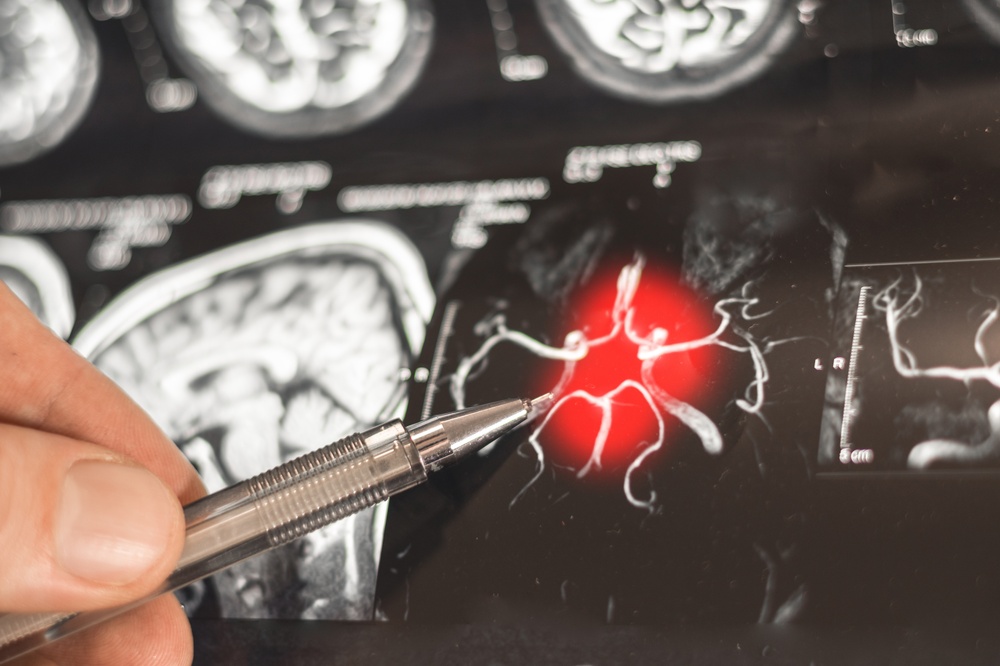
There is lithium in your brain right now. You cannot see it, feel it, or measure it on a kitchen scale, but Harvard researchers spent roughly a decade searching for tiny traces of it in nearly 400 donated human brains. When they compared people who died with their memory intact against those with mild cognitive impairment or Alzheimer’s disease, one finding stood out from everything else they measured: lithium levels were lower in the brains affected by cognitive decline. The gap appeared early, during the stage when forgetfulness can still be dismissed as ordinary aging and families may have no idea something more serious is beginning.
Contents
show
That discovery alone does not prove lithium deficiency causes Alzheimer’s. Associations can be misleading, and researchers know that better than anyone. So the team went further, turning to animal experiments to test whether losing lithium could actively damage the brain and whether restoring it could reverse some of that damage. The results in mice were striking enough to attract major attention, but the human evidence remains far more complicated. A recent clinical trial missed its main targets, leaving researchers with a fascinating possibility, a major unanswered question, and one clear warning for anyone tempted to start taking lithium supplements.

Only One Metal Came Back Different
The Yankner lab at Harvard Medical School worked with the Rush Memory and Aging Project in Chicago, a long-running study whose participants agreed to donate their brains after death so researchers could investigate conditions linked to aging and memory loss. Using mass spectrometry, the researchers measured trace levels of 27 metals in the prefrontal cortex, which plays a major role in memory and decision-making, as well as the cerebellum.
Lithium was the only metal that consistently separated people with healthy cognition from those with mild cognitive impairment or Alzheimer’s disease. Bruce Yankner, M.D., Ph.D., a professor of genetics and neurology, described lithium as something far more familiar to human biology than many people realize, saying, “Lithium turns out to be like other nutrients we get from the environment, such as iron and vitamin C.”
Lithium has been closely associated with psychiatric medicine since the 1940s and is prescribed at much higher doses for bipolar disorder. The new research raises the possibility that tiny environmental amounts of lithium may also play a previously overlooked role in the healthy brain.

Alzheimer’s Plaques May Be Trapping Lithium
The researchers then looked for an explanation for where the missing lithium was going. They found unusually high concentrations inside amyloid plaques, the protein clumps strongly associated with Alzheimer’s disease. In tissue containing heavy plaque buildup, lithium levels were more than three times higher than in nearby regions without plaques.
That finding suggests the problem may not simply be that lithium disappears from the brain. Instead, amyloid plaques may trap it, leaving neurons with less access to whatever role the mineral normally performs. The team then tested the consequences in mice by reducing cortical lithium by roughly half. Normal mice developed brain inflammation, lost synapses and myelin, and experienced cognitive decline.
Mice genetically bred to model Alzheimer’s accumulated amyloid plaques and phospho-tau more quickly, with much of the effect appearing to involve an enzyme called GSK3β. The experiments cannot prove the same process happens in humans, but they gave researchers a reason to investigate lithium as more than a passive bystander in Alzheimer’s disease.
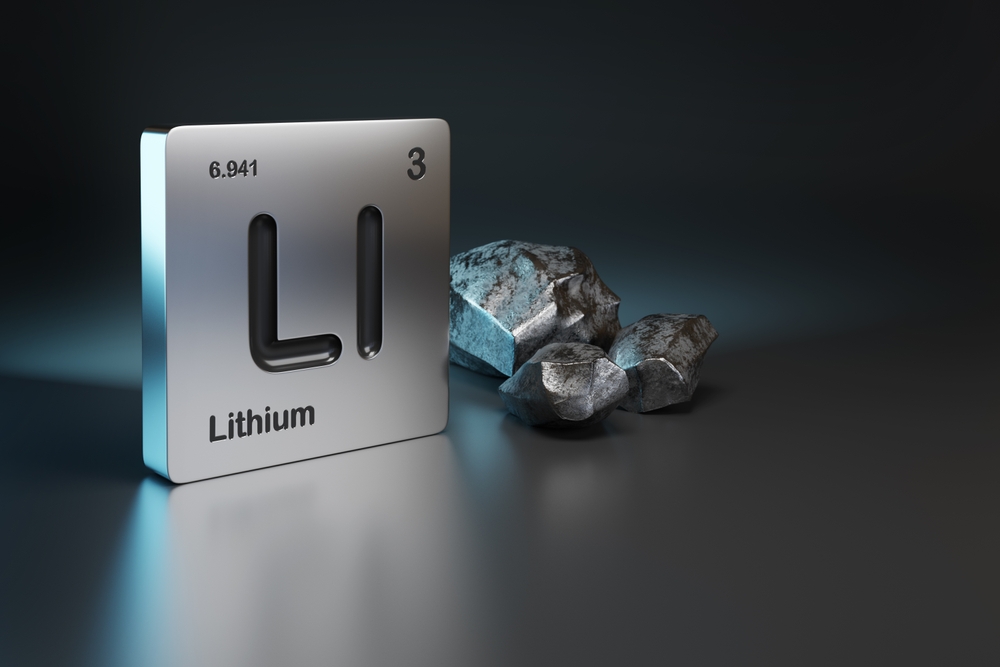
A Different Form Of Lithium Changed The Results
If amyloid plaques trap certain forms of lithium, researchers needed to know whether another form could reach the brain more effectively. Lithium carbonate, the prescription form commonly used in psychiatry, carries properties that may make it easier for negatively charged amyloid to capture it. The Harvard team investigated lithium orotate, which they believed could avoid that same trapping process more effectively.
In Alzheimer’s model mice, the compound reduced amyloid and phospho-tau in the hippocampus and improved memory. In older mice without an Alzheimer’s model, it slowed inflammation, protected synapses, and helped preserve cognitive function. The dose was also extremely small compared with the amounts typically used in psychiatric treatment.
Yankner described that result as one of the team’s most striking discoveries, saying, “One of the most galvanizing findings for us was that there were profound effects at this exquisitely low dose.” There is a critical limitation, however: every one of those dramatic results came from mice. Promising mouse studies regularly fail to produce the same benefits in humans, which makes the next stage of research far more important than the laboratory headlines.
The Human Trial Produced A More Complicated Answer
Human evidence has already delivered a reality check. In March 2026, researchers at the University of Pittsburgh published a two-year randomized trial examining low-dose lithium in older adults with mild cognitive impairment. Eighty-three people were randomized, and 80 began treatment, but the trial missed all six of its co-primary outcomes, including three cognitive measures, hippocampal volume, cortical gray matter, and a blood marker linked to the disease process.
Verbal memory declined more slowly among participants taking lithium than among those receiving a placebo, with scores dropping by 0.73 points per year compared with 1.42 points, but the result did not meet the threshold established before the trial began. The study used lithium carbonate, and Yankner has argued that this is precisely the form amyloid may trap.
Ariel Gildengers, the trial’s lead author, did not dismiss that possibility and said a well-designed human study of lithium orotate would be an important next step. For now, both explanations remain possible: researchers may have tested the wrong form of lithium, or lithium may simply fail to reproduce its dramatic effects outside laboratory animals.

Denmark Found A Similar Pattern In Drinking Water
Another piece of the puzzle comes from an enormous population study in Denmark, where researchers examined natural lithium levels in drinking water and compared them with national health records for more than 800,000 people. The analysis included 73,731 people diagnosed with dementia and found that those living in areas with the highest lithium concentrations, above 15 micrograms per litre, were about 17% less likely to have a dementia diagnosis than those in areas with the lowest levels.
The pattern was not perfectly straightforward, and the researchers could not rule out other differences between municipalities that may have influenced the results. Drinking water studies also cannot establish cause and effect. Still, the finding points in the same general direction as the brain research and the mouse experiments. That does not turn lithium into a proven dementia treatment, but it gives scientists another reason to investigate whether long-term exposure to tiny amounts of the mineral influences brain health.
What Scientists Still Need To Find Out
Several major questions now stand between this research and any possible treatment for Alzheimer’s. The most important issues include:
- Whether low lithium levels actively contribute to disease: Human brain samples can show associations, but they cannot reveal every step in the process.
- Which form of lithium matters most: The difference between lithium carbonate and lithium orotate could prove important, but that has not yet been established in people.
- What dose could be safe and effective: The tiny doses used in animal experiments cannot simply be translated into human supplement advice.
- Whether blood testing could identify risk early: Researchers are investigating whether lithium levels might eventually help flag cognitive problems before major symptoms appear.
- Whether a human trial can reproduce the mouse results: This remains the central question, and only carefully designed clinical studies can answer it.
The Harvard team has suggested that measuring lithium in blood could eventually become part of a broader effort to identify Alzheimer’s risk before obvious symptoms develop. Researchers increasingly want to detect the disease during its earliest stages, when there may still be more opportunity to protect brain function. A future blood test would be particularly significant if lithium levels consistently changed before substantial cognitive decline began, although that possibility remains a research goal rather than a current medical tool.
Why Experts Are Warning People Not To Self-Medicate
Lithium orotate is already available over the counter, which makes the current state of the science especially important. The headlines surrounding the Harvard findings could easily convince someone that a supplement bottle represents a simple way to protect against Alzheimer’s, but Yankner has explicitly warned against that conclusion.
“I do not recommend that people take lithium orotate at this point,” he said while discussing the research. Human studies have not established the correct dose, long-term effects, or potential interactions, and lithium has a narrow therapeutic window when used at psychiatric doses. Anyone considering lithium because of memory concerns or a family history of dementia should discuss that decision with a qualified medical professional rather than treating a mouse study as a prescription. The research is exciting because it opens a new scientific question, not because it has delivered a product ready for the public.
The Best Advice Still Sounds Surprisingly Ordinary
Asked what people can actually do today to support cognitive health, Yankner pointed toward something far less dramatic than the mineral making headlines: a balanced diet, particularly one modeled on the Mediterranean diet. That approach has a much stronger foundation in human research than lithium supplementation for Alzheimer’s prevention.
The current evidence supports familiar habits that protect overall health and may support brain function, including eating a varied diet, staying physically active, managing cardiovascular risk factors, and maintaining social and mental engagement. None of those habits carries the same viral appeal as the idea that a nearly invisible mineral could hold a hidden key to Alzheimer’s. Science, however, rarely rewards the most exciting headline with an immediate treatment. For people worried about memory loss right now, established healthy habits remain far more useful than experimenting with lithium supplements.
A Tiny Trace Has Opened A Huge Question
Ten years of research, nearly 400 donated human brains, and measurements of 27 different metals eventually narrowed the mystery to one tiny trace element. The work has not produced a cure, and it has not shown that lithium can prevent dementia in a single person. What it has produced is a serious new question about whether the brain depends on environmental amounts of lithium in ways medicine has overlooked for decades.
The next human trials will determine whether this discovery becomes an important chapter in Alzheimer’s research or another promising result that never survives the jump from mice to people. For now, the most remarkable part may be how the story began: scientists went searching for something almost too small to measure and found a clue they can no longer ignore.
Sources:
- Dutchen, S., & Dutchen, S. (2025, August 6). Could lithium explain — and treat — Alzheimer’s? Harvard Gazette. https://news.harvard.edu/gazette/story/2025/08/could-lithium-explain-and-treat-alzheimers/
- Lithium deficiency may be the hidden spark behind Alzheimer’s. (2025, August 25). ScienceDaily. https://www.sciencedaily.com/releases/2025/08/250829022829.htm