
Your cart is currently empty!
Trump Opens US Market to 300000 Tons of Imported Beef

President Donald Trump’s new plan to bring more tariff-free beef into the United States has begun, with the administration hoping the additional supply will ease pressure on Americans facing high prices at the grocery store. But as imported lean beef trimmings enter the market, shoppers who want to support U.S. ranchers may have to look closely at what is written on the package.
Contents
show
The new policy has also sparked questions about where the beef is coming from, whether the imports will actually reduce prices, and how consumers can tell the difference between meat produced entirely in America and beef that was imported or blended with foreign products.
The New Beef Imports Are Entering the Market
Trump’s proclamation temporarily increases the amount of certain imported lean beef trimmings that can enter the United States under the lower in-quota tariff rate. The plan allows an additional 300,000 metric tons during the remainder of 2026, with the quantity divided into three separate import periods.
The first 100,000-metric-ton tranche opened on September 1 and is scheduled to close on September 30. Another 100,000 metric tons will become available from October 1 through October 30, while the final tranche opens October 31 and remains available until the quota is filled or November 30 arrives.
The administration says the policy is intended to address a shortage of beef supplies and persistently high prices. Trump’s proclamation points to a domestic cattle herd that had fallen to its lowest level in 75 years, alongside drought, wildfires, disease concerns and other pressures affecting American cattle production.
According to the proclamation, the Department of Agriculture expects U.S. beef output to fall by around 4% from 2025 levels. At the same time, the administration forecasts continued demand for beef, creating further pressure on the market for ground meat.
The Imports Are Mainly Lean Beef Trimmings
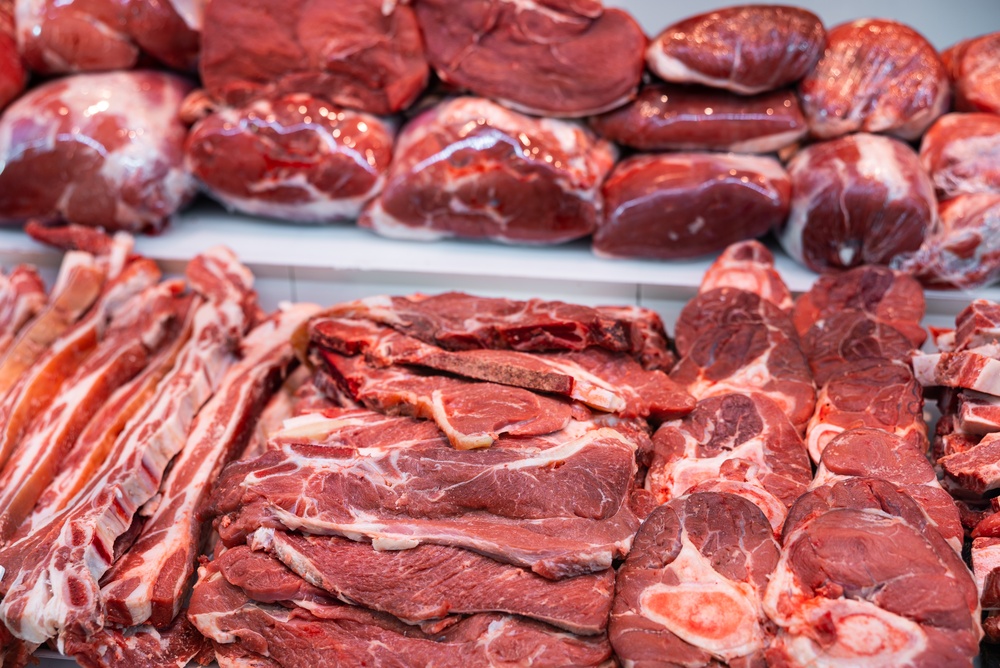
The additional imports do not mean supermarkets will suddenly be stocked with large quantities of foreign steaks or roasts. The policy specifically applies to lean beef trimmings, which are commonly used by processors when producing ground beef.
American cattle can produce relatively fatty trimmings, while processors need leaner meat to create familiar ground beef blends. Imported lean trimmings can be mixed with fattier domestic beef to reach ratios such as 80/20 or 90/10.
The administration believes increasing the supply of lean trimmings could help relieve pressure on the ground beef market. Trump’s proclamation says officials will monitor whether imports entering under the expanded quota are being sold at prices 25% below the market price for lean beef trimmings.
If officials determine that the imports are not being sold at the expected discount, the proclamation says Trump may decide to eliminate the remaining portion of the increased quota. The administration has therefore tied the policy to the expectation that lower-priced imports will provide some benefit rather than simply increasing profits for foreign producers.
The Import Schedule Has Three Tranches
The additional beef quota will be released in three stages during the fall of 2026. The system is designed to make 100,000 metric tons available at a time rather than opening the entire 300,000 metric tons immediately.
- September 1 to September 30: Up to 100,000 metric tons becomes available.
- October 1 to October 30: Another 100,000 metric tons becomes available.
- October 31 to November 30: The final 100,000 metric tons is available, unless the quota is filled earlier.
The additional quantity is allocated to “other countries or areas,” according to the proclamation. The sources provided do not identify a final list of countries expected to supply the additional beef, and Trump has said only that “there are a few countries” involved.
How Shoppers Can Identify American Beef
Consumers looking specifically for beef produced entirely in the United States should pay close attention to country-of-origin claims on the packaging. One of the clearest labels to look for is “Product of USA,” which the USDA says can be used when the product meets specific domestic sourcing requirements.
According to the source material, a single-ingredient beef product carrying that claim must come from animals exclusively born, raised, harvested and processed in the United States. It also cannot include imported livestock or imported ingredients under the requirements described in the references.
Shoppers may also encounter labels stating “Born, Raised, and Harvested in the USA.” Some consumers may see certification marks such as “American Grassfed Association Certified,” although shoppers should examine the specific certification and package information rather than assuming every American-sounding label means the same thing.
The Label Is Voluntary
One complication is that the “Product of USA” claim is voluntary. That means a package without the label is not automatically proof that the beef was imported or that it contains foreign meat.
Consumers may need to look elsewhere on the package for country-of-origin information. The sources say relevant information can appear in small print near the nutrition facts panel or ingredient list, particularly when products contain imported or commingled meat.
Ground meat can contain beef from multiple countries, with the applicable countries listed on the package. That makes careful label reading more important for shoppers who want to know where the meat originated.
“Processed in the U.S.” Can Be Misleading
One of the biggest sources of confusion is wording that says beef was “packed” or “processed” in the United States. Those phrases do not necessarily mean the animal itself was born, raised and slaughtered in America.
Cattle can be raised and slaughtered in another country before the meat is transported to a U.S. facility for cutting, processing or repackaging. The finished product can therefore reference American processing even though the animal originated elsewhere.
This distinction matters because consumers may see a U.S. location on the packaging and assume the beef is entirely domestic. For shoppers specifically seeking American-produced beef, a clear country-of-origin claim provides more useful information than a general statement about where the product was packed.
The sources also note that imported beef is already a regular part of the American food supply. Beef from Canada and Mexico has been part of that supply for years, while Brazil, Australia and New Zealand are also major sources of imported beef.
A USDA Stamp Does Not Prove Where Beef Came From
The familiar oval USDA inspection mark can also confuse consumers trying to determine a product’s origin. The stamp includes an establishment number that can be searched to identify the facility where the meat was processed.
That information can help consumers learn more about the processing location, but it does not prove that the cattle were born and raised in the United States. Imported beef can be processed in a USDA-inspected facility and still carry information connected to that inspection.
USDA quality grades can create similar confusion. Labels such as “USDA Prime,” “Choice” and “Select” describe characteristics including marbling and tenderness rather than the country where the animal originated.
Inspection and Grading Are Different
USDA inspection and USDA grading serve different purposes, according to the source material. Inspection concerns safety and wholesomeness, while grading evaluates quality characteristics.
Inspection is mandatory under the applicable federal system, while grading is voluntary. Neither label alone provides a country-of-origin guarantee, meaning shoppers should not use a quality grade as evidence that beef is entirely American.
For consumers focused on origin, the most useful information remains the specific wording on the package and any country information listed near the ingredients or nutrition panel.
Much of the Imported Beef May Go to Food Service
The additional imports may not be especially visible in supermarket meat cases. Dr. Derrell Peel, a professor of agricultural economics and livestock marketing specialist at Oklahoma State University, told Nexstar that much of the ground beef made using imported trimmings is expected to go into food service.
That could include fast-food restaurants and other businesses that purchase large volumes of ground beef. Peel said imported beef generally does not appear in grocery stores unless it is specifically labeled, although imported products can still be found in certain markets.
This means the additional imports could become part of the broader food supply without every grocery shopper seeing an obvious package labeled as imported. The way lean trimmings are blended into ground beef production also makes the supply chain more complicated than a simple choice between a domestic package and a foreign package.
Will the Imports Actually Lower Beef Prices?

The administration’s central argument is that more available supply could help make ground beef more affordable. Trump’s proclamation says the temporary quota increase is necessary to help ensure that Americans can purchase beef at reasonable prices.
However, agricultural economists quoted in the source material have questioned how much consumers will actually save at the checkout counter. David Anderson of Texas A&M University said processors may benefit from access to cheaper beef, while retail price reductions may not necessarily follow.
Glynn Tonsor, an agricultural economist at Kansas State University, said the additional imports could help with supply but argued that the administration may be overstating the likely impact on consumer prices. The source material also estimates that 300,000 metric tons represents around 2% of overall U.S. domestic beef consumption.
The policy could therefore help relieve pressure in part of the supply chain without producing a dramatic change in supermarket prices. Much will depend on how processors, distributors and retailers handle the additional supply as it moves through the market.
Ranchers Are Worried About Foreign Competition
The plan has drawn criticism from some Republican lawmakers and cattle industry groups, particularly in states where ranching plays a major role in the economy. Their concern is that additional foreign imports could make conditions harder for American producers already struggling with a historically small cattle herd.
Sen. Deb Fischer of Nebraska has warned that increased foreign imports could harm the domestic supply chain. Sen. John Barrasso of Wyoming said the policy could make it harder for ranchers in his state to continue feeding the country, according to the reference material.
Sen. Tim Sheehy of Montana has also criticized the approach, saying he had warned Trump against it. Industry groups have raised separate concerns about inspection capacity and differences in standards involving foreign cattle production.

The Administration Faces Competing Pressures
The policy reflects a difficult balance between consumer prices and domestic production. Families want relief from high grocery bills, while ranchers want conditions that allow them to rebuild their herds without facing additional pressure from foreign competition.
Trump’s proclamation argues that the temporary imports can help address the short-term supply problem while domestic cattle production recovers. USDA data cited in the proclamation suggests the herd began showing early signs of growth in July 2026, although rebuilding a cattle herd takes time.
The administration is betting that additional imported lean beef can fill part of that gap without causing major disruption to the domestic market. Ranchers and some lawmakers remain unconvinced, particularly because the long-term health of American cattle production depends on producers being able to retain breeding stock and expand their herds.
What Consumers Should Look For at the Store
Shoppers who want to know where their beef came from should focus on the entire package rather than a single sticker. The front label may provide useful information, but the fine print can offer a more complete picture.
Consumers can check several details when comparing products:
- Look for “Product of USA”: This is the clearest claim described in the source material for beef derived exclusively from animals born, raised, harvested and processed in the United States.
- Read the country information: Check near the nutrition panel or ingredient list for countries of origin, particularly on blended or commingled products.
- Do not rely on “processed in the U.S.”: Beef can be processed or repackaged domestically after coming from cattle raised and slaughtered elsewhere.
- Do not confuse quality grades with origin: Prime, Choice and Select describe quality rather than where the animal came from.
- Check the USDA establishment number: The number can identify the processing facility, although it does not establish where the cattle were raised.
The extra imports are expected to become part of an already complicated beef supply chain. For consumers who specifically want to support American ranchers, reading the label carefully may be the most practical way to make an informed choice.
The Fine Print May Become More Important
Trump’s 300,000-metric-ton import plan is intended to ease supply shortages while the American cattle industry works to rebuild from a 75-year low. The administration believes the additional lean beef will help address high prices, although economists remain uncertain about whether those savings will reach grocery shoppers.
For Americans who care about where their beef comes from, the package offers the clearest answer. A USDA stamp or a statement saying the meat was processed in America may sound reassuring, but the country-of-origin information and a genuine “Product of USA” claim provide a much clearer picture of what is actually being purchased.