
Your cart is currently empty!
A Baby Wild Horse Has Just Been Born on the Steppe for the First Time in 200 Years
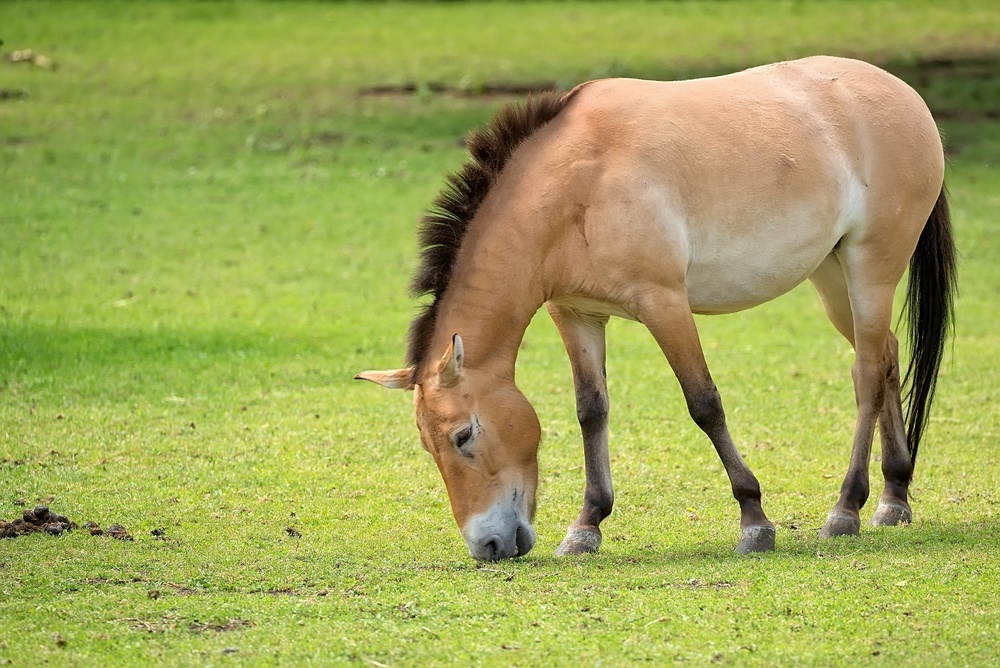
For more than two centuries, Przewalski’s horses were gone from the grasslands of central Kazakhstan. Now, one tiny colt has arrived on the same steppe where the species once roamed, marking a moment conservationists have spent 15 years working toward.
Contents
show
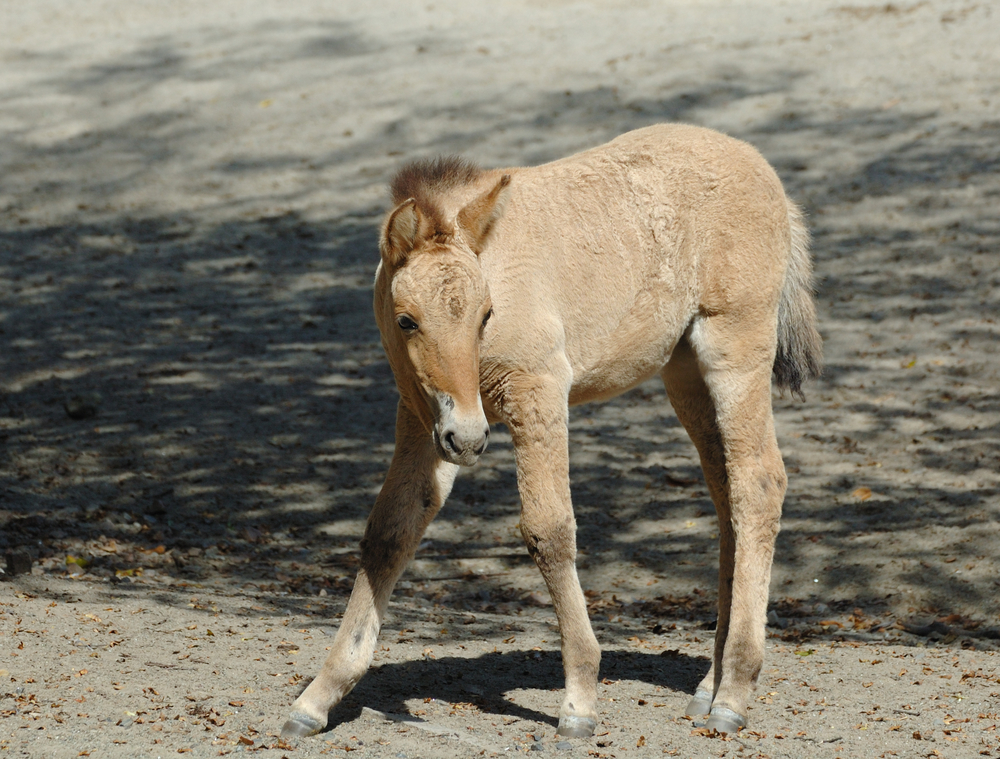
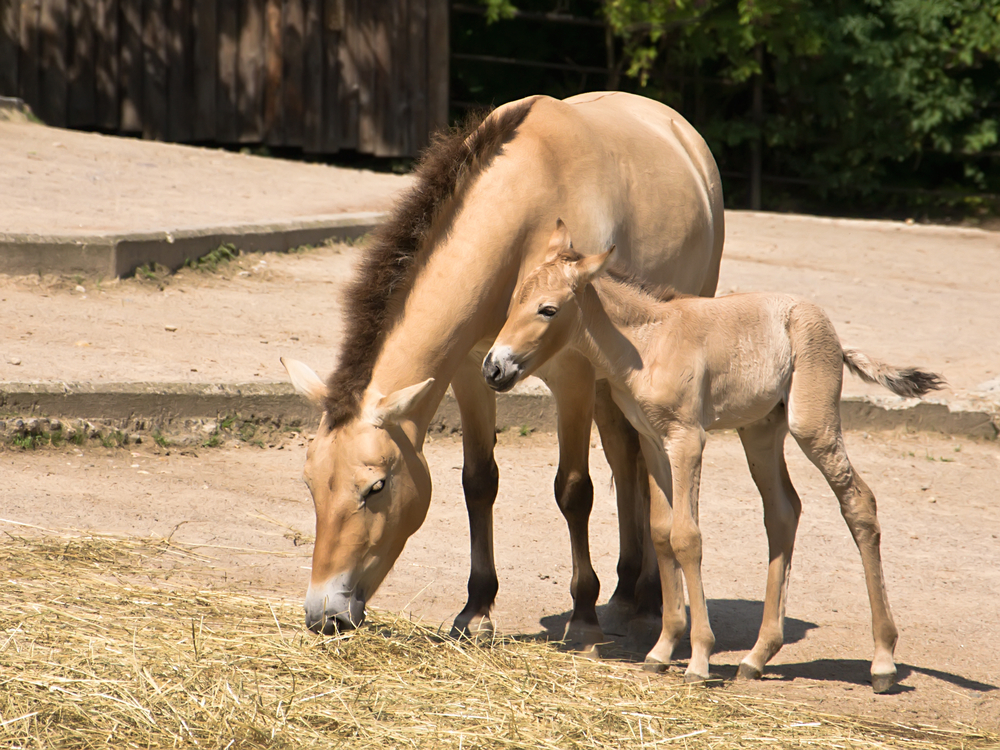
The colt was born on August 22, 2026, at the Alibi Reintroduction Centre inside Kazakhstan’s Altyn Dala State Nature Reserve. His mother, a seven-year-old mare named Tessa, had arrived from Tierpark Berlin in 2024. Her first foal is now taking his first steps on Kazakh soil, watched closely by the people trying to return an entire species to the wild.
For the first time in 200 years, a Przewalski’s foal has been born on the wild steppes of Central Kazakhstan.
— Massimo (@Rainmaker1973) August 29, 2026
It is a major win for conservation, and for the species.
The arrival of a healthy male foal on 22 August 2026, at the Alibi Reintroduction Centre in the Altyn Dala… pic.twitter.com/hqS9Kfd3Ea
The Colt Took His First Steps on August 22
The newborn quickly did what conservationists needed to see. He stood beside his mother, followed her around the enclosure and began nursing, all signs that he was getting through those crucial first hours of life.
His father is Zorro, a stallion from Prague Zoo’s breeding programme, while Tessa was born in Berlin. Their colt therefore represents a new generation produced from an international breeding effort designed to rebuild a population in the animal’s former range.
“This is much more than the birth of one foal. It is the first new generation of Przewalski’s horses born in the steppes of central Kazakhstan and a very important milestone for the whole reintroduction programme,” said Albert Salemgareyev, a project coordinator with the Association for the Conservation of Biodiversity of Kazakhstan.
For Salemgareyev, the sight of the newborn standing beside his mother carried a personal significance after years of preparation. “For me, seeing him standing beside his mother in the Kazakh steppe is something I will remember for the rest of my life.”
The piece on the left was made by me almost three years ago. The picture on the right is of the first Przewalski’s horse foal born on the Central Kazakhstan steppe in 200 years. So much love for the return of the wild horses🐎 pic.twitter.com/YBnAZMCJhr
— FRUITBLUSH (@fruitblush) September 2, 2026
This Horse Nearly Disappeared From The Wild
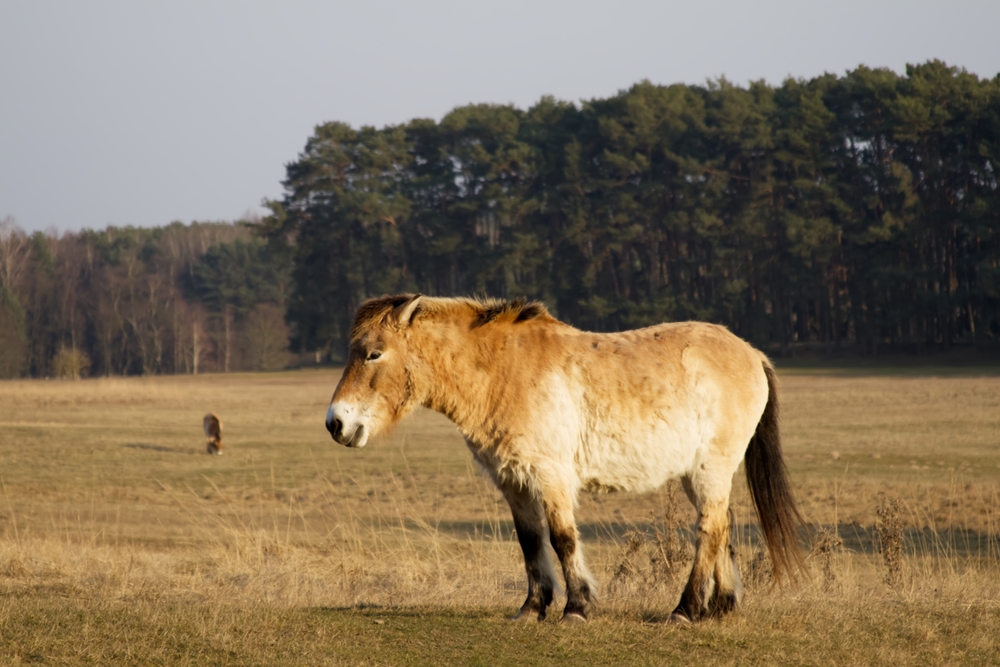
Przewalski’s horses are unlike the familiar domestic horses found in riding stables. They have 66 chromosomes compared with 64 in domestic horses, along with a distinctive upright mane and no forelock.
The species was pushed toward extinction during the twentieth century as hunting, competition with livestock and habitat loss destroyed much of its former range. The last confirmed wild herd was seen in Mongolia’s Gobi Desert in 1969, after which the species survived only through carefully managed populations in captivity.
Every Przewalski’s horse alive today descends from a tiny founding population of 14 animals caught in the wild between 1910 and 1960. That means the entire modern population traces back to an extraordinarily narrow genetic foundation.
Around 1,900 Przewalski’s horses are alive today, and the species remains classified as Endangered. The Kazakhstan programme is therefore attempting something considerably harder than simply breeding more animals. It is trying to establish a population that can survive without permanent human care.
Twenty-Two Horses Have Now Reached Kazakhstan
The newborn colt is part of a much larger operation that has been building year after year. Prague Zoo’s Return of the Wild Horses project began 15 years ago under former director Miroslav Bobek, with animals transported to Kazakhstan as part of the reintroduction effort.
In 2026, eight horses made the journey from Europe. Four stallions came from Prague Zoo, while four mares came from Tierpark Berlin. They were transported through Prague-Kbely airfield, with the first group arriving in Kostanai on June 1 aboard a Czech Air Force aircraft.
The numbers have steadily grown:
- 2024: Seven Przewalski’s horses were transported to Kazakhstan.
- 2025: Another seven animals arrived.
- 2026: Eight more horses were brought into the programme.
- Current total: Twenty-two Przewalski’s horses are now in Kazakhstan.
The animals do not simply arrive and get released. Each group spends close to a year at the Alibi acclimatisation centre, where they adjust to local conditions and form stable social groups before being moved into open country.
Five Horses Have Already Gone Beyond The Fence
The first major release of 2026 happened on May 25, when five Przewalski’s horses left the Alibi centre after approximately 12 months of acclimatisation.
The group consisted of one stallion and four mares from Wildnispark Zürich and Hortobágy National Park. Two of the mares were fitted with satellite collars so researchers could monitor where the horses travelled and how they used their new habitat without constantly approaching them.
They were released into a network of protected corridors covering around 40,000 square kilometres. The idea is to give the animals enough space to behave like wild horses while allowing researchers to track their progress and respond if problems emerge.
That release also offered a glimpse of what the newborn colt could eventually experience. His first days are taking place under supervision, but the long-term goal is for animals born in Kazakhstan to grow up and move across the steppe without fences around them.
Their Grazing Could Help Protect The Steppe
The reintroduction is about more than bringing an iconic animal back. Conservationists describe Przewalski’s horses as keystone herbivores whose grazing could influence the wider Golden Steppe ecosystem.
As the horses move through the landscape, their grazing is expected to help restore native vegetation, slow desertification and reduce the intensity of seasonal wildfires. Their presence could therefore affect other species and the condition of the grassland around them.
That ecological role is part of the reason the project has taken years of planning. Reintroducing an animal is only useful if the landscape can support it, and the programme is attempting to restore both the horses and the conditions they need to survive.
“Protecting nature before such losses occur is always cheaper and more effective than trying to reverse them,” said Michael Brombacher, who heads the Europe department of the Frankfurt Zoological Society.
One Foal Cannot Rebuild A Species
The birth is a major milestone, but there is a long way to go. The colt was born inside the Alibi enclosure rather than on open range, meaning his early development will be closely monitored before he can eventually face the conditions of the wild.
Twenty-two horses also represent a very small starting population. The programme’s stated target is to have between 40 and 45 free-living horses in Kazakhstan by 2029, so the arrival of one healthy foal is an encouraging sign rather than proof that the population has become self-sustaining.
Two other mares at Alibi are also expected to give birth, potentially adding more young animals to the growing group. “Now we have a new task: to observe how the first generation grows and develops,” said Vera Voronova, executive director of the Association for the Conservation of Biodiversity of Kazakhstan.
The next stage will be watching whether these horses can reproduce, adapt and eventually survive with less human intervention. That is the test that will determine whether this is the beginning of a lasting population or simply another carefully managed conservation success.
Kazakhstan Has A Name For The Horse
In Kazakhstan, the Przewalski’s horse is known as kertagy, and its return carries significance beyond wildlife management.
The Altyn Dala Conservation Initiative, which manages the landscape, won the 2024 Earthshot Prize and was named a UN World Restoration Flagship in 2023. The reintroduction project forms part of broader efforts to restore the steppe and protect one of Kazakhstan’s major natural landscapes.
“We hope that the number of kertagy will grow year on year and that their return will make an important contribution to the restoration of Kazakhstan’s steppes,” said Daniyar Turgambayev, chairman of Kazakhstan’s Forestry and Wildlife Committee.
Jana Komrsková, Prague’s deputy mayor for the environment, offered a simple wish for the newborn: “a happy life, plenty of siblings and, in the future, offspring of his own.”
That is exactly what the project needs. One colt has survived his first day, but the real goal is generations of kertagy moving freely across Kazakhstan again.
The Horse May Have An Even Older Connection To Kazakhstan
There is another remarkable twist to the story. Research published in 2018 examined ancient DNA from horses associated with the Botai culture in northern Kazakhstan, dating back around 5,500 years.
The research found that the Botai horses were not the direct ancestors of modern domesticated horses. Instead, the study reported that “Botai horses did not give rise to today’s domesticated horses, they turn out to be direct ancestors of Przewalski’s horses.”
That finding complicated the traditional picture of the animal as simply the world’s last surviving wild horse. It suggested that Przewalski’s horses may descend from some of the earliest horses ever managed by humans before later becoming wild again.
The new colt therefore carries a connection to Kazakhstan that reaches far beyond the two centuries since the animals disappeared from the country’s steppes. His ancestors may have been here thousands of years ago.
A New Generation Is Finally Growing On The Steppe
Fourteen wild founders gave rise to roughly 1,900 Przewalski’s horses, and now one of their descendants has been born in the landscape from which the species disappeared.
The colt still has to grow, adapt and eventually prove that the horses can establish themselves in Kazakhstan. But for the people who have spent 15 years moving animals across borders and rebuilding a population from a tiny genetic base, his first steps represent something concrete.
A horse that once vanished from these grasslands is now raising its next generation there. The next challenge is making sure that generation does not become the last.