
Your cart is currently empty!
Italy Has Unleashed 130,000 Baby Octopuses Against an Invasive Crab Army
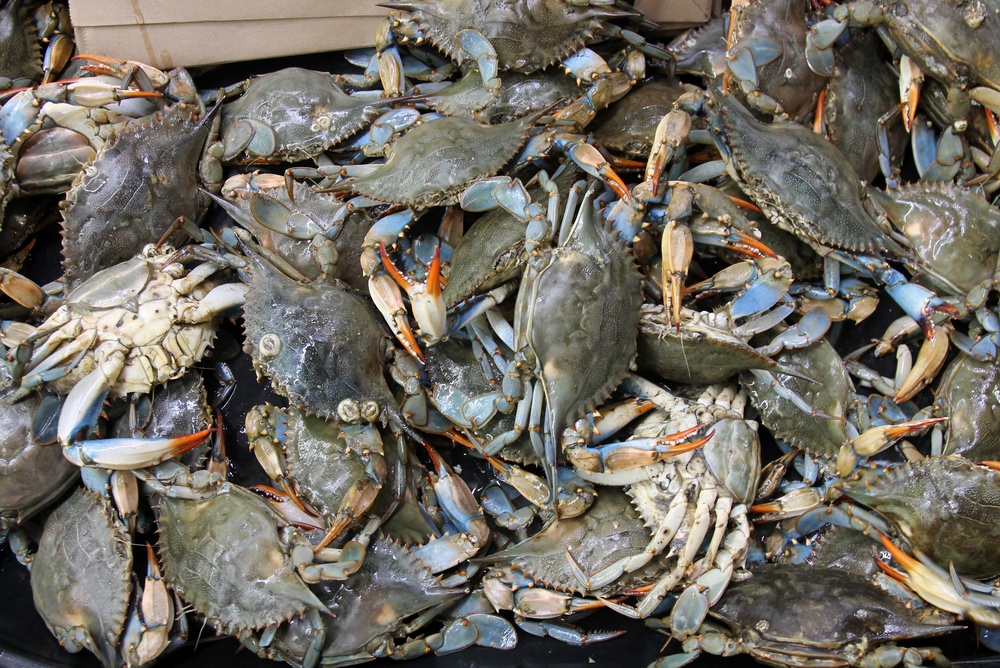
Italy has tried paying fishermen to catch millions of invasive blue crabs, but the invasion has continued to overwhelm parts of the Adriatic coast. Now scientists are taking a far stranger approach: releasing an army of tiny octopuses into the sea and hoping one of nature’s own predators can help restore the balance.
Contents
show
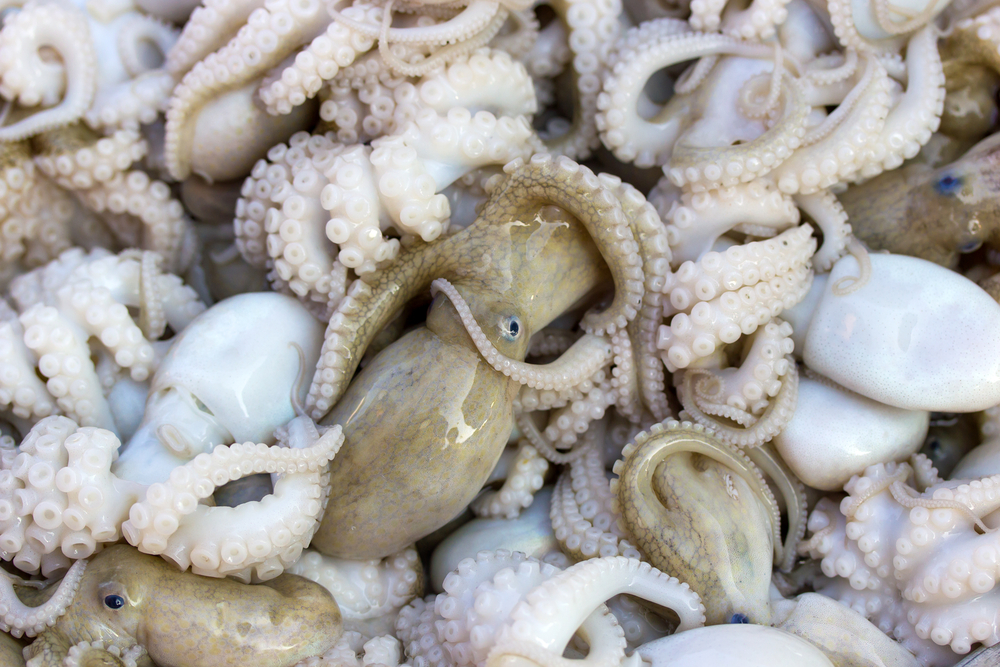
Around 130,000 baby octopuses, each measuring only a few millimeters, have been released off the Italian coast as part of a carefully controlled experiment. The hatchlings were raised in tanks at a University of Bologna laboratory, where researchers spent roughly two years working out how to breed the animals and studying how they behave around blue crabs. The idea is simple enough: put a native predator back into the water and give it a chance to hunt the invasive species that has devastated local shellfish production.
Italy Deploys an Army of 130,000 Baby Octopuses in ‘War’ Against Invasive Crabs | Rupendra Brahambhatt, ZME Science
— Owen Gregorian (@OwenGregorian) August 29, 2026
Italy is fighting an invasive crab species with a weapon that sounds almost too strange to be true. The country has released 130,000 baby octopuses in the Adriatic… pic.twitter.com/oZscFojM5n
The Blue Crab Has Become A Coastal Nightmare
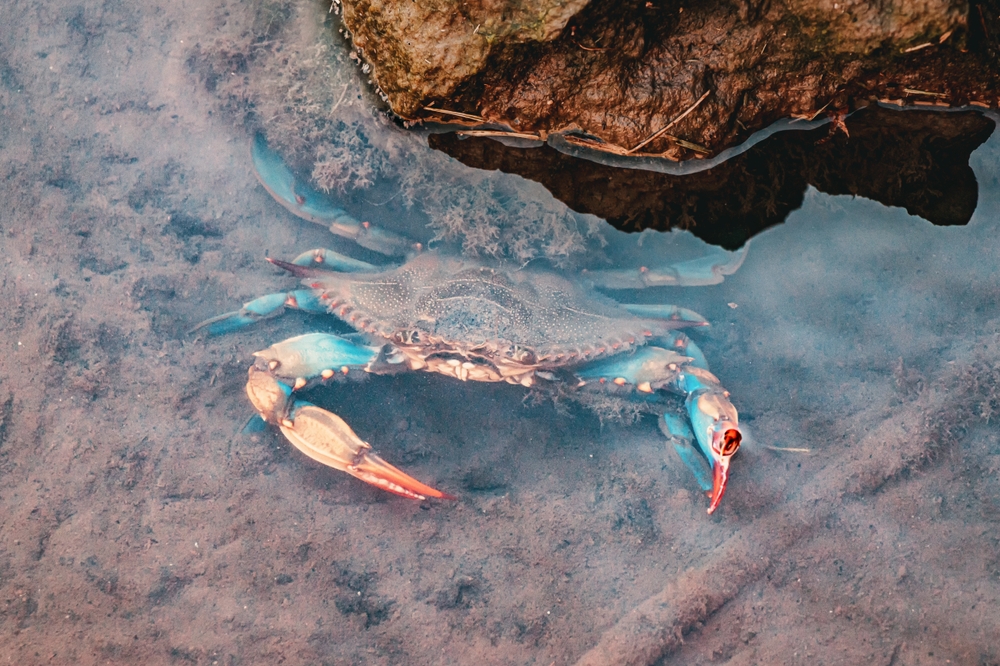
The Atlantic blue crab is native to the eastern seaboard of North America, but it has been present in the Adriatic since at least the 1940s. Scientists believe it most likely arrived through ballast water carried by cargo ships. For decades, however, the crab remained a relatively minor presence rather than becoming the ecological and economic threat that Italian fishermen are dealing with today. That changed dramatically around 2023, when populations began rising at a pace that transformed the animal from an occasional curiosity into a serious coastal problem.
One major factor behind the explosion appears to be warmer water. Marine biologist Enrica Franchi explained that blue crabs traditionally struggled when temperatures dropped below 10°C during parts of the year, but the conditions in the Adriatic have changed enough for them to find suitable temperatures throughout all 12 months. That gives the species far more opportunities to feed and reproduce, while removing a seasonal obstacle that once helped keep its population in check.
The damage has been particularly severe for clam farmers. Blue crabs can grow to around 1 kilogram and have a powerful appetite for young clams living on the seabed, putting them directly against an industry that depends on those shellfish surviving long enough to be harvested. Davide Sanulli, a mussel farmer working in the shallow waters near the Po delta, described the impact bluntly, saying the invasion had “caused a massacre” because the crabs eat everything, including young clams lying on the seabed.
For communities that have depended on these waters for generations, the invasion has therefore become much more than an unusual wildlife story. Alessio Mammi, the region’s councilor for agriculture, has described the blue crab crisis as one of the most serious emergencies to hit the sea in recent years. The problem has reached a point where fishermen are not simply dealing with a bad season. They are watching the species they rely on disappear while another species takes its place.
Italy Has Already Tried Destroying Millions Of Crabs
The scale of the economic damage is staggering. Commercial clam production has fallen by more than 70% in the worst affected areas, while the national fishing industry has suffered losses estimated at around €200 million. Emilia-Romagna alone has recorded roughly €17 million in losses since 2022, and hundreds of fisheries have closed along the wider coastline as the invasion has made traditional shellfish operations increasingly difficult to sustain.
For fishermen, those statistics translate into disappearing livelihoods. At the Polesine fishermen’s cooperative, clams once accounted for around 90% of earnings. That figure has now fallen to roughly 10%, while overall revenue dropped by about three quarters and the number of active members declined from 1,500 to 850. The contrast is particularly painful because the sea itself has not stopped producing life. It is producing enormous numbers of blue crabs instead of the shellfish that once supported these communities.
There is also a brutal economic mismatch between the two species. Clams can sell for around €10 per kilogram, while the invasive blue crab can fetch only about €1.30 per kilogram. That means fishermen are losing a high-value product while being surrounded by a much cheaper animal that has already consumed much of the resource they depended upon. Catching the crabs does not automatically replace the income lost from the clams.
Italy responded by paying fishermen to remove the invasive animals and destroy them. Over two years, almost 2.3 million kilograms of blue crabs were caught and incinerated. The figure sounds enormous, but the species has a reproductive capacity capable of making those efforts seem tiny by comparison. Researcher Pietro Emmanuele of the University of Bologna has pointed to the crab’s “incredible reproductive potential and fertility rate,” with the average female capable of producing roughly 1.63 million eggs.
Scientists Found A Predator That Actually Eats Them
That reproductive advantage is why researchers began searching for a biological response rather than relying solely on fishing. The common octopus was an obvious candidate because it is already native to the Adriatic and naturally preys on crustaceans. Researchers wanted to know whether it could successfully take on the blue crab, and laboratory observations gave them a reason to continue with the experiment.
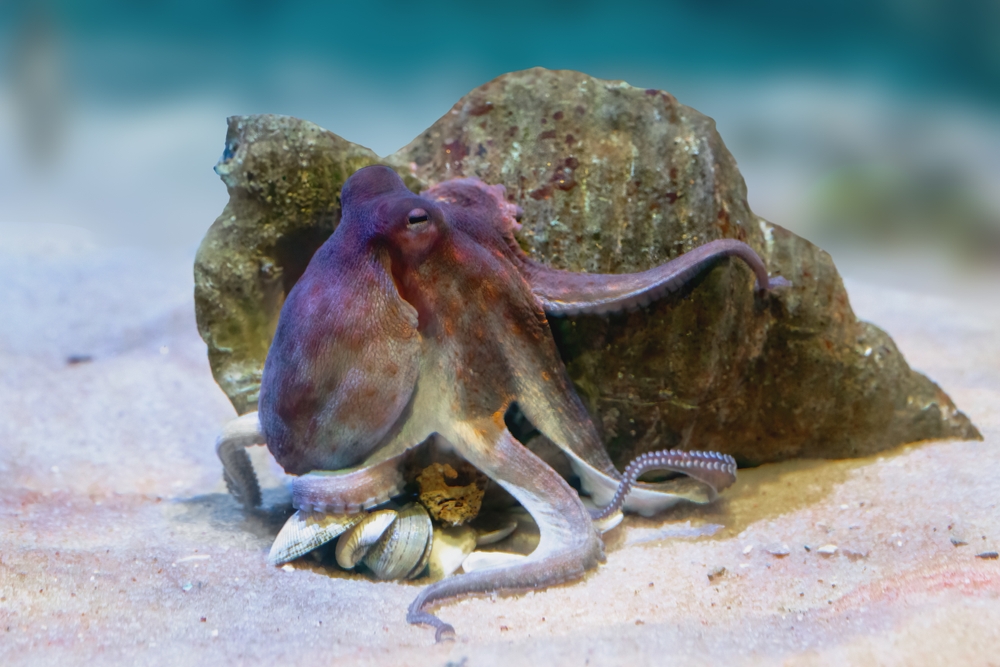
A mature common octopus weighing around 1 kilogram can eat approximately four medium-sized blue crabs in a day. Its anatomy gives it a useful combination of tools for dealing with armored prey, including eight arms and a powerful beak capable of breaking through shells. The researchers were interested in whether those natural abilities would translate into a useful relationship outside the laboratory.
Marine biologist Laura Gentile observed young octopuses attacking blue crabs weighing around a pound in the Bologna laboratory. The octopuses were able to overpower the crabs, and Gentile described what she observed as “an encouraging sign, biologically.” That does not prove the animals will control the invasion in the wild, but it demonstrated that the predator-prey relationship works under controlled conditions.
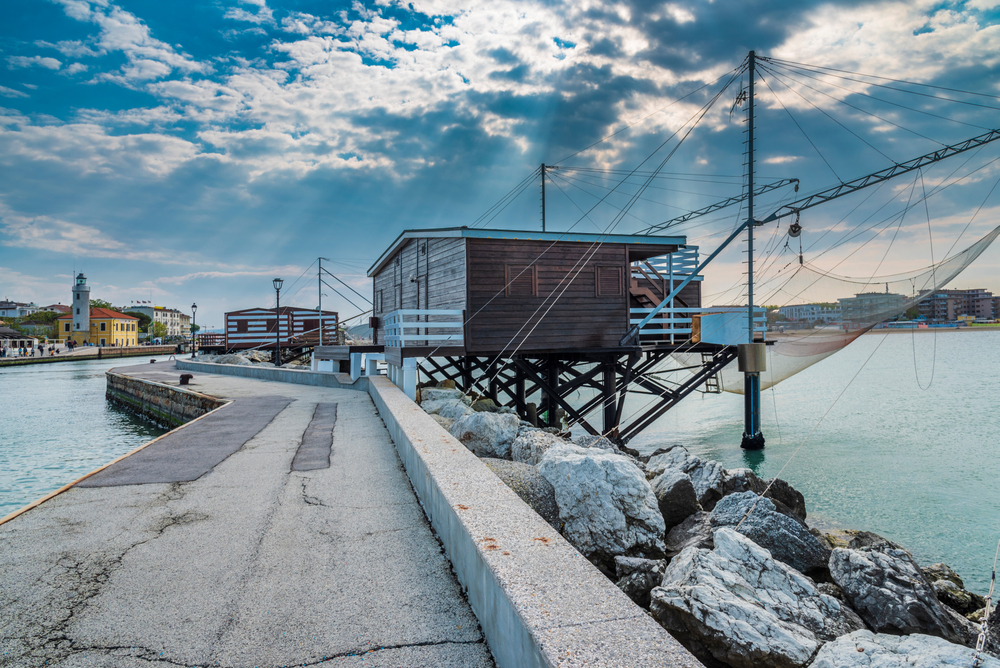
The releases have therefore taken place in several waves rather than as one enormous drop. On two mornings in June, boats left Cesenatico carrying roughly 130,000 hatchlings, with further releases taking place in August around Cesenatico and nearby Riccione. Divers had already placed artificial dens on the seabed, giving the young octopuses potential hiding places during the earliest and most vulnerable part of their lives.
Most Of The Tiny Octopuses Are Expected To Die
The biggest obstacle facing the experiment is survival. Octopus paralarvae, the tiny stage released into the water, naturally experience extremely high mortality rates. Marine ecologist Gianluca Sarà of the University of Palermo estimates that mortality could reach around 99.9%, while other accounts have placed survival closer to 1%. Either way, the overwhelming majority of the hatchlings are unlikely to live long enough to grow into predators capable of hunting blue crabs.
That makes the release number sound much more dramatic than the eventual adult population may be. Even if 130,000 animals enter the water, researchers cannot expect anything close to 130,000 adult octopuses to emerge from the experiment. Most will die from the ordinary hazards faced by young marine animals, leaving researchers waiting to see whether enough survive to establish the small population they are trying to create.
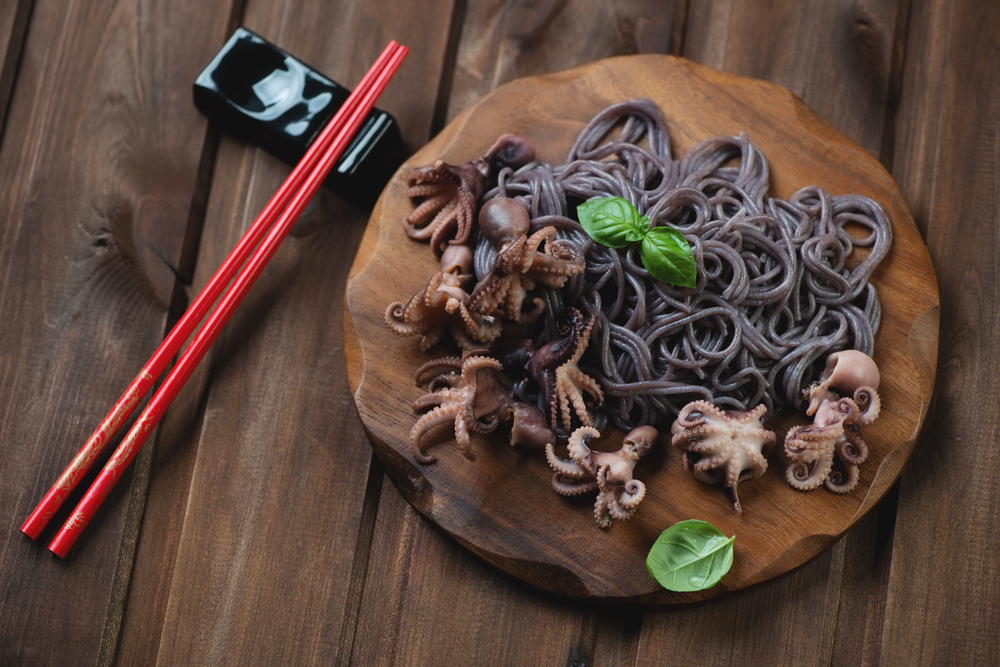
Habitat creates another major challenge. Common octopuses generally prefer rocky reef environments, while much of the blue crab damage is occurring in warm, shallow, sandy lagoon habitats. The two animals therefore overlap as predator and prey without necessarily sharing the same preferred living conditions. That is why artificial dens have been installed around the release areas, with researchers attempting to give the young octopuses a better chance of settling into places where they can eventually encounter their intended prey.
Scientists involved in the project are also careful about what the experiment can actually prove. Sarà described the concept as “powerful; it’s great,” while acknowledging that the effect could eventually prove “absolutely negligible.” Marine ecologist Rom Lipcius similarly said the project “is appropriate as a carefully controlled pilot experiment, but it is not yet a proven effective control strategy.” The team is continuing to fish for blue crabs while the experiment runs, rather than treating the octopuses as a replacement for existing control efforts.
The Experiment Is Bigger Than The Octopus Releases
By the middle of August, the research team had counted around 80,000 hatchlings in the water since June and hoped to roughly double that number before the month ended. Later accounts placed the total summer release as high as 150,000. Those changing figures reflect the fact that the project has been conducted in stages, with researchers monitoring the animals and release sites rather than treating the operation as a single event.
The goal is also far more limited than simply unleashing an army of octopuses across the Adriatic. Casalini explained that the idea is to establish a small community close to shore so it can better combat the spread of the blue crab. Researchers are therefore looking for evidence that a localized population can survive, settle into the habitat and eventually reproduce, rather than expecting the released hatchlings to eliminate the invasive species on their own.
The octopus is only one part of the wider investigation. Scientists are also studying seabass and eels, both native predators that may be better suited to the shallow lagoon environments where blue crabs have caused some of their worst damage. If those animals can prey on the crabs more effectively in those conditions, they could become another piece of the strategy for reducing pressure on native shellfish.
That approach is important because biological control can create problems of its own if it is handled carelessly. The researchers are working with an animal that already exists in the ecosystem rather than importing an entirely new predator, but they still need to determine whether increasing octopus numbers will have the intended effect. The experiment is therefore being watched as closely for unintended consequences as it is for signs of success.
Italy Is Betting On A Predator That Was Already There
The most unusual part of the experiment may be the fact that Italy is not importing a new species to fight its invasive crab problem. The common octopus already lives in the Adriatic, meaning researchers are trying to strengthen the population of an animal that naturally belongs in the ecosystem. Casalini said the team chose the octopus because “in the wild, it is a formidable predator of crustaceans.”
The project also represents a shift from trying to remove every blue crab individually toward changing the balance between predator and prey. Fishing and destruction can take millions of crabs out of the water, but the species’ reproductive capacity makes it difficult to keep pace. Researchers are now testing whether a native predator can create another source of pressure that works continuously rather than only when boats are out catching crabs.
Divers will survey the release sites while local fishermen report what they encounter in their nets. Researchers expect to have a clearer picture of the experiment’s results toward the end of the year. Nobody involved is promising that the blue crab population will suddenly collapse, and the project’s status as a controlled pilot means the results could just as easily show that the approach has little practical effect.
For now, the Adriatic has become the setting for one of the strangest ecological experiments underway in Europe. A highly reproductive invasive crab has transformed fishing communities, millions of kilograms of crabs have already been removed and destroyed, and scientists are now giving a native predator a chance to push back. The tiny octopuses may never become the army their release numbers suggest, but if enough survive, the experiment could reveal whether the sea already has part of its own answer.