
Your cart is currently empty!
Around One In Five People May Have This Unusual Sensory Trait

For some people, a crowded room can feel exhausting before anyone has even said a word. A change in someone’s expression, background noise, or the emotional tone of a conversation can seem unusually difficult to ignore.
Contents
show
Researchers studying sensory processing sensitivity believe this may reflect a genuine difference in how some brains handle incoming information. The familiar estimate is around 15% to 20% of people, although newer research suggests the numbers may be more complicated.
Researchers Have Been Studying This Trait For Years
The idea has a name: sensory processing sensitivity, or SPS. Psychologist Elaine Aron introduced the concept in the 1990s and proposed that around 15% to 20% of people show high levels of the trait.
That estimate has since been repeated widely, but researchers are still investigating exactly how common high sensitivity is. Their bigger question concerns what happens inside the brain when sensory and emotional information arrives.

One early clue came from a small brain-imaging study published in 2014. Researchers led by Bianca Acevedo, alongside Arthur and Elaine Aron, studied 18 married adults using functional magnetic resonance imaging.
Participants looked at photographs of happy and sad faces, including images of strangers and their spouses. People who scored higher on sensory processing sensitivity showed stronger activity in brain regions associated with awareness, empathy and distinguishing between oneself and other people.
Arthur Aron described the finding as “physical evidence within the brain that highly sensitive individuals respond especially strongly to social situations that trigger emotions.”
The One-In-Five Figure May Be Too Simple

The familiar one-in-five figure becomes less straightforward when researchers look at sensitivity as a spectrum. In 2018, a team including Elaine and Arthur Aron and Michael Pluess analyzed sensitivity across children, adolescents and adults.
Their analysis suggested three broad groups rather than a simple division between highly sensitive people and everyone else. Roughly 30% fell into a lower-sensitivity group, about 40% occupied the middle, and another 30% showed higher sensitivity.
The researchers described these groups using the labels dandelions, tulips and orchids. The findings suggest sensitivity may work more like a dial than an on-off switch.
That matters because people can differ in how strongly they respond to noise, social cues, emotions, novelty and other forms of stimulation. Someone does not necessarily need to fit neatly into a “highly sensitive” category to experience the world differently.
Genetics May Explain Part Of The Difference
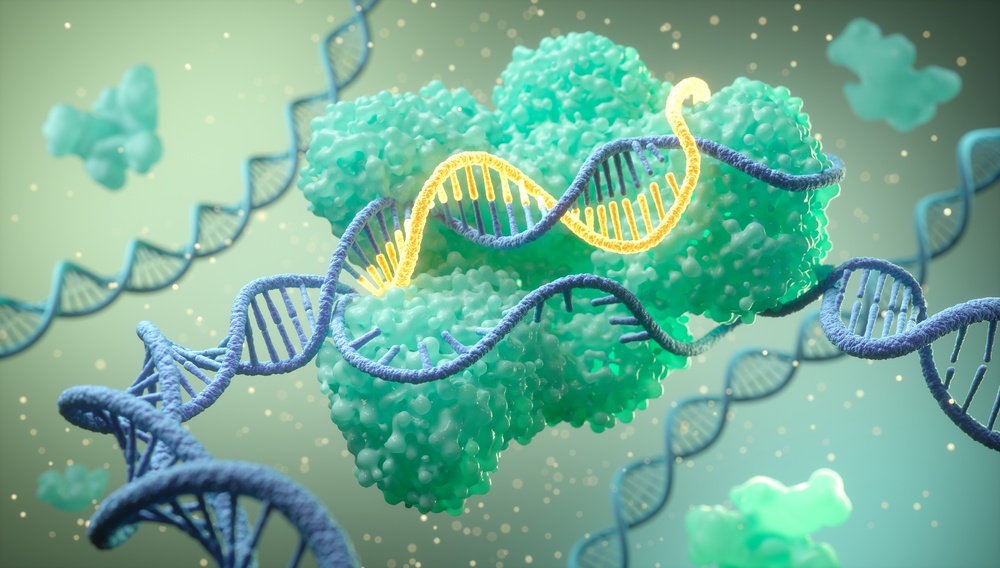
There is also evidence that sensitivity is partly influenced by genetics. In 2020, Elham Assary and colleagues studied more than 2,800 UK twins who were around 17 years old when the data were collected.
Their analysis estimated that genetic factors explained 47% of the differences in sensitivity between people. That does not mean an individual is 47% sensitive because of their DNA, since heritability describes variation within a population.
The study also found evidence that sensitivity to negative experiences and sensitivity to positive experiences may have partly different genetic influences. Environment therefore remains a major part of the picture.
A Simple Touch Experiment Revealed A Brain Difference
One of the more revealing studies involved something far less dramatic than emotional photographs. In 2022, researchers scanned 22 people while an experimenter touched their arms, looking for differences associated with sensory processing sensitivity.
The researchers did not find differences in the somatosensory cortices, the areas involved in processing physical touch. Instead, more sensitive participants showed stronger activity in the left posterior insula.
The researchers reported that they “did not find any differences in the somatosensory cortices.”
The finding points toward an intriguing possibility: the distinction may involve what the brain does with information after it arrives, rather than simply detecting more physical signals at the skin.
The researchers also acknowledged an important limitation. They said they did not know whether the results would have been different if participants had been touched by someone they liked rather than an unfamiliar experimenter.

A New Theory Could Explain Why Everything Feels More Intense
For years, researchers had evidence that sensitivity was associated with differences in brain activity without having one explanation that connected all the findings. A framework published in November 2025 offered one possible answer.
Corina Greven, MacKenzie Trupp, Judith Homberg and Heleen Slagter proposed that highly sensitive individuals may consistently assign greater “precision” to incoming sensory signals.
The idea comes from predictive processing, a theory suggesting that the brain constantly makes predictions about what it expects to encounter. Incoming information is then compared against those predictions, with some signals receiving more weight than others.
If incoming information receives greater weight, subtle changes in the environment could have a stronger influence on the brain’s ongoing calculations. That could help explain why someone might notice a slight change in another person’s expression while also becoming overwhelmed by a noisy environment.
The framework remains a proposal rather than a settled explanation. The researchers reviewed evidence supporting the idea indirectly and identified questions that still need to be tested.
Sensitivity May Come With Some Unexpected Advantages
The research becomes even more interesting when scientists look beyond overstimulation and distress. A 2025 study involving 296 adults examined sensory processing sensitivity alongside creativity and empathy.
Higher sensitivity scores, particularly those linked to the aesthetic component of the trait, were associated with “more creative ideas” and “more overall empathy.” The study also found associations with affective and cognitive empathy and less emotional disconnection.
There can be another side to that heightened responsiveness. The researchers noted that being more closely attuned to other people’s emotions can also contribute to empathic exhaustion.
The same sensitivity that helps someone notice subtle emotional details may therefore become tiring in environments filled with constant stimulation. The outcome can depend heavily on the person’s circumstances.
Being Highly Sensitive Is Not A Mental Disorder

Sensory processing sensitivity is not listed as a diagnosis in the DSM-5-TR. That distinction is important because high sensitivity should not automatically be treated as evidence of a mental disorder.
Researchers have also found overlap between SPS and established personality traits. The source research describes associations with neuroticism and openness, while the 2018 group analysis found differences in traits including neuroticism and extraversion.
A 2019 critical review questioned whether sensory processing sensitivity represents a distinct trait or overlaps substantially with characteristics psychologists already measure. That debate remains open.
Sensitivity and anxiety can also appear together without being the same thing. Someone who processes emotional information intensely may experience more distress, but that does not make sensitivity itself a diagnosis.
Scientists Still Have Plenty To Figure Out

The findings are intriguing, but the limitations are substantial. Some of the most frequently discussed brain-imaging studies involved very small groups, including 18 participants in the 2014 research and 22 in the 2022 touch experiment.
Much of the wider research also relies on a 27-item self-report questionnaire rather than brain imaging. The 2025 creativity study had a sample that was disproportionately female and highly educated, which limits how broadly its findings can be applied.
Researchers still need to answer several questions:
- How common is high sensitivity? Different statistical approaches produce different estimates.
- Which brain systems are involved? More imaging research is needed beyond the regions already identified.
- How much comes from genetics? The twin research points to substantial heritability while leaving considerable room for environmental influence.
- Is SPS a distinct trait? Researchers continue to examine its overlap with established personality characteristics.
- When does sensitivity help or hurt? A person’s environment may strongly influence the outcome.
The “Too Sensitive” Label Leaves Out The Science
Someone who leaves a crowded train because the noise has become exhausting may simply be responding to an environment their brain processes intensely. Another person might notice a friend’s mood before anyone else does, while someone else becomes deeply absorbed by music or art.
None of these experiences alone proves that someone has high sensory processing sensitivity. The research does, however, suggest that people differ in how heavily their brains process information coming from the world around them.
The science has not settled exactly where the trait begins, how many people have it, or how distinct it is from other personality characteristics. What researchers increasingly have evidence for is a measurable difference in how some people process incoming sensory and emotional signals, and that difference can carry both benefits and costs.