
Your cart is currently empty!
Scientists Found a Surprisingly Simple Trait Shared by People Who Believe Conspiracy Theories
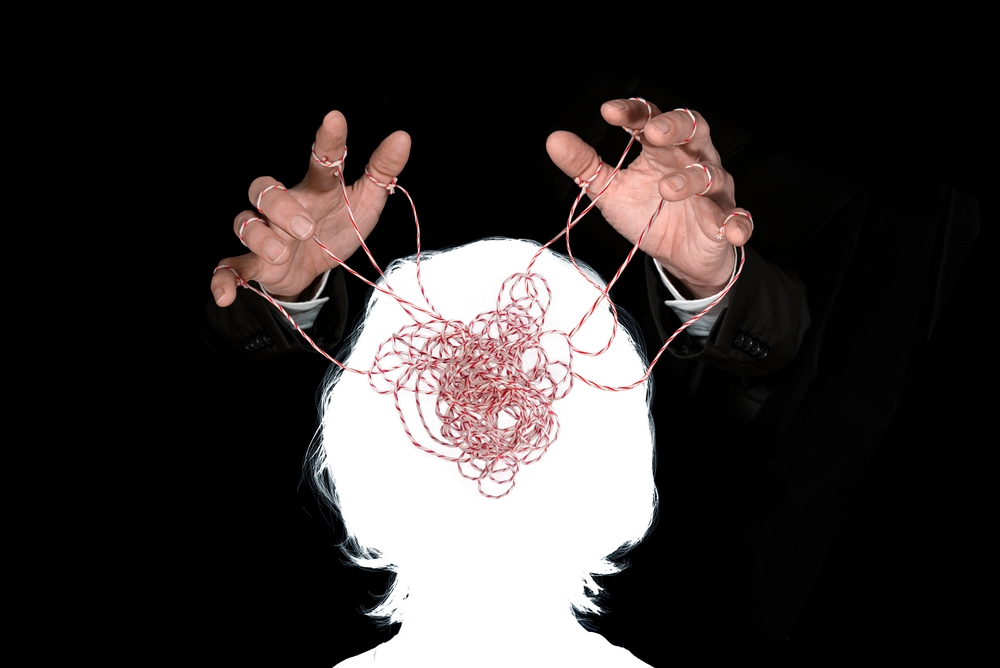
A government cover-up. A secret group pulling the strings. A hidden truth that powerful people supposedly do not want ordinary citizens to know. Conspiracy theories can look wildly different, but a new study suggests some believers may share something surprisingly ordinary: discomfort with uncertainty. Researchers examined 253 adults and found that certain psychological and worldview factors were associated with stronger conspiracy mentality, raising questions about whether these beliefs are driven by information gaps alone.
Contents
show
The participants were not asked to debate strangers online or defend their favorite theories. Instead, they rated a series of statements about government monitoring, secret events and alleged cover-ups before answering questions about their personalities, politics, religious beliefs and perceptions of fairness. The researchers were looking for patterns that existed before any particular conspiracy claim was considered, and three factors eventually stood out: religious belief, the feeling that the world is unjust and a lower tolerance for ambiguity.

Researchers Looked Beyond The Beliefs Themselves
The study, published in Applied Cognitive Psychology, examined 253 English-speaking adults from several countries, with the largest groups coming from Great Britain, South Africa, the United States and Canada. Participants completed a shortened conspiracy mentality questionnaire designed to measure general willingness to endorse conspiracy-style explanations, including beliefs involving hidden information and cover-ups. The researchers then compared those scores with a much wider set of psychological and demographic characteristics.
The team included psychologist Adrian Furnham, Stephen Cuppello and David S. Semmelink. Furnham has spent years studying conspiracy beliefs and has published around 20 papers on the subject over the past decade. That background was important to the study because the researchers were not treating conspiracy theories as one isolated internet phenomenon. They were examining the psychological characteristics that may make certain explanations more appealing in the first place.
The researchers assessed 14 variables in total. These included age, sex, education, political leaning, religious belief, optimism and whether participants viewed the world as generally fair or unjust. They also measured four personality traits from the High Potential Trait Indicator, allowing the researchers to examine whether particular personality characteristics were connected with stronger conspiracy mentality.
That approach produced a more complicated picture than simply asking whether people were educated, political or religious. The researchers wanted to know which characteristics continued to matter when several different factors were considered together. The eventual analysis narrowed the strongest relationships down to three factors, although those factors still explained only part of the differences between participants.

Three Factors Stood Out From The Rest
Several variables showed relationships with conspiracy mentality during the initial analysis. Sex, age, religious belief and a person’s sense of injustice were among the factors associated with conspiracy scores, while three personality traits also appeared relevant: Adjustment, Tolerance of Ambiguity and Competitiveness. At that stage, however, the researchers had not established which variables were independently important when considered alongside the others.
The regression analysis provided a clearer result. Of the 14 variables examined, three carried the strongest weight: religious belief, belief that the world is unjust and lower tolerance of ambiguity. The paper states that “More religious participants, who believed the world was unjust and had lower Tolerance of Ambiguity scores, tended to have higher CT scores.”
Together, those three factors “accounted for a fifth of the variance,” according to the researchers. That means the combination was associated with around 20% of the differences in conspiracy mentality observed in the sample. It is a meaningful signal, particularly given how many different characteristics were examined, but it does not come close to explaining every person’s beliefs.
That distinction is important because a fifth of the variance also means that most of the variation remained unexplained. Around four-fifths of the differences between participants were connected to factors outside those three variables, whether measured by the researchers or not. The study therefore points toward one piece of the puzzle rather than a single psychological formula that can identify who will believe a conspiracy theory.

Why Uncertainty Could Be Part Of The Equation
Tolerance of ambiguity describes how comfortable a person is when there is no immediate, definite answer. Someone with a high tolerance for ambiguity may be able to leave a question unresolved while waiting for more evidence, whereas someone with a lower tolerance may find uncertainty much more difficult to sit with. The researchers found that this trait had a particularly notable relationship with conspiracy mentality.
That connection offers one possible explanation for why conspiracy theories can become attractive when events are confusing or difficult to understand. A complicated situation can contain dozens of competing causes, incomplete information and unanswered questions. A conspiracy explanation can reduce that complexity by offering a clear story about who is responsible and why the event happened.
The paper notes that conspiracy theories “appeal to individuals with low tolerance for ambiguity, as these theories provide a sense of certainty.” The researchers also described how these explanations can simplify complicated issues into familiar conspiracy narratives. Instead of accepting that an event may have several unknown causes, the believer is offered a single explanation that appears to connect everything.
That does not mean everyone who dislikes uncertainty will believe conspiracy theories. It also does not mean uncertainty is the only reason people accept them. The finding suggests something narrower: when a person is particularly uncomfortable with unanswered questions, an explanation that provides certainty may have an additional psychological appeal, even when the evidence supporting it is weak.

The Cover-Up Belief Creates A Bigger Problem
The study also draws attention to something that can make conspiracy beliefs unusually resistant to correction: the idea that someone is actively hiding the truth. If a conspiracy theory includes the assumption that governments, corporations or other powerful groups are covering up what really happened, then contradictory evidence can become surprisingly difficult to use against the belief.
A denial from an institution can be interpreted as evidence that the institution is involved. A correction can be dismissed as an attempt to control the narrative. Even the absence of evidence can be explained away by saying that the evidence has been destroyed, hidden or deliberately kept from the public. The belief therefore gains a built-in response to information that would normally challenge it.
Furnham specifically argued that researchers have paid too little attention to this “cover up” perspective. He said, “Few, if any, researchers have taken into account the ‘cover up’ perspective of conspiracy believers.” That observation helps explain why conventional fact-checking can sometimes struggle to reach someone who has already decided that official information is part of the deception.
Once that structure is established, almost any outcome can be absorbed into the original theory. Evidence supporting the claim becomes confirmation, while evidence against it becomes evidence of the cover-up. That does not make the theory accurate, but it can make the belief unusually difficult to dislodge through argument alone.

A University Degree Did Not Provide An Easy Answer
If education were a simple safeguard against conspiracy thinking, the researchers should have found a clear relationship between educational attainment and conspiracy mentality. They did not. Education level was not significantly related to conspiracy belief in the study, even though the sample contained a large proportion of university-educated participants.
That finding challenges the idea that conspiracy theories mainly attract people who lack access to education or information. A university degree may provide someone with stronger academic skills, but it does not automatically determine how that person responds to uncertainty, perceived injustice or information from institutions. Those psychological and worldview factors can operate alongside formal education.
Curiosity also failed to show a significant relationship with conspiracy belief. That result complicates another common assumption: that conspiracy thinking is simply what happens when someone becomes especially curious and starts questioning everything. Asking questions can lead to useful investigation, but curiosity alone did not separate stronger conspiracy believers from the rest of this sample.
Some demographic patterns were still present. Religious observance and political conservatism were associated with higher conspiracy scores, while younger participants scored slightly higher as well. However, those demographic effects were smaller than the main trait and worldview findings, leaving a picture in which conspiracy mentality cannot easily be reduced to someone’s education, age or political identity.
A Much Larger Body Of Research Adds A Warning
The researchers themselves acknowledged several limitations that prevent the findings from being treated as a complete explanation. The sample contained only 253 people, which means smaller relationships could have gone undetected. It also leaned heavily toward middle-aged, well-educated professionals, making it difficult to assume that the same pattern would appear in every population.
There is another major limitation. The study measured associations at a single point in time, so it cannot show that low tolerance for ambiguity causes someone to develop conspiracy beliefs. It is possible that the relationship works in more complicated ways, with beliefs, personality traits and perceptions of the world influencing one another over time.
The findings also need to be considered alongside a much larger body of research. A 2023 meta-analysis examined 170 studies involving more than 158,000 participants and found that the need for closure and desire for control were not the strongest motivations for conspiracy beliefs. Social and identity-related needs appeared more important than researchers had expected.
Lead author Shauna Bowes also pushed back against the stereotype that conspiracy believers can be dismissed as unintelligent or mentally unwell. “Conspiracy theorists are not all likely to be simple-minded, mentally unwell folks,” she said. That broader research makes the new study more useful as one contribution to a complicated subject rather than a final explanation for why people believe extraordinary claims.
The Finding Changes How The Argument Looks
The most interesting implication is that conspiracy belief may sometimes involve more than a shortage of information. Someone can have access to facts, read explanations and encounter evidence that contradicts a particular claim, yet still find the conspiracy explanation more satisfying because it provides a sense of certainty or makes perceived injustice easier to understand.
That creates a problem during arguments. When two people disagree about a conspiracy theory, one person may assume the other simply needs better information. But if the belief is helping someone deal with uncertainty or interpret a world they already see as unfair, adding another fact may not address the reason the belief feels convincing.
This does not mean false claims should be ignored. It means the conversation may require more than fact after fact being thrown across the table. Understanding what psychological purpose a belief serves could help explain why some corrections are accepted while others are immediately rejected.
The study therefore points toward a more complicated view of conspiracy thinking. Social media can spread a theory rapidly, but the conditions that make an explanation appealing may involve personality, worldview, identity and a person’s relationship with uncertainty long before they encounter the claim online.
What The Researchers Still Do Not Know
The study offers a useful clue, but it does not provide a universal profile of a conspiracy believer. Its sample was relatively small and its participants were not representative of the entire population. The researchers also cannot establish cause and effect from the correlations they observed, so it would be wrong to conclude that low ambiguity tolerance automatically produces conspiracy beliefs.
The broader research makes that caution even more important. Conspiracy beliefs can serve different psychological and social purposes for different people, and the reasons behind one person’s belief may have little in common with another person’s. Some may be searching for certainty, while others may be responding to identity concerns, distrust or a perception that important institutions are acting unfairly.
There is also a practical lesson hidden inside the uncertainty. If a belief is partly serving a psychological purpose, simply removing the claim may leave the underlying need untouched. A person who uses a conspiracy explanation to make an uncertain world feel predictable may continue searching for another explanation if the first one disappears.
For now, the strongest conclusion from this particular study is relatively specific. Among these 253 participants, lower tolerance for ambiguity, a stronger belief that the world is unjust and religious belief were associated with higher conspiracy mentality. The finding does not explain everyone who believes a conspiracy theory, but it suggests that the story behind the belief can be more complicated than the information appearing on someone’s screen.
Sources:
- Furnham, A., Cuppello, S., & Semmelink, D. S. (2025). Conspiracy theory mentality, injustice and tolerance of ambiguity. Applied Cognitive Psychology, 39(6). https://doi.org/10.1002/acp.70151
- Dolan, E. W. (2026, January 4). Researchers identify two psychological traits that predict conspiracy theory belief. PsyPost – Psychology News. https://www.psypost.org/researchers-identify-two-psychological-traits-that-predict-conspiracy-theory-belief/