
Your cart is currently empty!
The ‘Forgotten’ Generation Between Boomers And Gen X Says It Never Belonged To Either

For millions of Americans, a birth year has placed them firmly inside the Baby Boomer generation, even when their actual childhood memories look nothing like the cultural image attached to that label. They were born close enough to the postwar baby boom to be counted among its members, yet many were too young to participate in the defining upheavals of the 1960s. By the time they reached their teenage years, the country had moved into a very different era shaped by Vietnam’s aftermath, Watergate, economic uncertainty and a rapidly changing music scene. Now, many of those people are embracing a name that describes the awkward space they occupied between two generations: Generation Jones.
Contents
show
The term generally refers to people born between 1954 and 1965, although there is no universally accepted definition of the exact years. For people who identify with it, the distinction is about far more than having a different favorite band or remembering a different historical event. Their experiences of childhood, adulthood, housing, work and retirement often separated them from the older Boomers who had already reached adulthood during the cultural explosion of the 1960s. Darlene M. Temple is one example. She was born during the baby boom and grew up in Philadelphia, but her memories of the decade that supposedly defined her generation were far removed from the images that later became synonymous with being a Boomer.

Why Some Boomers Say The Label Never Fit
Darlene M. Temple was born during the middle of America’s enormous postwar baby boom, which automatically placed her inside a generation that would later become one of the most heavily discussed demographic groups in the country. Yet her childhood in the Mount Airy section of Philadelphia did not resemble the counterculture story that became attached to the Boomer identity. She remembers living in a relatively quiet neighborhood while some of the country’s most dramatic political and cultural events unfolded elsewhere, often reaching her family through television rather than personal experience. “I didn’t know anything about Woodstock or the shootings at Kent State University,” Temple said, explaining that she also did not grow up around the riots and counterculture scenes that are frequently associated with the decade.
Temple’s recollections expose the problem with treating an entire generation as though everyone experienced the same historical period at the same age. Someone born during the early years of the Baby Boom could have been a teenager or young adult during Woodstock, the civil rights movement and the Vietnam War protests. Someone born near the end of the commonly used Boomer range was still a child when many of those events occurred. That difference can completely change how a person remembers an era, even when both people receive the same generational label later in life.
For Generation Jones members, that age gap became especially noticeable as they grew older. They inherited the cultural reputation of the Boomers without necessarily having lived through the experiences that created it. They were close enough to the 1960s to remember its aftermath, but many were too young to participate in its defining movements. That left them with a distinct generational identity that was difficult to describe using the conventional Boomer and Gen X categories.

Generation Jones Finally Gets A Name
Cultural critic Jonathan Pontell coined the term Generation Jones in 1999 to describe the younger half of the Baby Boomer cohort. Pontell was born in 1958, placing himself squarely inside the group he was attempting to define, and his argument centered on the idea that people born during this period had developed a shared cultural experience that differed from older Boomers. The name itself carries two separate ideas that help explain the cohort’s identity. One reference is “keeping up with the Joneses,” reflecting the competitive suburban culture many members grew up around, while the other comes from “jonesing,” a term associated with craving something that remains difficult to obtain.
The name was not the first idea Pontell considered. He has said that the process of finding a suitable label generated around 650 possibilities before Generation Jones finally emerged as the one that stuck. That detail says something about the difficulty of defining the group in the first place. Unlike the much more familiar Boomer, Gen X and Millennial labels, Generation Jones was created specifically to describe people who appeared to fall through the cracks of the existing categories.
That identity has continued to circulate because the experiences behind it are recognizable to many people born during those years. Generation Jones members came of age during a period when the optimism associated with the postwar years was colliding with economic and political uncertainty. They watched the cultural changes of the 1960s from the sidelines, then entered adulthood as the country was dealing with inflation, unemployment, Watergate and the consequences of the Vietnam era.
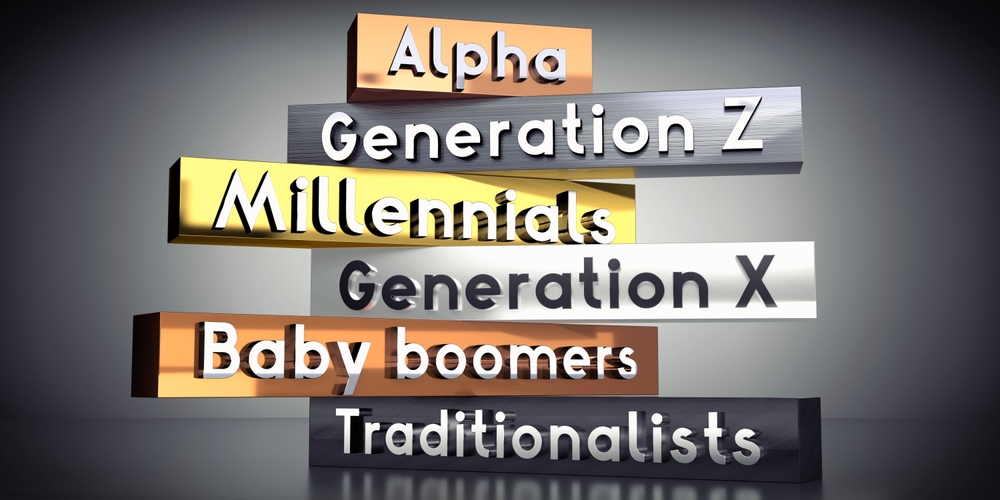
They Watched The 1960s Instead Of Living Them
One of the clearest differences between older Boomers and Generation Jones involves the Vietnam era. Older members of the Baby Boom were old enough to participate directly in the political and cultural upheaval surrounding the war, while many Generation Jones members were still children or teenagers. They saw the images, heard the arguments and lived through the consequences, but their personal relationship with the era was different because of their age. In many cases, television became their window into events that older people experienced on the streets, campuses and military bases.
The difference was especially striking for Generation Jones men who reached the age of selective-service registration toward the end of the Vietnam period. One member of the cohort pointed out that Generation Jones men still registered for the draft, but many were not drafted because the war had already ended. They therefore experienced the pressure and uncertainty surrounding military service without necessarily having the same direct experience as the older men who had been sent to Vietnam.
For many members of the group, the defining memory was simply watching history unfold at home. One Generation Jones member described the experience by writing, “We are the generation that got to see the war every evening at dinner ‘live via satellite’.” That sentence captures the strange position of the cohort. They were close enough to the events to remember them clearly, but often too young to participate in the way that shaped the identity of older Boomers.
Their Music And Memories Tell Another Story
The cultural divide becomes even more obvious when Generation Jones members talk about music. Older Boomers often connect their youth with Elvis Presley, The Beatles and the explosive musical culture of the 1960s. Generation Jones members, by contrast, frequently point toward the artists who dominated the following decade. “Boomers had Elvis and The Beatles. We had Led Zeppelin and Pink Floyd,” one member wrote, describing a difference that might seem small but reflects a much larger shift in when each group reached adolescence.
Another member recalled owning the same Rolling Stones album in a succession of formats, moving from 45s and 8-tracks to cassettes, CDs and eventually streaming. That kind of memory places the cohort at an unusual technological and cultural crossroads. They grew up with physical records and analog entertainment, but they also lived long enough to experience the arrival of digital music and the transformation of how people consume media.
The historical reference points were different too. One of the sharpest comparisons came from a Generation Jones member who wrote, “Boomers remember where they were when President Kennedy died. We remember where we were when John Lennon died.” The comparison captures the generational divide in a single sentence. Both events were enormous cultural moments, but they happened at very different points in the lives of the people who would later be placed under the same Boomer label.

The Economy Changed Their Adult Lives
The differences did not stop with childhood memories or music. Generation Jones entered adulthood during a far more difficult economic period than many older Boomers had experienced. The 1970s and early 1980s brought slow economic growth, high unemployment and rapid inflation, creating a combination known as stagflation. By the time many Generation Jones members were beginning careers, buying homes and raising families, the economic environment had changed dramatically from the postwar expansion that had shaped the early Boomers’ youth.
Personal finance commentator Austin Williams described the shift by saying, “And Generation Jones entered the era known as the stagflation era of slow economic growth, high unemployment, and rapid price inflation.” The timing was significant because economic conditions can have a lasting effect when they hit during the years when people are establishing careers and making their largest financial commitments. A generation entering adulthood during high inflation and expensive borrowing faces a different set of choices from one that entered adulthood during a period of stronger growth and cheaper credit.
Housing offers one of the clearest examples. The average 30-year fixed mortgage rate reached 13.88% in 1984 and 12.43% in 1985, years when many Generation Jones members were entering the market for their first homes. Williams contrasted those conditions with the experiences of some older Boomers, who had purchased homes at lower multiples of annual income. As Williams put it, “Buying a home in a favorable housing market can create financial stability for decades, while buying a home in an unfavorable one can make everything else harder.”
Their Retirement Story Also Looks Different
Retirement created another major dividing line between the generations. During the years Generation Jones members were building their careers, employers increasingly shifted away from traditional pensions and toward defined-contribution retirement plans such as 401(k)s. That change transferred more responsibility for retirement preparation from employers to individual workers, meaning employees increasingly had to manage investment decisions and absorb more of the risk themselves.
Williams described that transition directly: “The risk and responsibility of retirement preparation shifted from the employer to the employee.” For people who had spent decades working under that system, market losses could have a much more immediate impact on their retirement plans. The difference becomes especially significant when comparing workers who expected a traditional pension with those whose retirement savings depended heavily on investment accounts.
Sharon Dietrich, who was 62 when she discussed her situation, described the pressure created by losses in her retirement account. “I lost so much in my 401(k) in the last 18 months, I’ll have to keep going just to recover that.” Her experience illustrates why economic conditions have become such an important part of the Generation Jones discussion. The group came of age during one economic transition and spent its working years living through another.
Famous Names Fall Inside The Jones Generation
The Generation Jones label also includes several highly recognizable Americans born during the commonly cited period. Barack Obama, born in 1961, has referred to himself as “the first Generation Jones president.” Kamala Harris, born in 1964, also falls within the commonly used range. Lists of Generation Jones figures have also included Oprah Winfrey, Steve Jobs, Madonna, Michael Jordan and Sonia Sotomayor.
Those names span politics, entertainment, technology, sports and law, but their inclusion points toward something broader about the cohort. They belong to a group that experienced the transition from the analog world of the postwar decades into the rapidly changing culture of the late 20th and early 21st centuries. Their formative years were shaped by television, vinyl records and physical media, while their later lives were transformed by personal computers, the internet and digital technology.
The label therefore offers a way to describe a particular cultural bridge rather than a rigid demographic category. Generation Jones sits between the Boomer generation and Gen X in both age and experience. Its members may share some characteristics with each, but many argue that neither label fully captures what it was like to grow up when they did.
The Generation Has No Official Box
There is one major complication with Generation Jones: it has no official government status. The U.S. Census does not recognize it as a formal generation, and researchers do not universally agree on its precise boundaries. Some definitions begin in 1954 or 1955 and end in 1964 or 1965, while estimates of the cohort’s size also vary significantly.
That uncertainty means Generation Jones is best understood as a cultural identity rather than an officially measured demographic group. Generational categories themselves are broad conventions, and the people placed inside them can have dramatically different experiences depending on where they grew up, their economic circumstances and their age when major events occurred.
Susan Meyer, who was 63 when she described her reaction to being classified as a Boomer, put the frustration bluntly: “I was shocked to be classified as a boomer, a show-offy generation that took up all the cultural space.” Her objection reflects a broader problem with generational labels. A category can describe someone’s age while completely missing the experiences that shaped them.
A Birth Year Cannot Capture Their Whole Story
Generational labels can be useful shortcuts, but they become less convincing when people are expected to share the same cultural memories simply because they were born within a particular range. Someone born near the beginning of the Baby Boom could have been an adult during the most turbulent years of the 1960s, while someone born near its end could have been watching those same events from a family living room.
That gap is the foundation of the Generation Jones argument. Members of the cohort were close enough to the Baby Boom to inherit its label, yet young enough to experience the defining events of that period differently. Their teenage years arrived alongside Watergate, the aftermath of Vietnam, a new wave of rock music and a much tougher economic environment.
One set of statistics cited alongside generational commentary found that around 27% of people do not identify with the generation assigned to them, while another 15% are unsure which generation they belong to. For Generation Jones members, the disconnect has produced a label that gives a name to an experience many already recognized: being placed inside a generation whose defining cultural moments happened before they were old enough to fully participate.
Darlene Temple’s memories bring the entire argument back to its simplest point. She was a Baby Boomer by birth year, but the decade associated with that generation did not necessarily feel like hers. For millions of people caught between the cultural worlds of the Boomers and Gen X, Generation Jones offers a way to describe that missing space.