
Your cart is currently empty!
Congress Takes On The Companies Controlling Americas Seeds
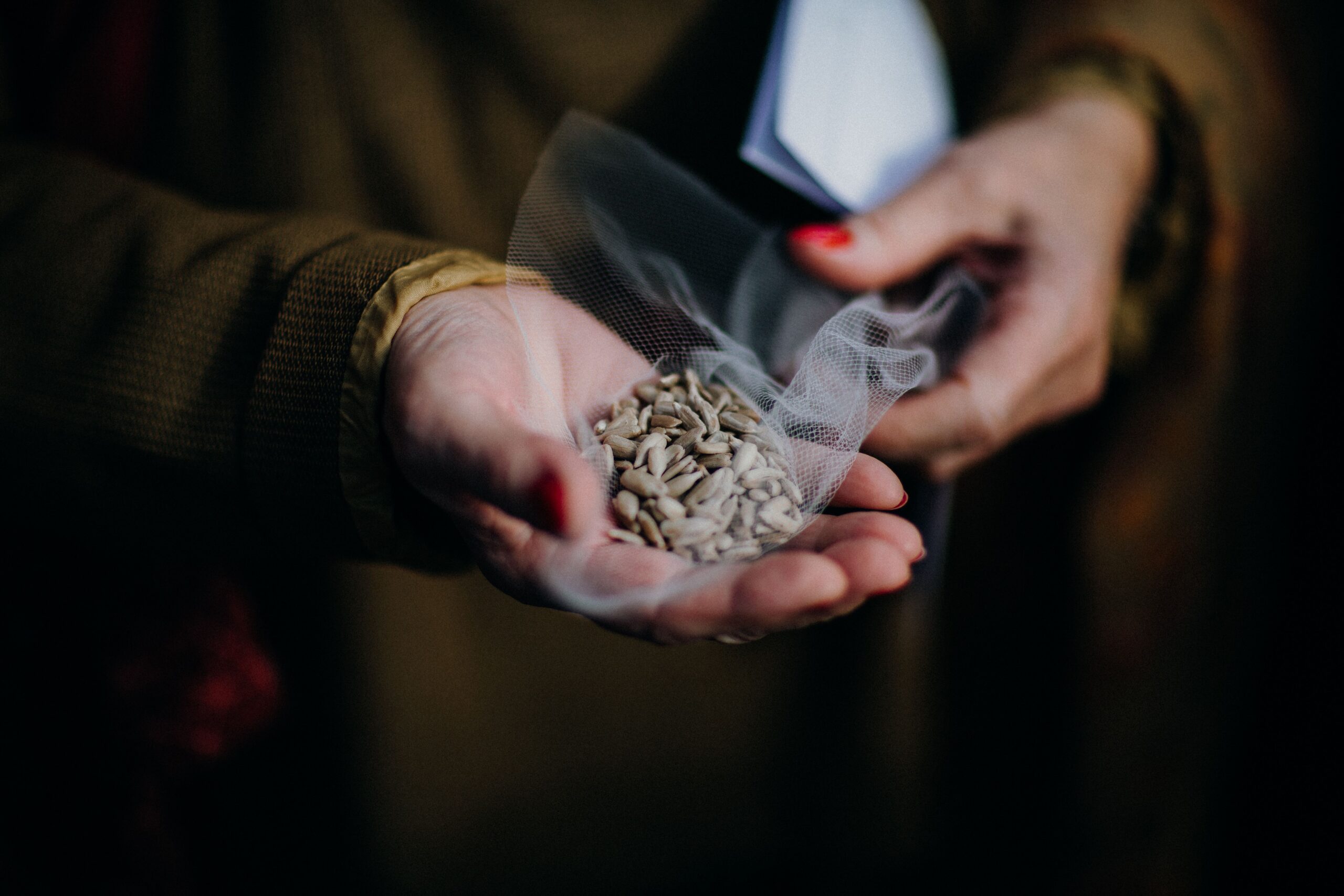
For generations, farmers could save seeds from one harvest and use them to plant the next. Now, a new congressional proposal is taking aim at the legal protections that have helped major agricultural companies control how some commercially important seeds are used.
Contents
show
Representatives Jim McGovern and Greg Casar have introduced the Fair Seeds for Farmers Act, a bill designed to limit certain future patent protections for plants and prevent new agreements from restricting farmers and researchers from breeding, experimenting with, propagating or saving seeds. The proposal comes as lawmakers and agricultural groups increasingly focus on consolidation, rising farm input costs and the power of large seed companies.
Congress Wants To Change How Seeds Are Protected
The Fair Seeds for Farmers Act, introduced as H.R. 9681 on July 14, 2026, would change the federal framework governing intellectual-property protection for plants, plant varieties and plant germplasm. The sponsors say the legislation would give farmers greater control over seeds while opening more room for independent seed companies and public researchers to develop new varieties.
McGovern, a Democrat from Massachusetts, framed the legislation as part of a broader fight over the cost of food and the power of large agricultural corporations. “Food is one of the most basic promises we make to one another: that the people who grow it can make a decent living, and the families they feed can afford to eat,” McGovern said when announcing the bill.
Greg Casar, a Democrat from Texas, also connected the legislation to the affordability pressures facing American households. “Every working American knows that groceries are just too expensive,” Casar said, arguing that seed patents and corporate control can contribute to higher costs for farmers and consumers.
The proposal is part of the Congressional Progressive Caucus’s New Affordability Agenda, a group of policy proposals aimed at reducing costs for families while challenging corporate concentration. The Fair Seeds for Farmers Act focuses specifically on the agricultural supply chain and the role intellectual-property rights play within it.
The Proposal Would Restrict Several Seed-Use Restrictions
The bill would not simply abolish every form of intellectual-property protection for plants. Instead, it would establish limits on the types of federal protection available for plants, plant varieties and plant germplasm, while leaving existing issued patents unaffected.
Under the proposal, federal protection for covered plant material would be limited to protections available under the Plant Variety Protection Act and the Plant Patent Act. Pending and future patent applications would be affected by the change, while patents that have already been issued would remain in place.
The legislation would also address contracts between seed companies and users of their products. Certain restrictions in agreements entered into after enactment would become unenforceable if they prevent farmers or researchers from using plant material for breeding, experimentation, research, seed saving or propagation.
The main changes proposed by the bill include:
- Future protection: Pending and future protections for covered plant material would be limited to the Plant Variety Protection Act and Plant Patent Act.
- Farmer seed saving: New corporate restrictions preventing farmers from saving and replanting qualifying seed would face limits under the legislation.
- Research and breeding: New agreements could not prevent researchers and breeders from conducting certain activities involving protected plant material.
- Breeding definitions: Federal law would establish definitions for important plant-breeding terms used in intellectual-property disputes.
The timing provisions are particularly important. Existing issued patents and agreements entered before enactment would not be directly affected by the proposal’s effective-date rules.

Why Seed Patents Have Become A Political Flashpoint
The dispute over seed patents reaches back to a major change in how agricultural innovation is developed and commercialized. For much of human history, farmers saved, exchanged and replanted seeds, gradually developing crop varieties suited to particular regions and farming practices.
Public institutions also played a much larger role in plant breeding during much of the 20th century. Government research stations and universities developed many varieties, while private companies focused heavily on producing and selling seeds at scale.
That system began changing as governments expanded intellectual-property protections for biological inventions. Agricultural companies increasingly saw commercial opportunities in developing specific genetic traits and protecting those innovations through patents.
Utility patents became particularly significant because they could provide broader rights than the specialized plant-protection systems created by Congress. In the United States, the Supreme Court’s 2001 decision in J.E.M. Ag Supply, Inc. v. Pioneer Hi-Bred International, Inc. confirmed that sexually reproducing plants could qualify for utility-patent protection.
That ruling helped establish the current system in which agricultural companies can use utility patents alongside the Plant Variety Protection Act and Plant Patent Act.
The Seed Market Is Highly Concentrated
Supporters of the Fair Seeds for Farmers Act point to concentration in the seed industry as evidence that intellectual-property rights deserve greater scrutiny. The supplied USDA data shows that a small number of companies account for large shares of major crop markets.
According to USDA Economic Research Service data cited in the reference material, Bayer and Corteva accounted for 72% of planted U.S. corn acres and 66% of planted soybean acres during 2018-20. A separate USDA analysis found that Bayer, Corteva and Syngenta, including their legacy companies, held 71% of utility patents and 58% of Plant Variety Protection Certificates in the agency’s dataset for new crop varieties.
That concentration does not by itself establish that patents are responsible for every increase in seed prices. USDA research cited in the supplied material found that stronger intellectual-property protection helped stimulate private research and development while also increasing market power and contributing to higher seed prices.
That creates a central tension in the debate. Patents can provide companies with an incentive to spend money developing new agricultural technologies, but the same protections can also make it harder for competitors to enter the market or build on existing innovations.
Seed Prices Have Risen Faster Than Crop Prices

The economics become more striking when seed prices are compared with what farmers receive for their crops. The supplied research cites USDA Economic Research Service data showing that the price of genetically engineered seeds increased by 463% since 1990, while the prices farmers received for their crops increased by 56% over the same period.
For farmers, that difference can have serious consequences because seed is purchased before crops are harvested and sold. When input costs rise while crop prices fail to keep pace, producers can find themselves with less room to absorb unexpected weather, market or trade shocks.
The reference material also cites an August 2025 study examining the relationship between farm subsidies and seed prices. According to that study, seed companies raised prices by 0.5% for every 1% increase in farm subsidies.
That finding has become part of the argument that taxpayer-funded support intended to stabilize farm incomes can also increase the amount farmers are charged for key inputs. The broader agricultural supply chain adds another layer because commodity processors benefit when farmers continue producing large quantities of crops despite low margins.
Farmers Say Consolidation Limits Their Choices

The concerns over seed prices and market concentration were also raised during a Senate Judiciary Committee hearing in October 2025. Iowa farmer Noah Coppess told lawmakers that farmers have limited influence over both the prices they receive and the costs they face.
“The reality in farming today is we’re price takers rather than price makers,” Coppess said. “That’s especially true when consolidation limits our options.”
Coppess also said he had concerns about input and equipment supply chains and their ability to affect farmers’ costs. His testimony reflects a broader issue facing agricultural producers: farmers often have limited control over both ends of the economic equation.
They may have little influence over commodity prices when selling crops, yet they must make significant purchasing decisions before planting. Seed, fertilizer, machinery and other inputs can therefore become major sources of financial pressure.
Supporters of H.R. 9681 argue that giving farmers more freedom to save and work with seed could create additional options and reduce dependence on dominant suppliers.
The Research Fight Goes Beyond Farmers
Seed patents also affect what researchers can do with commercially important crops. Patent holders can use their rights and licensing agreements to control how protected material is accessed, studied or used in breeding programs.
The supplied research argues that large seed companies have threatened independent researchers with patent-infringement lawsuits, discouraging some genetic studies even when researchers believe their work may fall within lawful research activities.
That matters because genetic analysis can reveal information about the characteristics and vulnerabilities of important crop varieties. Researchers could potentially use that information to identify useful traits or develop varieties better suited to changing agricultural conditions.
The concern is particularly significant for public breeding programs and universities, which may not have the financial resources to fight lengthy patent disputes with multinational corporations.
What Researchers Say They Need
The National Sustainable Agriculture Coalition has backed the Fair Seeds for Farmers Act, arguing that farmers and researchers need greater freedom to work with seed.
Nick Rossi, an NSAC policy specialist, said corporate consolidation has affected both agricultural diversity and farmers’ ability to participate in seed development. “The Fair Seeds for Farmers Act takes an important step in curtailing corporate abuse of US Patent Law and reaffirms farmers’ and researchers’ ability to breed, experiment, propagate, and save seeds without fear of retaliation from large seed companies,” Rossi said.
Supporters argue that broader access to genetic material could help independent breeders develop varieties suited to local conditions. They also point to potential benefits for biodiversity and resilience against weather, pests and diseases.

The Justice Department Has Entered The Debate
The congressional push comes shortly after the Justice Department raised its own concerns about the relationship between seed patents and competition.
In a May 2026 court filing involving a dispute between Corteva and genetic-engineering company Inari, the Justice Department’s Antitrust Division argued that companies should not be able to restrict public access to genetic sequencing of material deposited as part of the patent process.
The department did not take a position favoring either company in the underlying dispute. Its filing instead addressed broader questions about the relationship between patent rights, research and competition.
Corteva had sued Inari in 2023, alleging patent infringement involving activities that included obtaining samples of Corteva’s patented seeds from a public repository and analyzing their genetic makeup.
The Justice Department’s involvement is significant because the filing came from its Antitrust Division rather than the Civil Division, which ordinarily handles intellectual-property matters. The move suggests that the government is examining whether certain uses of seed patents can function as barriers to competition.
The legal dispute is still proceeding, so the ultimate impact of the government’s position remains uncertain.
H.R. 9681 Could Raise Major Legal Questions
The legislation is relatively short, but its wording could produce substantial debate if Congress moves it forward. One major question involves its proposed prohibition on federal protection “with respect to” a plant, plant variety or plant germplasm outside the Plant Variety Protection Act and Plant Patent Act.
The supplied legal analysis notes that the phrase could be interpreted in different ways. A narrow interpretation might focus on claims directed toward particular plants, varieties or propagating material. A broader interpretation could potentially affect claims involving genes, traits, edited sequences, plant cells, transformation events or breeding methods.
The bill does not provide a definitive answer to that question.
The contract provisions also create questions about how companies would handle agreements signed after enactment. Existing contracts would not be directly affected by the effective-date clause, while specified restrictions in new agreements could become unenforceable.
That could create a gradual transition rather than an immediate overhaul of the industry. Existing patents would continue operating until they expire, while pending applications and future applications would face the new rules.
The Bill Would Not Immediately End Seed Patents
Describing the proposal as an instant end to seed patents would miss one of its most important provisions.
Existing issued patents would remain valid. The bill would instead alter the framework for pending and future applications covered by its language.
The distinction also means the Supreme Court’s earlier decisions would not simply disappear. In J.E.M. Ag Supply, the Court interpreted the federal statutes that existed at the time. Congress could change those statutes prospectively without treating the Court’s decision as though it had never existed.
The same applies to the Supreme Court’s 2013 decision in Bowman v. Monsanto. That case held that patent exhaustion did not allow a farmer to reproduce patented, self-replicating seed by planting it and harvesting newly produced seed.
Existing utility patents would continue to be governed by that precedent. The importance of the decision could gradually decline for subject matter that can no longer receive new utility-patent protection under a changed federal framework.

The Grocery Price Argument Needs Some Caution
Supporters of the bill say limiting corporate control over seeds could help lower food costs. The connection between seed prices and grocery bills, however, is indirect.
A reduction in seed costs could lower some expenses for farmers, but consumers pay prices shaped by many parts of the food supply chain. Crop prices, processing, transportation, labor, storage and retail costs all influence the final price.
That means the Fair Seeds for Farmers Act should be viewed as an attempt to address costs and competition at the beginning of the supply chain rather than as a guaranteed way to reduce grocery bills.
The more direct potential effect would be on farmers’ access to seed and the ability of independent breeders and researchers to work with plant material.
The Fight Over Seeds Is Now A Fight Over Market Power
As of July 17, 2026, H.R. 9681 had been introduced and referred to the House Judiciary Committee, according to the supplied legal analysis. No Senate companion, committee markup or floor schedule had been identified by that date.
The bill could still change significantly before reaching any vote, assuming it advances at all. Its introduction nevertheless puts seed patents, farmer autonomy and agricultural consolidation squarely into a national political debate.
For supporters, the issue is straightforward: farmers should have more freedom to save and develop the seeds they depend on, while researchers should have room to study important crops without facing prohibitive legal barriers. For major seed companies, the legislation could affect the intellectual-property framework that has helped fund and protect private agricultural innovation.
The practical stakes extend well beyond a single seed contract. They reach into who controls agricultural genetics, who can compete in the seed market and how much freedom farmers and researchers will have to work with the crops that underpin the country’s food system.
Congress has now been handed a choice that goes beyond patent law. It must decide how much control over America’s seeds should belong to private companies, and how much should remain available to the farmers and researchers whose work keeps the food system moving.