
Your cart is currently empty!
The Health Reasons You Should Leave Your Shoes At The Door
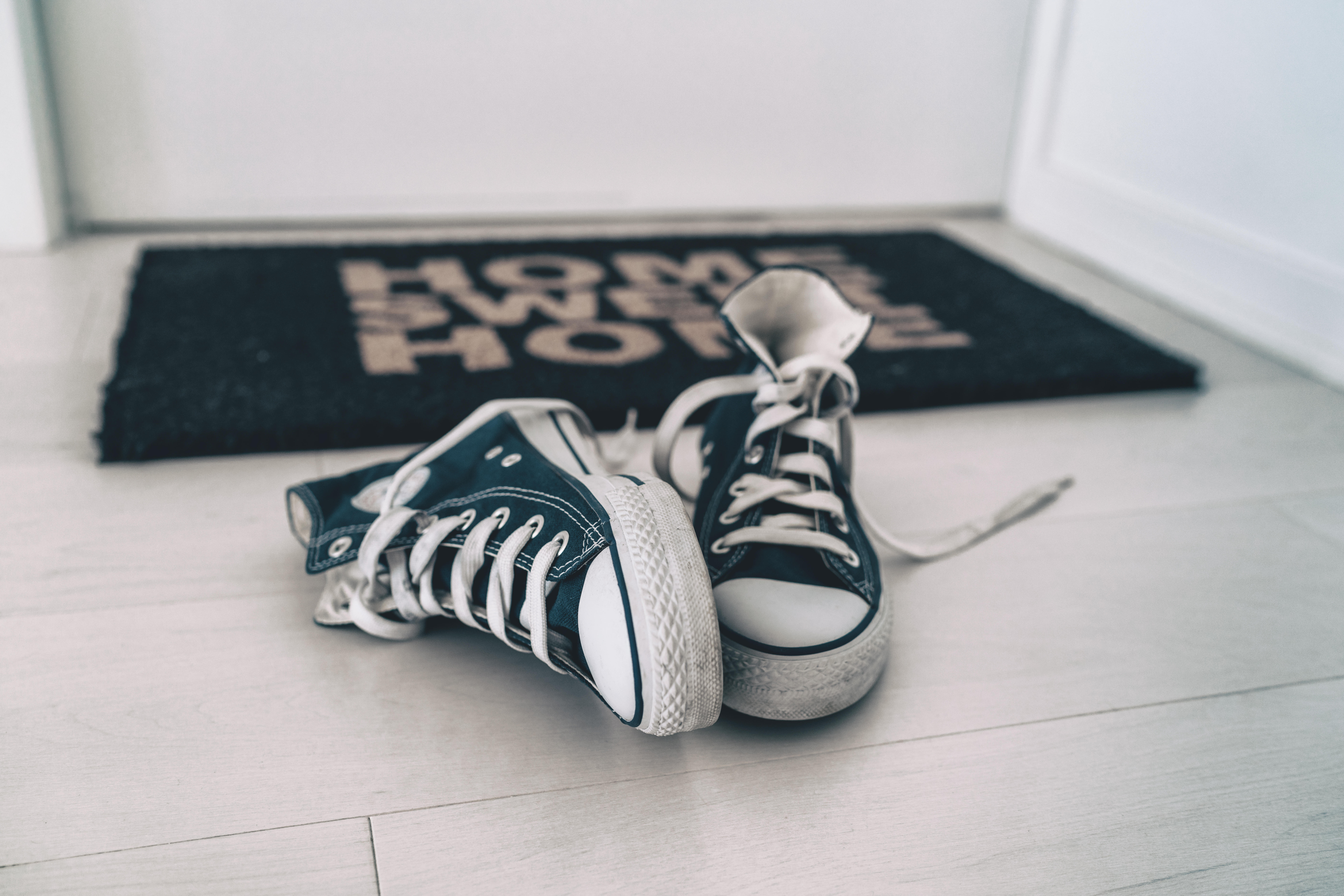
That pair of shoes by the front door may look perfectly clean, but the soles can carry far more than dirt after a day outside. Research has found bacteria, fecal organisms, allergens, pesticides and environmental contaminants on footwear, giving households a reason to think twice before walking across the living room in outdoor shoes.
Contents
show
The issue becomes especially relevant for families with babies and young children. Since little ones spend so much time crawling and playing on floors, whatever gets tracked inside can end up much closer to them than most adults realize.
Your Shoes Can Carry Millions Of Bacteria
Shoes spend the day touching surfaces that most people would never consider clean enough to put their hands on. Sidewalks, public restrooms, parks, workplaces and other busy areas can all leave microorganisms on the soles, even when the footwear looks spotless.
One 2008 study led by Charles Gerba, a professor of virology at the University of Arizona, examined 26 pairs of shoes that had been worn for three months in the outside world. Researchers found between 3,600 and 8 million colony-forming units of bacteria on the shoes, both inside and outside.
E. coli was among the most common organisms found in the study. Gerba told TIME that about 80% of the shoe bottoms contained fecal bacteria, which could have been picked up from public restroom floors or outdoor areas where animals had been present.
That does not mean every contaminated shoe will make someone sick. The findings do show, however, that footwear can provide an easy route for microorganisms from outdoor environments to enter the places where people eat, sleep and spend much of their day.
Some Of Those Organisms Can Cause Illness

E. coli is only one of the organisms researchers have found on footwear. Studies have also identified Clostridioides difficile, commonly called C. diff, as well as bacteria that can be difficult to treat when they cause infections.
According to the research cited in the supplied references, University of Houston researchers found C. diff on 40% of the shoes they tested. C. diff is an intestinal bacterium that can cause diarrhea and, in some cases, severe inflammation of the colon.
Healthcare environments can expose footwear to an even wider range of microorganisms. A 2016 meta-analysis published in the Journal of Applied Microbiology reviewed 13 studies examining how shoes became contaminated and where those contaminants could travel.
One study included in that analysis found that 65% of shoes worn by physicians during hospital rounds tested positive for either methicillin-resistant Staphylococcus aureus, commonly known as MRSA, or Enterococcus faecalis. Another study found that 48% of shoes worn in operating rooms carried at least one pathogenic bacterium.
The point is not that ordinary footwear is equivalent to hospital equipment. Rather, the research illustrates how easily shoes can collect microorganisms when they move through environments where bacteria are present.
Your Floors Can Become The Next Stop
Once contaminated shoes enter a home, the material on their soles does not necessarily stay near the doorway. Walking naturally distributes whatever is attached to the footwear across the surfaces people use throughout the day.
Researchers from Northeastern University examined this issue in a 2023 study published in Design, Architecture, and Ergonomics. The team sampled sidewalk rain puddles, shoe bottoms and flooring inside one of the university’s urban buildings.
The researchers found an average of 30,000 gut bacteria per 100 milliliters of water in neighborhood sidewalk puddles. The same types of bacteria were also detected on the soles of shoes worn by student and teacher volunteers.
The study also found contamination inside the building, with carpeted areas presenting a particular concern because fibers can act as reservoirs for bacteria. Alessandra Leri, a professor of chemistry and biology and the study’s lead author, explained that flooring can influence how long contamination remains in an indoor environment.
“If you have carpets, they function as a reservoir of bacteria,” Leri said. She also described shoe soles as a serious vector for transferring fecal bacteria from outdoor environments into indoor spaces.
The First Few Steps May Be The Germiest
Research cited by Gerba suggests that the area immediately inside the front door can receive a disproportionate amount of contamination when outdoor shoes are worn indoors. His studies found that the first four steps inside a home were the germiest floor area.
Researchers also conducted tracer experiments using dye and tracer viruses placed on shoe soles. The experiments showed that material from footwear could leave a visible trail as people walked through a home.
That pattern matters because the floor is not an isolated surface. People walk across it, children play on it and household objects can come into contact with it throughout the day.
For adults, touching a contaminated floor and then touching the face creates one possible route for microorganisms to reach the body. Young children have even more contact with floors because crawling, sitting and playing close to the ground are normal parts of early development.
Shoes Bring In More Than Germs
Bacteria may get most of the attention, but footwear can collect other substances while people are outside. The supplied research and medical references point to lead dust, pesticides, lawn chemicals and pollen as additional contaminants that can travel indoors on shoes.
Lead deserves particular attention in older homes and buildings. Lead-based paint can deteriorate over time, producing dust that settles onto surfaces and soil around a building. Someone walking through that contaminated material can potentially carry some of it indoors on their footwear.
Dr. Daniel Sullivan, an internal medicine physician cited in one of the supplied references, explained that children are particularly vulnerable to lead exposure because it can affect the brain and other organs. Young children also spend considerable time on floors and frequently put their hands or objects into their mouths.
The concern therefore extends beyond visible dirt. A shoe can appear clean while still carrying particles that are too small to see.
Allergens Can Hitch A Ride Too
People who struggle with seasonal allergies may also have another reason to reconsider outdoor shoes indoors. Pollen from trees, grass and weeds can collect on footwear and later be redistributed around the home.
Dr. Sullivan noted that pollen can become airborne when people walk around indoors. It can also settle onto household surfaces, potentially adding to the allergen load inside the home.
That does not mean taking off shoes will eliminate allergy symptoms. Indoor air quality is affected by many factors, including ventilation, windows, pets and other sources of allergens. Removing outdoor footwear can simply reduce one way that pollen enters the living space.
Outdoor Chemicals Can Follow You Home
A walk through a park, sidewalk or lawn can expose shoes to substances that are difficult to notice. Fertilizers, insecticides and pesticides can be present on treated grass and public green spaces, while road surfaces can leave other chemicals on the soles.
Dr. Sullivan told the source that lawn chemicals can carry health risks ranging from eye and throat irritation to increased cancer risk. The reference does not establish that ordinary household exposure from shoes causes cancer, but it does identify treated outdoor surfaces as another potential source of chemical contamination.
Rural environments can introduce their own set of contaminants. A 2009 study conducted in rural Alaska had participants wear sterilized boots while walking along an outdoor path before stepping onto sterilized flooring.
Seventy percent of the boots became positive for multiple gut bacteria after that short walk. When participants subsequently walked across sterile flooring wearing the contaminated boots, bacteria transferred to the flooring during half of those walks.
The study demonstrates how quickly contamination can move from an outdoor surface to footwear and then from footwear to an indoor surface.
Children Have More Contact With Contaminated Floors
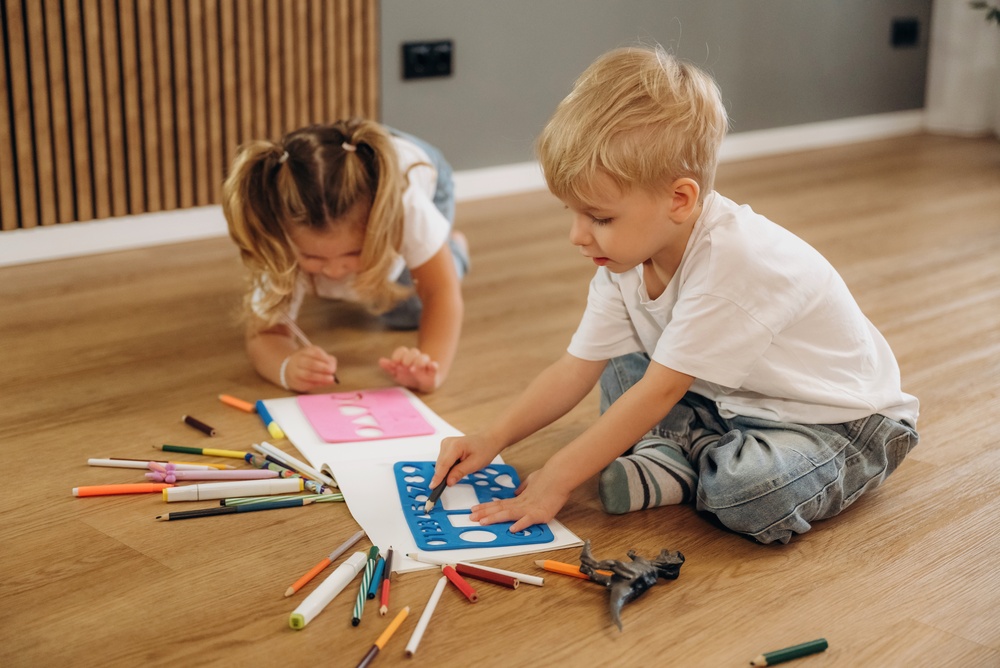
Adults generally spend much of their time standing or sitting on furniture, but young children interact with floors in a completely different way. Crawling, playing with toys and sitting on the ground can put their hands and bodies into frequent contact with whatever has accumulated there.
That is one reason the shoe issue deserves particular attention in homes with babies and toddlers. When a contaminated shoe walks across a floor, the material does not disappear simply because it is no longer visible.
Children can touch the floor and then touch their mouths or toys. Pets can also move contaminants around after walking across floors and licking their paws.
The available research does not establish that removing shoes prevents specific illnesses in every household. It does support the simpler point that footwear can transfer microorganisms and contaminants onto indoor surfaces, where children and other household members can encounter them.
For families trying to reduce unnecessary sources of contamination, the doorway provides a straightforward place to intervene.
A No-Shoes Rule Does Not Have To Be Awkward
The science may make the case for keeping outdoor shoes away from indoor floors, but household rules can become complicated when guests arrive. Some visitors may not feel comfortable walking barefoot, while others may consider shoes part of their outfit.
One supplied reference cites a CBS News and YouGov poll in which 63% of Americans said they regularly remove their shoes when they get home. However, only 24% said they ask their guests to do the same.
The numbers also varied considerably by age. Among respondents ages 18 to 29, 44% said they require guests to remove their shoes, compared with 13% of those ages 45 to 64 and 7% of people over 65.
That suggests shoe removal is already a familiar household practice for many people, even if enforcing it with guests can feel uncomfortable.
A little preparation can make the process much easier.
- Create a dedicated entrance area: A bench, shoe rack, cabinet or tray gives everyone an obvious place to leave outdoor footwear without creating clutter.
- Keep indoor slippers available: Comfortable house shoes or washable slippers can make guests feel less self-conscious about removing their outdoor footwear.
- Give guests advance notice: A quick message before a gathering can prevent an awkward conversation when someone arrives at the door.
- Use a washable entry mat: A good mat can catch some dirt and moisture before people move farther into the home.
- Keep indoor-only shoes separate: Anyone who needs footwear for arch support, balance or traction can designate a pair exclusively for indoor use.
What If Someone Walks Inside With Shoes?
A no-shoes policy does not need to become a source of household anxiety. If someone accidentally walks inside wearing outdoor shoes, there is no need to assume the entire home has become unsafe.
The practical response is to clean the areas where footwear traveled. Carpets and rugs can be vacuumed, while hard floors can be wet-mopped using warm water and an appropriate mild disinfectant.
One medical reference specifically recommends avoiding dry sweeping because it can disturb particles and send them back into the air. A HEPA-filter vacuum can also be useful for carpets and rugs where one is available.
Regular cleaning remains useful even in a no-shoes household because outdoor contaminants can enter through many other routes. The objective is reducing an unnecessary source rather than creating a completely sterile environment.
That distinction is important because ordinary homes will always contain microorganisms. Removing outdoor shoes simply limits how many contaminants are deliberately carried across the threshold.
Going Shoe-Free Can Protect Your Floors Too
There is another practical reason households adopt the habit, and it has little to do with bacteria. Outdoor shoes can bring in grit, dirt and moisture that gradually affect flooring.
Heavy boots and high heels can also cause scratches, dents or scuff marks on some surfaces. Keeping outdoor footwear near the entrance can therefore reduce cleaning and maintenance as well as limit the material being tracked through the house.
The design of an entryway can make the routine even easier. A bench provides somewhere to sit while removing shoes, while a cabinet or rack keeps footwear organized and out of the main living areas.
For households with children, a designated shoe area can also make the rule easier to teach. When everyone follows the same routine, removing footwear becomes a normal part of coming home rather than a constant reminder from parents.
The Habit Starts Before You Reach The Living Room
There is no need to turn a no-shoes rule into an elaborate household project. The simplest version requires little more than a designated place for footwear and a consistent routine when people enter.
The research does provide a clear reason to consider that routine. Shoes can pick up bacteria, fecal organisms, pollen, pesticides, lead-containing dust and other outdoor contaminants, then transfer some of that material onto indoor flooring.
For families with young children, the argument is especially straightforward because floors are part of their everyday environment. Keeping outdoor shoes at the door will not make a home completely germ-free, but it can remove one avoidable route by which outdoor contaminants enter.
The next time you come home, leaving your shoes at the door may be one of the easiest household habits you can adopt. The floor your family plays on is worth keeping as clean as practical.