
Your cart is currently empty!
Mercury Could Be Smaller Than Its Ancient Size By Miles

Mercury has been shrinking for billions of years, but scientists may have seriously underestimated how much the planet has contracted. A new analysis suggests its roughest terrain has been hiding evidence of that dramatic change.
Contents
show
The revised estimate puts Mercury’s radial contraction between 6.9 and 11.6 kilometers. At the upper end, that could mean the planet has lost around 14.5 miles across its diameter.
Scientists Found A Pattern They Did Not Expect
The discovery began with two maps of Mercury placed side by side. One showed how rough different parts of the planet’s surface are, while the other showed scarps and ridges created as the crust buckled during cooling.
Gaku Nishiyama expected to find some relationship between the maps, but the correlation was much stronger than anticipated.
“I was expecting that there would be some correlations, but such a clear correlation was well beyond my expectation,” Nishiyama said.
The smooth volcanic plains contained plenty of visible wrinkles created by planetary contraction, while rough, heavily cratered terrain contained far fewer. That raised an obvious question: was Mercury actually shrinking unevenly, or was its battered surface simply hiding the evidence?
Mercury Has Been Squeezing Down For Billions Of Years
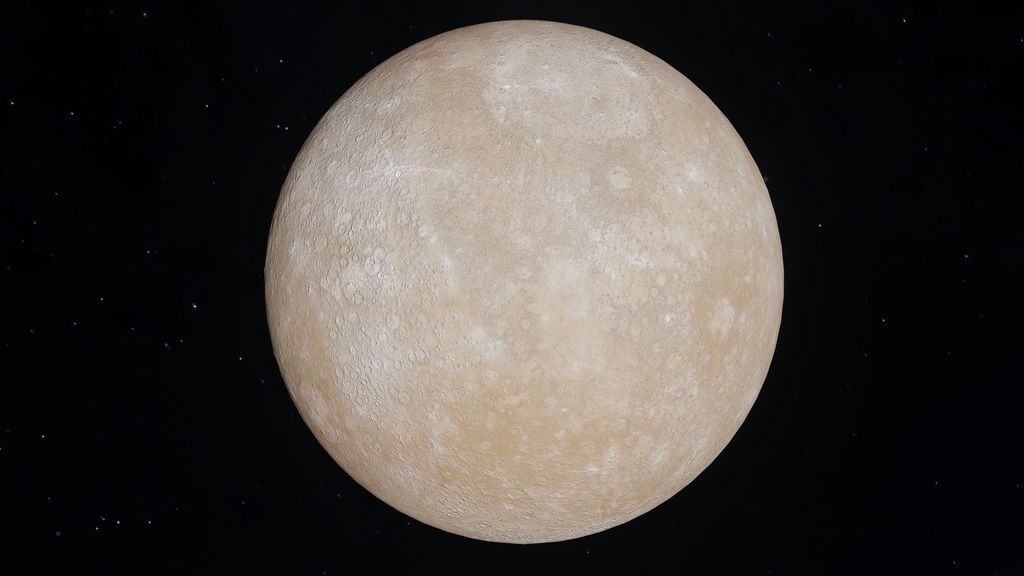
Mercury is a small, iron-rich planet with a large metallic core. Since its formation around 4.5 billion years ago, that interior has gradually cooled, and cooling metal takes up less space.
As the interior contracted, the rocky shell surrounding it had to respond. Sections of the crust were pushed together, producing enormous cliffs called lobate scarps and smaller structures known as wrinkle ridges.
Scientists can measure these features and use them to estimate how much Mercury’s crust has shortened. The problem is that researchers can only count structures that remain visible today.
“Mercury’s surface preserves a record of how the planet has cooled and contracted, but we found that this record is incomplete,” Nishiyama said. The new research suggests the missing evidence could be concentrated in Mercury’s roughest regions.
Mercury’s Roughest Ground May Have Hidden The Evidence
Much of what scientists know about Mercury’s surface came from NASA’s MESSENGER spacecraft, which orbited the planet between 2011 and 2015. Its cameras transformed scientists’ understanding of Mercury, but they could not reliably resolve every small geological feature.
Features smaller than roughly 5 kilometers were difficult to detect consistently. That limitation becomes particularly important on a world that has endured billions of years of asteroid impacts.
Billions Of Years Of Impacts Changed The Surface
Every large impact can scatter debris, fracture existing structures and cover the surrounding landscape with fresh material. A relatively small fault or scarp could therefore become buried or broken apart over time.
The researchers found that contraction features became less common as surface roughness increased. That suggests some of Mercury’s geological history may have been erased from view rather than never existing.
This creates a problem for older estimates because counting only visible scarps and ridges could make the planet appear to have contracted less than it actually did.
The New Estimate Could Be Much Larger

Nishiyama’s team used a global roughness map created from MESSENGER stereo imaging to examine the relationship between terrain roughness and visible crustal shortening. They then estimated how much contraction could be missing from rough regions and incorporated that hidden amount into their calculations.
The previous best estimate placed Mercury’s radial contraction at around 8.3 kilometers. The revised estimate ranges from 6.9 to 11.6 kilometers, equivalent to roughly 4.3 to 7.2 miles.
Across Mercury’s diameter, the upper end of that range corresponds to a reduction of around 23 kilometers, or 14.5 miles. The researchers estimate that earlier calculations may have undercounted the planet’s contraction by roughly 10% to 30%.
For a planet measuring just over 3,030 miles across, that difference is substantial. However, the 14.5-mile figure represents the upper end of the revised range rather than a newly measured amount that scientists have directly observed.
Mercury’s Interior May Be Different Than Expected

A larger amount of contraction could provide clues about Mercury’s interior and how the planet formed. The revised estimate could fit several different explanations, but the study does not establish which one is correct.
“More shrinking means Mercury could have a larger metal core, less light elements like silicon mixed into the metal core, or a higher starting temperature,” Nishiyama said. These are possible explanations for the revised contraction estimate rather than confirmed findings.
Scientists have not directly measured Mercury’s core composition or determined its exact starting temperature. Instead, the new calculation gives researchers another constraint for models describing how the small, iron-heavy planet formed and cooled.
Mercury already stands out because its metallic core is unusually large compared with the planet’s overall size. A greater contraction estimate could therefore help researchers understand why Mercury developed such an unusual internal structure.
Scientists Have Known Mercury Was Shrinking Since 1974
The idea of a contracting Mercury is not new. NASA’s Mariner 10 spacecraft provided an important clue in 1974 when it photographed enormous cliffs stretching across the planet’s surface.
Those scarps suggested that Mercury’s crust had been compressed as its interior cooled. Later observations added another intriguing detail, with small grabens found along scarp crests dated to less than roughly 300 million years old.
For a planet around 4.5 billion years old, those structures are relatively recent. Their presence suggests Mercury’s crust has remained capable of movement long after the planet formed.
BepiColombo Could Test The Theory
The timing of the new research is significant because a much more detailed look at Mercury is approaching. BepiColombo, a joint European and Japanese mission launched in 2018, is scheduled to arrive at Mercury in December 2026, with routine science operations expected to begin in April 2027.
One instrument could be particularly useful for testing the new idea. The BepiColombo Laser Altimeter, known as BELA, is designed to measure Mercury’s surface topography and roughness at finer scales than MESSENGER could manage.
That gives scientists an opportunity to search for the smaller structures that earlier observations may have missed. “New data from BepiColombo will open a door for understanding how Mercury has been shaped up to now,” Nishiyama said.
If the relationship between rough terrain and hidden contraction holds up, BepiColombo could provide direct evidence supporting the team’s calculations. It could also help narrow the unusually wide range in the current estimate.

The Same Problem Could Affect The Moon
The researchers’ finding may have implications beyond Mercury because the underlying problem involves rough surfaces hiding geological structures. The Moon is an obvious comparison because its heavily cratered terrain could create similar difficulties.
The lunar highlands are roughly 40% rougher than Mercury’s plains at the scale examined by the researchers. Yet current measurements put the Moon’s radial contraction at less than a kilometer.
That does not mean scientists have discovered that the Moon is suddenly shrinking by several additional miles. Instead, the Mercury study raises the possibility that rough terrain could cause contraction to be underestimated on other rocky worlds as well.
Mercury’s Shrinkage Is Still An Open Question
The study does not establish one final number for how much Mercury has contracted. Its estimate relies on a statistical relationship between surface roughness and visible faults, meaning some of the missing structures are inferred rather than directly observed.
The researchers describe their correction as a lower bound, so even the revised estimate may not capture the full amount of contraction. Further observations will be needed to determine whether the relationship survives closer examination.
BepiColombo could provide the most important test yet. If its instruments reveal smaller contraction features hiding across Mercury’s rough terrain, scientists may finally get a clearer picture of how much this battered little planet has squeezed itself over billions of years.