
Your cart is currently empty!
A 1,500-Foot Tsunami Hit Alaska. Scientists Warn It Could Happen Again
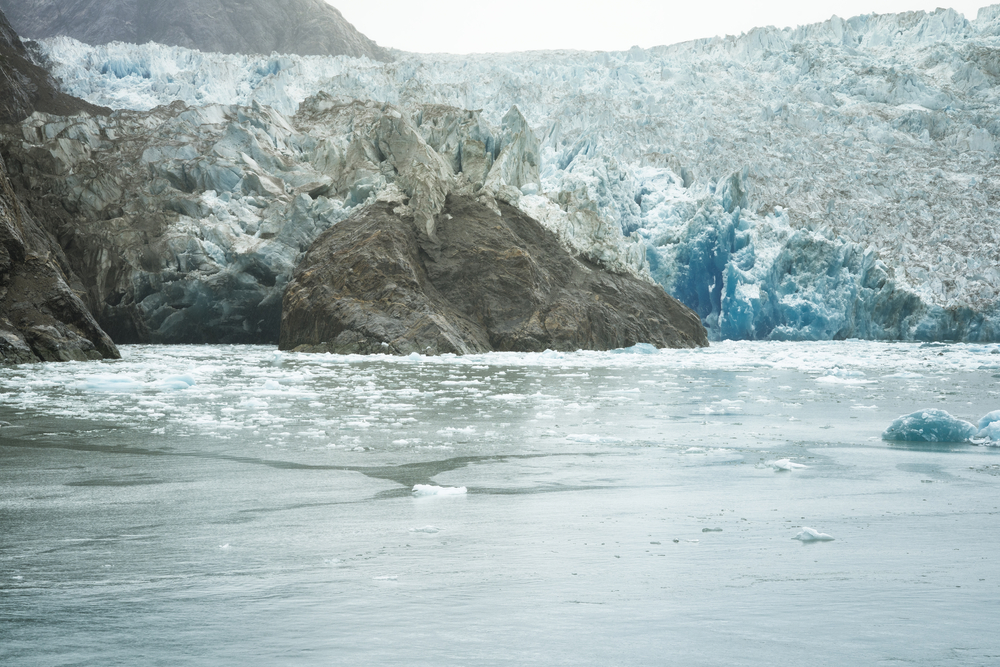
The mountain gave way at 5:26 on a Sunday morning, sending more than 63 million cubic metres of rock crashing into Alaska’s Tracy Arm fjord. The impact forced the water upward with such force that it climbed 481 metres up the opposite mountainside, creating a wave roughly 1,578 feet high. Nobody died, but researchers say the timing may have been the difference between a terrifying warning and a mass-casualty disaster.
Contents
show
Tracy Arm is also a popular cruise destination, meaning thousands of people can be in the area during the summer months. The 2025 collapse happened when the fjord was unusually quiet. Scientists now say similar events can and will happen again, particularly as glaciers retreat and steep mountain slopes lose the support that has helped hold them in place for decades.
👀“The wave, in a remote and uninhabited area, reached a height of nearly 500m, just hours after a cruise ship had visited the fjord” pic.twitter.com/jr0ILK7ZOs
— Prof. Ryan Katz-Rosene (@ryankatzrosene) September 27, 2026
The Wave Was Nearly 1,600 Feet High
The scale of the Tracy Arm tsunami is difficult to grasp. When the mountainside collapsed, the enormous volume of rock slammed into the narrow fjord and displaced the water almost instantly. On the opposite side, the water surged 481 metres up the rock face, reaching roughly 1,578 feet above the fjord. That is around 150 metres higher than the Eiffel Tower, and it makes the event the second-highest tsunami ever measured.
The wave did not simply rise and disappear. It travelled through the narrow fjord, sweeping across the water and leaving a visible mark on the landscape. Kayakers who had been camping on Harbor Island woke to discover that their equipment had been washed away by the wave. The destruction stopped there because the people in the area were extraordinarily fortunate.
University of Calgary geomorphologist Dan Shugar led the reconstruction of the event, which was published in Science in May 2026. The landscape still shows exactly where the water went. Shugar described the “bright landslide scar on the north side of the fjord” and the “bathtub” ring around the fjord where the tsunami flattened forest.
The numbers are what make the event so unsettling. A wave generated by an earthquake is already capable of causing enormous destruction, but Tracy Arm shows what can happen when an entire mountainside suddenly falls into a confined body of water.
Five Hours Could Have Changed Everything
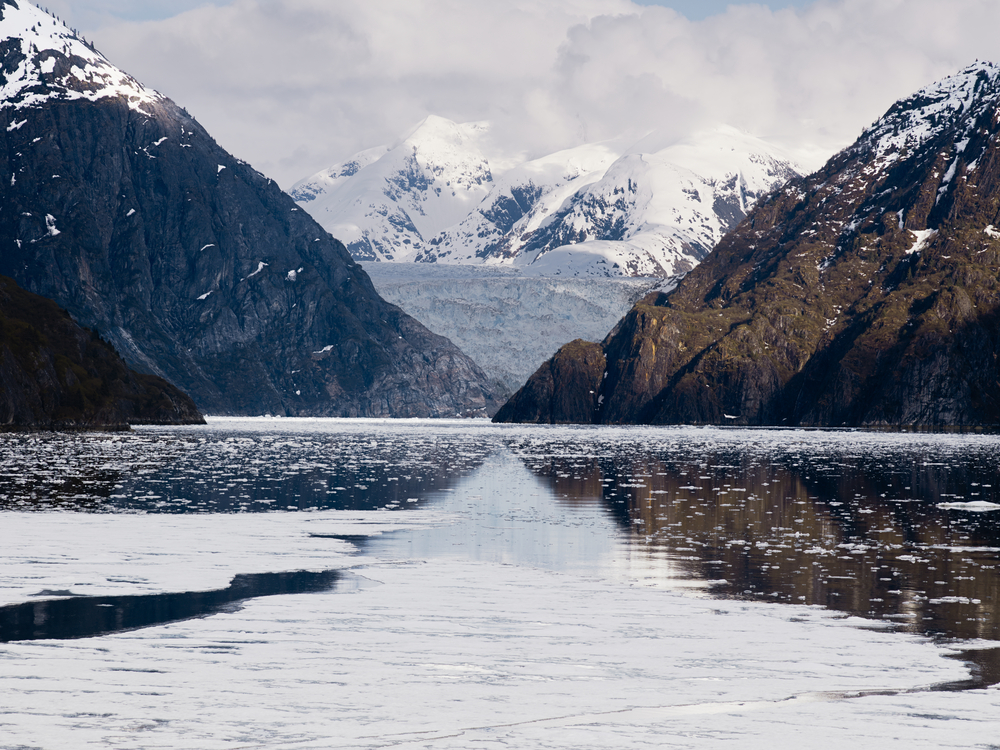
The timing of the collapse may have been the most important detail of the entire event. Tracy Arm can become extremely busy during the summer, with cruise ships carrying thousands of passengers visiting the area. The landslide struck at 5:26 in the morning, when there were no large groups of tourists moving around the fjord.
Dan Shugar said, “We were unbelievably lucky that the [tsunami] occurred with the timing that it did, and not 5 hours later.” He explained that if the slope had failed five or six hours later, at least one ship could have been close to the glacier.
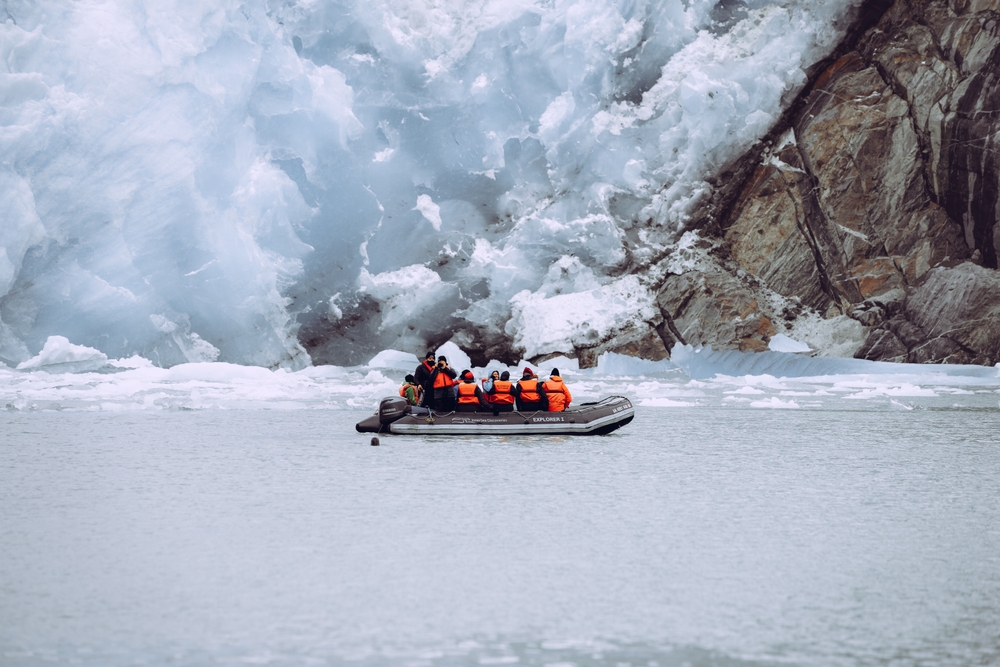
That difference is enormous when the potential wave is hundreds of metres high. Cruise passengers can also be transported ashore in smaller boats to explore the surrounding landscape, putting people directly beside the steep slopes that could be affected by another collapse. Landslide researcher Dave Petley wrote that if a large cruise ship had been nearby under those circumstances, “the consequences would have been catastrophic.”
Tom Robinson, a senior lecturer at the University of Canterbury, reached the same conclusion from a different angle. “We got lucky last year that there wasn’t anyone in the Tracy Arm at the time, but it could have been very different.” Cruise traffic has also increased sharply, rising from around a million passengers a year in 2016 to roughly 1.6 million in 2025.
The Glacier Was Holding The Mountain Up
The reason the landslide happened begins with the glacier below the slope. South Sawyer Glacier had been thinning for decades, and during spring 2025 alone it retreated by about 500 metres. As the ice pulled back, the rock above it lost some of the support it had previously provided.
Dan Shugar compared the relationship between the glacier and the mountainside to the supports of a cathedral. “While the Glacier is in the fjord, it’s supporting those valley walls, like the buttresses on a cathedral,” he said. Once that support disappears, steep rock slopes can become increasingly unstable.
Glaciologist Leigh Stearns pointed to another problem. “Often, we think of glacier retreat as a long and continuous thing, but [it] can trigger sudden catastrophic events.” Steep slopes can be especially sensitive to changes involving retreating glaciers, thawing permafrost and increased water in the soil.
That means a landscape can appear stable for years before suddenly changing. A glacier can retreat gradually, but the mountain above it does not necessarily respond gradually. Once enough support is removed, an enormous amount of rock can move in seconds.
Alaska Is Not The Only Place At Risk
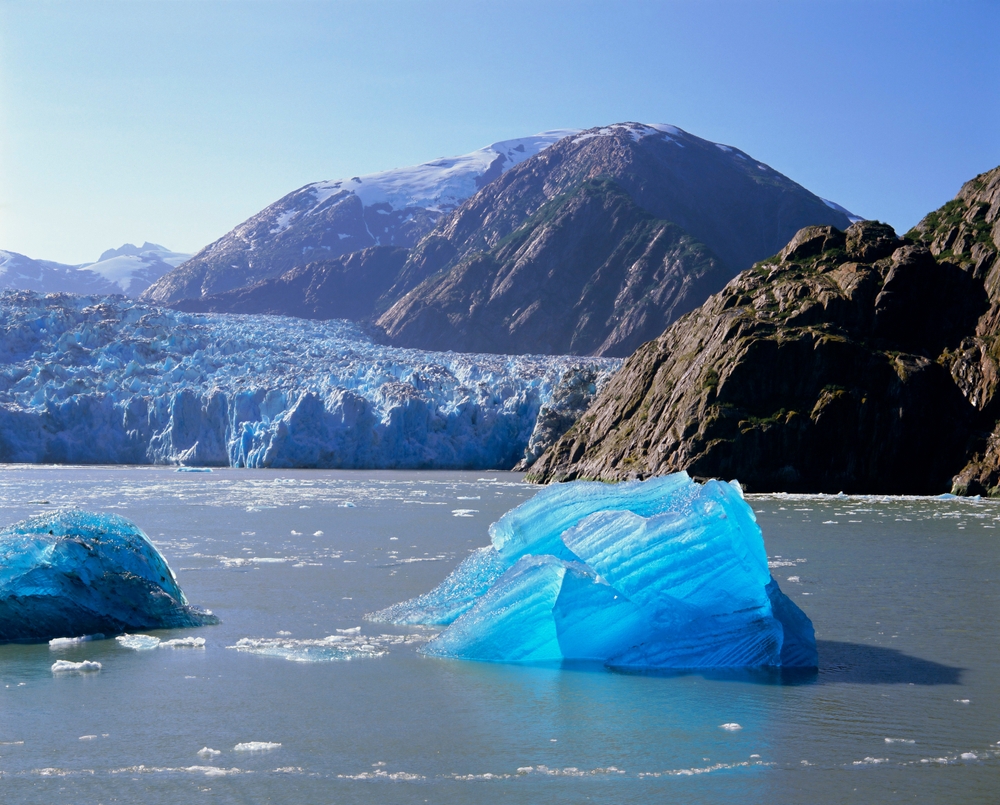
The same combination of retreating ice and unstable mountain slopes exists in other parts of the world. Alaska contains vast areas where glaciers interact directly with steep terrain, while parts of the Rocky Mountains also contain landscapes where ice loss could change slope stability.
Bill McGuire, professor emeritus at University College London, described Tracy Arm as both a warning and a possible preview of what could happen as temperatures rise. “The event isn’t only a sign of the times, but a pointer to the future. It is a threat that is only going to get bigger as the planet gets hotter.”
Patrick Lynett, a civil and environmental engineering professor at the University of Southern California, also expects similar events to occur. “Tracy Arm-type events will continue to happen, seemingly at an increasing rate, in fjords and other water bodies with rapidly retreating glaciers.” Alaska and parts of the Rockies are among the US areas identified as having elevated risk.
There are important uncertainties. Researchers cannot currently say which particular mountainside will collapse next or give a reliable date for such an event. Lynett also cautioned against immediately linking the Tracy Arm collapse directly to warming, saying, “It is not obvious that this is the case, and it will take some time to figure out.” Scientists are still studying how quickly slopes respond after glaciers retreat and lose their supporting effect.
Nepal Shows How Deadly The Same Forces Can Become
The danger became even clearer on August 26, 2026, when a rock and ice avalanche broke loose in Nepal’s Langtang region. The material turned into a massive debris flow containing ice, mud, rock and water, moving down the valley toward the China border.
By the time it reached Gyirong Port, the debris wall stood around 30 metres high. The impact was powerful enough to register on seismographs, with the event later estimated at about magnitude 5.2. At least 1,399 people were confirmed dead and more than 5,200 were missing in the initial reports, with later counts reported as higher.
The underlying process has similarities to what happened in Alaska. Himalayan slopes can depend partly on permafrost, which is ground containing rock, soil and ice that has remained at or below 0°C for many years. When that frozen ground warms, its ability to hold material together can weaken. Glacier retreat can then remove support from below while thawing permafrost reduces stability above.
The difference is that Tracy Arm was largely empty when the mountain collapsed. Nepal’s disaster struck a populated and heavily used area. The contrast shows why the location and timing of these events can matter just as much as the size of the landslide itself.
The Mountain May Have Given Scientists A Warning
There is one detail from Tracy Arm that could prove crucial in the future: the mountain did not fail without warning. Researchers found evidence of substantial seismic activity before the landslide, suggesting that instruments may be able to detect changes before some slopes collapse.
Landslide researcher Dave Petley wrote, “This landslide showed substantial precursory seismic activity, which might represent a route to providing a warning for at least some of these rock slope failures.” That possibility could give authorities time to move people and vessels away from dangerous areas.
There is already evidence that early warning can save lives. When a glacier collapsed in Switzerland, authorities had cleared the valley beforehand because monitoring systems had detected the danger. Nobody died in that collapse because residents had been evacuated before the glacier fell.
Tracy Arm therefore leaves scientists with a very practical challenge. The seismometers detected the mountain moving at 5:26 that morning, but detecting a signal is only useful if someone can interpret it quickly enough to act.
What A Future Warning System Could Watch For
Researchers are still working out exactly how quickly a mountain slope responds after losing the support provided by retreating ice. Dan Shugar said, “I think in the next 5 years or so, we’ll probably have a much better understanding of just how and how quickly slopes respond to that debuttressing.”
That research could eventually help authorities identify the warning signs associated with unstable slopes. The key signals may include:
- Seismic activity: Small movements inside a slope could provide an early indication that the rock is becoming unstable.
- Glacier retreat: Rapid changes in the position and thickness of nearby ice can alter the support provided to mountain walls.
- Permafrost thaw: Warmer ground can weaken frozen material that has helped stabilize steep terrain.
- Increasing water: Changes in soil moisture can add another source of instability to already vulnerable slopes.
- Human exposure: Cruise traffic and tourism can turn an isolated geological event into a major disaster if people are nearby.
None of these factors can currently tell scientists exactly when a specific mountain will collapse. That uncertainty remains one of the biggest challenges facing researchers working in Alaska and other mountainous regions.
The Next Collapse Could Happen When People Are Watching
Tracy Arm was a near miss because the enormous wave arrived before the day’s visitors had filled the fjord. Five hours later, the same mountain collapse could have involved cruise ships, smaller passenger boats and tourists exploring the shoreline.
That is what makes the event so difficult to dismiss as an isolated oddity. The wave itself has already happened, and the landscape still carries the scar. What researchers are trying to determine now is how often similar slopes may be approaching the same tipping point.
There is no US early warning system currently operating specifically for this hazard. But the mountain at Tracy Arm left behind something potentially valuable: evidence that seismic signals may appear before a catastrophic collapse.
The challenge now is turning that signal into time. For a fjord capable of producing a 1,578-foot wave, even a short warning could make the difference between a spectacular geological event and a human disaster.
2025 Alaska landslide, Alaska glaciers, Alaska megatsunami, Alaska tsunami, climate change, giant tsunami, glacial collapse, glacier retreat, landslide tsunami, megatsunami, mountain landslide, natural disasters, Rocky Mountains, seismic warning systems, South Sawyer Glacier, Tracy Arm Alaska, Tracy Arm landslide, tsunami risk, tsunami warning, US tsunami risk