
Your cart is currently empty!
Scientists Turned A Probiotic Into A Tiny Chemotherapy Factory
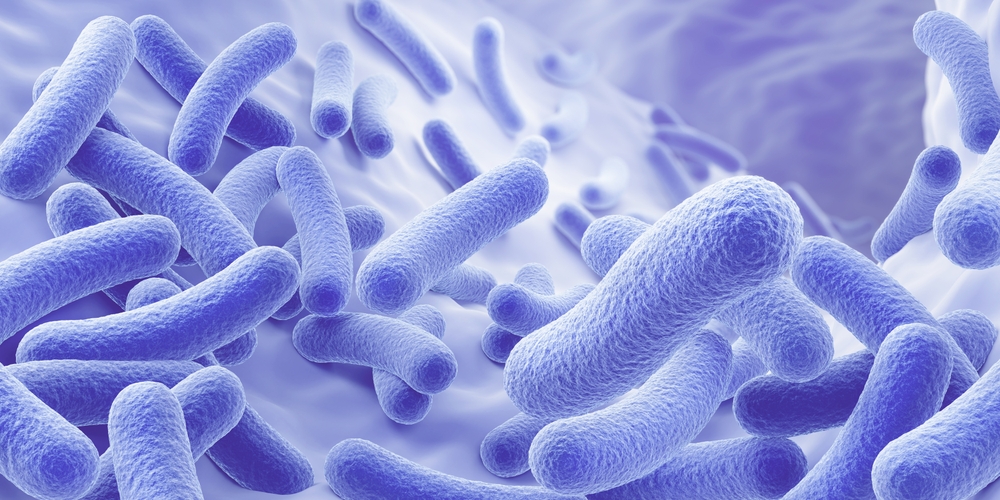
A bacterium commonly used as a probiotic has been genetically redesigned to manufacture chemotherapy inside tumors instead of sending the drug throughout the body. In experiments involving mice with colorectal cancer, the engineered bacteria helped three of seven treated tumors completely regress, while also triggering an immune response that affected cancer beyond the original treatment site.
Contents
show
The result works out to about 43%, but there is a major qualification behind that number. The experiment involved seven tumors in mice, not human patients, so the research represents an early step toward a possible new cancer treatment.
The Cancer Treatment Problem Scientists Wanted To Solve
Chemotherapy can be powerful against cancer, but the drugs travel through the bloodstream and can affect healthy tissue along the way. Depending on the treatment, patients can experience problems including weight loss, appetite changes and weakened immune defenses.
Nicholas Arpaia and colleagues at Columbia University approached the problem from another direction. Rather than trying to make chemotherapy safer throughout the entire body, they looked for a way to manufacture the drug directly where it was needed.
Their candidate was Escherichia coli Nissle 1917, a bacterial strain with a long history of use as a probiotic. The bacterium also has characteristics that can make solid tumors a suitable environment for growth, particularly because some tumor regions contain very little oxygen.
That gave researchers something valuable: a living organism that could establish itself inside a tumor. The next challenge was turning that organism into a controlled drug delivery system.
The Probiotic Was Rebuilt To Make Chemotherapy
The Columbia team engineered the Nissle strain to produce cytosine deaminase, an enzyme that converts 5-fluorocytosine into 5-fluorouracil. The latter is already used as a chemotherapy drug, including in treatments for colorectal cancer.
The key difference was where that conversion happened. Instead of giving the active chemotherapy drug throughout the body, researchers administered the separate compound 5-fluorocytosine and allowed the engineered bacteria to convert it inside the tumor.
There was also an engineering problem to solve. E. coli naturally carries an operon called preTA that can break down 5-fluorouracil, meaning the bacteria could potentially manufacture the chemotherapy drug while simultaneously destroying it.
Researchers deleted preTA from the engineered strain. Five days after the bacteria were introduced into tumors in the mouse experiments, the average bacterial count had reached more than a billion colony-forming units per gram of tumor tissue.
The Bacteria Were Designed To Release An Immune Attack
The researchers added more than chemotherapy to their bacterial system. The engineered strain also carried an IL-15 superagonist and a nanobody designed to block PD-L1, with the aim of stimulating immune cells while interfering with a mechanism tumors use to suppress immune activity.
The bacteria were also given a synchronized lysis circuit. They were programmed to multiply until reaching a particular threshold, after which most of the population would rupture and release its therapeutic cargo into the tumor.
A small number of bacteria survived the process and could multiply again. That created a repeating cycle in which the bacterial population could rebuild itself and release another dose of its payload.
Three Of Seven Tumors Completely Regressed
In a mouse model involving established MC38 colorectal tumors, researchers administered the engineered bacteria followed by the 5-fluorocytosine prodrug. Three of seven treated tumors completely regressed, producing the 43% figure that has drawn attention to the experiment.
The raw number is important because the experiment was small. Three tumors disappearing from a group of seven is a notable laboratory result, but it cannot establish how the treatment would perform across a much larger population.
The researchers also tested the platform in a melanoma model, where extended survival was reported. That finding suggests the technology could potentially have applications beyond colorectal cancer, although further experiments would be needed to establish that.
The Safety Comparison Also Stood Out
Tumor shrinkage is only part of the challenge in cancer treatment. Researchers also need to determine whether a therapy can attack cancer without causing the kind of systemic toxicity associated with conventional chemotherapy.
The study compared the engineered bacterial treatment with conventional 5-fluorouracil delivered through the bloodstream. Mice receiving conventional treatment lost about 7% of their body weight by day 16, while mice receiving the bacterial approach showed no obvious weight loss during the experiment.
Body weight is only a rough laboratory measure and cannot be treated as a human quality-of-life assessment. Still, the difference supports the central idea behind the technology: producing chemotherapy inside the tumor could reduce exposure elsewhere in the body.
One Tumor Was Treated While Another Was Left Alone
Researchers also tested whether the treatment could produce an immune response beyond the tumor where the bacteria were placed. Some mice carried a second tumor on the opposite hind flank, and bacteria were injected into only one of the tumors.
The untreated tumors slowed anyway. Researchers described this as an abscopal effect, which can occur when a localized treatment stimulates an immune response capable of affecting cancer elsewhere in the body.
The source also reports that mice whose tumors had cleared resisted cancer when it was reintroduced 90 days later. If confirmed through further research, that result could point toward immune memory developing after the initial treatment.
The Biggest Hurdle Is Still Human Testing
The results are intriguing, but there is a substantial gap between this experiment and a treatment that could be offered to cancer patients. No human patients have received the therapy described in the study.
The colorectal cancer experiment involved seven tumors in mice, and the tumors were implanted models rather than naturally occurring human cancers. Some experiments also relied on bacteria being injected directly into a tumor, which would not be practical for every cancer location.
The researchers tested intravenous delivery as well, which could be more relevant to future clinical use. However, the team still needs to study how the engineered bacteria behave in models that more closely reproduce the complexity of human cancer.
Human tumors can differ considerably in their genetics, immune environments and physical structures. A treatment that produces tumor regression in an implanted mouse model therefore cannot simply be assumed to produce the same result in people.
A Probiotic Has Become A Tiny Drug Factory
The unusual part of this research is the basic idea behind it. Instead of asking chemotherapy to circulate through the body and reach a tumor, researchers are attempting to send a living system into the tumor and have it manufacture the treatment there.
The bacteria can multiply inside the tumor, produce the active chemotherapy compound and release additional components designed to stimulate the immune system. The synchronized release system is intended to keep that process going rather than delivering everything in one burst.
The researchers describe the platform as “a highly adaptable, targeted, and synergistic approach to overcoming tumor heterogeneity, toxicities, and treatment resistance across a variety of cancer types.” That describes the system’s intended potential, rather than evidence that it has already achieved those goals in humans.
For now, the most defensible takeaway is also the simplest: an engineered probiotic produced a striking result in a small mouse experiment, with three of seven colorectal tumors completely regressing. The next challenge is proving whether the same biological factory can safely find cancer, deliver its payload and activate the immune system in the far more complicated environment of the human body.