
Your cart is currently empty!
The Man Who Turned Antarctic Ice Into A Telescope Just Won The Nobel Prize
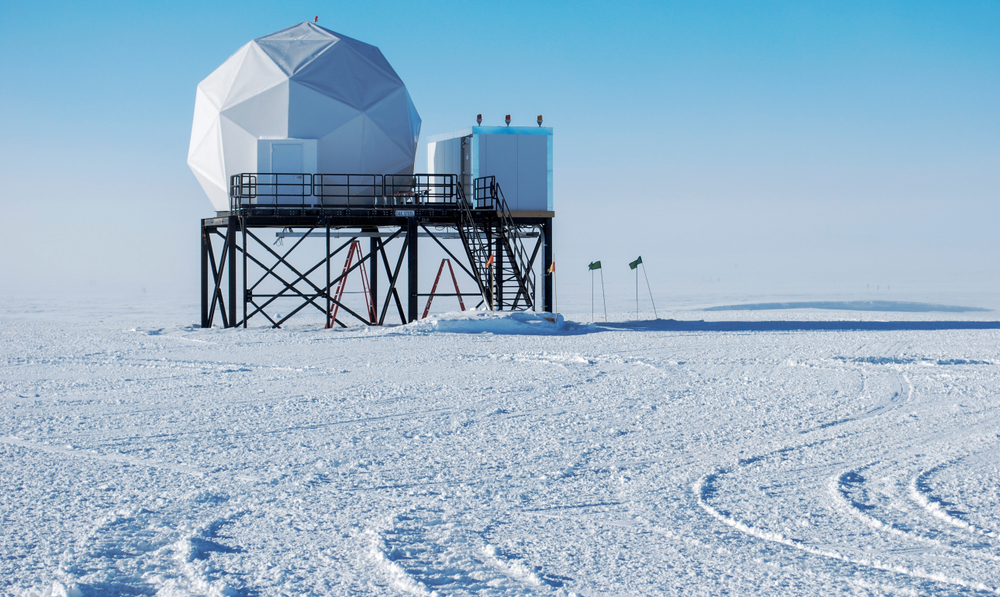
A physicist has just won the 2026 Nobel Prize in Physics for helping build a telescope unlike anything most people have ever seen. Instead of sitting on a mountain or orbiting Earth, this extraordinary observatory is buried deep beneath the frozen landscape of Antarctica, where thousands of sensors wait for tiny flashes caused by particles traveling across the universe.
Contents
show
Those particles are neutrinos, often described as ghost particles because they can pass through ordinary matter with almost no interaction. Around 100 trillion of them pass through the human body every second, yet most go completely unnoticed. Now, Francis Halzen has been recognized for turning these elusive particles into a new way of studying the cosmos.
Nobel winner Francis Halzen said the prize ‘was not a motivation,’ speaking of his IceCube observatory, which uses Antarctic ice to track ‘ghost particles’ called neutrinos https://t.co/gs6bjbhLHu https://t.co/BGdEboBVYy
— Reuters Science News (@ReutersScience) October 6, 2026
Francis Halzen Wins The 2026 Physics Nobel
The 2026 Nobel Prize in Physics was awarded on October 6 to Francis Halzen, a theoretical physicist at the University of Wisconsin-Madison, for his role in developing the IceCube Neutrino Observatory. The massive detector sits beneath the South Pole and was designed to find rare, high-energy neutrinos arriving from deep space. These particles are electrically neutral and nearly massless, allowing them to travel enormous distances without being easily stopped by ordinary matter.
Halzen, who was born in Belgium in 1944, spent much of his career in the American Midwest, but his most famous scientific project ended up thousands of miles away in Antarctica. The idea behind IceCube was developed decades ago, when Halzen realized that the enormous volume of Antarctic ice could potentially serve as a giant detector. The strategy depended on catching extremely faint flashes of light produced when neutrinos occasionally collide with atoms.
The Nobel committee praised the scientific vision behind the project. Mark Pearce, chair of the Nobel Committee for Physics, said Halzen’s “tenacity and scientific vision [have] paved the way for a new kind of astronomy.” That description reflects the unusual nature of the achievement, because IceCube does not simply improve an existing telescope. It allows scientists to investigate the universe using particles that carry information in a fundamentally different way.
The Belgian-American scientist Francis Halzen won the 2026 Nobel Prize in Physics for his work creating an Antarctic observatory of ice to detect high-energy neutrinos, elusive subatomic particles that can reveal otherwise inaccessible information about the cosmos. https://t.co/dADXXGolfF
— BusinessWorld (@bworldph) October 7, 2026
Why These Cosmic Ghost Particles Are So Difficult To Catch
Neutrinos are produced constantly throughout the universe, including through ordinary processes such as nuclear fusion inside the Sun. The particles are so weakly interactive that they can travel through matter without leaving much evidence behind. That is why roughly 100 trillion can pass through a person’s body every second without causing any noticeable effect.
The high-energy neutrinos targeted by IceCube are much rarer and far more interesting to astronomers. They are associated with some of the most violent environments known, including exploding stars and black holes consuming surrounding material. Because the particles can travel vast distances without being easily deflected or absorbed, they can potentially reveal where these extreme cosmic events occurred.
That makes the particles valuable messengers from distant parts of space. Conventional astronomy often depends on light reaching a telescope, but high-energy neutrinos provide another route to investigating violent events across the universe. Scientists can study the particles they detect and work backward to learn more about the distant objects that produced them.
Antarctica Became The Perfect Place For A Giant Detector
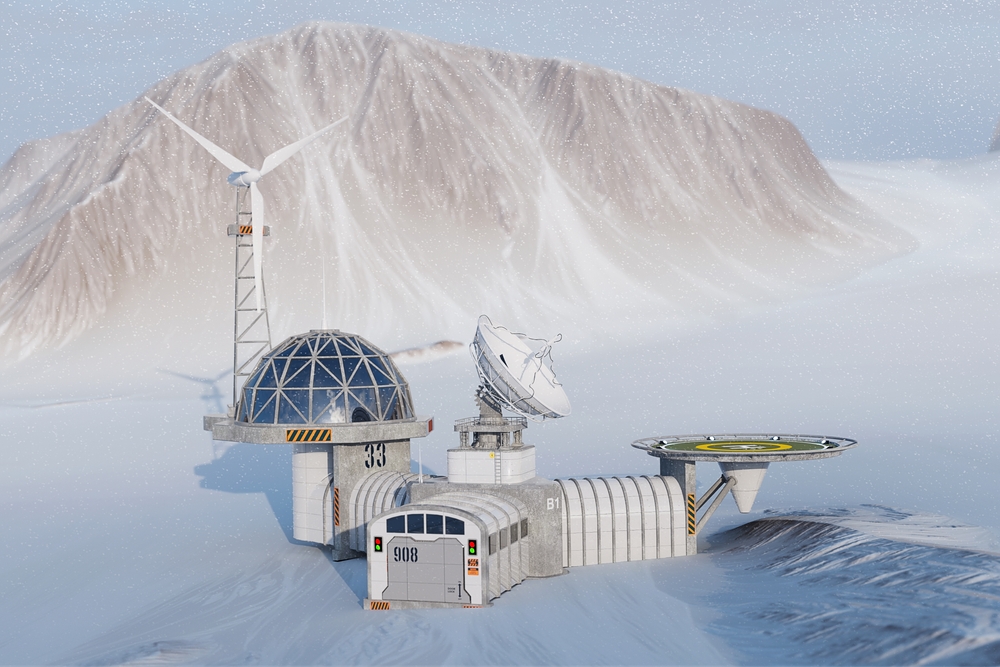
Halzen’s proposal to use Antarctic ice as a neutrino telescope emerged in the 1980s. The choice of location was crucial because scientists needed an enormous, dark and relatively quiet environment where tiny flashes of light could be detected without too much interference. Deep beneath the South Pole, the ice provides conditions that are remarkably well suited to that job.
When a neutrino does interact with an atom, the collision can produce a faint flash of light. IceCube’s sensors are positioned deep below the surface to watch for those flashes. The deeper the detector extends, the more ice is available for scientists to use as a giant volume in which these rare interactions can occur.
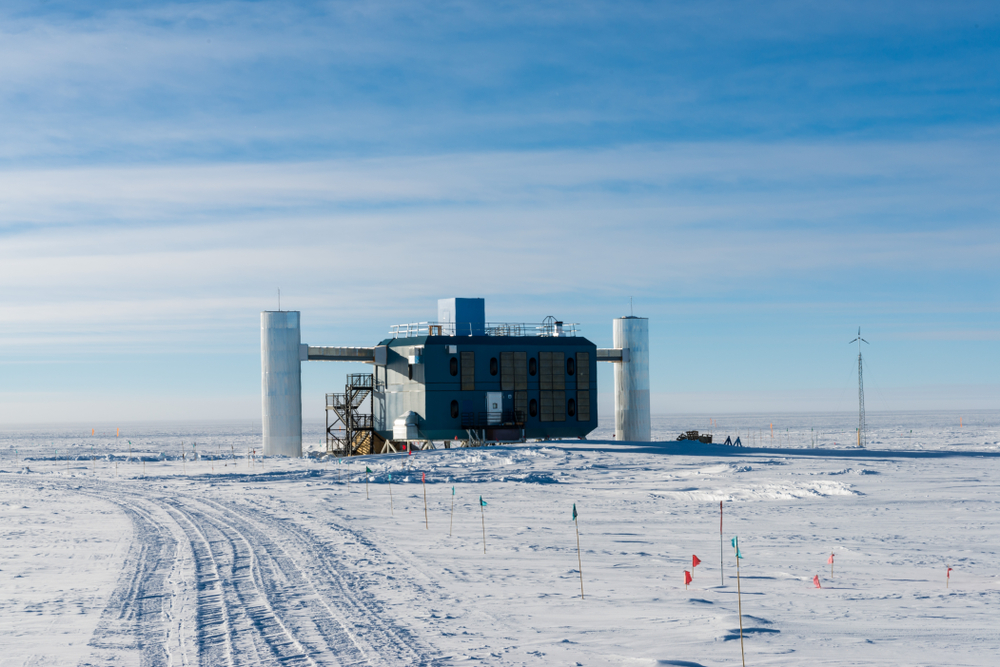
The finished observatory is enormous. Construction was completed in 2011, creating a detector occupying roughly one cubic kilometer of ice. Its 5,160 light sensors are attached to vertical strings that run through 86 boreholes, reaching depths of up to roughly 8,000 feet beneath the Antarctic surface.
IceCube Finally Caught What Scientists Were Looking For
The years of construction and uncertainty eventually paid off. In 2013, the IceCube collaboration reported its first evidence of high-energy neutrinos arriving from beyond the solar system. The observation represented a major moment for the project because it showed that the detector could actually find the rare cosmic particles it had been designed to hunt.
Halzen captured the significance of the discovery at the time, saying, “It is gratifying to finally see what we have been looking for.” He added, “This is the dawn of a new age of astronomy.” The observations helped establish neutrino astronomy as a new field and gave scientists another way to investigate the universe.
The work has continued since then. IceCube has detected neutrinos associated with our Milky Way galaxy and has also investigated neutrinos connected with other galaxies. The detector has therefore evolved from an ambitious experiment buried beneath Antarctic ice into an instrument capable of producing observations that conventional astronomy alone cannot provide.
The Energy Levels Are Almost Hard To Imagine
The neutrino hunt has also produced extraordinary measurements. In 2023, an observatory in the Mediterranean Sea off Sicily detected a neutrino with an energy of 220 million billion electron volts, setting a record for the highest-energy neutrino ever detected.
The discovery illustrates why scientists remain interested in these particles. High-energy neutrinos can arrive carrying information from some of the most extreme environments in existence, potentially allowing researchers to investigate cosmic events that are otherwise difficult to study directly.
Building The Observatory Required A Huge Scientific Effort
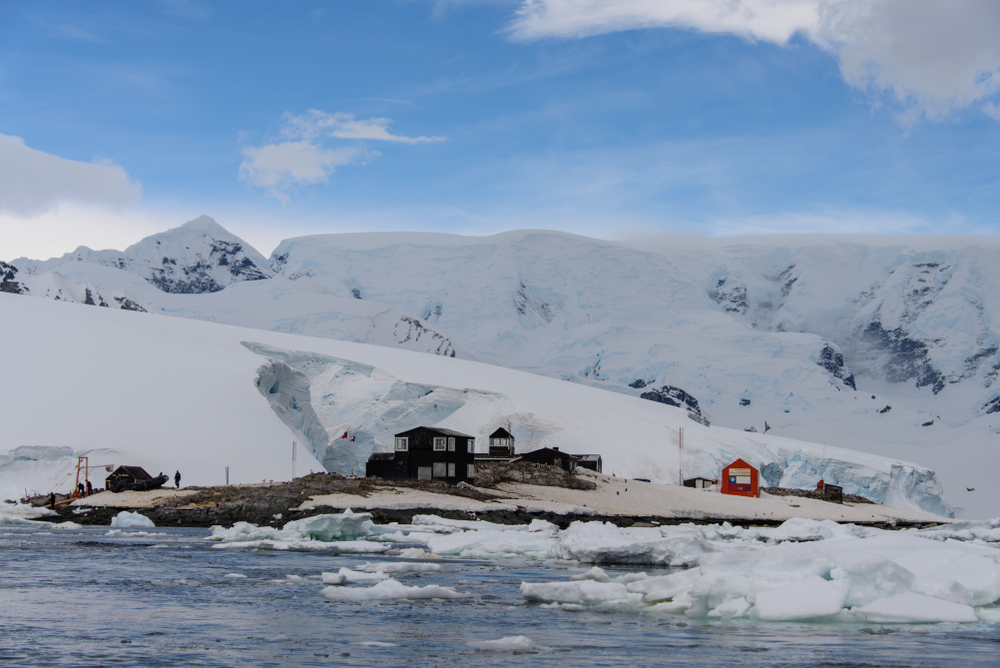
IceCube may have started with Halzen’s vision, but turning that idea into a functioning observatory required an enormous international effort. Scientists had to drill deep into Antarctic ice, install thousands of sensors and create the infrastructure needed to operate a sophisticated particle detector in one of the most remote environments on Earth.
The observatory’s design can be understood through a few key elements:
- Deep Antarctic ice: The ice provides an enormous detection volume while shielding the sensors from many forms of interference.
- 5,160 light sensors: These instruments watch for the tiny flashes produced by neutrino interactions.
- 86 boreholes: The sensor strings are distributed through these deep holes across the detector.
- Rare particle collisions: Scientists wait for neutrinos to interact with atoms and produce detectable signals.
- Cosmic tracing: Researchers analyze those signals to investigate where the high-energy particles came from.
The collaboration included about 450 scientists from roughly 60 institutions as of January 2025. That scale helps explain why the Nobel recognition is unusual. The project involved hundreds of people, yet the prize went to Halzen alone because of the central role his original scientific vision played in creating the observatory.
Halzen Says He Wasn’t Sure The Idea Would Work
The Nobel recognition comes decades after Halzen first began pushing the idea of using Antarctic ice to detect neutrinos. At the time, the concept required scientists to commit to a massive project without knowing whether the faint signals they were looking for could actually be measured reliably.
During a livestream of the Nobel announcement, Halzen reflected on those early uncertainties. “When we started this project, everybody realized this was maybe a good idea but very few thought it would work, including myself,” he said. He described the effort as an adventure where success was never guaranteed.
That uncertainty makes the eventual result even more striking. The project went from an ambitious proposal involving an unusual use of Antarctic ice to a functioning observatory that helped establish an entirely new field of astronomy. What once looked like a risky experiment has now become one of the world’s most unusual windows into deep space.
The Next Version Could Be Eight Times Larger
IceCube is still searching for neutrinos, and scientists already have plans to make the detector considerably larger. Researchers are proposing an expansion that would increase the observatory to about eight cubic kilometers of South Pole ice.
A larger detector would give scientists an even greater volume in which to search for rare neutrino interactions. More detected particles could help researchers identify cosmic sources and better understand the extreme environments responsible for producing the highest-energy neutrinos.
The expansion also shows that the Nobel Prize is unlikely to be the final chapter of the project. The observatory continues to operate, while scientists work toward making the unusual Antarctic telescope even more capable.
A Telescope With No Mirror Is Now Studying The Universe
There is something almost bizarre about what IceCube has achieved. When most people picture a telescope, they imagine a giant mirror or lens pointed toward the sky. IceCube does not work that way at all. Its observatory is buried beneath Antarctic ice, where thousands of sensors wait for fleeting flashes created by particles that have traveled through space.
Those particles can cross enormous distances while barely interacting with anything in their path. That means they can carry clues about violent cosmic environments that scientists cannot fully understand through ordinary light alone.
Francis Halzen’s Nobel Prize recognizes the idea that made this possible. A massive detector hidden beneath the South Pole has become a new kind of telescope, and its observations are giving scientists another way to see the universe.
The strangest part may be that the telescope was there all along. Scientists simply had to realize that the ice could be used to look for what could not be seen.