
Your cart is currently empty!
Nearly 12000 Viruses Found Beneath the Pacific and Most Were Unknown to Science
Scientists exploring one of the Pacific Ocean’s most remote regions have uncovered thousands of viruses that science has never documented before. Their discovery is raising fresh questions about what could happen if industrial mining begins disturbing this largely unexplored underwater ecosystem.
Contents
show
Researchers identified 11,742 distinct viruses in seabed sediments from the Clarion-Clipperton Zone, a vast stretch of the Pacific Ocean packed with valuable mineral deposits. Of those, 11,662 were entirely new to science, revealing just how much remains hidden beneath the ocean floor.
The discovery is particularly striking because the same region is attracting growing interest from companies hoping to extract metals used in electric vehicle batteries and other technologies. Scientists now have a clearer picture of the microscopic life that could be affected before commercial mining gets underway.
Scientists Found Nearly 12,000 Viruses in Deep-Sea Sediments
The research team from Chongqing University in China examined more than 60 sediment samples collected from the Clarion-Clipperton Zone by the China Ocean Mineral Resources R&D Association. Their analysis uncovered an extraordinary variety of viruses living in an environment defined by darkness, scarce nutrients and elevated concentrations of heavy metals.
According to the researchers, more than 99% of the viral clusters they identified were absent from existing reference databases. Genetic comparisons also revealed that only around 4% of the viruses’ protein clusters matched those recorded in global databases, highlighting how different these communities appear to be from those already documented elsewhere.
The findings suggest that the deep seabed supports viral communities that remain largely unfamiliar to scientists.
Although viruses are often associated with disease, the newly identified organisms are part of a much larger biological network that helps sustain life in the deep ocean.
In their paper published in Nature Communications, the researchers wrote, “Protein-sharing network and phylogenetic analyses showed extensive benthic viral diversity, with over 99 percent of viral clusters not represented in current reference databases.” The results provide a substantial new collection of genetic information that scientists can use to investigate these previously overlooked communities.
The research team examined sediment samples collected during expeditions to the region, including material gathered in 2023 and 2024, according to the supplied study coverage. By extracting genetic material and comparing it with existing datasets, researchers were able to identify viruses that had escaped previous scientific documentation.
The Pacific Region Is Packed With Valuable Metal Deposits
The Clarion-Clipperton Zone lies between Mexico and Hawaii, extending across a vast area of the Pacific seabed. Parts of the region reach depths of around 6,000 meters, or approximately 19,700 feet, where sunlight never reaches and conditions differ dramatically from those near the ocean’s surface.
Scattered across the seabed are millions of potato-sized rocks known as polymetallic nodules. These mineral-rich formations contain metals including cobalt, nickel and manganese, making them attractive targets for companies interested in deep-sea mining.
The nodules develop gradually as metals accumulate around a central nucleus, which may be a tiny fragment of shell, rock or another material. Some grow extremely slowly, with layers building up over geological timescales rather than at a rate that would allow rapid natural replacement.
Why Companies Want These Underwater Rocks
Polymetallic nodules have attracted attention as demand grows for materials used in batteries, electronics and other industrial applications. Electric vehicles are one reason interest in these resources has increased, with manufacturers and governments looking for supplies of metals needed for modern energy technologies.
Supporters of deep-sea mining view the nodules as a potential source of valuable raw materials. However, the biological communities living around these formations remain incompletely understood, creating uncertainty about the environmental consequences of removing them.
The International Seabed Authority has granted 17 exploration contracts in the Clarion-Clipperton Zone, including five held by China. These contracts permit exploration activities and should not be confused with authorisation to begin commercial mining.
That distinction matters because scientists are still working to establish what lives in the region before large-scale extraction potentially changes it. The newly discovered viruses provide another reason to investigate the seabed carefully before making decisions about industrial activity.
These Viruses Help Keep the Deep-Sea Ecosystem Functioning
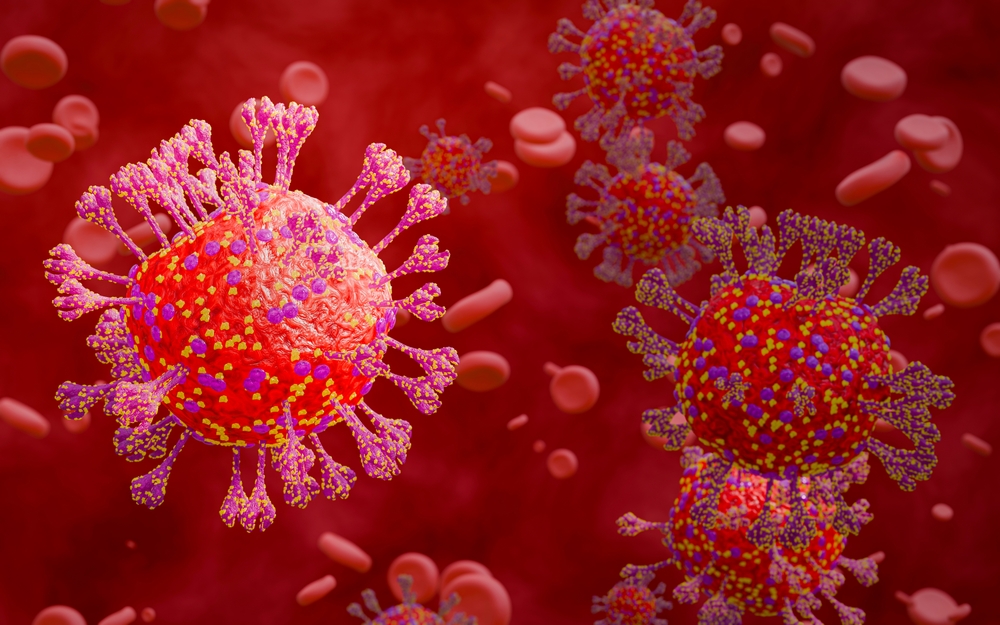
The newly identified viruses may be tiny, but their influence could extend across some of the ocean’s most important biological processes. Many appear to infect prokaryotes, a group of single-celled organisms that includes bacteria and archaea.
These microbes help cycle essential elements such as carbon, nitrogen, phosphorus and sulfur through the environment. Such processes support the movement and reuse of nutrients within ecosystems, including those found in the deep-sea sediments surrounding polymetallic nodules.
Viruses can influence these processes by infecting microbial hosts and changing how they function. When infections cause host cells to break apart, nutrients can be released into the surrounding environment and become available to other organisms.
Their effects can also extend to the genes carried by their hosts. Some viruses contain auxiliary metabolic genes, which may influence how infected microbes process nutrients and respond to the demanding conditions of their habitat.
Some Viruses May Help Microbes Cope With Toxic Metals
The seabed environment presents a difficult combination of challenges for microbial life. Nutrients are limited, sunlight is absent and metal concentrations can place stress on organisms that must survive under these conditions.
Researchers found evidence suggesting that some viruses carry genes capable of influencing the metabolism and survival of their hosts during infection. Viral gene exchange may also help microbes adapt to metal-related stress, although the precise effects of individual viruses still require further investigation.
The study authors explained, “By infecting key functional microbes and encoding auxiliary metabolic genes, viruses may modulate host metabolism and survival during infection, with potential implications for biogeochemical processes in polymetallic nodule field sediments.” Their findings suggest that viruses could influence how microbial communities function in this unusual habitat.
The discovery does not mean every newly identified virus performs a beneficial role. Rather, it shows that viral communities are connected to microbial activity in ways scientists need to understand before assessing what environmental disturbance could mean for the ecosystem.
Deep-Sea Mining Could Disrupt More Than the Seabed
The possibility of mining in the Clarion-Clipperton Zone raises concerns that extend beyond the physical removal of mineral deposits. Mining equipment operating on the ocean floor could disturb sediment and send plumes of particles into the surrounding water, changing conditions for organisms living nearby.
As suspended material settles, it could cover parts of the seabed and alter habitats used by microbes and other organisms. The scale and duration of these effects would depend on the location, intensity and nature of the disturbance, as well as the ability of affected communities to recover.
Such changes could also affect microbial populations that viruses depend on. If important host populations decline or become displaced, the viral networks associated with them could change, potentially influencing biological processes that operate within the sediment.
Possible consequences include disruptions to nutrient cycling and other functions that help maintain the ecosystem. However, researchers have not established exactly how commercial mining would affect the newly discovered viral communities, and the findings should not be treated as proof that these organisms will disappear.
The Effects Could Persist for Decades

The concern is not limited to the immediate area where mining equipment operates. Sediment disturbance can have lasting effects, and previous long-term disturbance experiments in nodule-field environments have indicated that some impacts may persist for decades.
The researchers noted in their paper, “Mining activities will induce physical disturbance, resuspension, and redeposition of surface sediments, and long-term disturbance experiments have shown that the effects of such disturbance on nodule-field sediments can persist for decades.” This raises questions about whether biological communities could return to their previous condition after mining-related disruption.
The researchers also discussed the possibility that viral populations and functional genes shared between deeper and surface sediments could provide a source for partial recovery. Such connections might help some communities reassemble after disturbance, but the extent of any recovery remains uncertain.
The distinction is important because ecosystems can respond differently to the same physical disruption. Scientists need more evidence to determine which viral communities are most vulnerable, which functions might be affected and whether recovery would restore the original ecological balance.
The Discovery Is Not a Warning About Human Infection
The word “virus” can understandably trigger concerns about infectious diseases, but the findings do not suggest that these deep-sea organisms pose a significant threat to people. Most of the viruses identified belong to the class Caudoviricetes, which includes tailed viruses that infect bacteria.
These viruses depend on microbial hosts rather than behaving like familiar human pathogens. Their ecological role is therefore central to the discovery, as scientists investigate how they regulate microbial populations and influence nutrient availability.
The findings should not be interpreted as evidence of a new human health threat. Instead, they reveal how much of the ocean’s microscopic biodiversity remains undocumented, even in regions that have already attracted extensive scientific and commercial attention.
The research also demonstrates why classifying viruses solely by their association with disease can obscure their environmental importance. In deep-sea sediments, viruses are part of a network of interactions involving microbes, nutrients and the chemical conditions that shape life.
Understanding those relationships could help researchers determine how the ecosystem responds to changes in its physical surroundings. It also provides a clearer basis for distinguishing established scientific findings from concerns that still need testing.
Scientists Now Have a Baseline Before Commercial Mining
The research provides a reference point for understanding the viral communities currently found in the Clarion-Clipperton Zone. This baseline could help scientists assess future changes if mining activities proceed, including whether particular populations become less common after sediment disturbance.
Without information about the organisms already present, it would be difficult to determine whether later changes reflected natural variation or the effects of industrial activity. Documenting the existing communities gives researchers a starting point for comparing observations collected in the future.
The study also creates opportunities for further research into the relationships between viruses, their microbial hosts and the chemical processes taking place within mineral-rich sediments. Genetic information can help scientists identify possible functions, although additional work is needed to confirm what individual viruses do in their natural environment.
Several major questions remain unanswered, including which viruses perform the most important ecological functions and how sensitive their communities are to sediment disturbance. Researchers also need to establish whether surviving viral populations could help rebuild disrupted communities and what changes to microbial activity might mean for the wider ecosystem.
Answering these questions will require further investigation, particularly because identifying viral genetic material does not automatically reveal every function those viruses perform. The current findings establish an important starting point, but they cannot yet predict the full ecological consequences of commercial extraction.
A Hidden Pacific Ecosystem Is Facing an Uncertain Future
The Clarion-Clipperton Zone illustrates a difficult challenge facing deep-sea exploration. Its mineral deposits could become valuable resources, yet the surrounding environment contains biological communities that remain poorly understood and may be sensitive to physical disturbance.
The discovery of nearly 12,000 distinct viruses adds another layer to that uncertainty. These organisms may help sustain microbial processes that researchers are only beginning to map, and some of their ecological roles could be difficult to restore if their communities are heavily disrupted.
For now, the study does not prove that deep-sea mining will destroy these viral networks. It shows that the potential consequences deserve serious investigation before commercial extraction moves forward, particularly when the baseline knowledge of the ecosystem is still developing.
Thousands of newly documented viruses have given scientists a clearer view of the Pacific seabed. The challenge now is to understand the communities they belong to before industrial activity changes an environment whose smallest inhabitants may help keep it functioning.