
Your cart is currently empty!
Scientists Discover Possible Dinosaur Blood Cells Preserved for 115 Million Years Inside Fossil
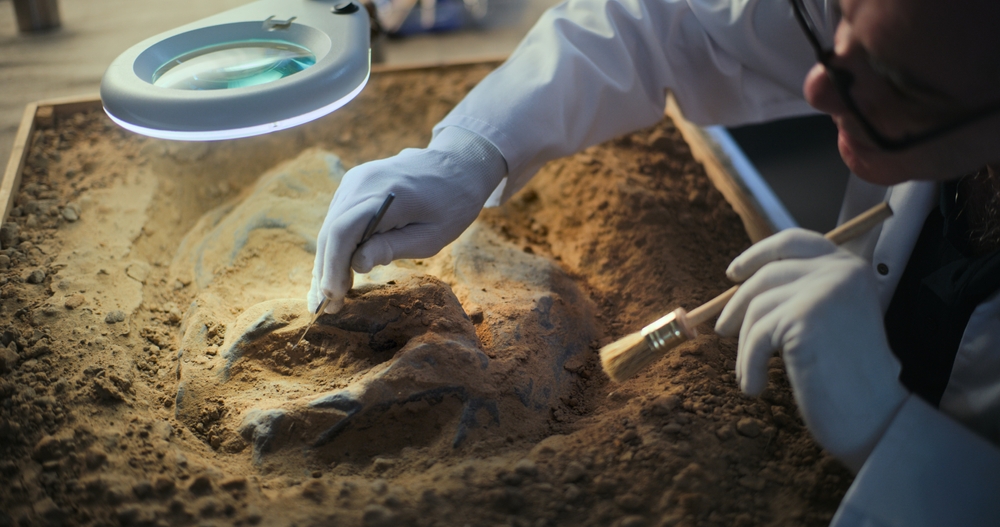
Scientists have found something inside a dinosaur fossil that could change how researchers investigate prehistoric life. Hidden inside a 115-million-year-old leg bone were microscopic structures resembling red blood cells, alongside chemical evidence associated with blood. The discovery has attracted attention because soft tissues rarely survive the fossilisation process, particularly over such enormous periods of time.
Contents
show
The fossil belonged to a small theropod dinosaur called Aratasaurus museunacionali, which lived in Brazil approximately 115 million years ago. Researchers examining the specimen discovered unusual structures inside its bone tissue, prompting a detailed investigation into their possible biological origins. Their findings suggest that ancient blood-related structures may have survived through an unusual combination of geological and chemical processes.
Scientists Discover Something Extraordinary Inside A Dinosaur Bone
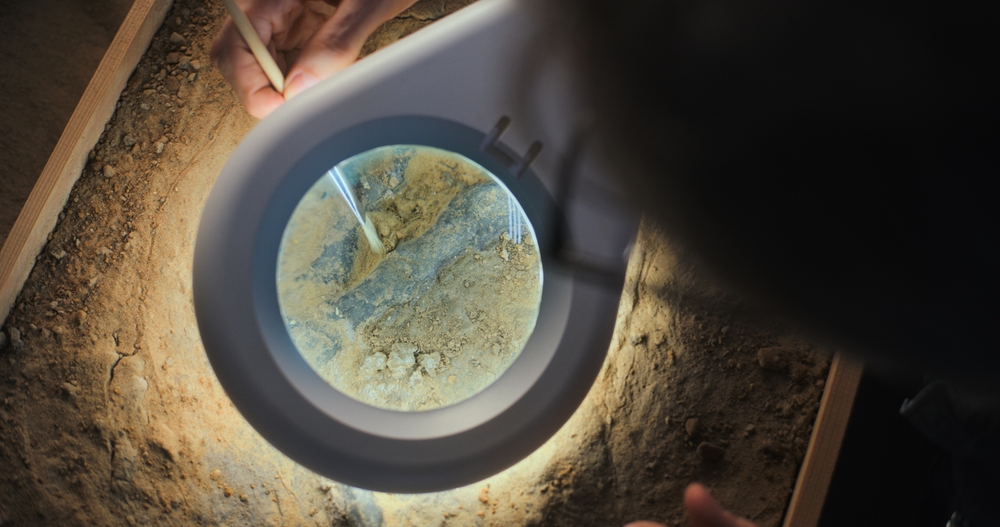
The discovery began with a fossil recovered from a mine in Brazil in 2008. The specimen contained bones from the dinosaur’s right leg, which researchers later examined using advanced microscopic and chemical techniques. During their investigation, they identified tiny ellipsoidal structures inside fossilised vascular canals, the channels that once carried blood through the dinosaur’s bones. Their shape, size and location raised the possibility that these structures were remnants of red blood cells.
However, identifying something that resembles a blood cell does not automatically establish that it came from an ancient animal. Microorganisms and mineral deposits can develop inside fossils over millions of years, sometimes creating structures that resemble biological material. Researchers therefore needed to investigate whether the microscopic formations genuinely originated from the dinosaur or appeared after its death.
Kliti Grice, an organic geochemist at Curtin University, explained that visual similarities alone were insufficient to establish the structures’ identity. “Something that looks like a blood cell under a microscope is interesting, but morphology by itself isn’t enough to establish its biological origin,” she said. The research team therefore combined microscopic observations with chemical testing to establish a stronger scientific basis for their interpretation.
Grice explained that combining independent evidence made the findings considerably more convincing than relying on appearances alone. The researchers wanted to determine whether the structures contained chemical signatures associated with blood cells while also ruling out alternative explanations. Their investigation eventually identified several findings that supported the possibility that the fossil contained preserved dinosaur blood-cell structures.
Why Finding Dinosaur Blood Is So Difficult
Dinosaur bones have survived for millions of years, but the same cannot usually be said about the soft tissues that once surrounded them. Blood cells are particularly delicate biological structures that normally begin breaking down soon after an animal dies. Bacteria, environmental conditions and natural chemical processes contribute to their deterioration, making their preservation over geological timescales exceptionally difficult.
Scientists have previously reported possible proteins and cellular structures inside dinosaur fossils. However, some of those discoveries have faced questions about contamination and whether the material genuinely belonged to the original animal. Fossils remain exposed to microorganisms and environmental changes throughout the preservation process, meaning researchers must carefully distinguish ancient biological material from anything introduced later.
The Brazilian specimen offered an opportunity to investigate these questions using several complementary techniques. Researchers examined the microscopic structures alongside the surrounding bone and rock, looking for chemical differences that could help establish their origins. This approach allowed them to investigate the fossil at several levels rather than relying on one unusual observation.
The findings are particularly interesting because they suggest that fossilised bones may contain biological information that conventional examinations cannot easily reveal. Researchers have traditionally focused on the shape, structure and physical characteristics of dinosaur remains. Modern chemical and microscopic analysis could help uncover additional evidence about the tissues and biological processes that existed inside these prehistoric animals.
Researchers Had To Rule Out Several Possible Explanations
Before connecting the structures to dinosaur blood, scientists investigated whether microorganisms could have created them after the animal died. Fungi and other microbes sometimes colonise bones before fossilisation is complete, potentially leaving behind microscopic formations that resemble cells. If the structures originated from microbial activity, researchers expected to find additional evidence supporting that explanation.
The team therefore examined the fossil for several indicators of microbial contamination, including:
- Filaments: Thread-like structures associated with certain microorganisms.
- Spores: Reproductive structures that could indicate fungal activity.
- Biofilms: Layers of microbial material that can develop on surfaces.
- Other microbial formations: Additional microscopic evidence suggesting that organisms colonised the fossil after death.
Researchers reported finding none of these expected indicators. They also investigated whether mineral deposits or sedimentary grains could have created the unusual shapes. Their geochemical analysis revealed no traces of pyrite mineralisation or sedimentary material that could adequately explain the structures.
Eliminating these possible explanations strengthened the researchers’ interpretation, although it did not establish absolute certainty. The investigation required evidence that could connect the structures directly to ancient biological material. This led the team to examine the chemical composition of the fossil, where they discovered another important clue associated with blood.
Chemical Analysis Revealed A Molecule Associated With Blood
One of the most significant findings involved heme B, a molecule associated with the function of blood cells. Heme plays an important role in oxygen transport because it forms part of haemoglobin, the protein responsible for carrying oxygen through the bloodstream. Researchers detected heme B in the fossil extract using high-performance liquid chromatography-mass spectrometry.
The surrounding rock displayed a different molecular signature, which appeared to have been produced by photosynthetic microbes. This difference provided another way to distinguish the chemical material inside the fossil from substances present in its surrounding environment. Researchers considered this particularly useful because contamination from the surrounding rock could otherwise complicate the interpretation.
The team also conducted elemental mapping to investigate the distribution of different chemical elements throughout the fossil. The cell-like structures showed correlations with iron, carbon and nitrogen, which are potential constituents of heme. Meanwhile, the rest of the bone contained phosphorus, calcium, fluorine and carbon.
Together, these results provided several independent lines of evidence supporting the possibility that the structures represented fossilised red blood cells. The researchers’ interpretation relied on the combination of microscopic appearance, chemical signatures and elemental composition. Their findings were described in research published in the journal Proceedings of the National Academy of Sciences.
The Dinosaur Fossil Is Around 115 Million Years Old
The age of the Brazilian specimen makes the discovery particularly significant. At approximately 115 million years old, the fossil represents the oldest known example of possible dinosaur blood cells described in the research. Previous reported discoveries of similar structures dated back approximately 80 million years at most, making this specimen substantially older.
The dinosaur itself belonged to a group of theropods, a group of mostly meat-eating dinosaurs that included some of the most recognisable prehistoric predators. Aratasaurus museunacionali was relatively small compared with some of the enormous theropods that dominated popular dinosaur imagery. Its fossil has now attracted attention for what researchers believe may have survived inside its leg bone.
The findings could also influence how scientists examine other dinosaur specimens. Museums and universities around the world hold extensive fossil collections, including specimens collected decades ago. Many were originally studied for their anatomical features, meaning their microscopic and chemical characteristics may never have received the same attention.
Researchers now have another reason to revisit these collections using modern analytical methods. Some fossils that appear relatively ordinary on the outside could potentially contain microscopic evidence of ancient biological structures. The Brazilian discovery provides an example of how much information may remain hidden inside specimens that have already been studied.
Scientists Explain How The Blood-Related Structures Survived
The research team believes the geological environment surrounding the dinosaur played an important role in preserving the delicate structures. The fossil was preserved in a shallow-water setting containing a microbial mat, where oxygen levels were extremely low. These conditions may have helped slow the processes responsible for destroying biological material after death.
Researchers also suggested that manganese mineralisation could have contributed to stabilising or replicating the original structures during fossilisation. This process may have created a mineralised record of biological material that would otherwise have disappeared rapidly. The explanation offers a possible reason why structures resembling blood cells survived for such an extraordinary period.
Grice cautioned against imagining that the original cells remained completely unchanged throughout those millions of years. She explained that the original biological structures likely interacted with their surrounding geological environment, creating conditions that allowed some of their features to persist. This distinction is important because the researchers are describing possible fossilised biological structures rather than perfectly preserved, untouched dinosaur blood.
The proposed preservation process could also help scientists understand why some fossils retain delicate biological evidence while others preserve little beyond bones and teeth. Geological conditions vary considerably between fossil sites, influencing how quickly organic material breaks down and which chemical processes take place. Understanding those differences could help researchers identify other specimens worth examining.
Researchers Want To Examine More Dinosaur Fossils
Despite the findings, the research team has stressed that further investigation is necessary. A single fossil cannot establish whether similar structures exist across different dinosaur species or geological environments. Scientists must reproduce the findings through additional specimens and independent investigations before drawing broader conclusions about ancient blood-cell preservation.
Grice identified replication as the immediate priority. The researchers want to examine fossils from different geological settings and additional branches of the dinosaur family tree. They also plan to use complementary microscopic, chemical and molecular techniques to investigate whether similar biological signals can be identified independently.
If other specimens produce comparable results, scientists could begin investigating larger questions about how ancient tissues survived fossilisation. Researchers may also gain new opportunities to examine aspects of dinosaur physiology that were previously difficult to investigate. However, those possibilities depend on whether future studies can reproduce the findings.
The discovery has also highlighted the potential value of existing museum collections. Thousands of fossils have already been recovered and catalogued, with many remaining available for further scientific examination. Some specimens collected decades ago could now offer new information through analytical techniques that were unavailable when they were first discovered.
Forgotten Museum Specimens Could Hold More Dinosaur Secrets
One particularly interesting possibility is that the next major discovery may already be sitting inside a museum or university collection. Researchers do not necessarily need to uncover an entirely new dinosaur fossil to find additional evidence of prehistoric biology. Existing specimens could contain microscopic and chemical information that has simply never been investigated.
Grice explained that she was particularly excited by the possibility of revisiting fossils already held in scientific collections. Specimens originally collected for anatomical research may also contain molecular, mineralogical, isotopic and microscopic information that researchers never considered examining at the time.
This possibility could change how scientists approach fossil research. Instead of focusing exclusively on newly discovered specimens, researchers may begin examining older collections for evidence of preserved biological material. Modern laboratory techniques could reveal details that were impossible to identify using earlier methods.
The study does not establish that intact dinosaur blood has survived for 115 million years. However, the evidence suggests that microscopic structures associated with ancient blood cells may have been preserved through unusual geological processes. Somewhere among the thousands of fossils already collected, another specimen could contain equally unexpected evidence of prehistoric life.