
Every second that passes feels like another piece of the past slipping away. Yesterday is gone, tomorrow has yet to arrive, and the present seems to move forward without stopping. Yet some of the most complicated equations in physics suggest that time might not work this way at all. Scientists studying the deepest laws of the universe have encountered a problem that challenges everything people think they know about the passage of time.
The mystery becomes even stranger when quantum mechanics enters the picture. Some equations describing the universe do not distinguish between time moving forwards and backwards, while others suggest that past, present, and future could coexist. One famous equation developed by physicists John Wheeler and Bryce DeWitt in 1967 even removed time from its mathematical description of the universe. Now, researchers are exploring whether time could be an illusion that emerges from something much deeper.
Why Physicists Cannot Agree On What Time Actually Is
Time seems straightforward when measured with a clock. Seconds become minutes, minutes become hours, and every moment appears to follow the one before it. However, physicists have several different ways of describing what time actually means, and these descriptions do not easily fit together. The first comes from mathematical equations used to explain how things change. Scientists use these equations to describe everything from tennis balls moving through the air to atomic nuclei undergoing radioactive decay. In these calculations, time is known as coordinate time, essentially acting as a mathematical quantity that allows events to be assigned particular values.
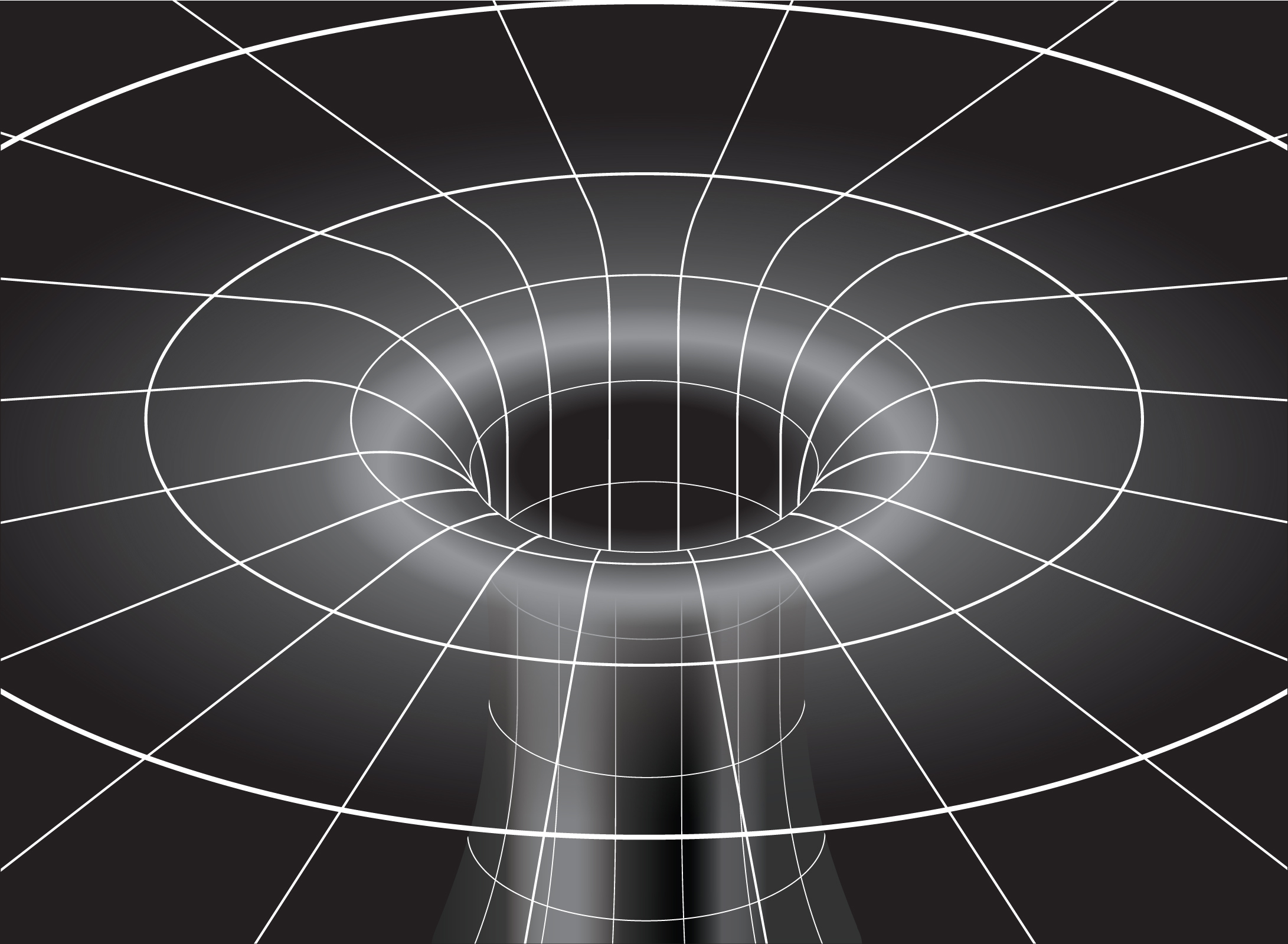
The second definition comes from Albert Einstein’s theories of relativity, which describe time as another dimension alongside the three dimensions of space. This creates a four-dimensional structure known as spacetime, where past, present, and future can be understood as different parts of the same structure. Such a description challenges the familiar idea that only the present moment exists. If every moment occupies a place within spacetime, the distinction between past and future becomes far less straightforward than everyday experience suggests.
Gravity complicates matters further because Einstein’s General Theory of Relativity connects the passage of time with the structure of spacetime itself. Massive objects influence the shape of spacetime, and differences in gravitational fields can cause clocks to tick at different rates. This means time is not necessarily experienced identically everywhere in the universe. The challenge becomes particularly difficult when scientists attempt to combine this relativistic understanding with quantum mechanics, which describes the behavior of particles at extremely small scales.

The Equation That Made Time Disappear
One of the strangest developments in the search for quantum gravity happened in 1967, when physicists John Wheeler and Bryce DeWitt developed an equation attempting to describe the quantum state of the entire universe. Known as the Wheeler-DeWitt equation, it became an important part of discussions about how quantum mechanics and General Relativity might eventually fit together. However, the equation contained something that immediately raised difficult questions: time did not appear in it at all. The mathematical description attempted to represent the universe without relying on time in the conventional way used by ordinary physics equations.
This created a possibility that many people would find difficult to accept. If the universe can be described through an equation without conventional time, perhaps time is not a fundamental ingredient of reality. It might instead emerge from something more basic that humans have yet to understand. The idea does not prove that time is imaginary, but it challenges the assumption that time must exist in the same way space and matter do.
The difficulty comes from the fact that quantum mechanics and General Relativity operate using fundamentally different mathematical frameworks. Quantum mechanics primarily describes extremely small systems, including electrons and photons, while General Relativity explains gravity and the structure of spacetime on much larger scales. Creating an experiment where both descriptions become relevant and can be accurately measured has proved exceptionally difficult. Physicists continue to investigate theories of quantum gravity, but the question of how time fits into these theories remains unresolved.
Three Possibilities That Could Explain The Nature Of Time
Scientists exploring quantum gravity have considered several ways time might fit into a deeper description of reality. Some approaches preserve familiar mathematical descriptions while introducing additional dimensions. Others suggest that time emerges from relationships between more fundamental parts of the universe. There is also the possibility that time itself has a discrete structure that becomes visible only at incredibly small scales.
Three possibilities have attracted particular interest:
- Time could be an emerging property: Time might arise from deeper physical processes rather than existing as a fundamental feature of reality.
- Time could exist within additional dimensions: Some theoretical approaches introduce spacetime structures involving more dimensions than the familiar four.
- Time could be quantised: At sufficiently tiny scales, time and space might consist of discrete units rather than behaving as perfectly continuous quantities.
The third possibility is particularly fascinating because people commonly imagine time as something that can be divided endlessly into smaller intervals. However, some theoretical approaches suggest that this might not be possible at the deepest level of reality. If time is quantised, there could be fundamental units of spacetime, sometimes described as spacetime atoms. These would represent a very different picture from the smooth passage of time experienced in everyday life.
None of these possibilities has been established as the definitive explanation. Physicists are still trying to determine which mathematical description best represents the universe. Yet even solving this first problem would leave another major mystery unanswered: why does time appear to move in only one direction?
Why Time Appears To Move Forward

People experience time as something that moves from the past towards the future. A glass can fall from a table and shatter across the floor, but nobody expects its broken pieces to spontaneously jump back together. Ice melts when placed in a warm drink, while the reverse process does not happen naturally under the same conditions. These familiar experiences are connected to a concept known as entropy, which describes how energy and matter become distributed within a physical system.
In thermodynamics, the direction of increasing entropy is associated with what physicists call the arrow of time. The universe appears to evolve from conditions of lower entropy towards higher entropy, helping explain why many everyday processes seem irreversible. A dropped glass breaking into pieces is consistent with this direction, while the spontaneous reconstruction of the glass would represent an extraordinarily unlikely reversal. This gives people a physical explanation for why the past and future feel fundamentally different.
However, there is a surprising complication. The fundamental equations of physics generally continue to work when the direction of time is reversed. Their mathematical descriptions do not automatically distinguish between past and future in the same way human experience does. This raises the second major problem of physical time: if the underlying equations permit time-reversed descriptions, why does the universe appear to have such a clear direction? Some physicists believe that understanding quantum mechanics and entanglement could help explain this contradiction.
Quantum Entanglement Could Hold An Important Clue
Quantum mechanics allows certain particles to exist in superpositions, meaning they can be described as occupying several possible states before a measurement determines the observed outcome. An electron, for example, can have different possible spin states before it is measured. When two quantum particles interact, they can become entangled, creating a connection between their properties that requires scientists to describe them as parts of one shared quantum system. Measuring one particle provides information about the other, even when they are separated by considerable distances.
Entanglement is one of the strangest features of quantum physics because it challenges ordinary expectations about how separate objects should behave. Albert Einstein famously described the phenomenon as “spooky action at a distance.” However, entanglement is not simply an unusual event that happens occasionally in nature. Quantum interactions make it an important feature of how physical systems become connected with their surroundings. The entire universe can become entangled with its environment, creating relationships that may be relevant to understanding how time emerges.
The Clock Experiment That Changed The Conversation
In 1983, physicists Don Page and William Wootters proposed a connection between quantum entanglement and time. Their idea offered a possible way to recover the experience of time from a universe whose overall quantum description might be timeless. They considered a hypothetical quantum clock entangled with its environment, allowing the clock and everything around it to be described together as one connected quantum system. Rather than treating time as something that exists independently, their approach considered how relationships between different parts of the system could produce an experience of time.
Imagine a clock existing in a superposition involving different possible times. Its surrounding environment would also become connected to those different states. When an observer measures the clock, that measurement provides information about the corresponding state of its environment. From the perspective of someone inside the universe, reading the clock would reveal what the surrounding universe is doing at that particular moment.
This creates a fascinating possibility. The universe could be described as timeless from an external mathematical perspective, while observers within it still experience a sequence of moments. The passage of time could emerge from relationships between different parts of a quantum system. The proposal does not settle the debate, but it offers physicists another way to approach the strange absence of time in certain descriptions of the universe.
Could The Future Actually Influence The Past?
The mystery becomes even stranger when quantum mechanics meets Einstein’s theory of relativity. Under ordinary circumstances, cause and effect follow a familiar order. A cause happens first, and its effect follows. Switching on a light produces illumination, for example, and the illumination cannot normally cause someone to switch on the light before the action takes place. Yet relativity introduces an interesting complication because different observers can disagree about the order in which certain events occur.
Einstein’s Special Theory of Relativity establishes that all observers measure light travelling at the same constant speed. Because observers can move relative to one another, they can disagree about the timing and ordering of events that are separated in certain ways. This is possible when the events are too far apart in space for either to causally influence the other. For events that can directly influence one another, their causal order remains protected.
Quantum mechanics introduces another possibility by allowing different causal orders to be considered together in a quantum superposition. Imagine two flashes of light produced at separate locations. One arrangement could involve flash A occurring first, while another could involve flash B occurring first. If these possibilities coexist within a quantum system, the events may not have one definite causal sequence. This theoretical possibility is known as indefinite causal order, and it challenges the assumption that every physical process must have one clearly defined order of cause and effect.
However, this does not establish that people can send messages into their own past or change historical events. The possibility of unusual causal structures in quantum physics is a much more specific theoretical question than ordinary time travel. Scientists are still investigating how such structures fit into the broader laws of physics, including whether causality must remain preserved in every possible description of reality.
Gravity Could Make The Mystery Even Stranger
Einstein’s General Theory of Relativity adds another unusual possibility because gravity affects how quickly clocks tick. A clock closer to a massive object experiences time differently from one positioned farther away. This effect is known as gravitational time dilation, and it demonstrates that the passage of time depends partly on the gravitational environment. When quantum mechanics enters the picture, the relationship becomes even more complicated because quantum systems can exist in superpositions of different possible arrangements.
Consider a theoretical experiment involving two entangled clocks positioned at different heights above Earth’s surface. Because the gravitational field changes with height, the clocks would tick at slightly different rates. Now imagine that the clocks exist in a quantum superposition involving two arrangements. In the first, clock A is higher than clock B. In the second, their positions are reversed. Each arrangement would produce a different relationship between the clocks and their ticking rates.
Until someone measures the system, its description must account for both possible arrangements. Determining which clock is higher and how their recorded events should be ordered becomes more complicated. Some physicists have explored whether situations like these could produce effects resembling retrocausality, where future events influence descriptions of the past. Others argue that causality must remain preserved, even when quantum mechanics and gravity are considered together.
There is currently no established demonstration that ordinary events can be changed by something happening in the future. The thought experiment instead illustrates how difficult it becomes to define past and future when quantum superposition, gravity, and time are considered together. It also raises questions about whether the familiar order of events remains fundamental at the deepest levels of reality.
Does This Mean Time Travel Could Become Possible?
The idea of future events influencing past events naturally brings time travel into the discussion. Some physicists have considered retrocausality as a possible feature of certain interpretations of quantum mechanics, while others have investigated how quantum theory might accommodate situations where causal order is not fixed. These ideas challenge familiar assumptions about how reality is organised, but they do not provide evidence that people can travel into yesterday or rewrite their own histories.
The theoretical possibility of unusual causal relationships should not be confused with science-fiction time travel. Quantum entanglement does not provide a known method for sending information into the past, and indefinite causal order does not mean that someone can prevent an event from happening. Even the relationship between quantum entanglement and the emergence of time remains an active area of theoretical investigation. Scientists still lack a complete, experimentally confirmed theory that unifies quantum mechanics and General Relativity.
The bigger challenge is understanding whether time is fundamental or whether it emerges from something more basic. The Wheeler-DeWitt equation, the Page-Wootters proposal, and theories involving quantum causal order all approach the problem from different directions. Each raises questions that scientists have yet to answer, and none has established a final explanation.
The Universe May Have A Very Different Relationship With Time
The way humans experience time is remarkably consistent. People remember the past, experience the present, and anticipate the future. Yet the mathematical descriptions used to explain the universe raise questions about whether that familiar division reflects reality at its deepest level. Time could have several different roles depending on the physical processes being examined, rather than behaving as one simple, universal concept.
For now, the clock on the wall continues to mark every passing second. But the deeper question facing physicists is what those seconds actually represent. The answer could change how humanity understands the universe, including the very idea of what it means for something to happen.
Sources:
- DeWitt, B. S. (1967). Quantum Theory of Gravity. i. The Canonical Theory. Physical Review, 160(5), 1113–1148. https://doi.org/10.1103/physrev.160.1113
- Page, D. N., & Wootters, W. K. (1983). Evolution without evolution: Dynamics described by stationary observables. Physical Review. D. Particles, Fields, Gravitation, and Cosmology/Physical Review. D. Particles and Fields, 27(12), 2885–2892. https://doi.org/10.1103/physrevd.27.2885