
Your cart is currently empty!
Physicist Claims Infinite Versions Of You May Exist Across Parallel Realities

Every person has replayed old decisions in their head and wondered how different life might look if one tiny moment had gone another way. A missed train, a relationship that ended too soon, a random conversation with a stranger, or a single bad decision can completely redirect a person’s future in ways they never expected. Most people treat those thoughts as harmless daydreams or late-night regrets, but one physicist now believes the idea may connect to something far stranger, buried deep inside quantum mechanics. According to his interpretation of modern physics, alternate versions of you may not only exist across parallel realities, but they could still be connected to the life you are experiencing right now in ways humans cannot fully understand.
Contents
show
The theory comes from physicist Vlatko Vedral, who recently argued that people have completely misunderstood one of quantum physics’ most famous concepts. For years, internet culture has embraced the idea that human consciousness somehow creates reality through observation alone. That belief spread through manifestation videos, social media spirituality, and endless motivational posts claiming people could shape the universe with thoughts and positive energy. Vedral says the actual science suggests something far more unsettling. Instead of humans changing reality simply by observing it, reality itself may constantly be changing humans through every interaction they experience with the world around them. Under this theory, every moment of your life may be creating countless alternate versions of you branching outward into separate realities.

The Observer Effect Became One Of The Internet’s Favorite Science Myths
The observer effect became wildly popular because it sounds almost supernatural when simplified online. The basic explanation people usually hear is that particles can exist in multiple states until somebody observes them, causing reality to collapse into one final outcome. Over time, that explanation escaped science classrooms and entered internet culture, where it slowly transformed into the belief that consciousness itself controls the universe. People began connecting quantum mechanics to manifestation culture, spirituality, and the idea that thoughts alone could attract money, love, or success into someone’s life.
Vedral argues that interpretation strips away what quantum physics is actually describing. According to him, observation itself is not special because physical interactions are happening constantly, whether humans are present or not. Light striking a surface, particles colliding with atoms, and photons entering someone’s eyes all change systems through interaction alone. Human consciousness is simply another physical process unfolding within a much larger universe that does not revolve around people observing it.
Part of the reason the observer effect became so popular is that it flatters human beings. It places people at the center of reality itself and suggests the universe somehow reacts to their awareness. Vedral rejects that idea entirely. He believes quantum mechanics points toward something less comforting and much stranger. The universe is not waiting for humans to look at it before reality unfolds. Instead, reality may already be branching endlessly through interactions happening every second across the cosmos.
The Sunglasses Experiment Completely Changes The Way People Think About Reality
To explain the theory, Vedral describes a surprisingly ordinary scenario involving a photon and a man wearing sunglasses named Bob. According to quantum mechanics, when the photon strikes the sunglasses, two possible outcomes emerge simultaneously. In one branch of reality, the photon passes through the lens and reaches Bob’s eye. In another branch, the photon reflects away and never reaches him at all. Quantum physics suggests both outcomes continue existing at the same time, even though Bob consciously experiences only one of them.
Vedral explains the idea by writing, “According to quantum physics, Bob and the photon are entangled: in one branch, the photon passes through the glasses and stimulates something in Bob’s brain, whereas in the other branch, the photon is reflected and Bob is left unperturbed.” Under this interpretation, there are effectively two versions of Bob continuing forward through separate quantum paths. One Bob experiences seeing the photon while another version of Bob never notices anything at all.
The strange part is how Vedral frames the situation. Most people assume Bob somehow changed reality through observation, but Vedral says the real change happened within Bob himself after interacting with one possible outcome rather than another. He argues people keep asking the wrong question when discussing quantum mechanics. Instead of asking why reality collapsed into one outcome, he believes the more important question is how each interaction changes the observer moving through reality.
That interpretation completely flips the internet’s favorite version of the observer effect upside down. Instead of consciousness controlling the universe, reality itself may constantly be shaping consciousness through every interaction humans experience throughout their lives.

Reality May Be Creating New Versions Of You Every Second
Vedral believes every interaction a person experiences slightly changes who they become. A random conversation can shift your confidence. A missed opportunity can redirect your career. One bad decision can destroy relationships or alter your future permanently. Under this interpretation of quantum mechanics, countless alternate versions of those outcomes may continue branching outward endlessly, creating slightly different versions of you across separate realities.
He explains the idea directly by writing, “When we interact with the external world, which exists in a multitude of states, the crucial change is in us, not in the external world. In other words, reality affects you.” That statement completely reframes the popular internet belief that humans shape reality through consciousness alone. Vedral argues the opposite may actually be true. Reality may constantly be reshaping humans every moment through interactions they barely notice.
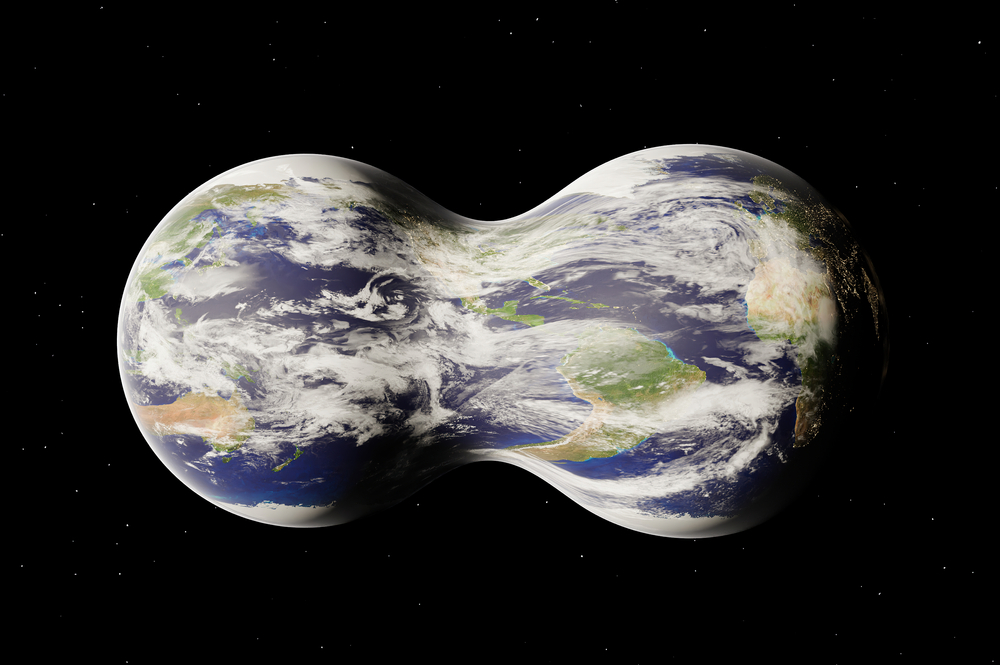
That possibility becomes deeply unsettling once people start applying it to ordinary life. Every decision could theoretically split into alternate outcomes somewhere else. A version of you who accepted a different job offer, married someone else, moved to another country, or avoided a catastrophic mistake may continue existing under the many-worlds interpretation of quantum mechanics. Humans experience only one path at a time, but the mathematics behind quantum theory suggests many possibilities could still coexist beneath the surface of reality.
The theory sounds like science fiction because human brains evolved to experience life as one continuous sequence of events. Quantum mechanics repeatedly produces mathematical results that refuse to behave according to common sense. That disconnect between physics and ordinary experience is exactly why theories involving alternate realities continue haunting people long after they first hear about them.
The Theory Connects Directly To Schrödinger’s Cat
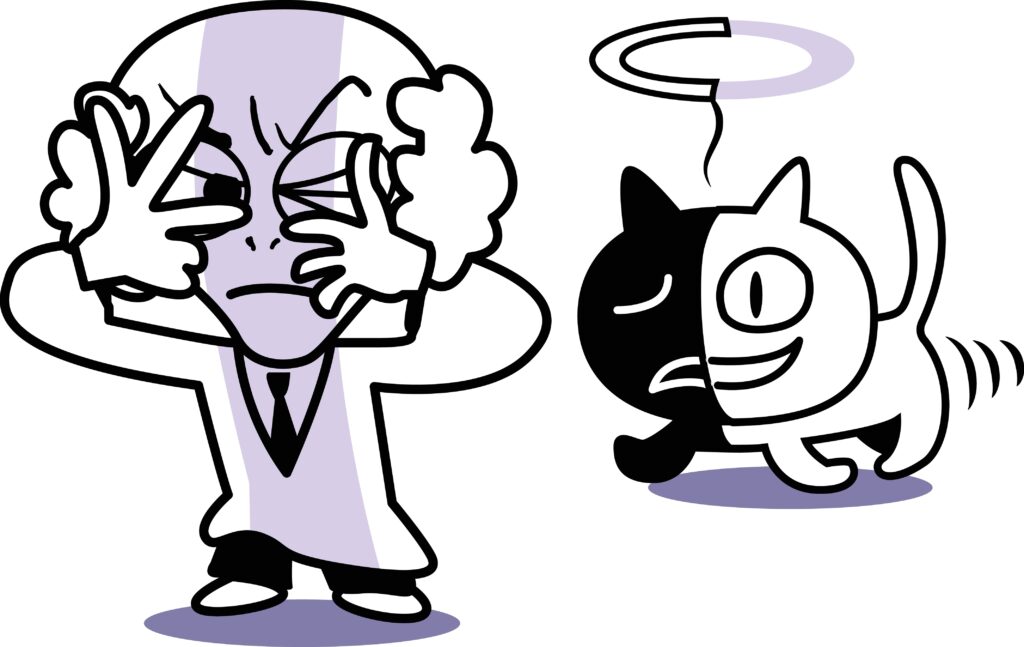
Vedral’s explanation closely mirrors the famous Schrödinger’s cat thought experiment, one of the best-known concepts in modern physics. The experiment imagines a cat sealed inside a box where a random quantum event could either kill the cat or leave it alive. Until somebody opens the box, quantum mechanics suggests both possibilities exist simultaneously. Mathematically, the cat exists in a strange state where it is both alive and dead at the same time until the quantum system resolves into one measurable outcome.
Vedral argues Bob and the photon behave similarly because both realities continue existing after the interaction occurs. One version of Bob sees the photon. Another version never does. Each version experiences only one outcome, while the larger quantum system still contains both possibilities simultaneously. The theory becomes difficult to imagine because human beings naturally assume only one version of reality can exist at once.
Vedral even connected the idea to a painful memory from his own life. As a teenager, he played guitar in a rock band and once received an opportunity to perform in front of a large audience in his hometown. Hoping to impress the crowd, he pushed his amplifier to maximum volume moments before the performance began. Instead of delivering the dramatic guitar riff he planned, the amp blew a fuse and stopped working entirely while the rest of the band continued performing without him.
Years later, after properly studying quantum mechanics, Vedral began thinking about that failed concert differently. He wrote, “I also realized that the other reality, the one in which the amp didn’t blow up (and I received a standing ovation for my guitar virtuosity), also exists and can ultimately affect the reality in which the amp had collapsed.” The story captures why parallel universe theories fascinate people so deeply. Almost everyone has imagined a different version of their life where one painful moment unfolded another way.
The Strangest Part Involves Alternate Realities Interacting
Vedral pushes the theory even further by suggesting alternate branches of reality might theoretically interfere with one another under extremely specific conditions. He describes another physicist named Alice who attempts to reverse the interaction between Bob and the photon completely. If Alice perfectly reverses the process, Bob and the photon return to the exact states they occupied before the photon ever struck the sunglasses.
According to Vedral, that reversal would only be possible if both realities had genuinely existed simultaneously inside the same quantum system. He explains, “This means that both alternatives, either the photon reflecting off the lens or being transmitted, must have existed and were perfectly superposed in an entangled state, for otherwise the final state wouldn’t be the same as the initial one.” Physicists refer to this phenomenon as quantum interference, where different possible outcomes mathematically combine and interact.
The concept sounds almost impossible to picture because humans experience life as a straight line moving from one moment to the next. Quantum mechanics refuses to behave that way. The equations repeatedly suggest reality is far stranger, less stable, and less intuitive than everyday human experience allows people to understand comfortably.
Vedral even raises the possibility that alternate versions of reality could already be colliding in ways humans cannot detect. That idea creates an unsettling question. If different versions of your life somehow interfered with one another, would you ever even realize it happened? Or would reality simply continue unfolding while you remained completely unaware that another version of yourself briefly touched the life you currently know?
Scientists Still Deeply Disagree About The Many-Worlds Interpretation
Vedral’s ideas closely align with the many-worlds interpretation of quantum mechanics, a theory proposing that every possible outcome of a quantum event actually occurs in separate branches of reality. Some physicists believe it provides one of the clearest explanations for quantum behavior because it avoids the need for reality to mysteriously collapse into a single outcome after observation.
Other scientists strongly disagree and argue that the theory creates more philosophical problems than it solves. Critics point out that there is still no direct evidence proving alternate universes physically exist. Many researchers also argue the theory becomes extremely difficult to test experimentally because these possible realities may remain permanently inaccessible to human observation.
Several major criticisms continue surrounding the theory:
- There is currently no direct proof that parallel universes physically exist.
- Many-worlds interpretations remain extremely difficult to test experimentally.
- Some physicists believe quantum collapse still requires another explanation.
- Consciousness itself remains poorly understood within modern science.
- The mathematical equations may work even if the interpretation is wrong.
Even with those criticisms, quantum mechanics remains one of the strangest fields in modern science because its equations repeatedly produce results that challenge ordinary human intuition. Physicists still disagree over what quantum theory actually says about reality itself, which is exactly why interpretations like Vedral’s continue attracting enormous attention online.
Parallel Universe Theories Keep Haunting People For One Simple Reason
The emotional power behind theories like Vedral’s comes from how deeply they connect to ordinary human regret, curiosity, fear, and hope. Almost everyone has imagined a different version of their life after major decisions. People wonder what would have happened if they had accepted a different job, moved somewhere else, stayed in a relationship longer, or avoided one catastrophic mistake that changed everything afterward.
Quantum theories about alternate realities place scientific language around those emotions. A universe where you became wealthy, avoided heartbreak, achieved your dreams, or completely destroyed your life may theoretically exist somewhere under the many-worlds interpretation. Even people who know little about physics immediately understand the emotional weight behind that possibility because it connects directly to universal human experiences.
Vedral ends the discussion with a question that still unsettles him personally. “Will the reality in which I played a successful gig as a teenager ever collide with my present reality to produce something surprising?” he asks. He admits such events seem extraordinarily unlikely because human beings are vastly more complicated than particles like photons.
Still, quantum mechanics has spent decades refusing to behave the way humans expect reality to behave. That uncertainty is exactly why theories involving alternate versions of ourselves continue haunting people long after they finish reading about them.
alternate realities, consciousness, many worlds theory, multiverse theory, observer effect, parallel universe, parallel universes, physics theory, Popular Mechanics, Quantum Mechanics, quantum physics, quantum theory, reality theory, Schrödinger’s cat, Science news, space and science, strange science, theoretical physics, viral science, Vlatko Vedral