

A canceled flight can leave passengers frustrated, exhausted, and desperate to get home. For 15-year-old Clara Daly, however, an unexpected change to her travel plans led to an encounter that would eventually capture the attention of thousands of people.
The California teenager had been preparing to fly home with her mother when cabin crew made an unusual announcement. They needed someone who knew sign language to help a deafblind passenger communicate. Clara volunteered, but what happened during the final hour of the journey turned a simple act of assistance into something much more personal.
A Last-Minute Flight Change Brought Them Together
The encounter took place on June 18, 2018, aboard an Alaska Airlines flight travelling from Boston to Los Angeles, with a scheduled stop in Portland, Oregon. Clara Daly was travelling with her mother, Jane, after visiting the East Coast. However, their journey home had not gone according to plan, as their original direct flight had been canceled.
The unexpected disruption forced the pair to make alternative arrangements and rush to the airport to catch another service. They eventually boarded a flight that included a stop in Portland, adding an unexpected change to their travel plans. At the time, neither Clara nor her mother could have known that this inconvenience would place them alongside someone who needed their help.
The flight also carried a passenger named Tim Cook, who was travelling alone to Portland after visiting his sister in Boston. Tim was both deaf and blind, which made communicating with the cabin crew particularly challenging. Although the flight attendants wanted to ensure he was comfortable, they struggled to understand his requests without someone who could communicate with him.
Around an hour into the journey, the crew decided to make an announcement asking whether anyone onboard knew American Sign Language. Their request caught Clara’s attention, and she quickly realized that her knowledge might be useful. Rather than waiting for someone else to volunteer, the 15-year-old pressed her call button and offered to help.
Clara Had Been Learning Sign Language For A Year

Clara had been studying American Sign Language for approximately a year before the flight. Her interest was partly connected to her dyslexia, which made traditional reading and writing more challenging. She had found sign language an alternative way to communicate, giving her a skill that would unexpectedly become valuable during the journey.
When the flight attendants explained the situation, Clara discovered that communicating with Tim would require a particular technique. Since he could not see conventional hand movements, ordinary visual signing would not be enough. Instead, she needed to spell individual letters directly into his hand so he could understand the words through touch.
This form of communication required patience and concentration, particularly because Clara was still relatively inexperienced. She nevertheless approached Tim’s seat and began asking whether he was comfortable or needed anything. Her first attempt quickly established a connection between the teenager and the passenger who had been struggling to communicate.
Speaking to ABC station KABC-TV, Clara recalled how she introduced herself and began their conversation. She explained that she knelt in the aisle, placed her hands inside Tim’s hands, and started asking simple questions to understand what he wanted.
“I like knelt down into the aisle and I just put my hands inside his hands and I started asking like ‘How are you?’ ‘Are you OK?’ ‘Do you need anything?’” she said.
Tim responded that he wanted some water, allowing Clara to pass the request to the cabin crew. The flight attendants were then able to bring him a drink, resolving one of the immediate difficulties they had encountered. What began as a request for someone with signing experience had already made the passenger’s journey easier.
Tim’s Next Request Was About Something Different

Clara’s assistance continued throughout the flight as Tim occasionally needed help communicating with the people around him. He wanted to know how much longer the journey would take and asked questions that required someone to translate information through tactile signing. Whenever he needed assistance, Clara returned to his seat and helped him understand what was happening.
Her willingness to keep coming back made a difference to the experience of travelling alone. Tim could communicate his needs without relying entirely on people guessing what he wanted. The crew also had someone available who could help bridge the communication gap whenever a question arose.
However, one particular request stood out from all the others. When Tim called Clara again, she initially expected him to need something practical, perhaps another drink or information about the flight. Instead, she discovered that he simply wanted to have a conversation with somebody.
“He didn’t need anything. He was just like lonely and wanted to talk,” Clara told CBS Los Angeles.
The teenager understood what he was asking and decided to stay with him. She could have returned to her own seat and continued the journey with her mother, but she chose to spend more time beside Tim. Their interaction gradually became a genuine conversation rather than a series of questions about his immediate needs.
The Final Hour Became A Conversation Between Two Strangers

Clara and Tim began talking about their backgrounds and continued communicating through tactile signing. She spelled her answers into his hand, allowing him to follow the conversation despite being unable to hear or see her. Their exchange continued for much of the final part of the journey.
Clara later explained that they spent the last hour of the flight talking. She appeared to understand that having someone available to communicate with could make a significant difference to a passenger travelling alone. Her decision gave Tim the opportunity to enjoy a conversation rather than spend the remaining journey without meaningful interaction.
“For the last hour of the flight, we just talked,” she said.
Clara also explained that she hoped their conversation helped him feel less isolated during the journey. She encouraged more people to learn sign language because it could help them communicate with people who might otherwise struggle to make themselves understood. Her experience showed how a skill learned for personal reasons could become useful in a completely unexpected situation.
Another Passenger Was Moved By What She Witnessed
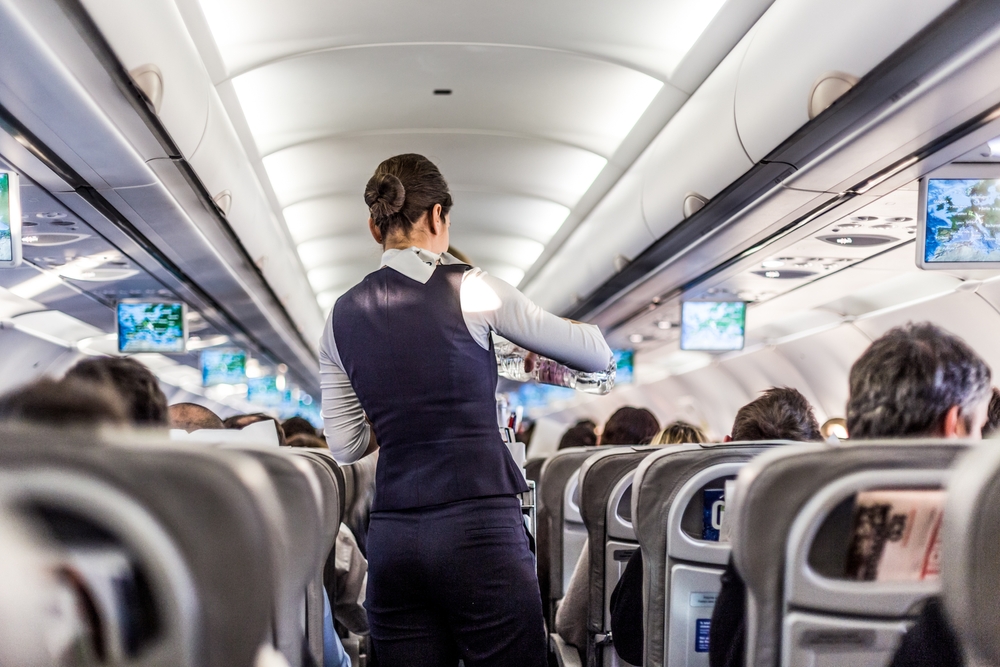
Clara and Tim’s interaction did not go unnoticed by the other passengers. Lynette Scribner, who was also aboard the flight, watched the teenager carefully spell letters into Tim’s hand as their conversation continued. She found the technique fascinating and was impressed by how naturally the pair communicated.
Scribner had noticed Tim before boarding and had seen another person signing into his hand at the airport. Once onboard, she realized that he was both deaf and blind and was seated nearby. She also witnessed other passengers and members of the crew making efforts to help him feel comfortable during the journey.
According to Scribner, a passenger sitting beside Tim had even switched seats with another traveller to make him more comfortable. People nearby helped with practical tasks, including his coffee and creamer, while another passenger assisted him when he needed to find his way to the restroom. Clara’s arrival added another important form of support.
Scribner later described how the teenager communicated with Tim, explaining that he was able to understand the letters she spelled into his hand. She also noticed how engaged the two became as the conversation continued.
“It was fascinating to watch as she signed one letter at a time into his hand. He was able to ‘read’ her signing and they carried on an animated conversation,” Scribner said.
She was equally impressed by the teenager’s willingness to volunteer. Scribner praised Clara for helping a fellow passenger without making a fuss about the situation. The interaction also appeared to bring the surrounding passengers together, as people nearby watched the conversation unfold.
“I can’t say enough about this beautiful young woman named Clara who didn’t think twice about helping her fellow passenger,” Scribner added.
The Story Spread Across Facebook And Attracted Thousands

After the flight, Scribner decided to share what she had witnessed on Facebook. Her account included details of Clara’s assistance and described the interaction between the teenager and Tim. The post quickly attracted attention, with people sharing the story and praising the young passenger.
According to the reports, Scribner’s post received more than 110,000 likes and 40,000 shares. The story spread because readers were touched by the way Clara had responded to a stranger who needed help. Many were particularly moved by the fact that she stayed with Tim after his immediate requests had been taken care of.
Clara’s mother, Jane, also shared photographs of her daughter helping the passenger. She had watched the encounter unfold and wanted to express how proud she was of her daughter’s decision. Alongside the pictures, she posted a short message that quickly became associated with the viral story.
“She’ll probably kill me for posting this, but – Proud of my girl,” Jane wrote.
The photographs offered people a glimpse of the interaction that had taken place during the flight. They showed Clara using tactile signing to communicate with Tim, illustrating how the teenager had adapted her knowledge of sign language to help someone who could not see her movements.
Despite the attention, Clara seemed surprised that so many people considered her actions extraordinary. She explained that she had simply responded to a situation in which someone needed assistance. Her reaction was remarkably straightforward, especially considering how widely the story had travelled.
“Doing something like that is just like what anyone would have done,” she said.
How Tactile Signing Helped Tim Communicate

The interaction between Clara and Tim also introduced many people to a communication method they might never have encountered before. Traditional sign language relies heavily on visual information, with people watching hand movements, facial expressions, and other signals. For someone who is both deaf and blind, those visual elements cannot provide the information needed to follow a conversation.
Tactile signing offers another way to exchange information through physical contact. Instead of watching the signs, the deafblind person uses touch to understand what the other person is communicating. In Tim’s case, Clara spelled individual letters into his hand, allowing him to follow words and respond.
The approach requires patience from both people because communication happens through touch rather than ordinary speech or visual signs. A person using the method needs to pay close attention to the letters being formed and the responses being given. Clara’s willingness to work through the process allowed Tim to communicate with her during a journey when that interaction had initially been difficult.
Her assistance covered several different aspects of the flight, including:
- Basic needs: Clara helped Tim communicate his request for water so the cabin crew could bring him a drink.
- Travel information: She helped him find out how much longer the journey would take, giving him information about the flight.
- Communication with the crew: Her signing helped bridge the gap between Tim and the flight attendants when he needed assistance.
- Personal conversation: She stayed with him when he wanted to talk, allowing him to share a conversation with another passenger.
- Social connection: Her presence gave Tim someone to communicate with during the final part of his journey.
The encounter demonstrated how communication can become easier when someone takes the time to understand another person’s needs. Clara did not need years of professional experience to make a difference during that flight. Her existing knowledge, combined with her willingness to learn the necessary technique, allowed her to help.
Clara’s Family Saw The Flight As Something Meant To Happen
The unexpected change to Clara’s travel plans became another memorable part of the story once the family looked back on the encounter. Their original flight was supposed to take them directly from Boston to Los Angeles. The alternative service placed them on an aircraft stopping in Portland, where Tim was travelling.
Had the original flight operated as planned, Clara and Tim would never have shared that particular journey. The cancellation had initially caused frustration, but it ultimately created the circumstances for their meeting. Jane later explained that her daughter believed the change had happened for a reason.
Clara shared that feeling when speaking to KABC-TV. She reflected on how an ordinary disruption had placed her in a position where she could use the skill she had been developing for a year.
“I think everything happens for a reason,” she said. “I got put on a flight where I had purpose … and was given a use.”
The comment offered an insight into how Clara viewed the experience. She had not boarded the aircraft expecting to help someone, and she had no idea that her knowledge would become so useful. The opportunity appeared unexpectedly, and she chose to respond when the crew asked for assistance.
Tim’s journey also ended on a positive note. A service provider from Brookdale Senior Living, where he resided in Portland, met him at the gate after the aircraft landed. According to the reports, Tim described the flight as the best trip he had ever taken.
A Conversation That Began With A Simple Offer Of Help
Clara’s actions attracted attention from people who were moved by the way she treated someone she had never met. The teenager had initially volunteered to help with a practical problem, but her involvement continued after that problem had been addressed. When Tim wanted company, she gave him her time and continued communicating with him until the journey was over.
Her experience also showed how learning a skill can create opportunities that are difficult to predict. Clara had started studying sign language partly because of her own difficulties with reading and writing. During that flight, the same knowledge helped someone facing a very different communication barrier.
The story became widely shared because it captured a moment that many passengers could have overlooked. Clara heard an announcement, recognized that she might be able to help, and decided to act. For Tim, that decision meant having someone beside him who was willing to listen and talk.
A canceled flight had brought two strangers onto the same aircraft, but Clara’s decision to leave her seat and help turned that coincidence into a memorable human connection.